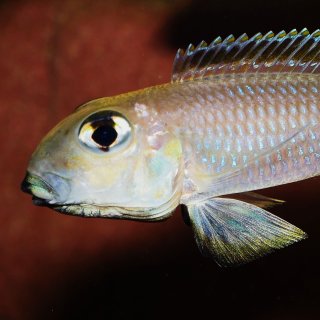

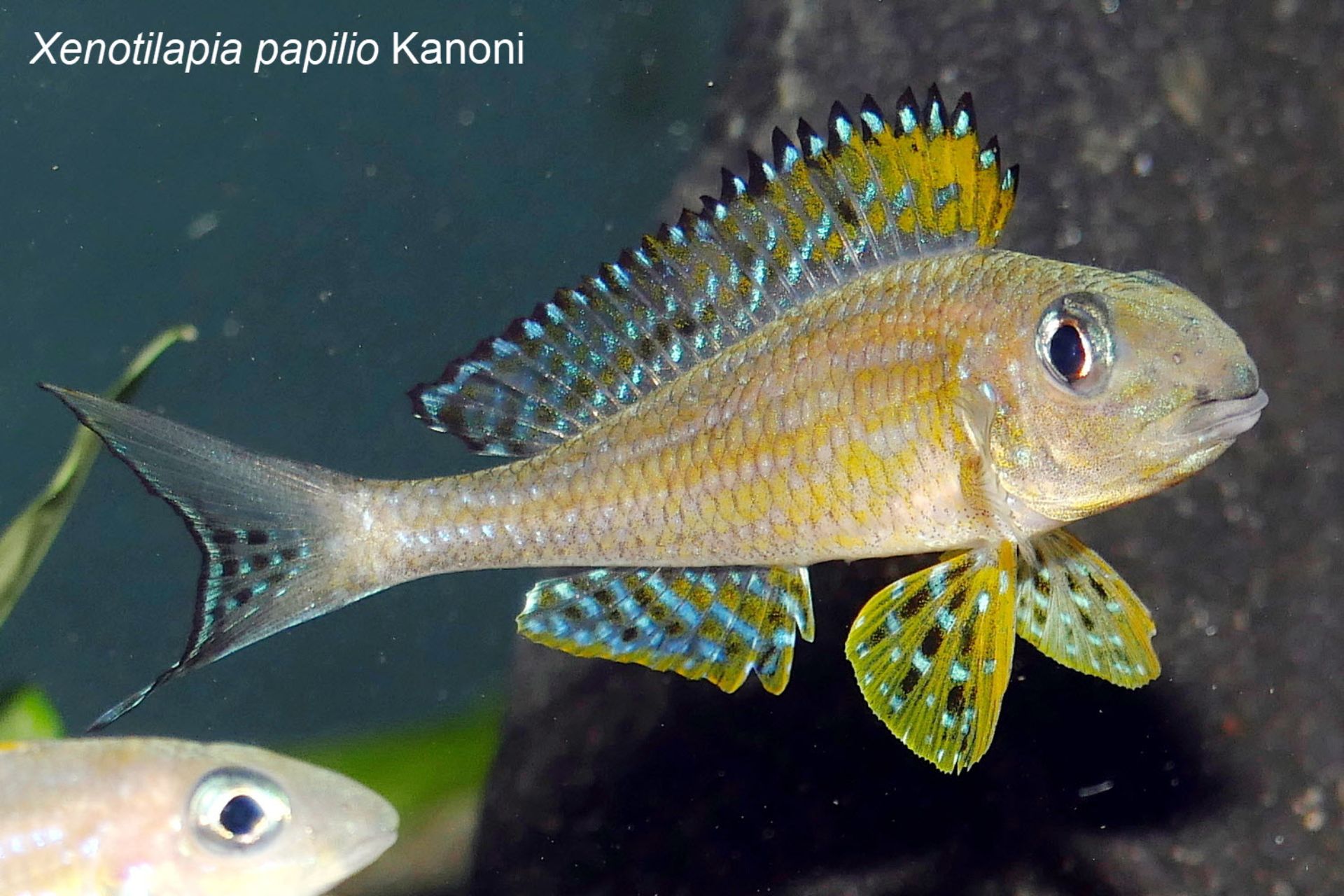
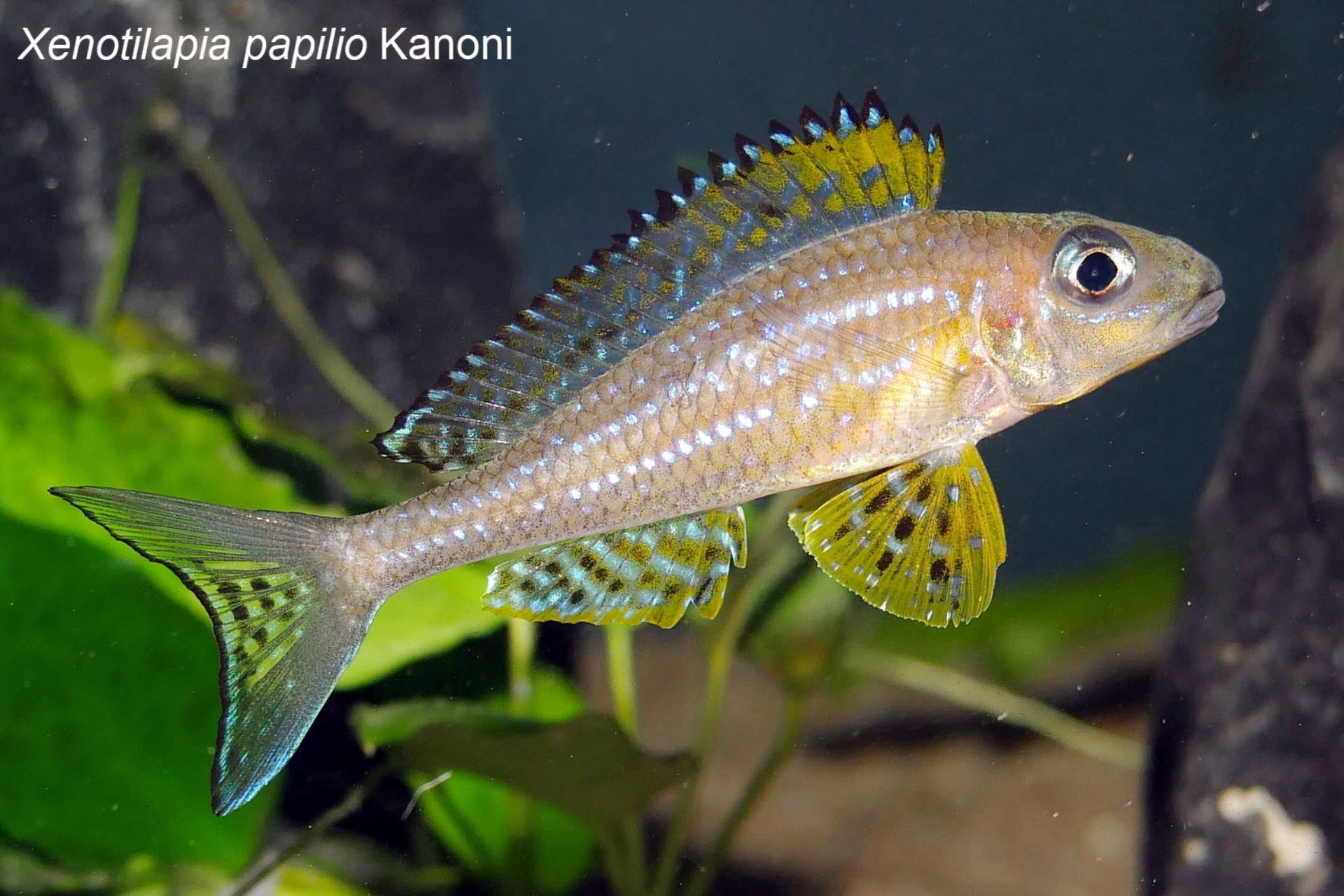
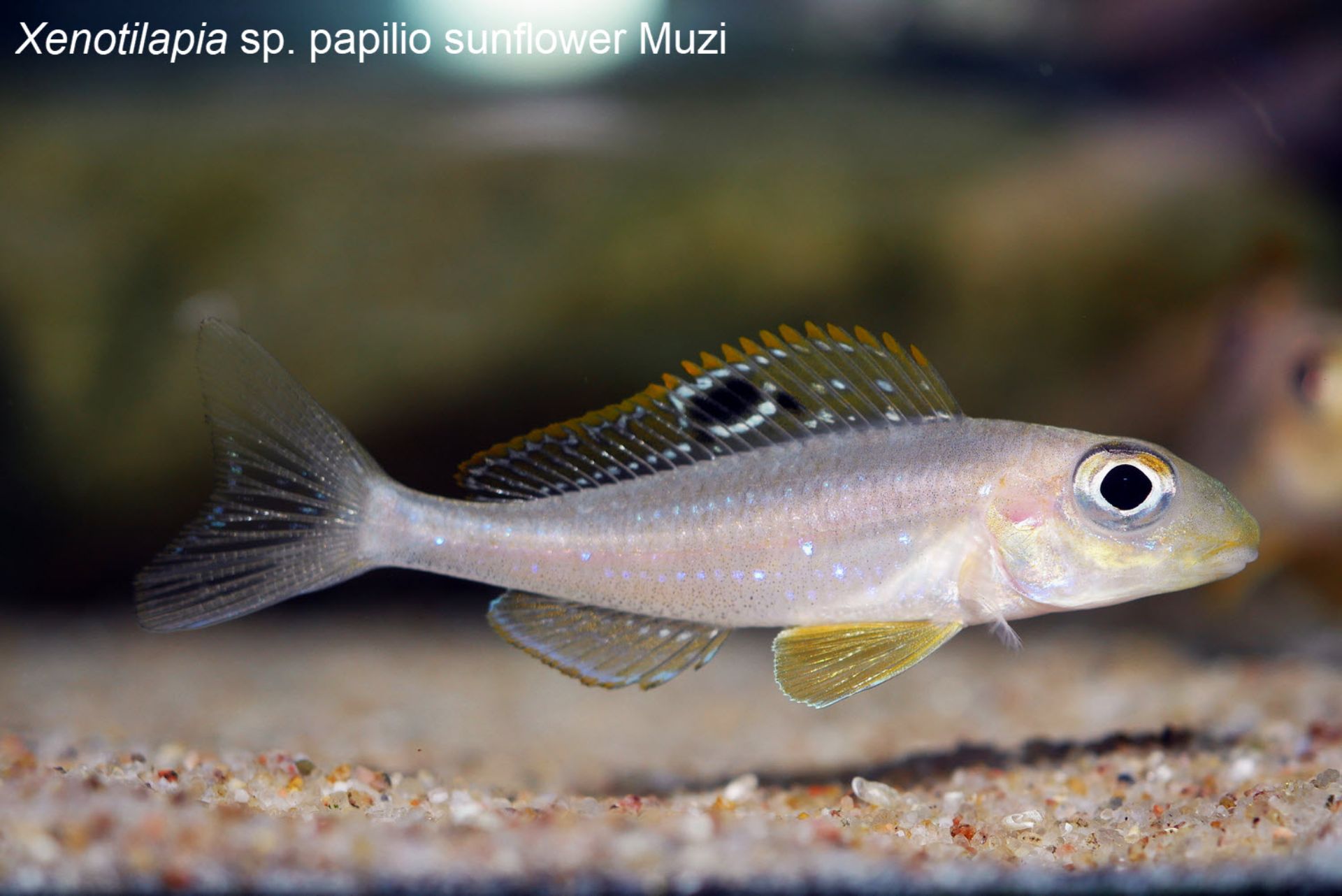
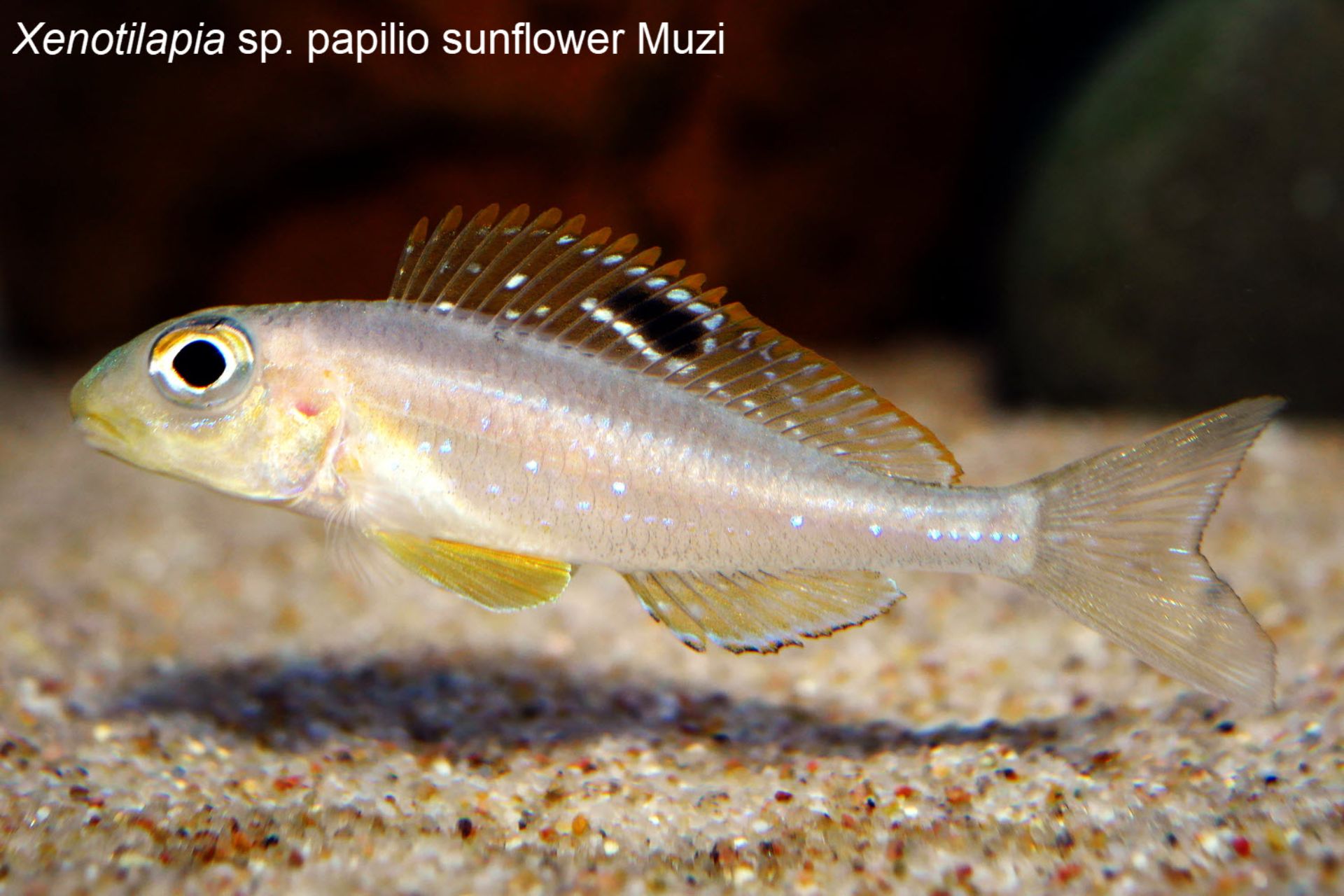
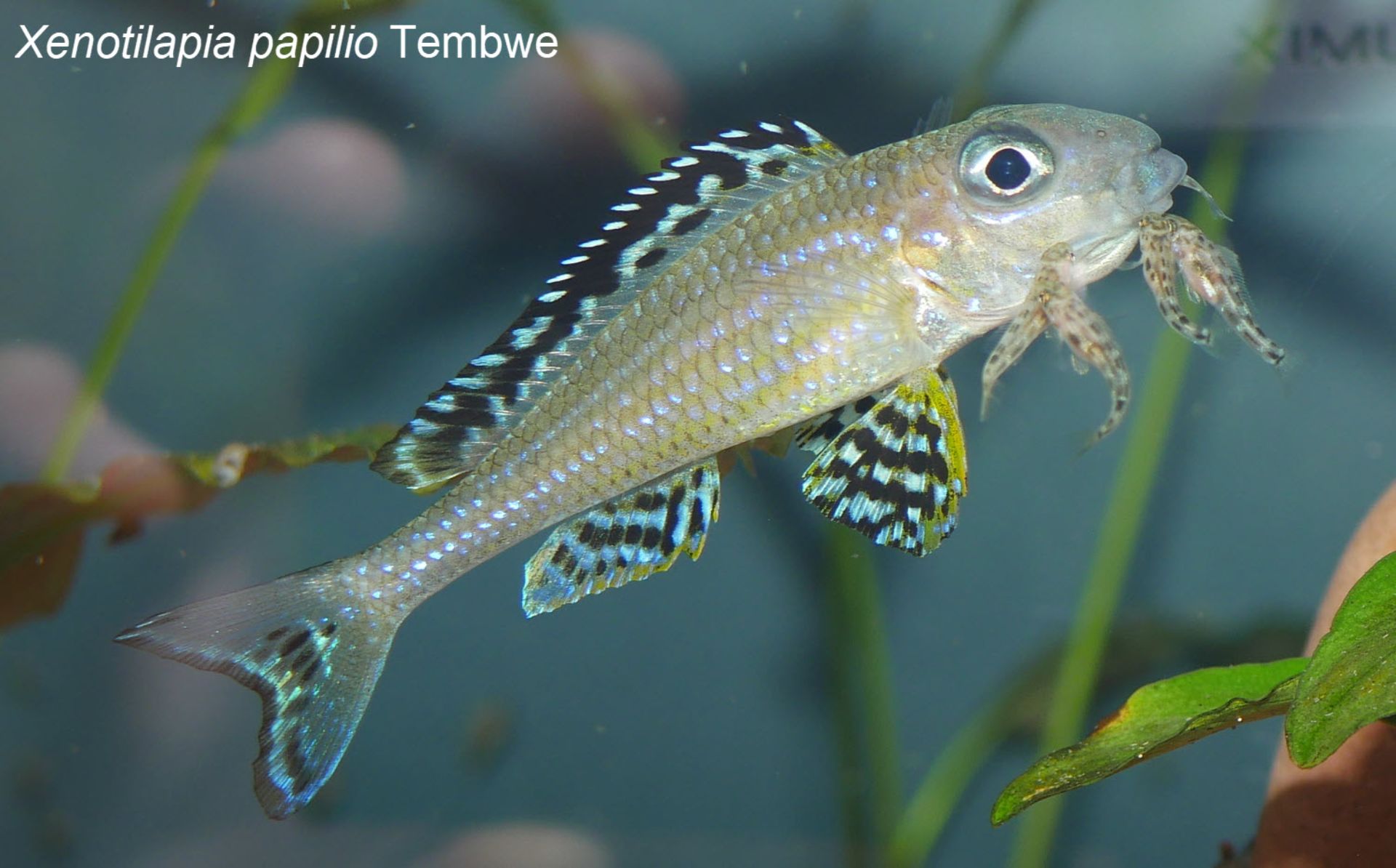
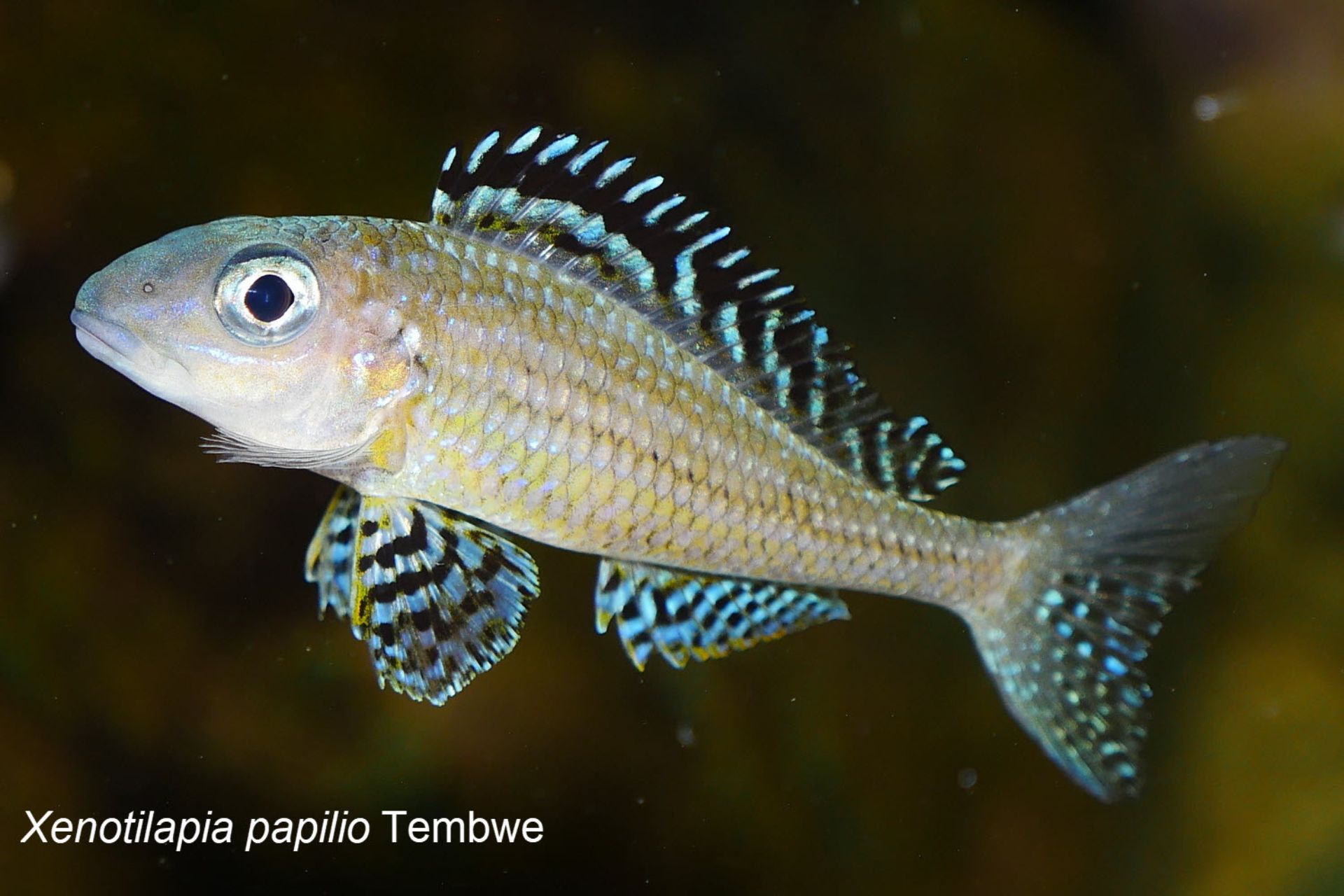
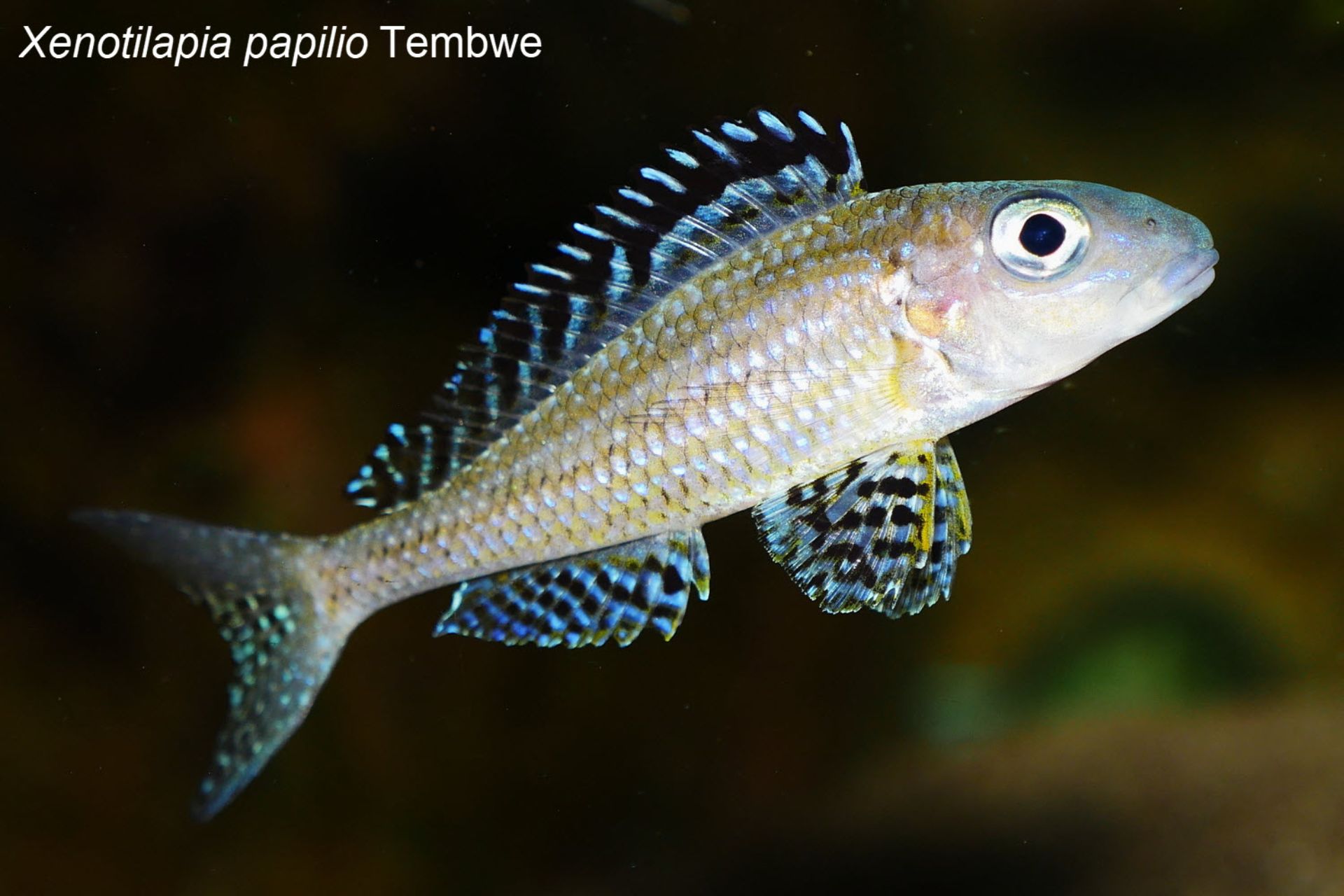
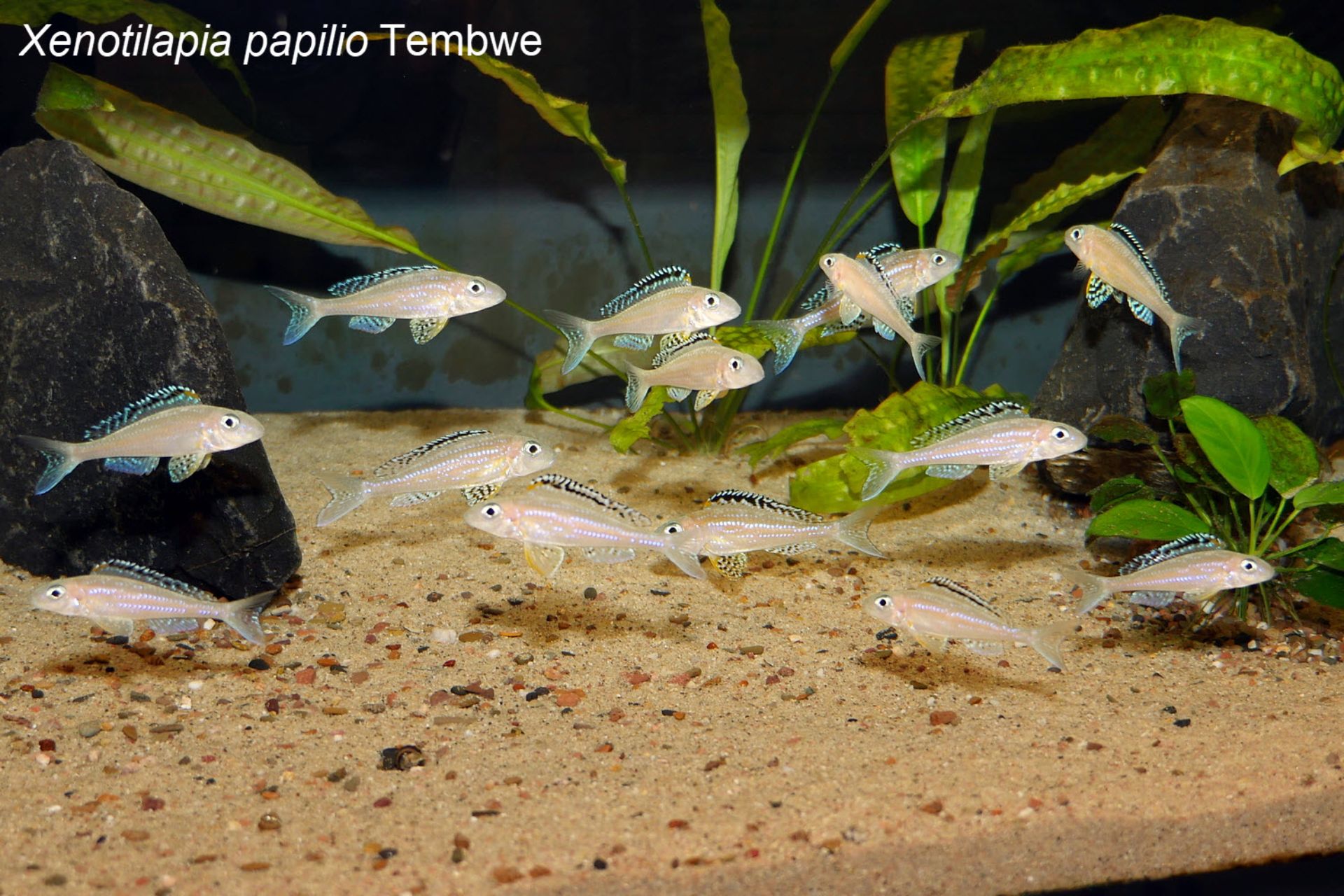
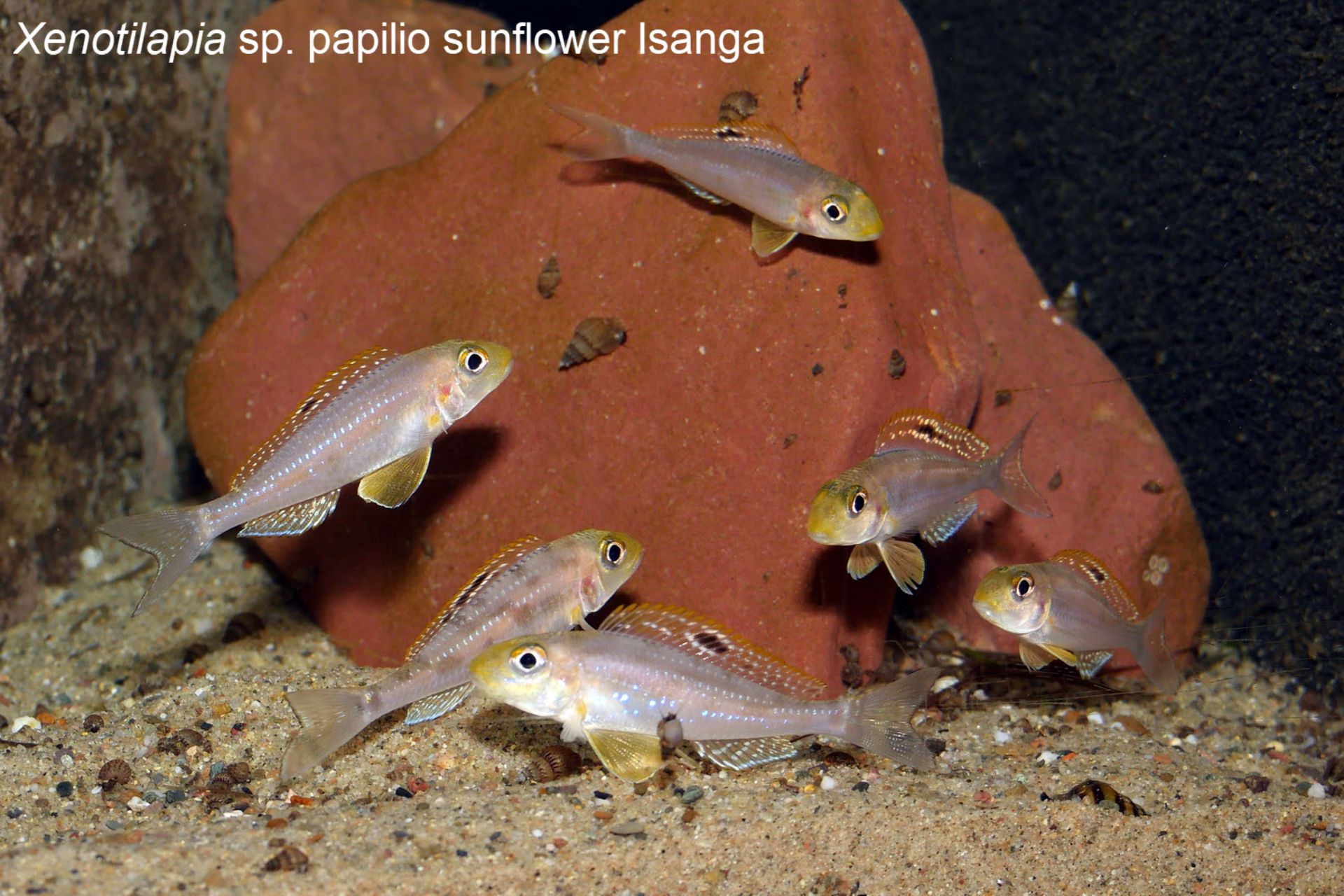
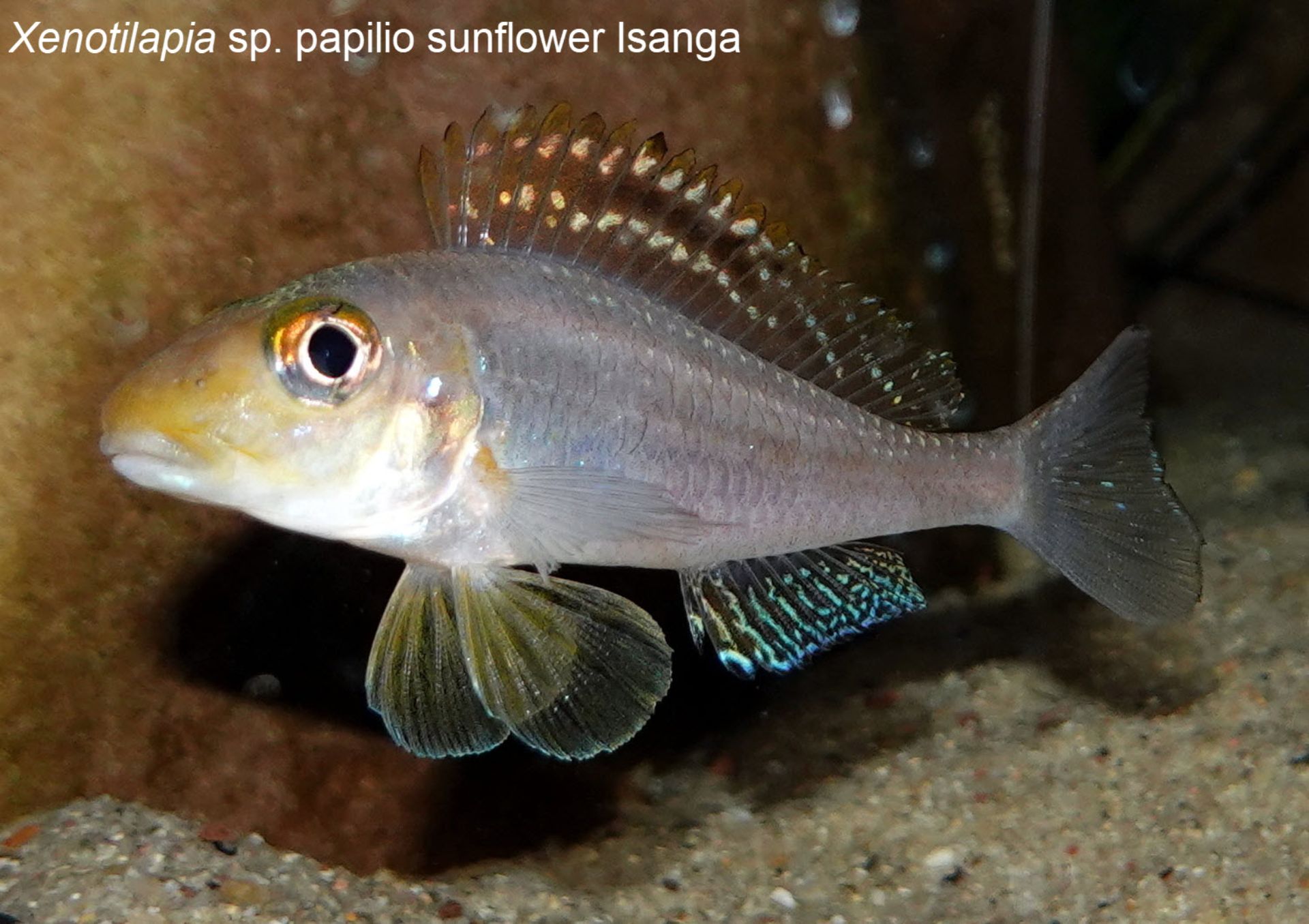
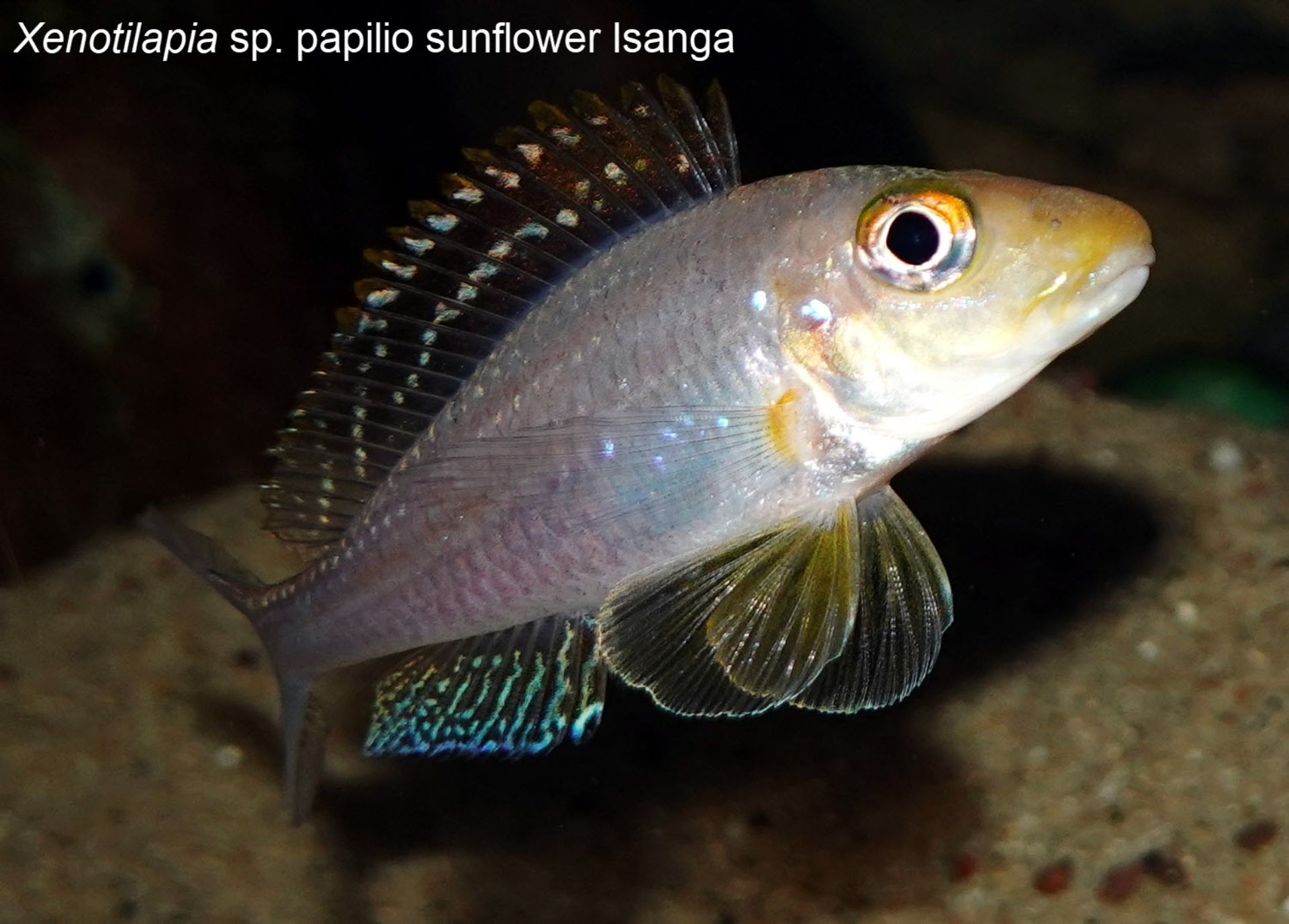

Lake Tanganyika cichlids – Short portrait Xenotilapia papilio BÜSCHER 1990
Habitat
- Transition zones (or Ecotones) between sand and rock biotopes at depths of 10 to 50 meters.
Characteristics
- Size: The fish reach a maximum length of about 8 to 10 cm.
- Sexual Dimorphism: Males and females are visually difficult to distinguish, with males tending to be slightly more robustly built.
Aquarium Keeping
- Aquarium Size: The species is best kept in a group from which pairs can form. An aquarium with a minimum volume of 300 litres is recommended for keeping a group of 6 to 8 animals. Tank length 150 cm.
- Setup: Substrate of fine, round-edged river sand. A few stones to serve as territorial boundaries.
Diet
- Natural Diet: In the wild, they feed on small crustaceans living in the sand, which they sift out by filtering the sand with their gill rakers.
- Aquarium Food: In the aquarium, the food should be varied and consist of a mixture of small crustaceans, insect larvae (e.g., red mosquito larvae), dwarf shrimp, and Tubifex. Special dry food can also be supplemented.
Breeding and Parental Care
- Xenotilapia papilio is a biparental mouthbrooder, meaning that both parents share the brood care.
- The female lays the eggs on a flat stone, where they are fertilised by the male. The female then takes the eggs into her mouth. After about 11 days, the male takes over all or some of the fry to continue the care. The fish practice mouthbrooding for up to 6 weeks after the initial release of the fry.