



They have the majestic appearance of discus fish but are significantly less demanding. The red-eyed cichlids, also nicknamed by aquarists as "severus cichlids" or "poor man's discus," are long-known gems of South American aquaristics. What does it take to keep these fascinating, inquisitive giants, how to set up a tank without risking destroyed plants, and what unconventional color variants currently dominate the aquarium world?
Discus are the majestic kings of the Amazon, but they do not live alone. Alongside them are many other species of fish, including a wide array of cichlids. A fish that is equally majestic and brings joy to many keepers is the Severum or red-eyed cichlid (Heros severus).
In the northern part of South America—mainly in the upper Rio Negro and Orinoco basins, as well as plant-rich Venezuelan rivers and lakes like the Rio Cunaviche, Rio Vichada, Rio Casiquiare, and Rio Caura—this fish can grow to 20 cm or more. Locally, they are sometimes referred to as "Mojarra" or the "false discus." In these habitats, they live primarily in acidic, soft blackwater environments filled with submerged branches and roots that serve as excellent hiding spots. The water temperature in these regions is often significantly high, hovering around 30°C.
Systematics
As one of the longest-known cichlids in the aquarium hobby, it was described as early as 1840 and was long classified under the collective genus Cichlasoma. In 1983, ichthyologist Sven Kullander reassigned it to the genus Heros. While it was considered a monotypic genus for a long time, more species have since been described, and debates regarding their exact scientific classification continue. The species first reached Europe via Germany (C. Siggelkow, Hamburg) in 1909.
Aquarium Care
These fish are best suited for large "show" aquariums. While smaller community fish (like livebearers or tetras) require roughly one liter of water per centimeter of fish, these large cichlids require approximately 300 liters of water per pair.
The aquarium should be decorated with large stones, driftwood, and coarse sand. Because of their habit of digging and occasionally eating soft plants, stick to robust plant species, preferably larger variants of the genus Anubias. Keeping a "Dutch style" aquascape with these fish is practically impossible.
-
Juvenile Diet: Live foods (Daphnia, brine shrimp, mosquito larvae, tubifex) and high-quality artificial flakes or pellets.
-
Adult Diet: Larger foods such as Mysis shrimp, krill, and earthworms.
Note on Filtration: Large cichlids have high metabolic rates. Efficient, heavy filtration and regular water changes are absolutely necessary to manage waste and maintain low nitrate levels.
Tank Mates
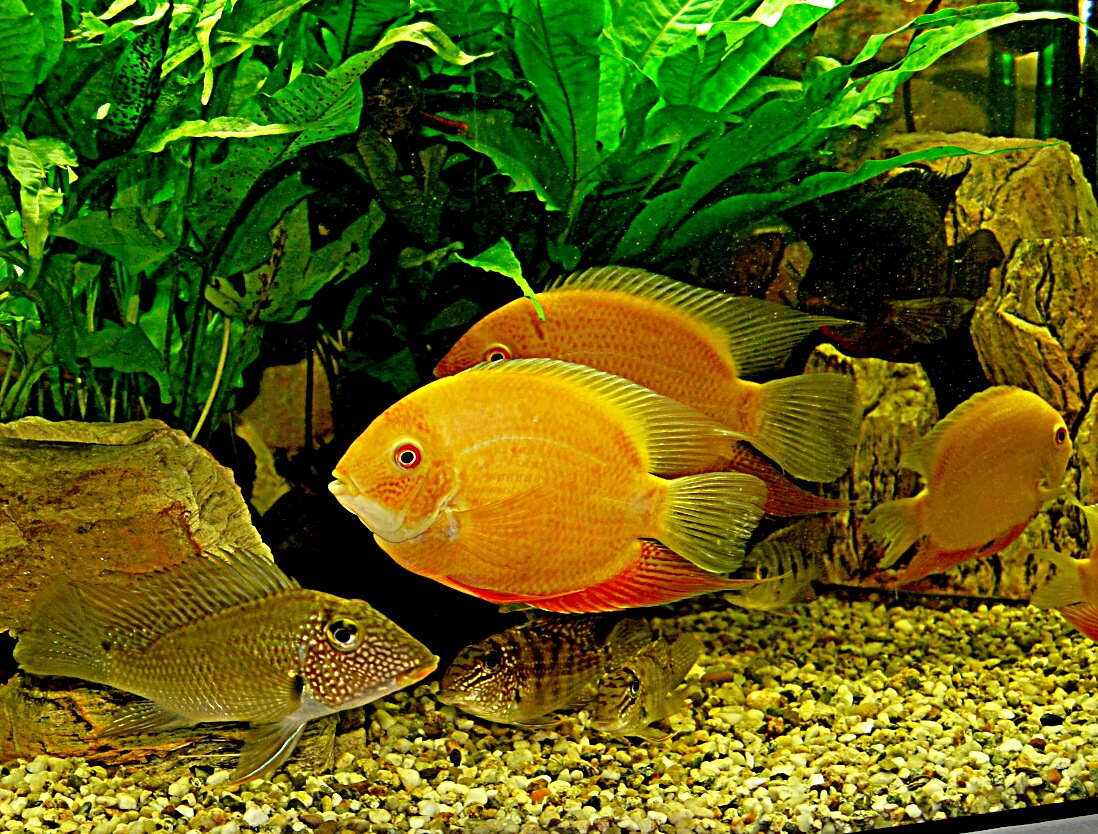
Choosing compatible tank mates for large cichlids can be challenging. For the bottom layer, large species of armored catfish or standard Ancistrus (Bristlenose plecos) work well. Other calm, large Amazonian species make excellent companions, such as:
-
Festivum (Mesonauta festiva)
-
Demon Eartheater (Satanoperca leucosticta)
-
Threadfin Acara (Acarichthys heckelii)
-
Angelfish (Pterophyllum scalare)
Avoid Central American cichlids, as their high aggression levels can stress Severums. Interestingly, significantly smaller, hyper-aggressive Central American species (from genera like Thorichthys or Archocentrus) can easily tyrannize and bully the much larger, milder-tempered Severum.
Breeding
Adult fish display very little sexual dimorphism; they are best sexed during spawning.
-
Males: Generally larger and more robust, displaying more prominent red markings (especially around the head). Their genital papilla is elongated, slender, and sharply pointed.
-
Females: Display a shorter, thicker, and bluntly rounded genital papilla.
It is best to let a pair naturally select each other from a group of young fish. They typically spawn on large, flat stones that they meticulously clean beforehand. A single clutch can consist of up to 1,000 eggs.
While the true wild Heros severus is a larvophilic mouthbrooder (taking hatched embryos into their mouths), many of the common colorful variants in the hobby act as traditional substrate spawners. Their beautiful coloration—especially during the breeding season when vibrant greens and golds intensify—earned them the nickname "poor man's discus." Fry should be fed heavily with fresh Artemia nauplii. To maximize growth rates for such a large number of hungry fry, flow-through tank systems are highly recommended.
Images:
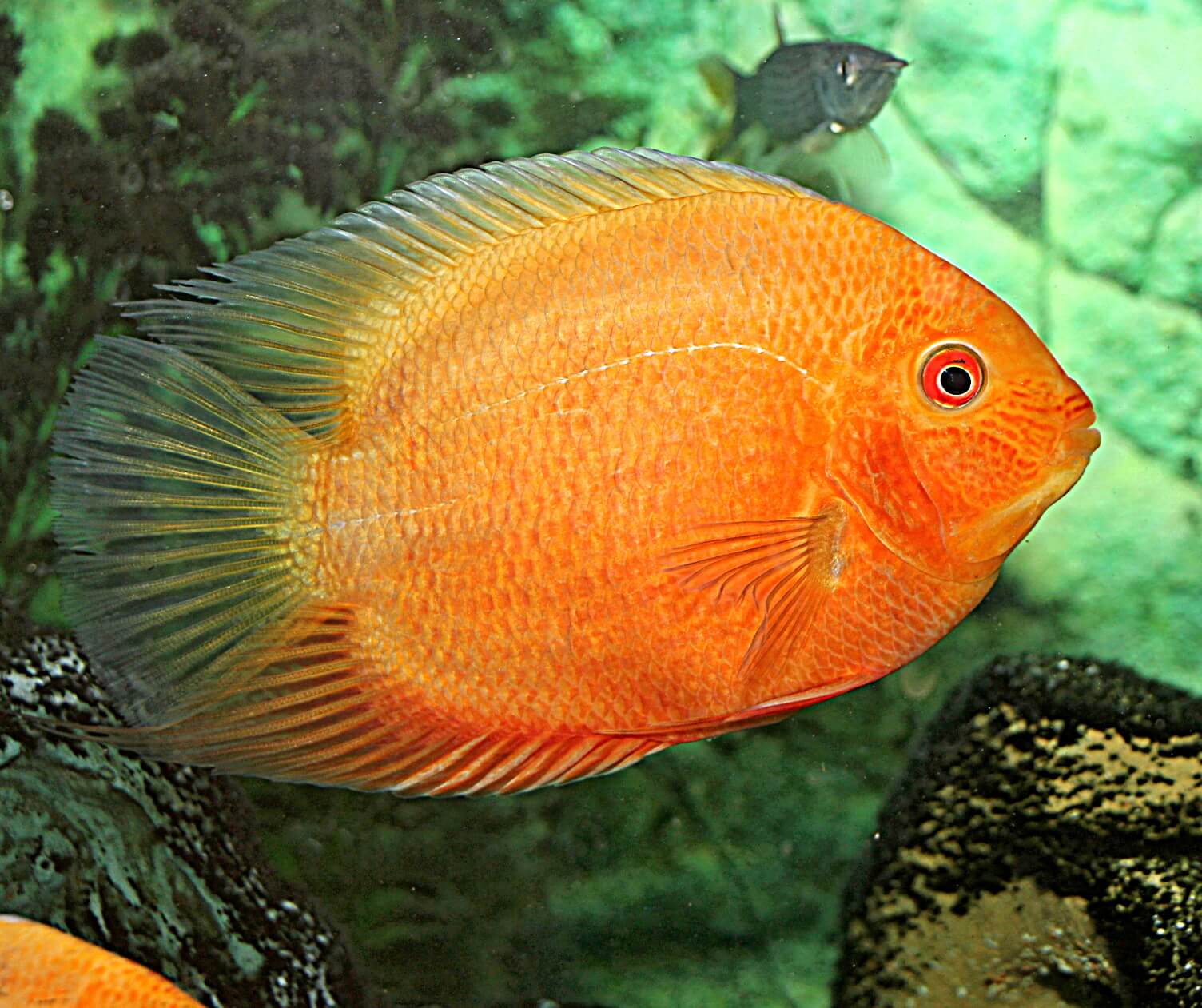
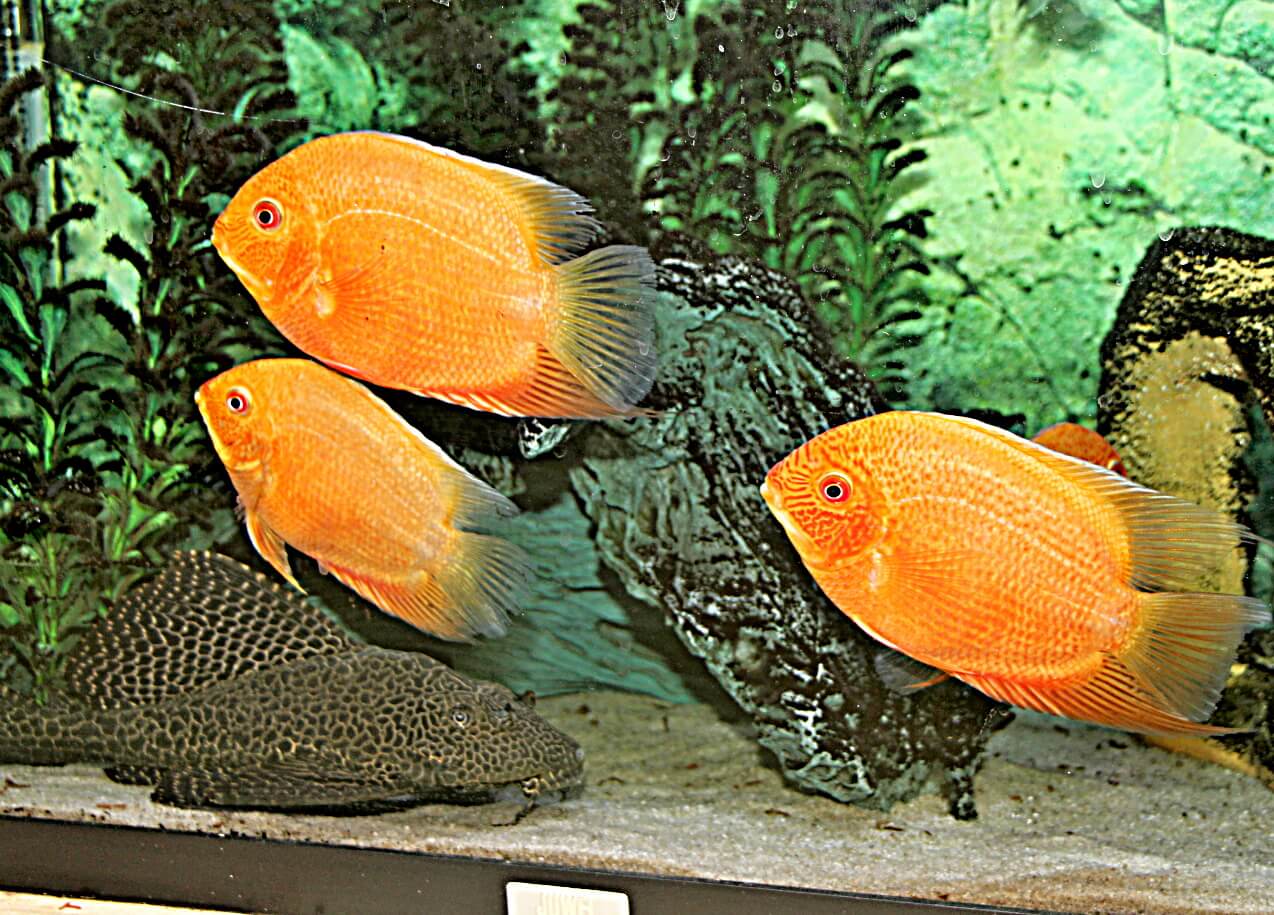
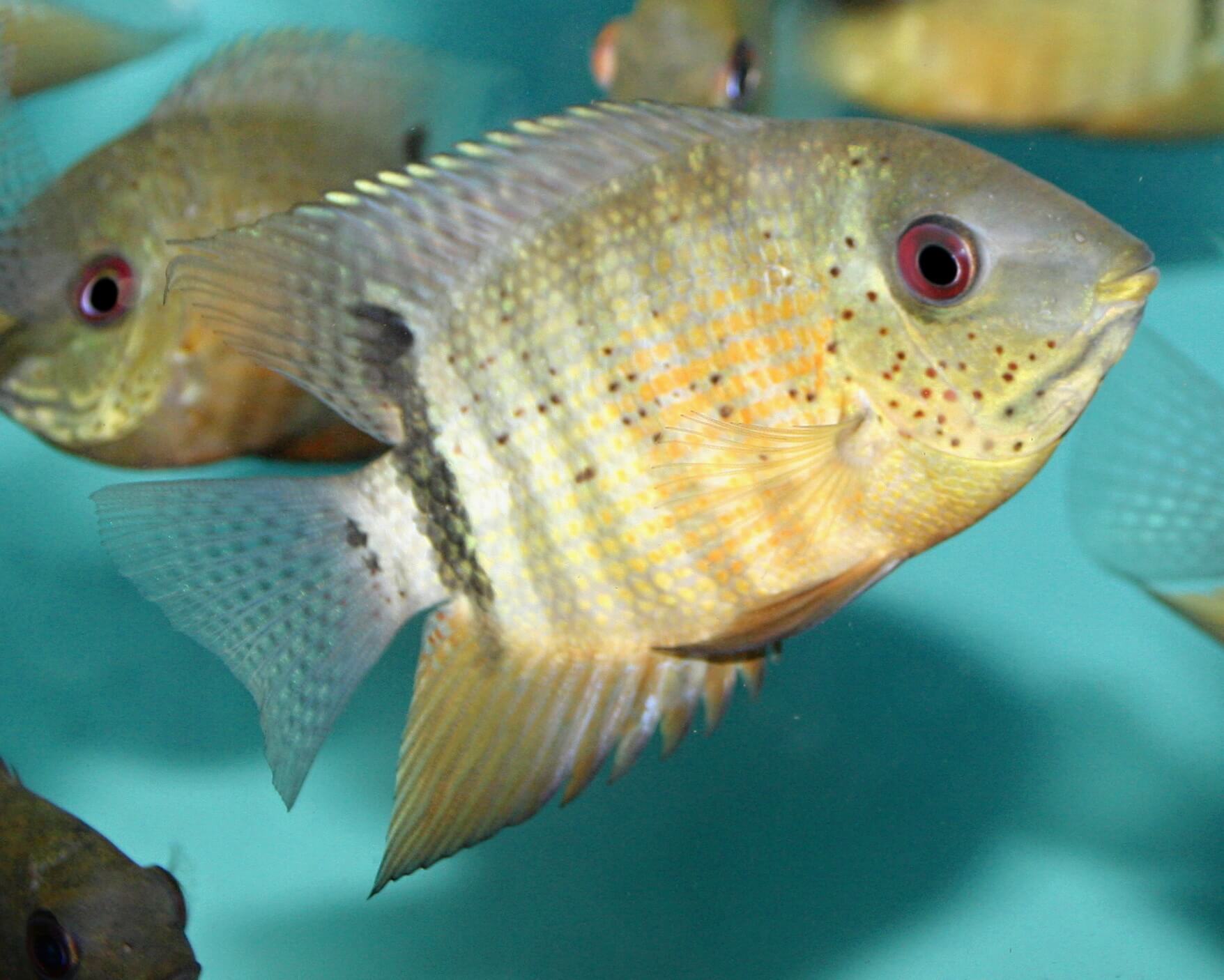
- It is interesting that nowadays we are more likely to find various color variants of severus, the most common being these yellow ones.
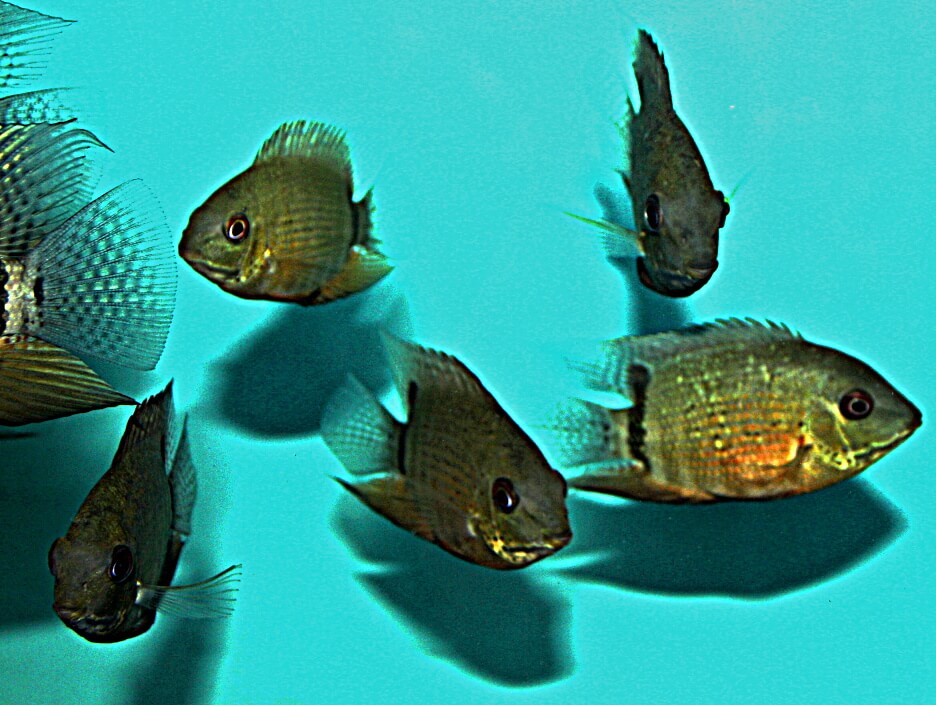
- In the aquarium, there must be calm, so we only introduce calm and size-appropriate fish.
- Severus are large cichlids that have the ability to observe even during the day outside the aquarium. This is known by keepers of discus, oscars, and other larger cichlids.
- A young individual of the basic color form.
- Sometimes even among young severus, we observe signs of intraspecific aggression, which becomes more pronounced in adults.
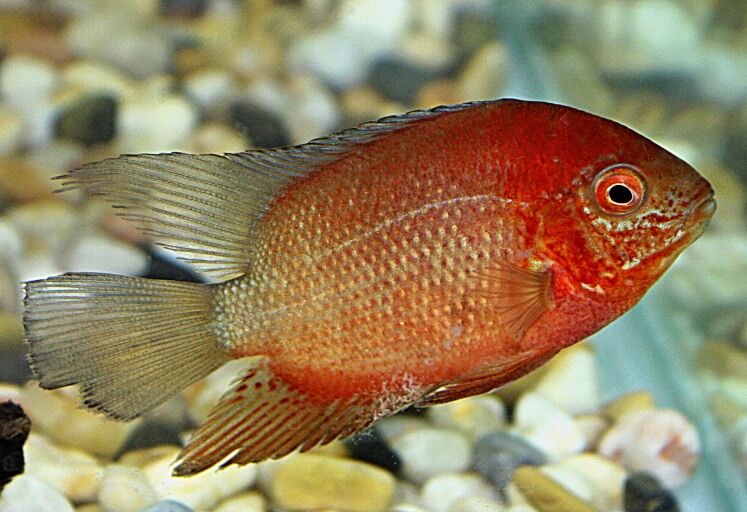
- Red is a sellable color; as early as 2005, I presented Heros severus "super rot." Times change; this color variant looks quite similar, and now Singaporeans call Heros severus "red face". It is also somewhat more expensive.
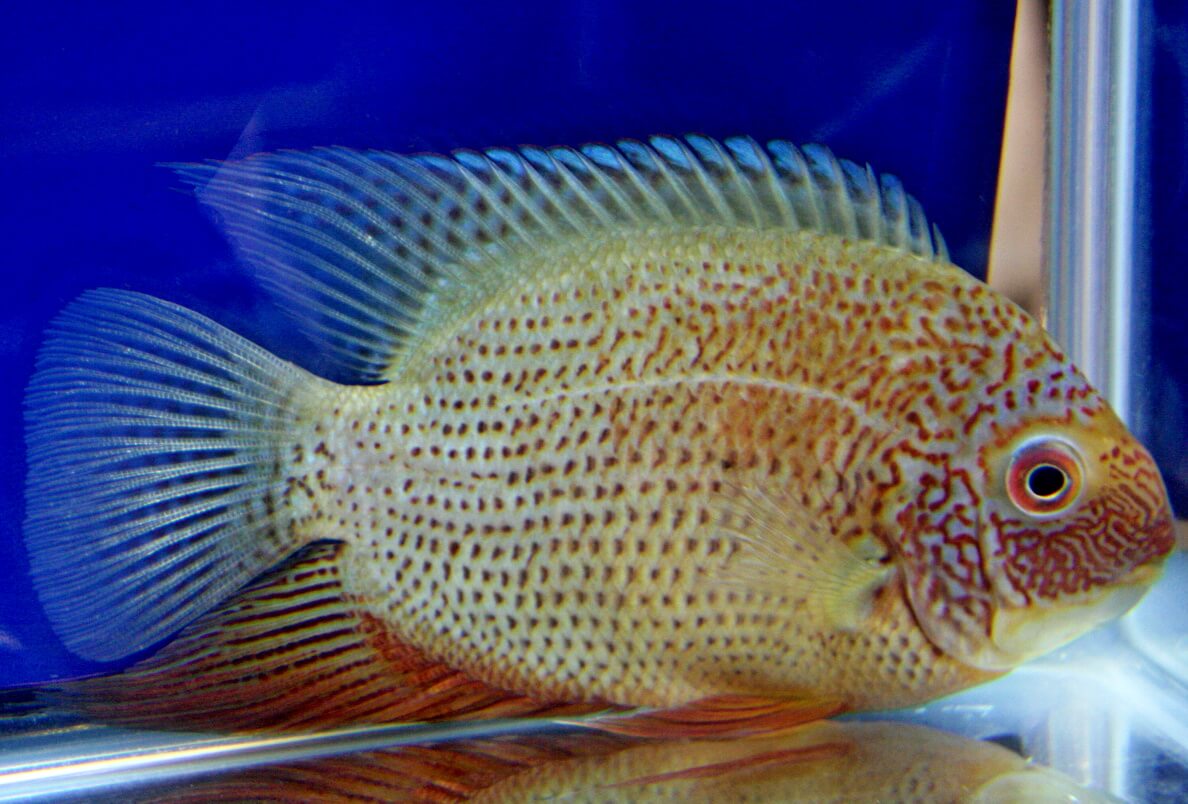
- One of the latest color variants, also created in Singapore, is Heros severus "rich pineapple", meaning "beautiful pineapple."