

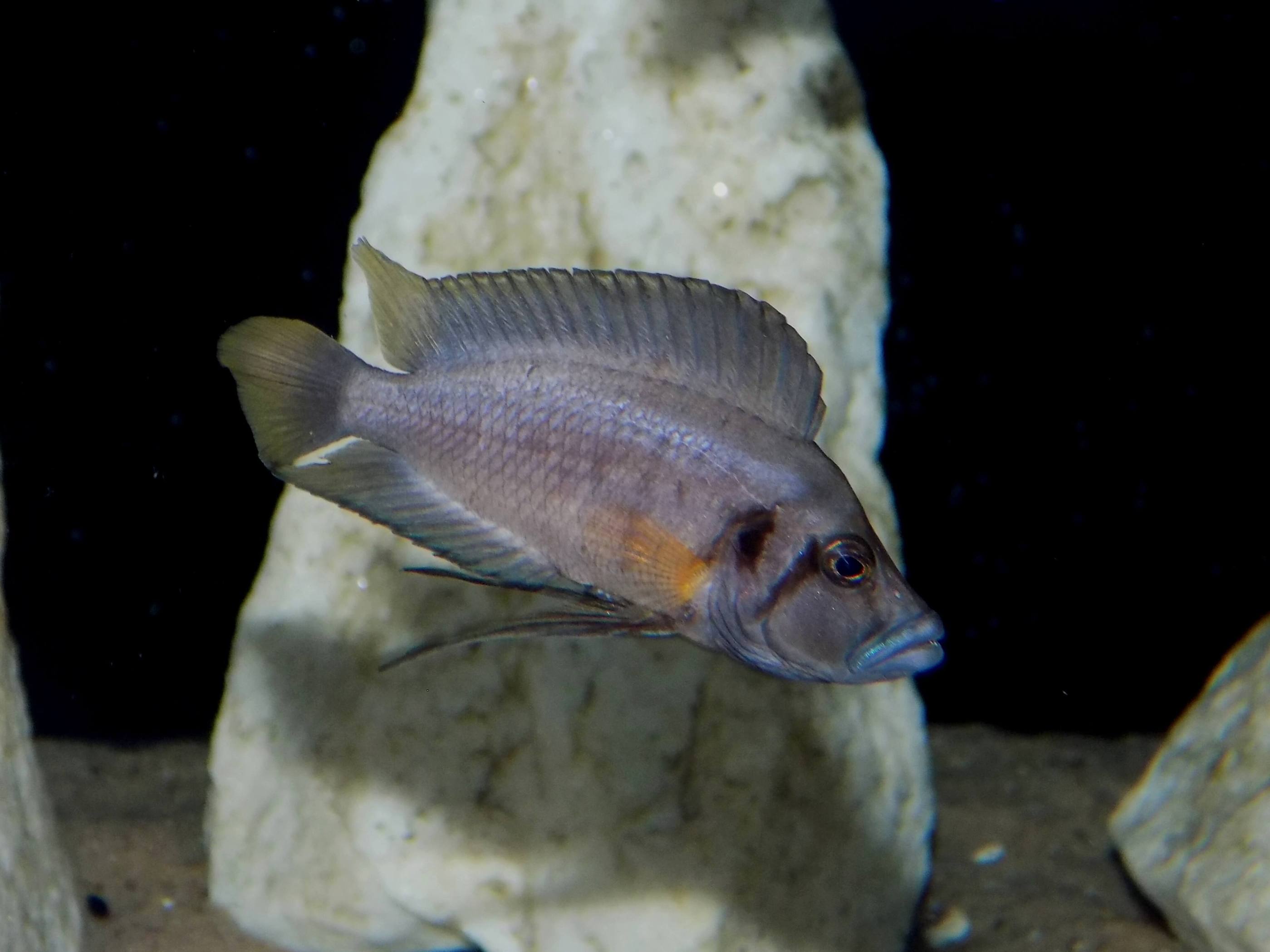
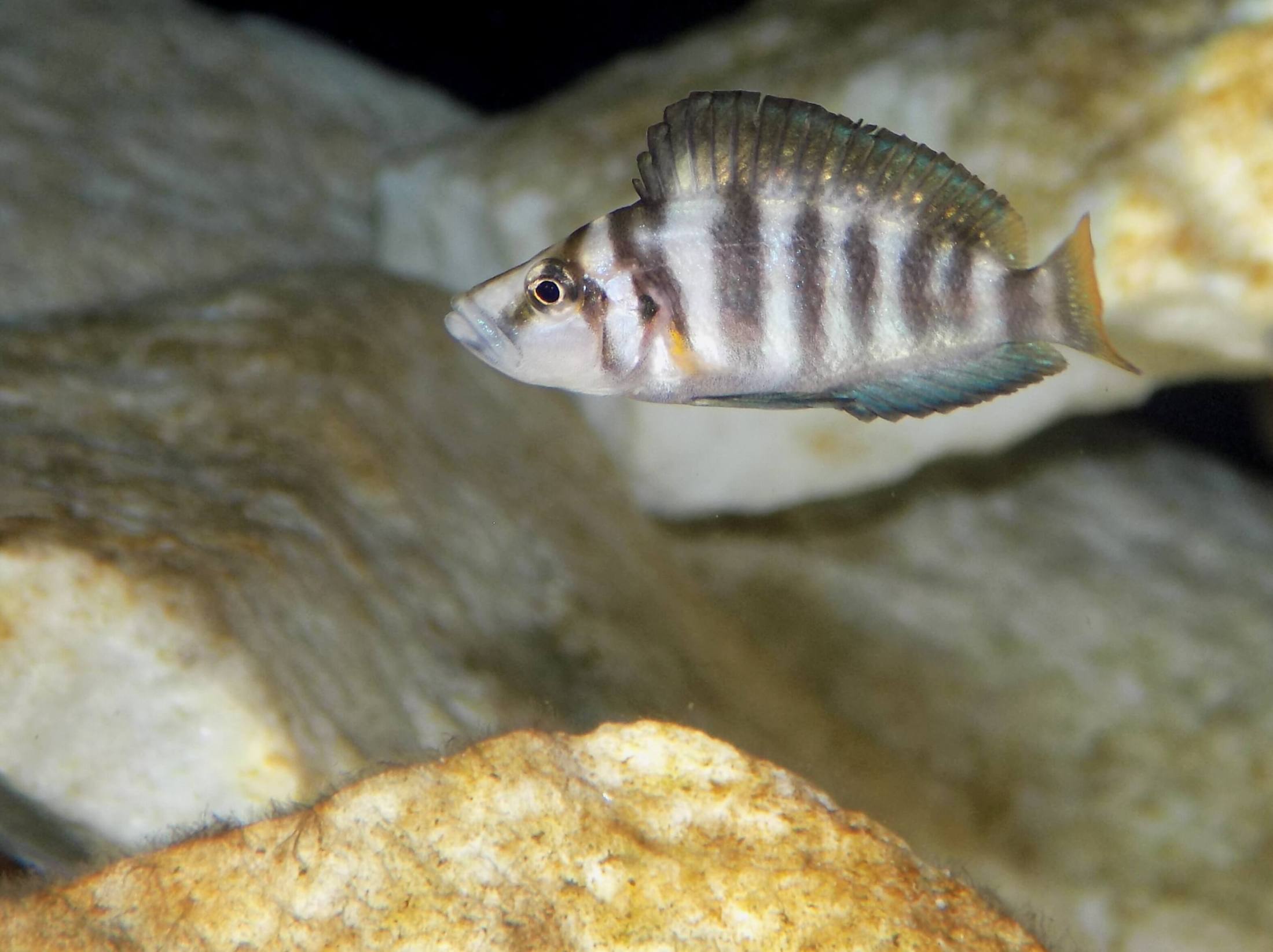
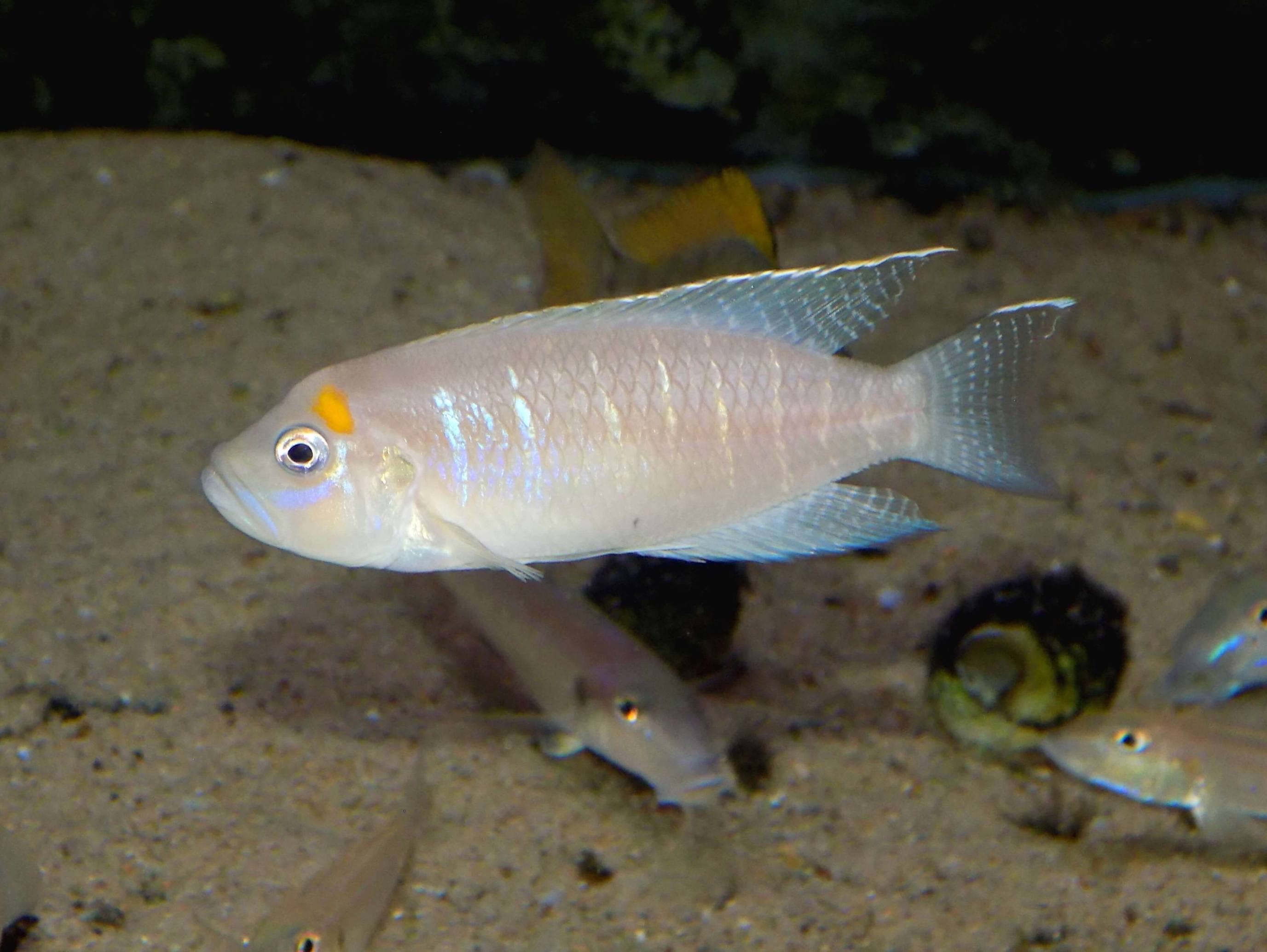
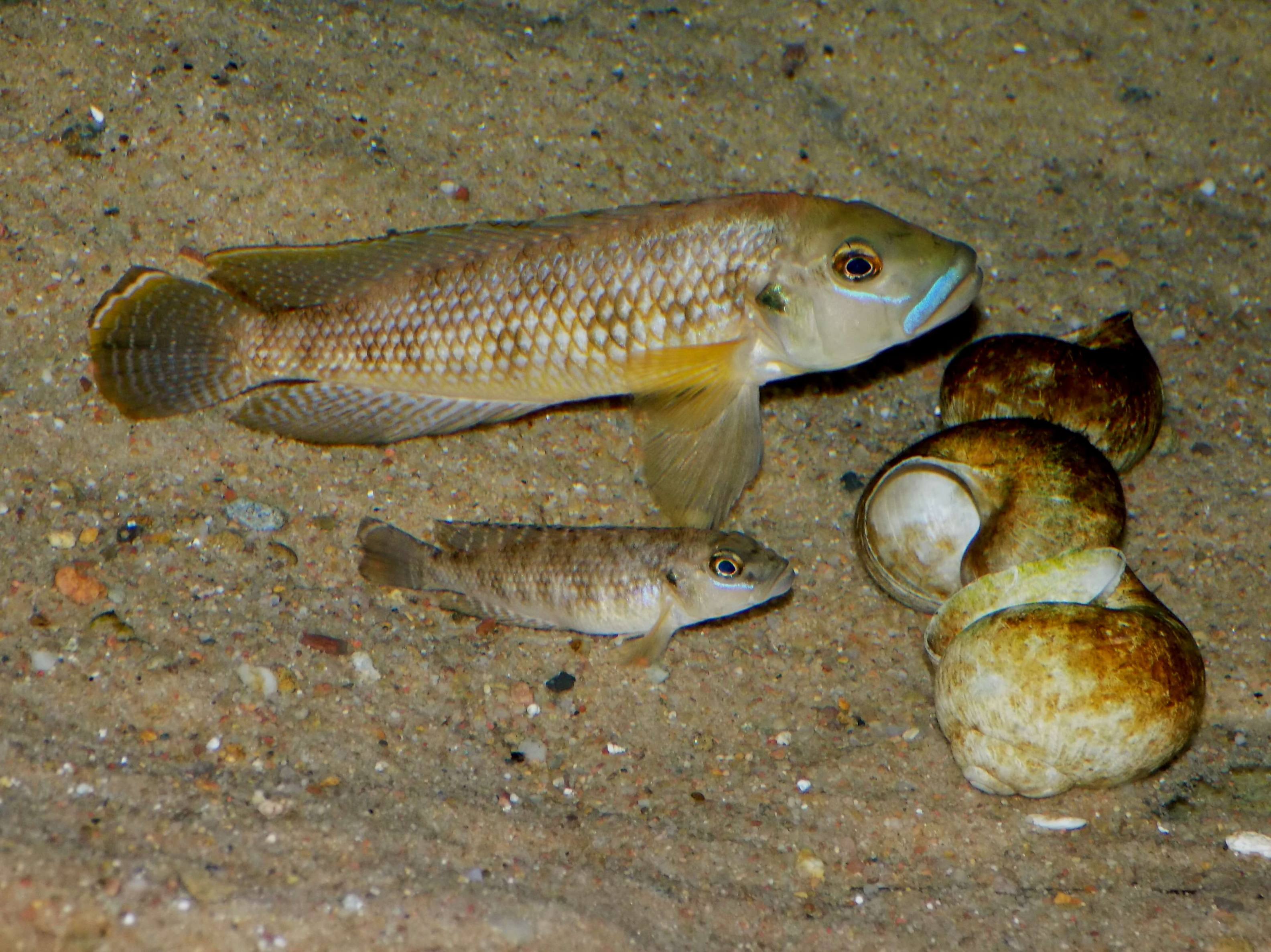
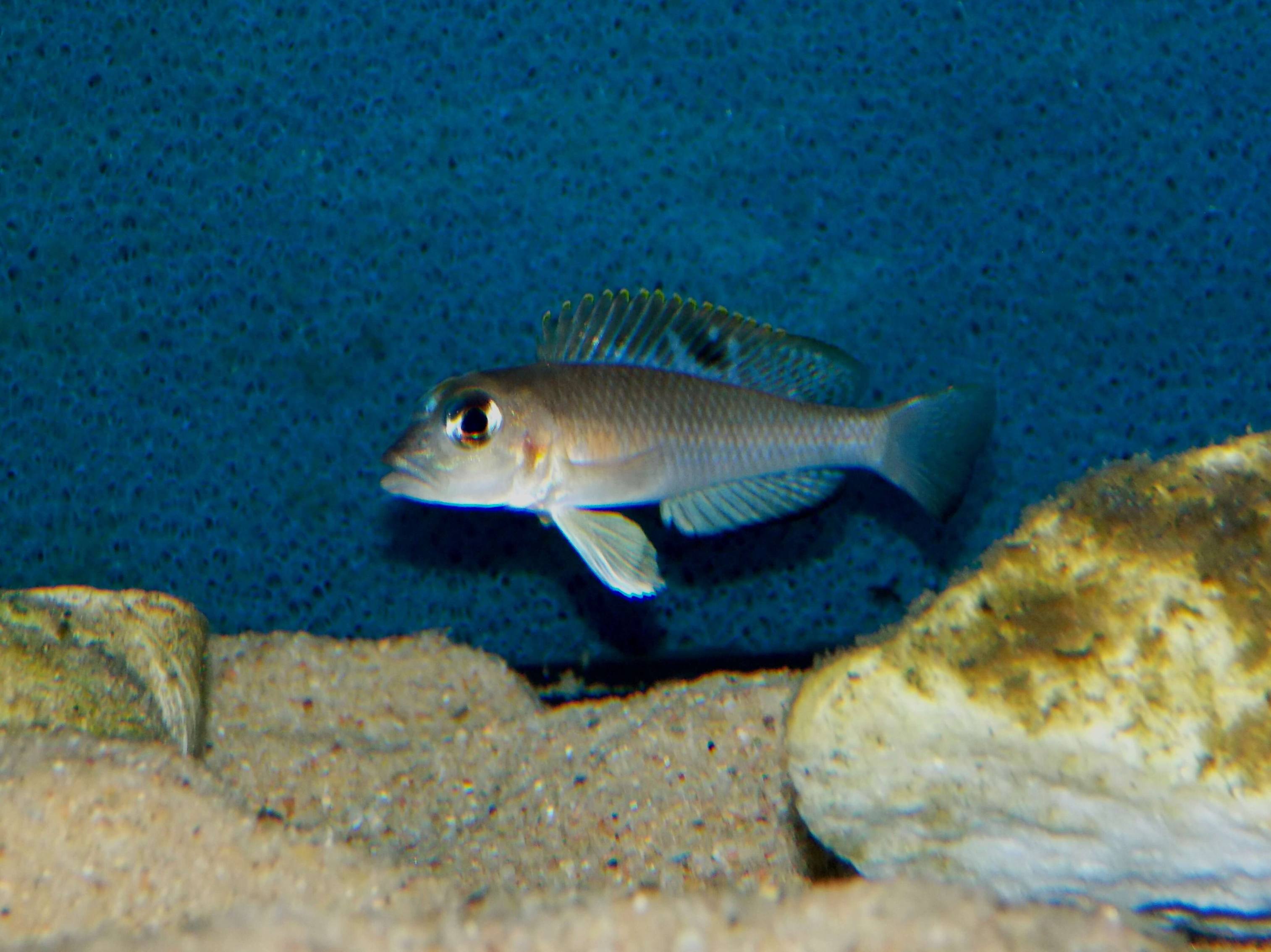
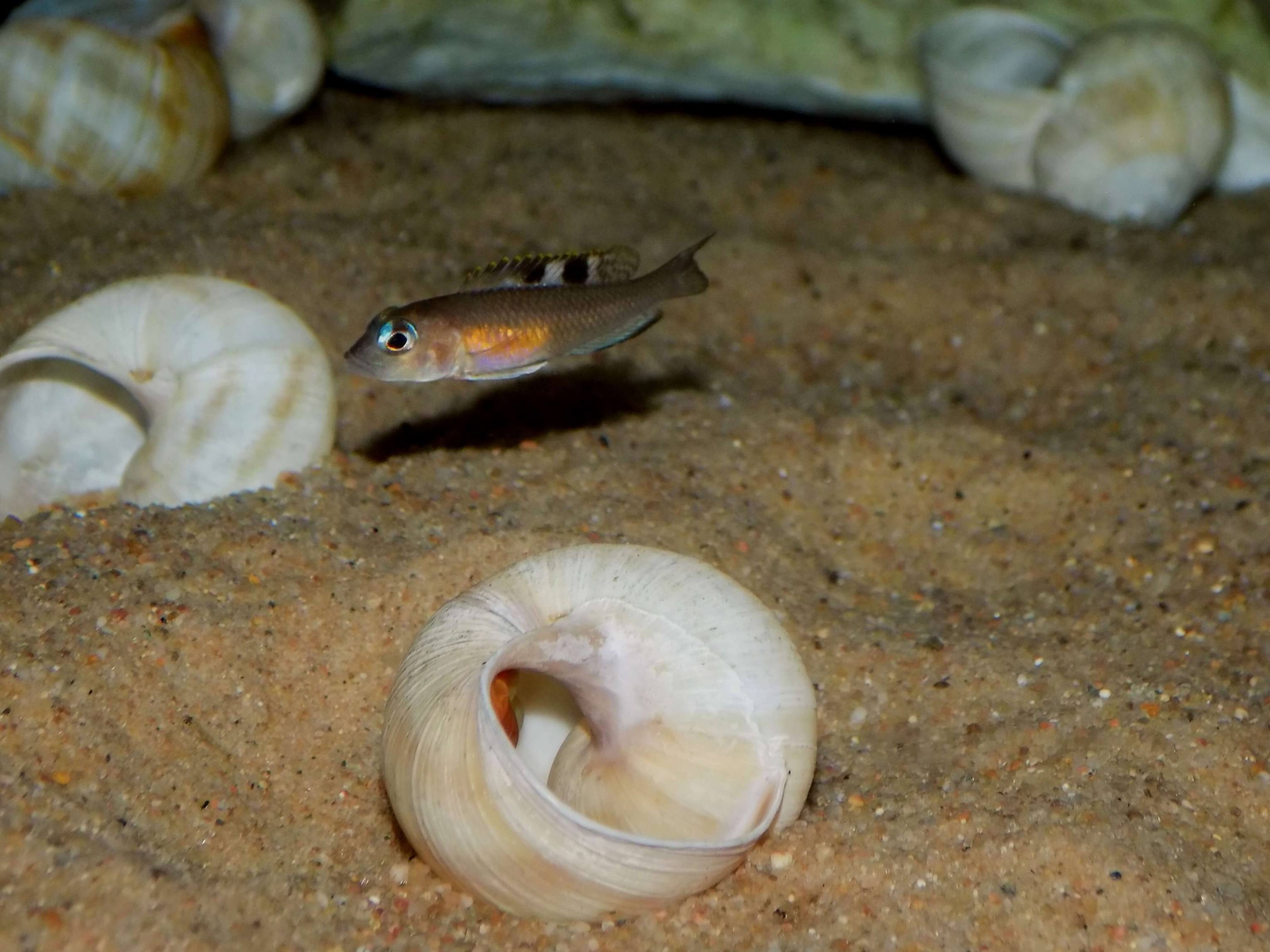
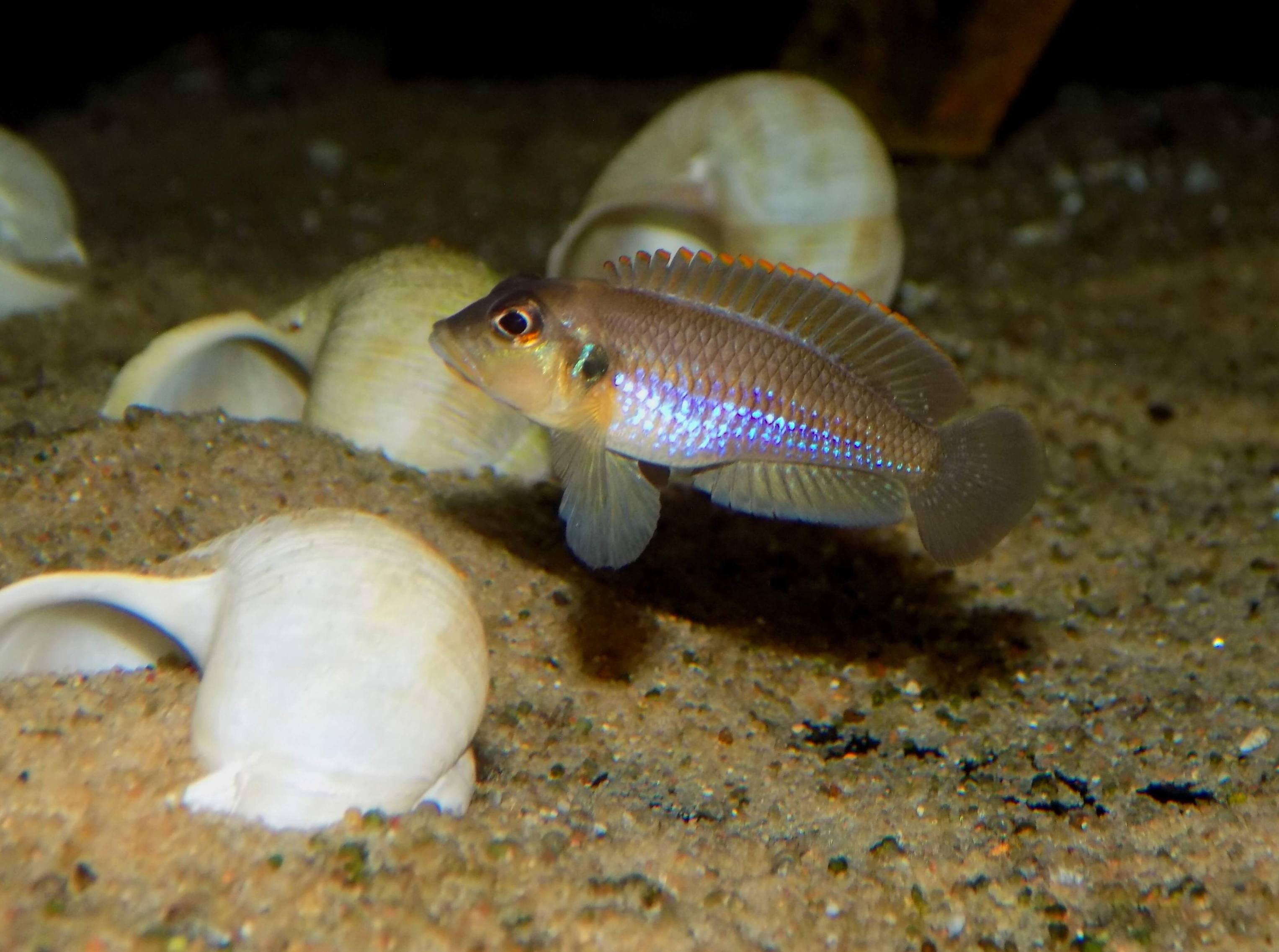
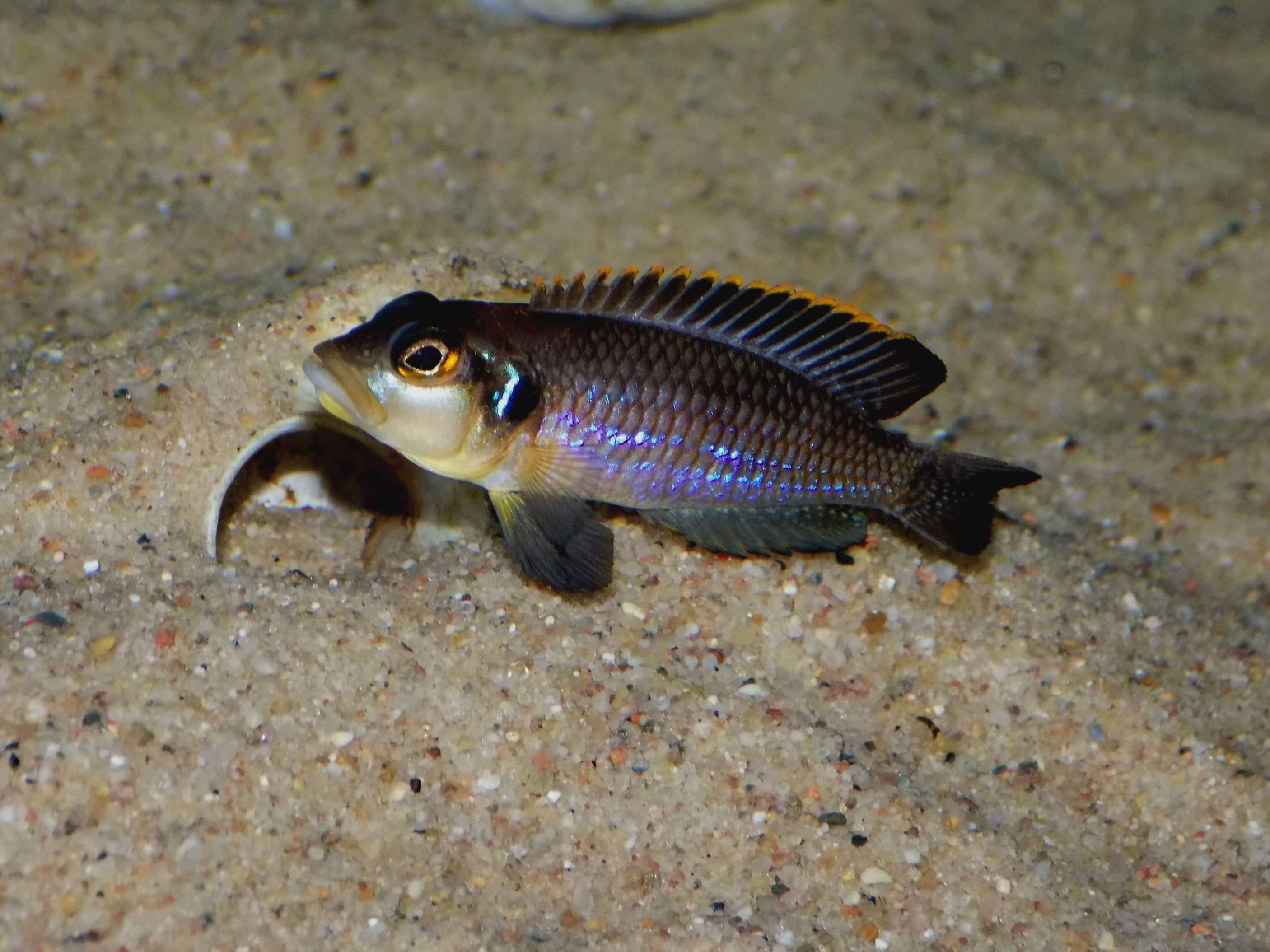
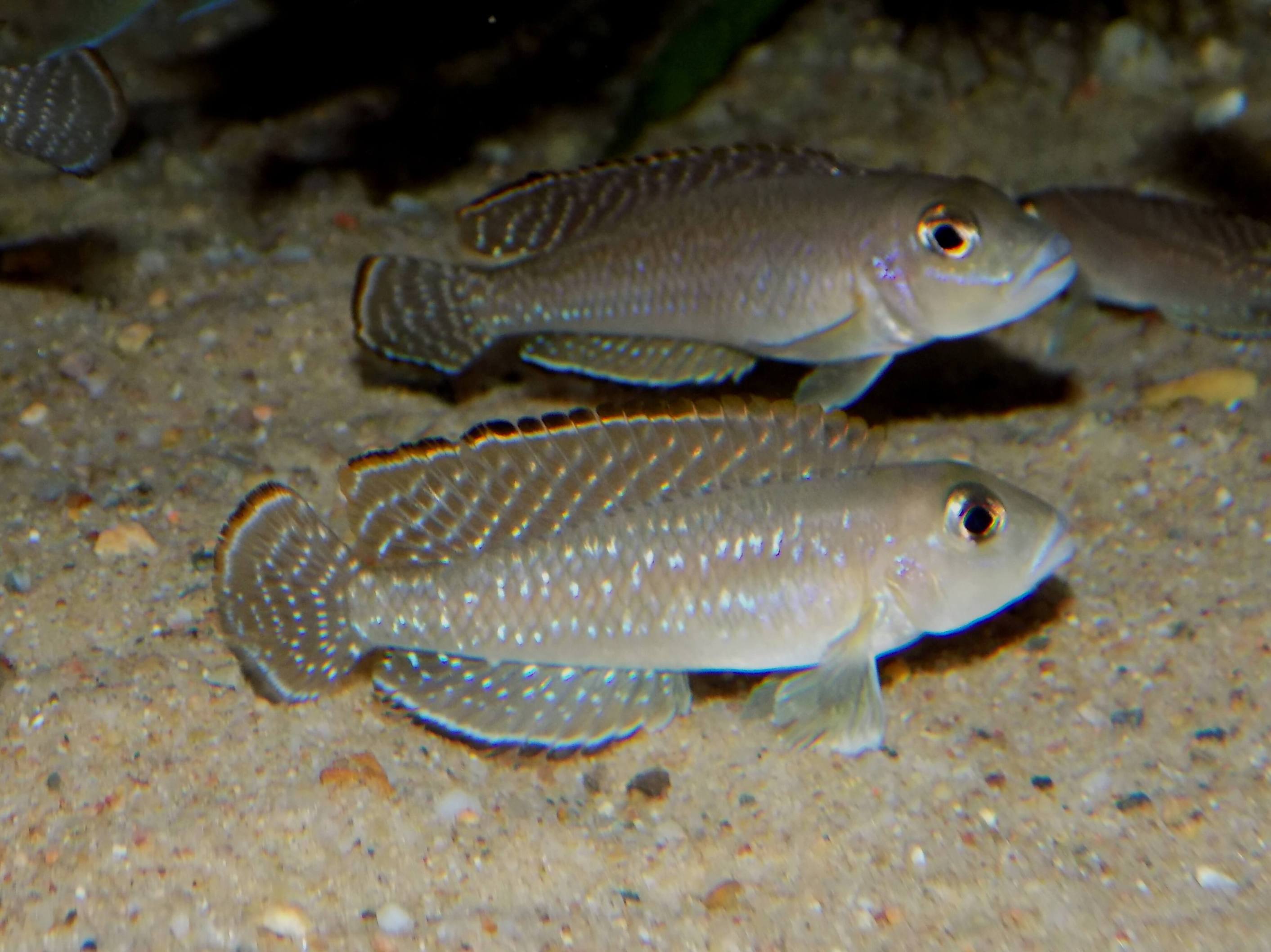
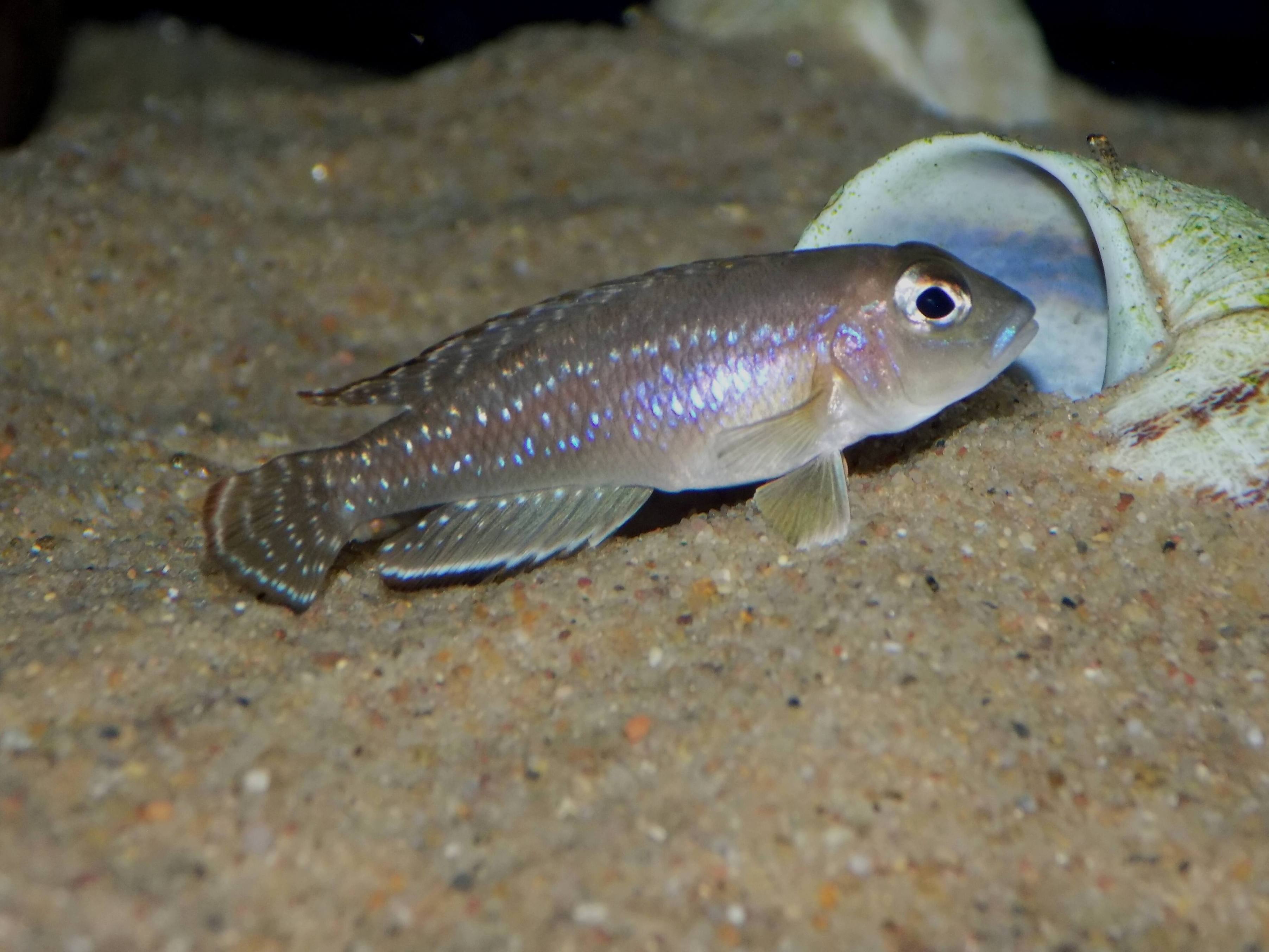
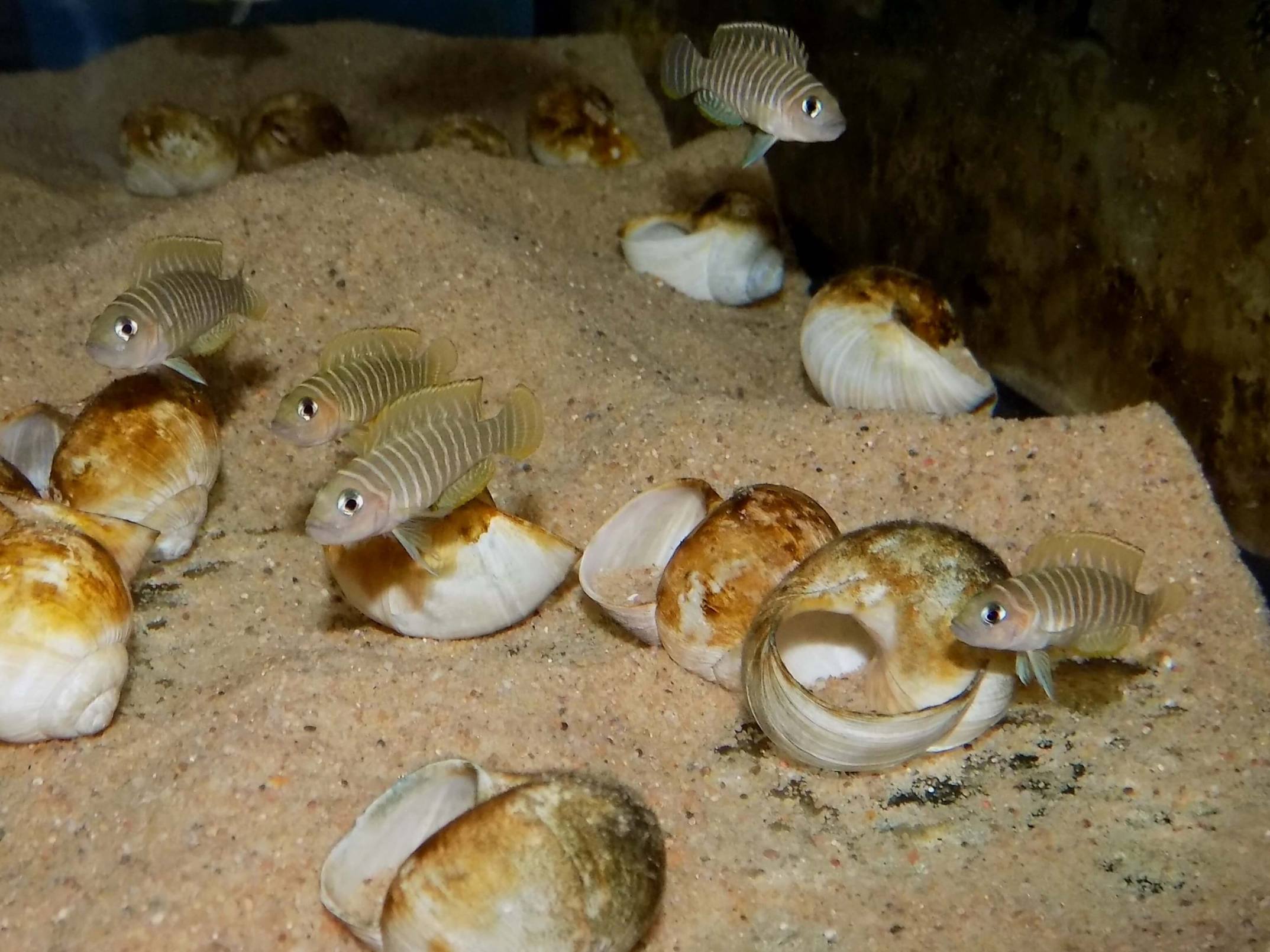
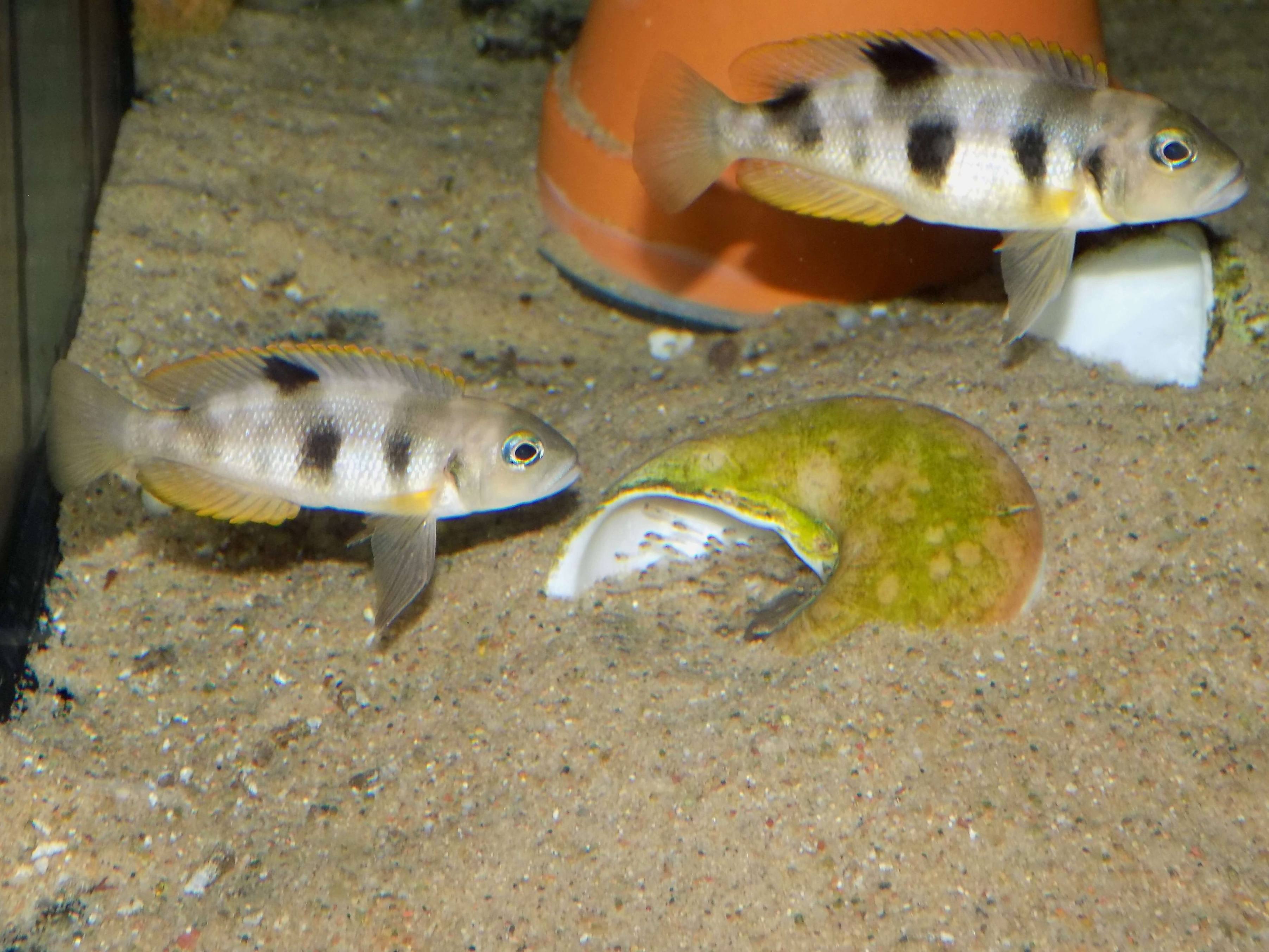
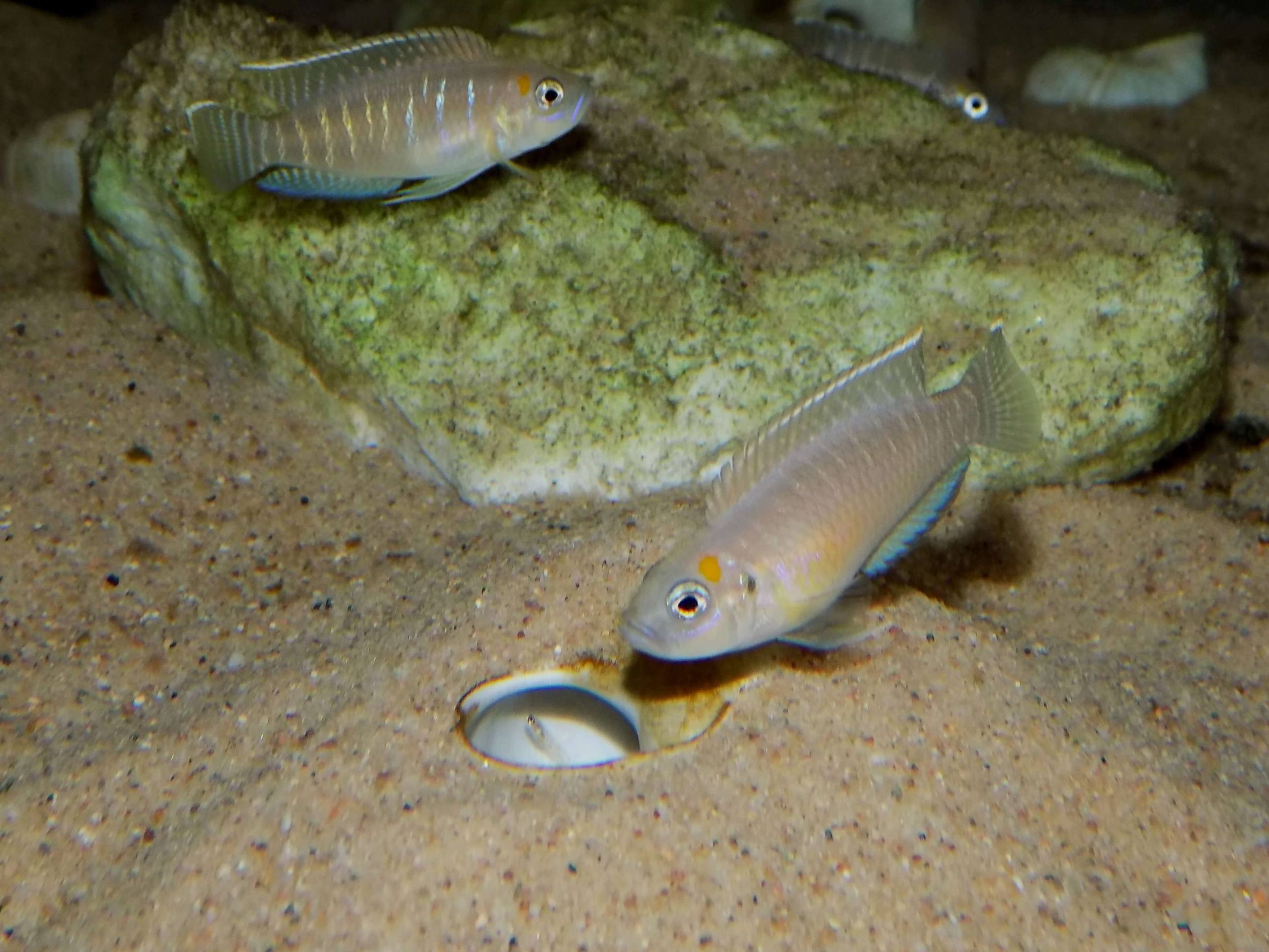
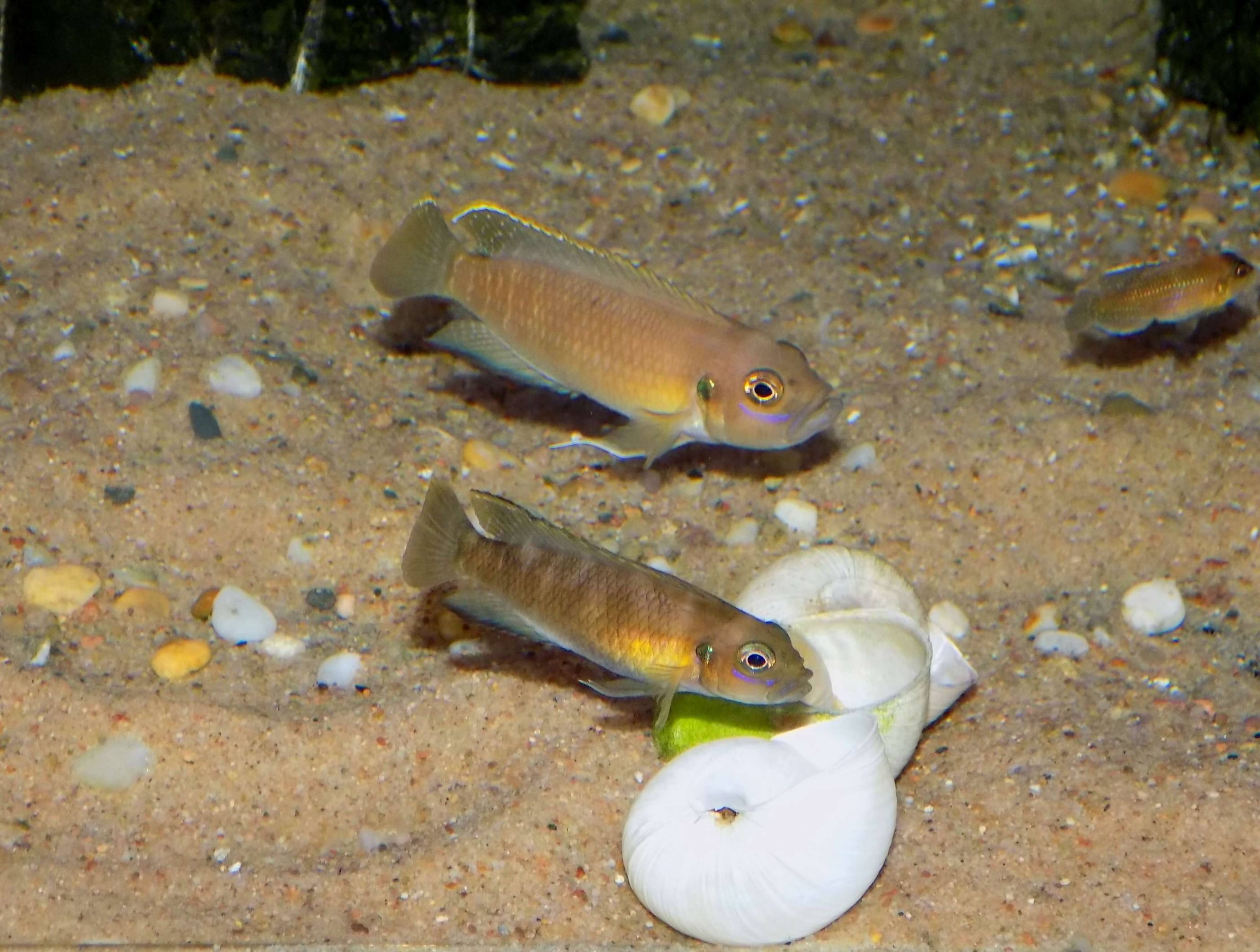
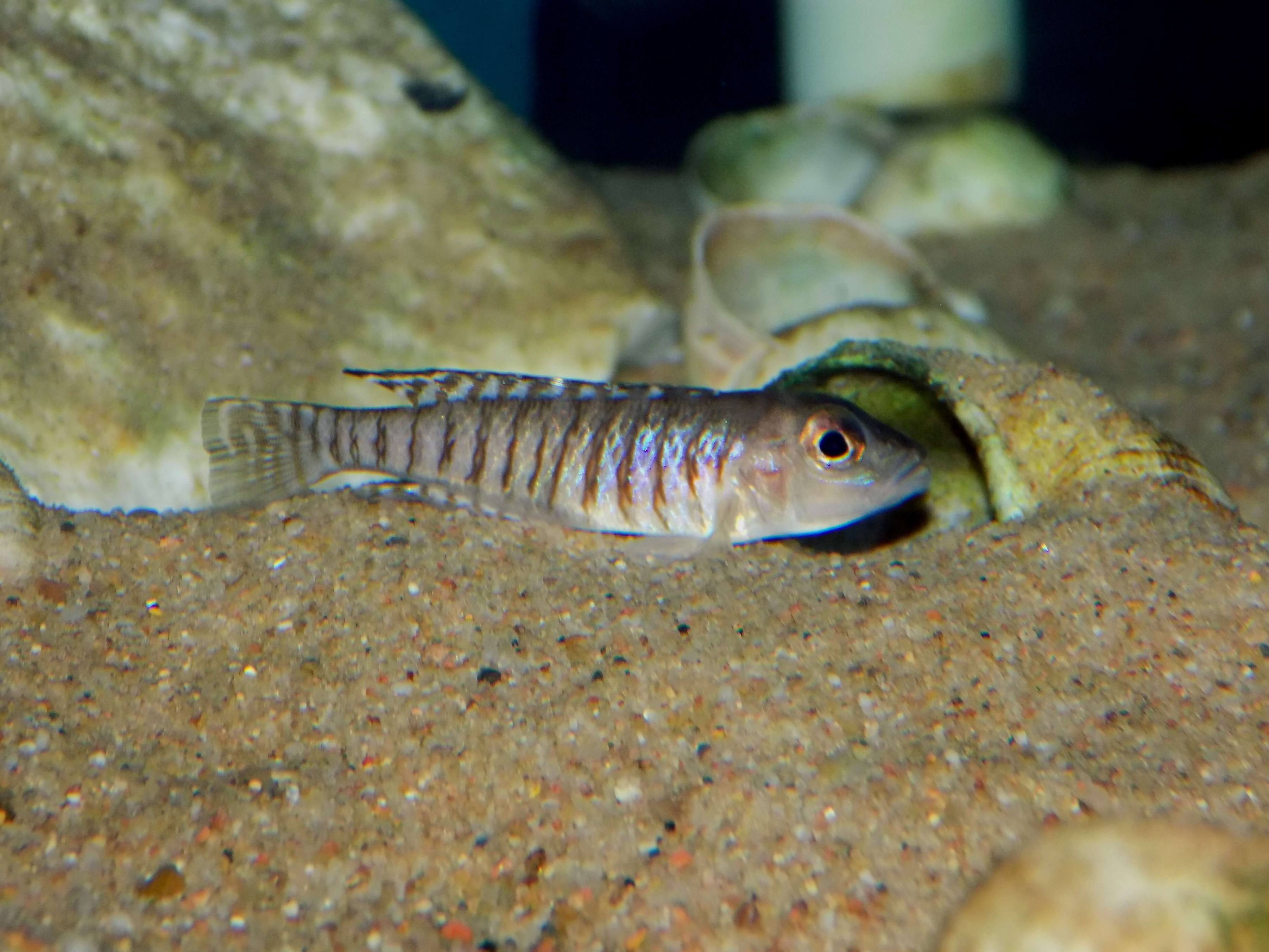
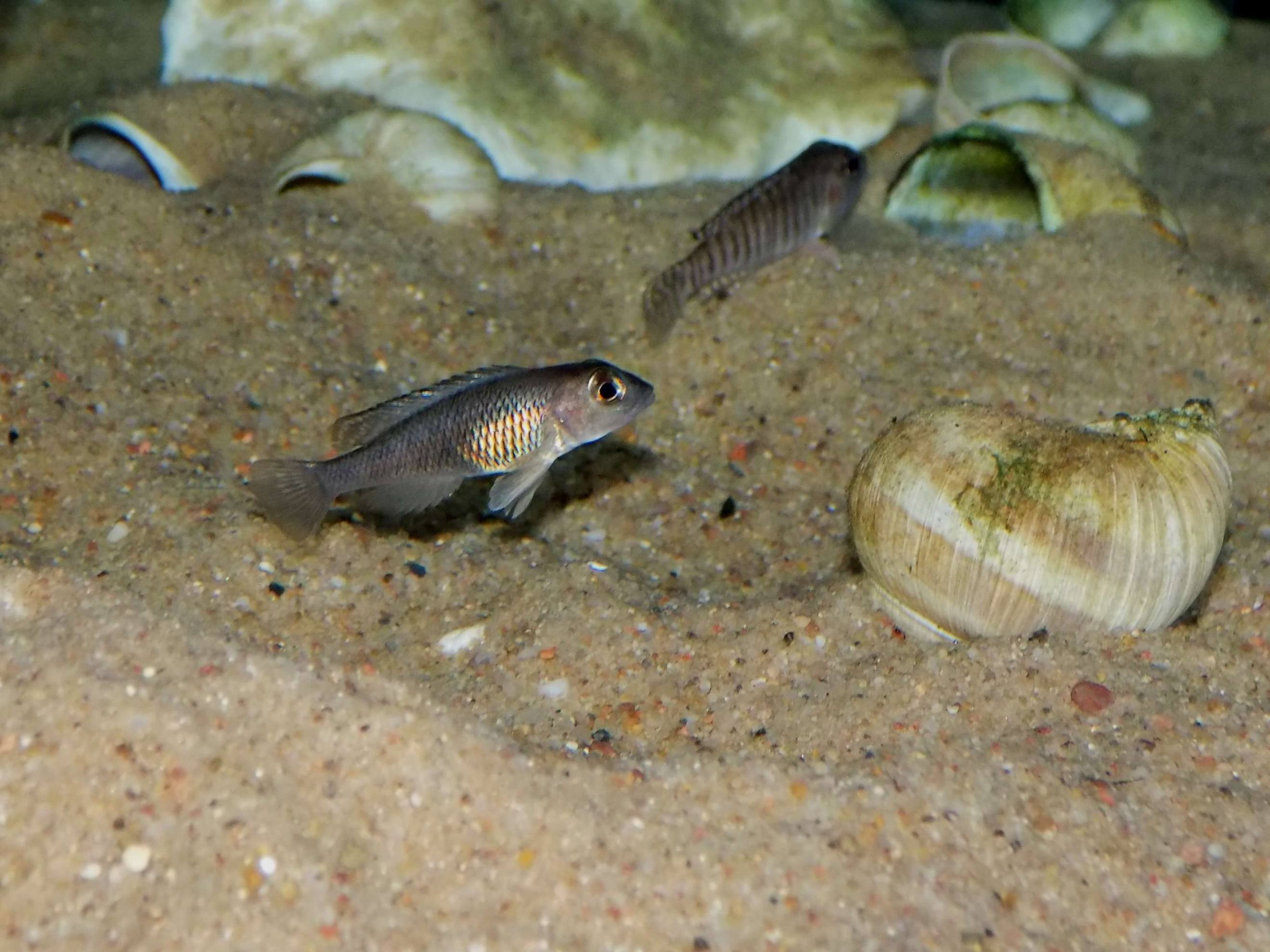
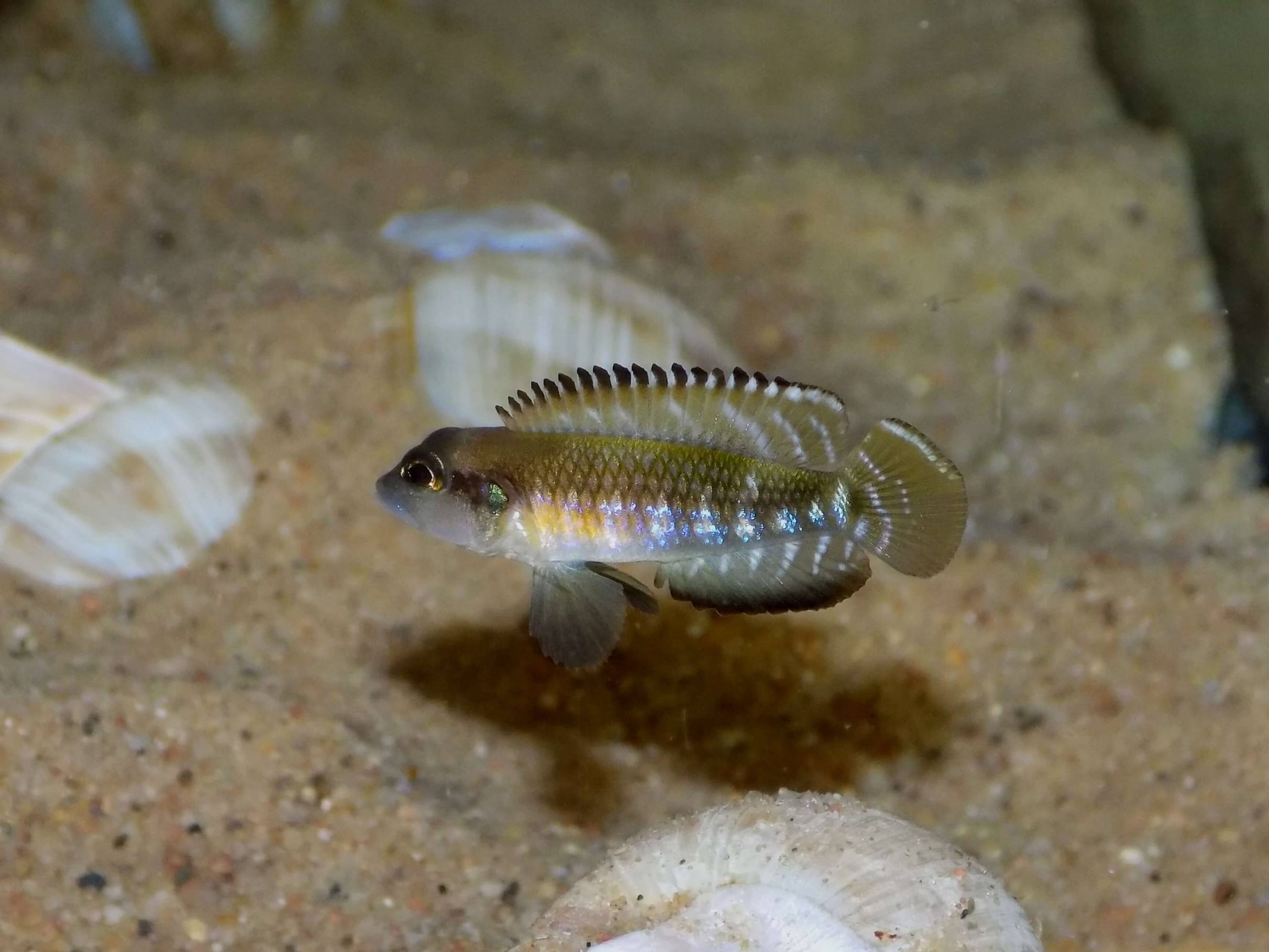
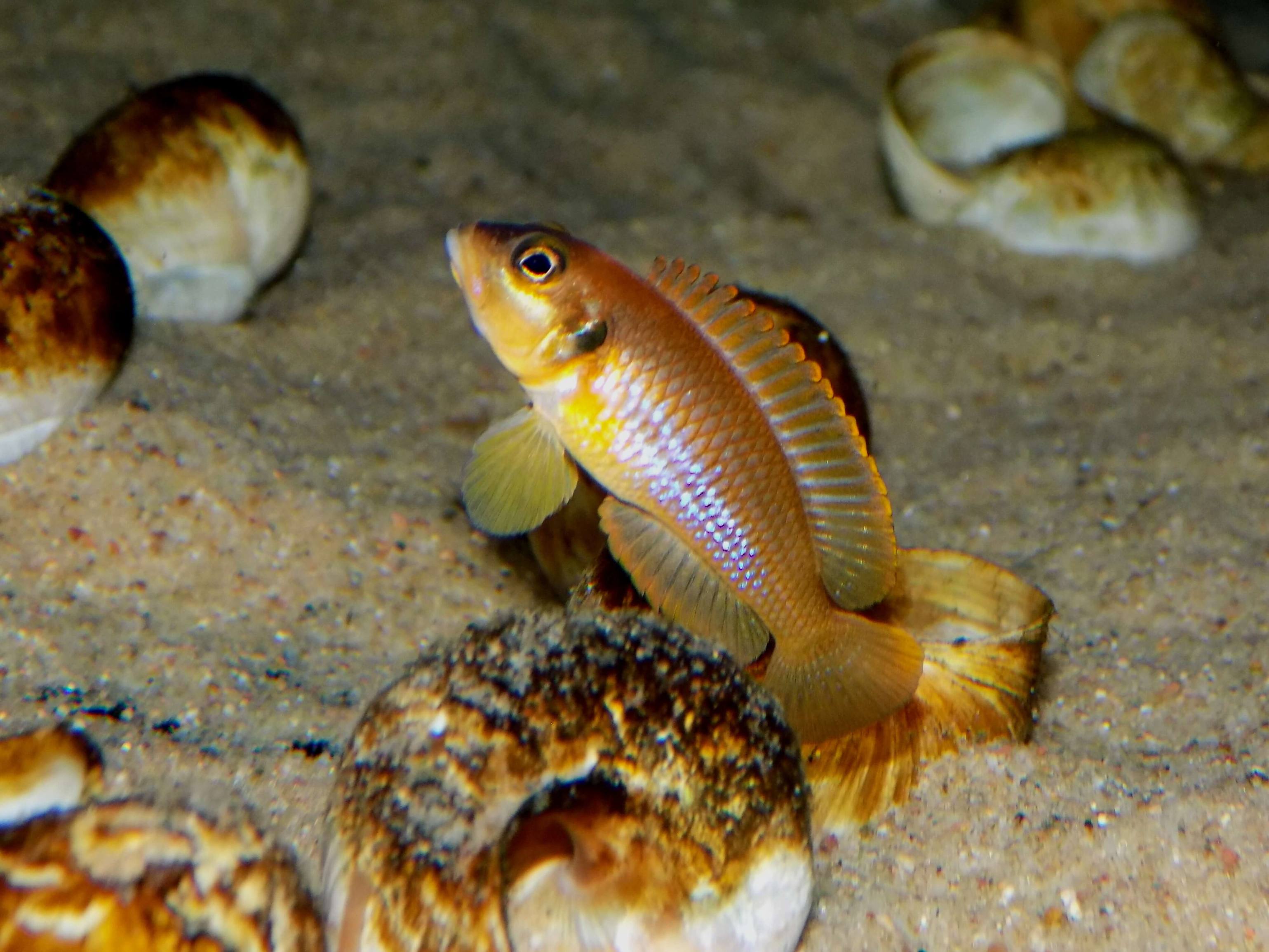
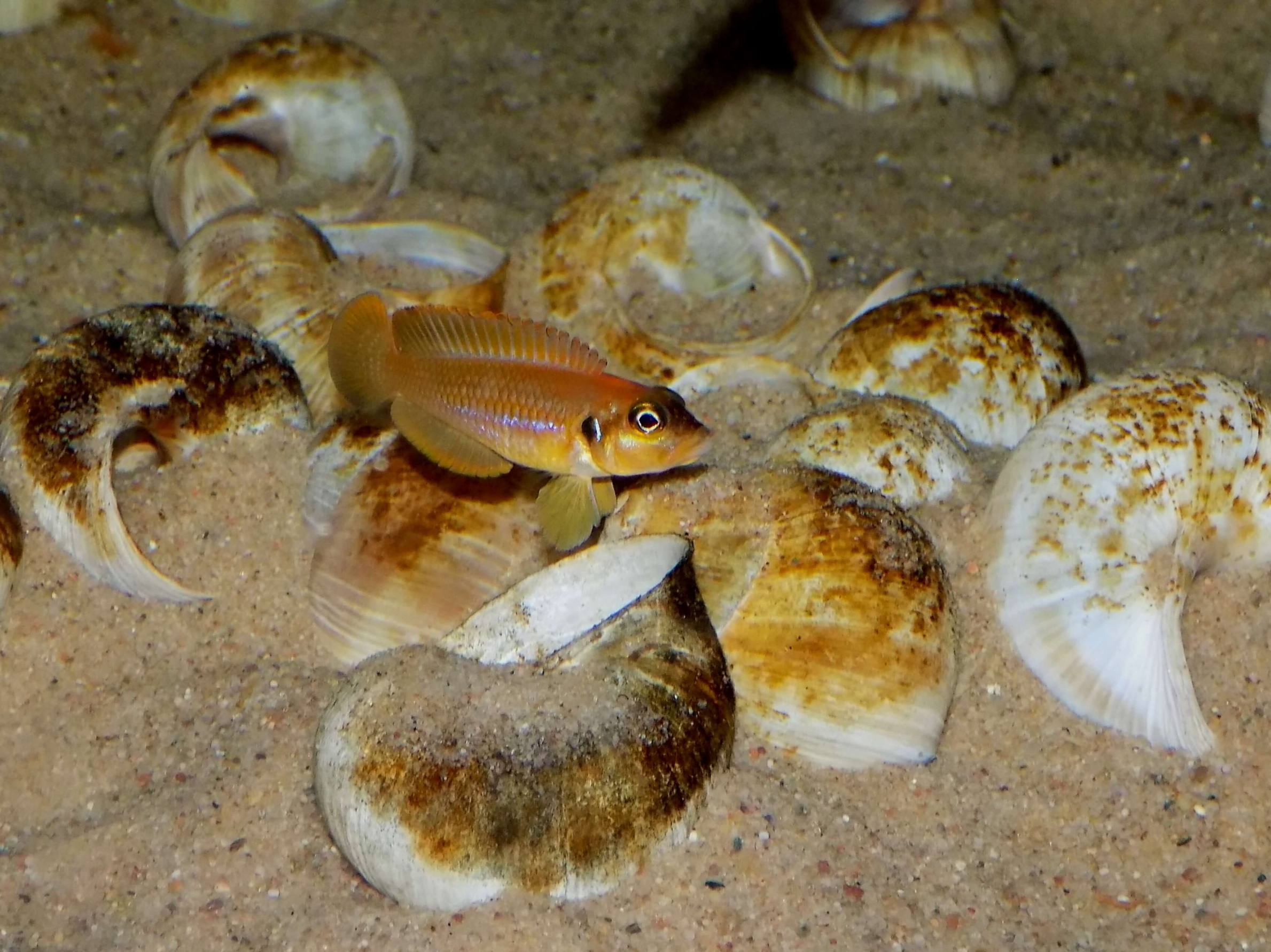


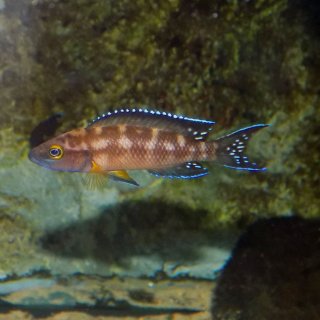
They may measure only a few centimeters, but don’t be fooled – they have courage to spare. Meet the shell-dwellers, unique cichlids from Lake Tanganyika, whose life cycle is fascinatingly intertwined with empty snail shells.
Introduction to the World of Shell Dwellers
In this article, I would like to focus on my experiences with keeping my favorite group of fish - the so-called "shell dwellers." They are interesting fish whose lives are tied to shells on the bottom of the lake, where they spawn. Most species are small and measure a few centimeters. Despite their size, they are very brave little fish that fiercely defend the tight surroundings of their shell.
When the aquarium is disturbed, some species are not afraid to attack the hands of the keeper if they get too close to their shell, which, given the usual size of these fish at just a few centimeters, seems somewhat comical.
Suitable tanks and ideal tankmates
Since these generally small fish (except for occasional digging) do not damage aquarium plants, they can be kept in planted tanks starting from 30 liters.
Coexistence with other species of fish from Tanganyika is usually problem-free if suitable tankmates are chosen. It is necessary to select species that will not interfere with the shell dwellers.
Depending on the size of the tank, the most suitable tankmates are smaller species of the genus Neolamprologus and pelagic Cyprichromis or Paracyprichromis. Larger species of shell dwellers are compatible with larger species of the genus Altolamprologus, Lepidiolamprologus or Neolamprologus. Conversely, less suitable tankmates are species that dwell close to the bottom, such as representatives of the genera Callochromis, Enantiopus, Xenotilapia and others.
Water parameters and feeding techniques
For keeping shell dwellers, I recommend a water temperature of around 24-26 °C, nitrate levels below 30mg, and a pH of 8. For feeding, I prefer smaller species live or frozen plankton, artemia, and high-quality flake food. Larger species can also handle flakes and high-quality granules. For feeding the parents of the removed fry, I use artemia nauplii, which I gradually replace with fine plankton and, depending on size, gradually add frozen artemia and flake food. In the case of breeding in a communal aquarium with parents, the fry can manage with frozen plankton and flakes that the parents accept during feeding. Fry of most species grow relatively quickly, and their breeding is usually problem-free.
Systematics and specifics of breeding
Shell dwellers are found throughout the lake, and many species within their genus vary in coloration depending on their locality, which is relatively common among fish from Tanganyika. For simplification, I have grouped individual species into several groups that are closely related, and their breeding is similar or differs only in minor details. Currently, some species have been reclassified by various authors from the genus Lamprologus to the genus Neolamprologus, which is not the subject of this article, so for the purposes of this article, I will "keep" them in their original genus.
The variety of shell dwellers is broader than mentioned in this article, but since I do not have experience with breeding some species, I have omitted them. Conversely, I have included among shell dwellers a group known in English as mud-dwellers. These are fish that can be bred in shells (or plastic tubes buried in sand) in an aquarium, but in nature, they spawn in burrows dug into the mud at the bottom of the lake.
Detailed overview of species and their requirements
Altolamprologus compressiceps shell
Altolamprologus compressiceps shell is essentially a reduced form of the very popular species Altolamprologus compressicepsin aquariums.
Males grow to 8 cm, females to 5 cm. Fish do not form stable pairs, they live rather solitary lives at depths of around 25 - 30 m in Cameroon and Nkamba Bay. In an aquarium of 150 liters or more, it is ideal to have a group of about 10 fish with a predominance of females. Since these are larger fish compared to common shell dwellers, larger shells are usually used for their breeding than the common garden snail shell. Most often, it is the shell of the predatory snail Rapana venosa (Rapana venosa), which is abundantly imported to us as a souvenir from the Black and Adriatic Seas. If these large shells are not available, they will also breed in smaller ones.
Breeding and raising is similar to larger relatives of the genus Altolamprologus. Fish readily accept coarse meaty food. The female lays about 50 eggs in the shell. The fry must be removed after they are free-swimming and raised separately. Without artemia nauplii, raising is almost impossible, as fry of smaller size usually refuse frozen food. Their growth is very slow, and they reach sellable size in approximately 9 months.
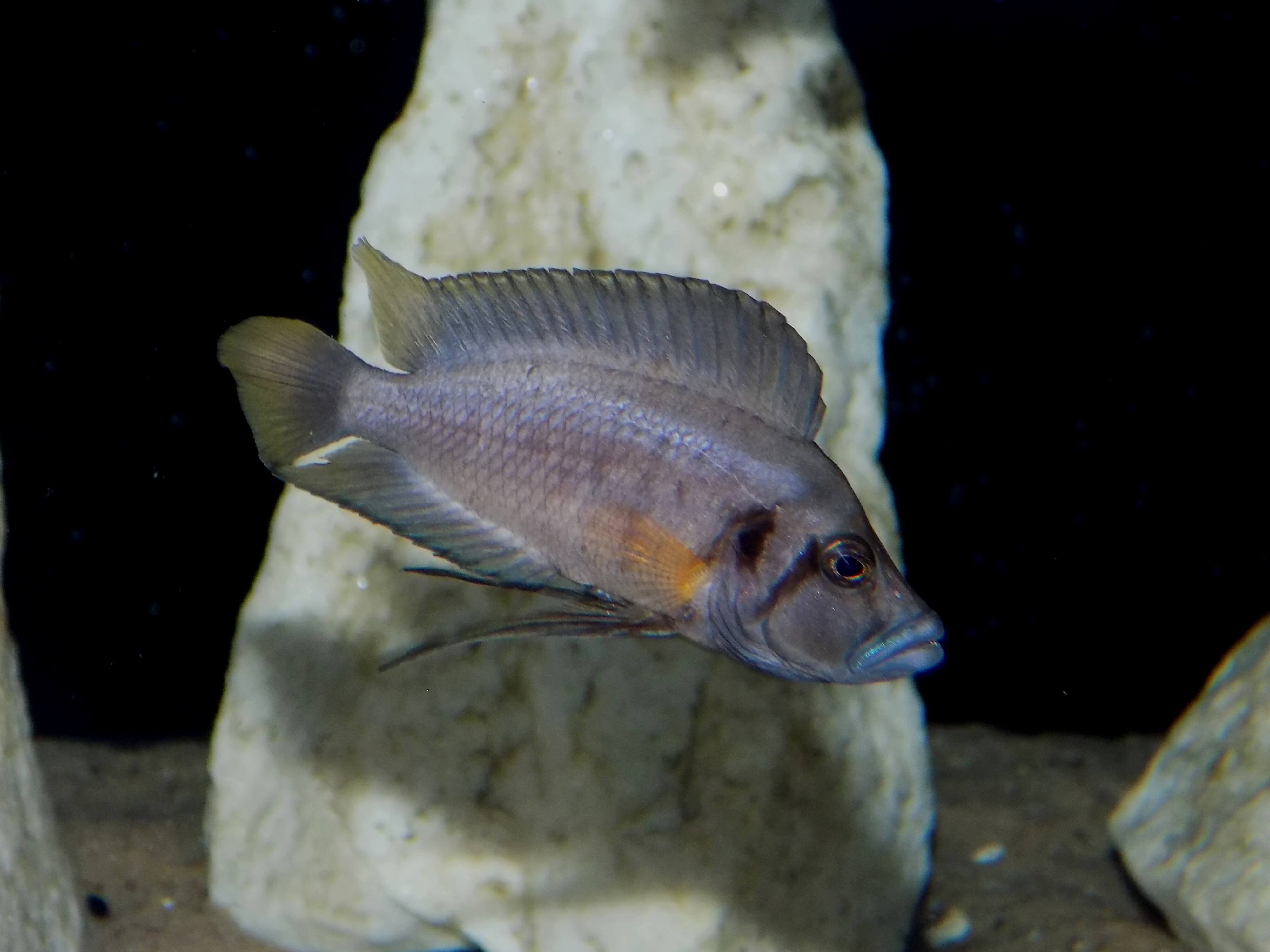
Altolamprologus compressiceps shell male
Lamprologus brevis, Lamprologus calliurus
These two species look very similar. Lamprologus calliurusis slightly larger (male 10 cm, female 4 cm) and the male has an elongated tail fin, whereas Lamprologus brevishas a male around 5 cm and a female 4 cm, and both sexes have a round tail fin. Both species are found throughout the lake at depths between 10 - 30 m. In Lamprologus caliurus, fish from different localities within the species hardly differ, whereas in Lamprologus brevis, several different variants can be found that vary by locality. Lamprologus calliuruswas previously available under the designation Lamprologus brevis Magara. For Lamprologus brevis, it is optimal to start with a tank size according to the number of fish kept at 40 - 50 l, while for Lamprologus calliurus, I would recommend a tank of 100 l.
Breeding has worked best for me in pairs or in a harem with one male and several females. Both species are relatively fertile and can produce up to 100 fry. Pairs usually tolerate fry up to 1 cm in size, at which point they begin to push them out of their territory. At that time, it is ideal to catch the fry into another tank. The growth of fry is fast and problem-free.
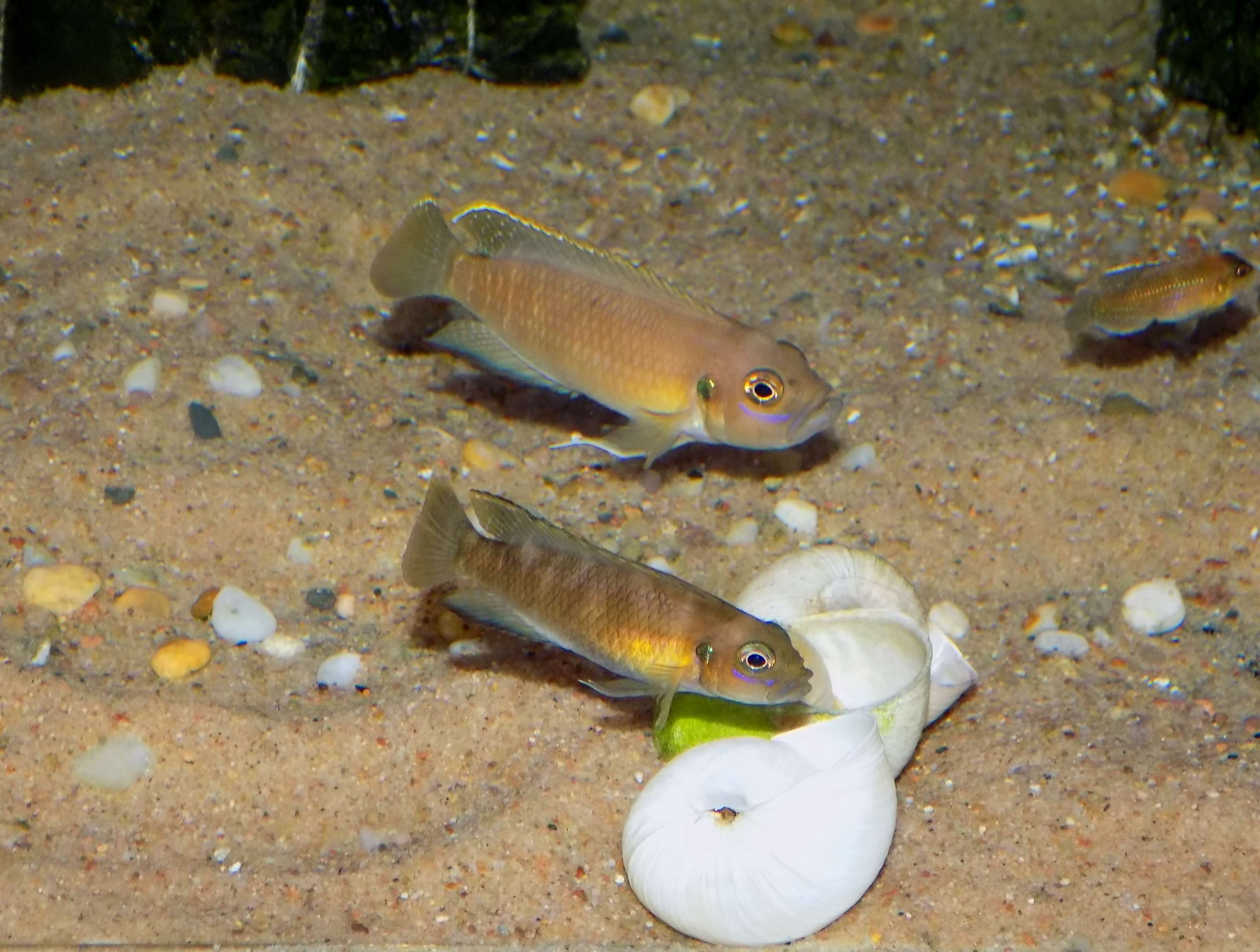
Lamprologus brevis Kitumba pair
Lamprologus callipterus
This species is found around the entire perimeter of the lake. Males grow to about 15 cm, females approximately 6 cm. Males defend territories around 40 cm in diameter, where they gather dozens of shells, in which a harem of females hides. Neighboring males often steal shells (and sometimes females) from each other. Females usually lay around 30 - 100 eggs, which, like other species of shell dwellers, are cared for in the shell, while the male guards the surroundings. The actual raising is somewhat complicated, as the male constantly moves the shells in the nest along with the females. This makes it difficult to estimate where the spawning female is and at what stage the specific spawning is. If the raising is successful, the fry grow very quickly. One unpleasant aspect is a very pronounced sex ratio in the fry, where males are often as much as 90%.
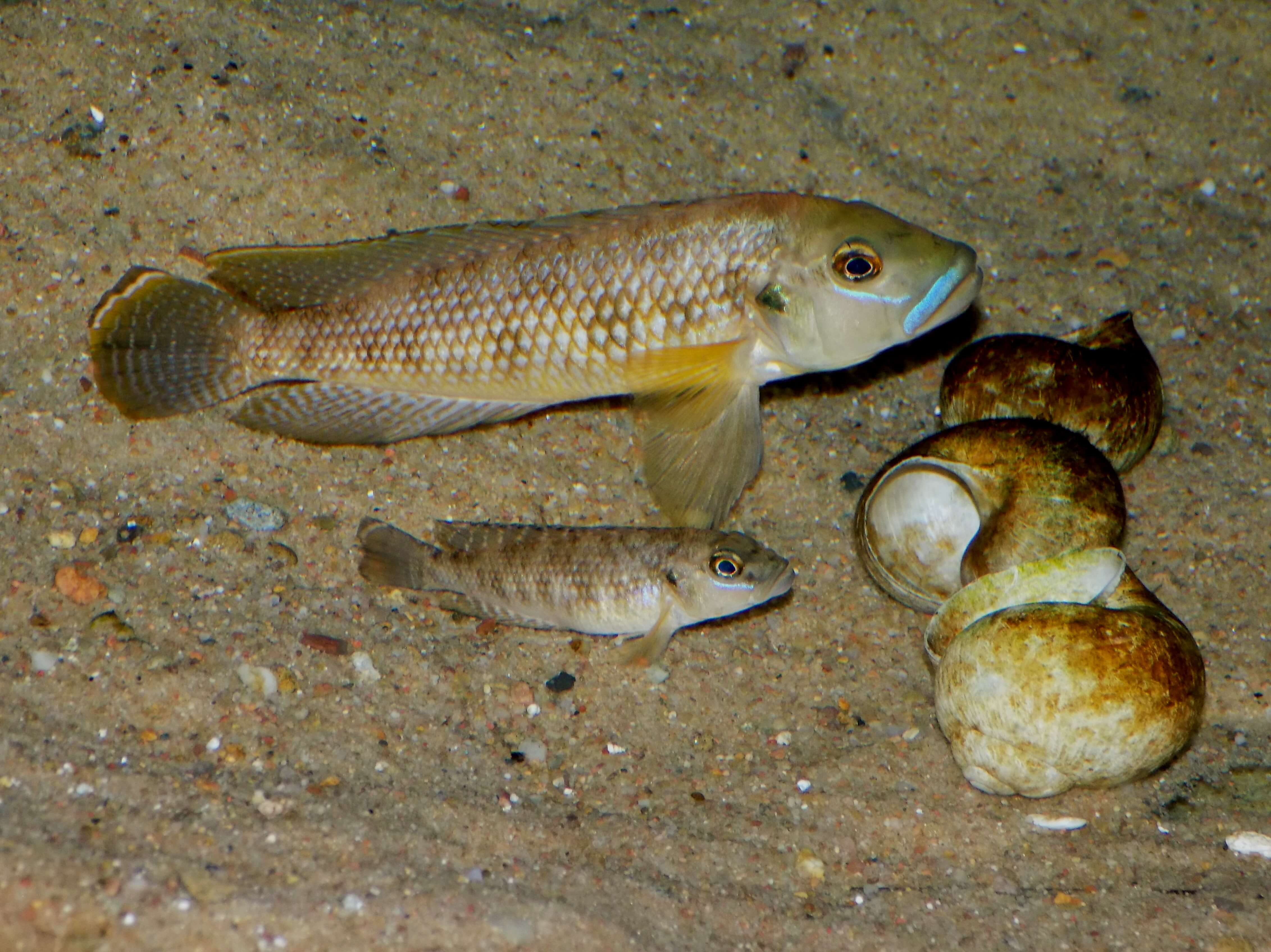
Lamprologus callipterus pair
Lamprologus kungweensis, Lamprologus signatus
Both of these species belong to the so-called mud-dwellers, which are fish that spawn in burrows dug into the muddy bottom in nature. Lamprologus kungweensisinhabits depths of 10 - 50 m, Lamprologus signatusdescends somewhat deeper to 75 m. Lamprologus signatusis somewhat larger, with males reaching 6 cm and females 4 cm, and it inhabits Congo and Zambia.
Lamprologus kungweensis males are 4 - 5 cm and females 3 cm, inhabiting the northern part of the lake in Tanzania and Congo. Both species exhibit pronounced sexual dimorphism, with a visible difference between males and females at first glance. The male Lamprologus signatushas beautifully striped body, while the female is uniformly gray with a rainbow-colored greenish belly. The male Lamprologus kungweensisis gray with a spotted dorsal fin, while the female is gray with an orange belly. For breeding these fish, an ideal tank is over 30 l, where a pair or trio can be placed. Both species lay around 15 - 20 eggs per spawning. Parents usually do not care for the fry, and we catch them after reaching a size of approximately 1 cm. The growth of fry is fast. Lamprologus kungweensisis more sensitive to transport compared to other shell dwellers; otherwise, they are problem-free fish.
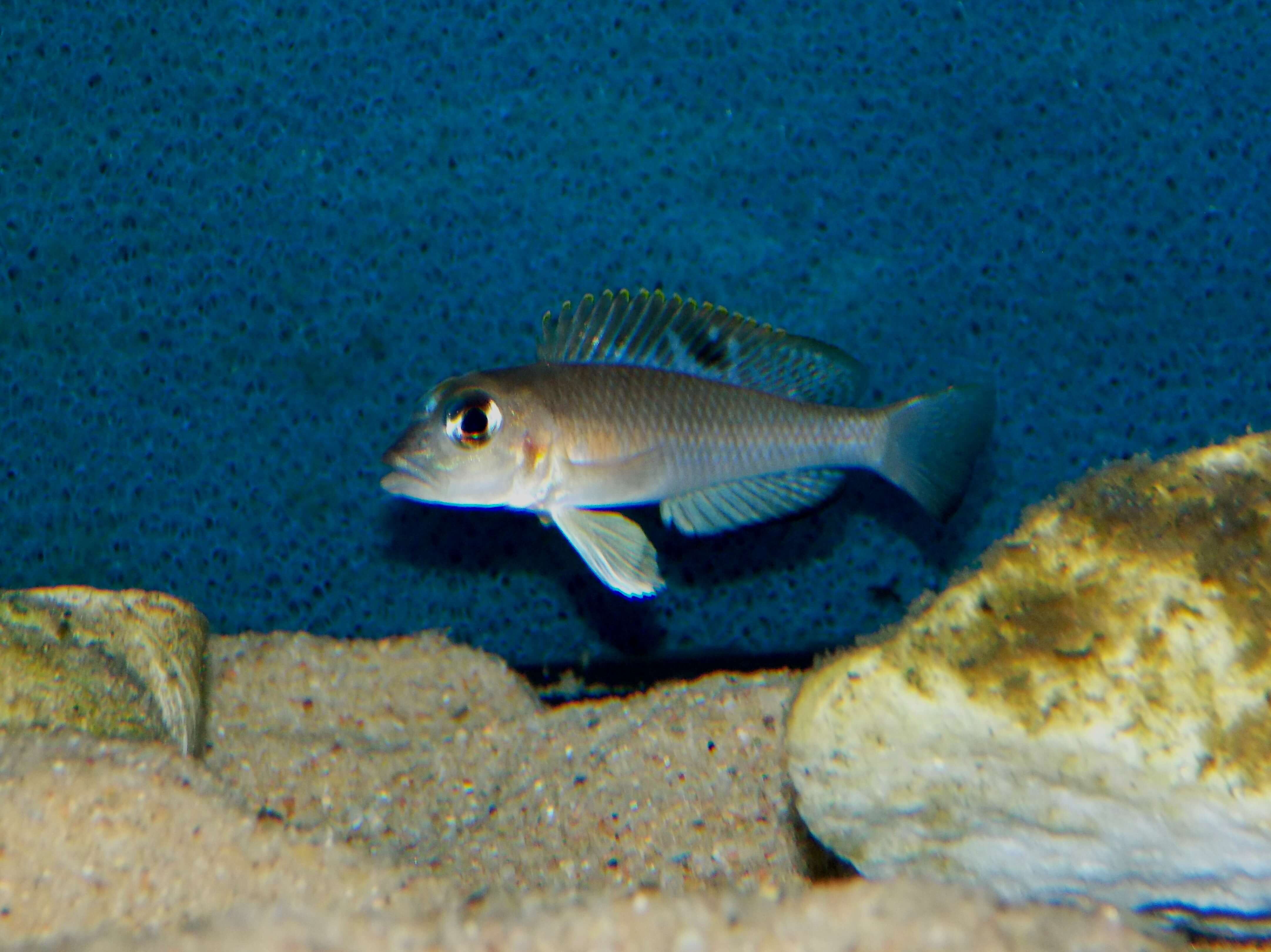
Lamprologus kungweensis male
Lamprologus meleagris, Lamprologus ocellatus, Lamprologus speciosus
These three species are very closely related. Among shell dwellers they belong to some of the most recognizable species. They constantly fight and chase each other. Males grow to about 6 cm, females around 4 cm. In nature, they are found at depths of around 10 - 30 m. Lamprologus meleagrisinhabits the southern part of the lake, Lamprologus speciosusthe southwestern part of the lake, and Lamprologus ocellatusis found around the entire perimeter of the lake except for the areas inhabited by the previous two species.
Lamprologus meleagris and Lamprologus speciosusdo not differ significantly within the species, whereas Lamprologus ocellatusis known for a wide range of color variants that vary by locality. In aquariums, a golden bred variant is very popular, which does not originate from nature and was created by selecting specific fish.
For breeding these fish, an optimal aquarium is from 30 l for a pair. However, I have found that breeding in aquariums around 100 - 150 l works better, where I keep groups of 1 + 3 up to 2 + 4. Since they are relatively aggressive fish, a precise ratio of fish to tank size cannot be recommended. In one tank, two males and four females work for me, while in the adjacent aquarium, more than one pair cannot coexist. The same goes for the breeding of fry - some fish tolerate fry up to 1 cm, while others will chase the fry shortly after they leave the shell. All three species usually have approximately 20 eggs per spawning (some females may have up to 50 eggs).
These fish are great individualists, rewarding even minor difficulties with beautiful colors, active breeding, and rapid growth of fry.
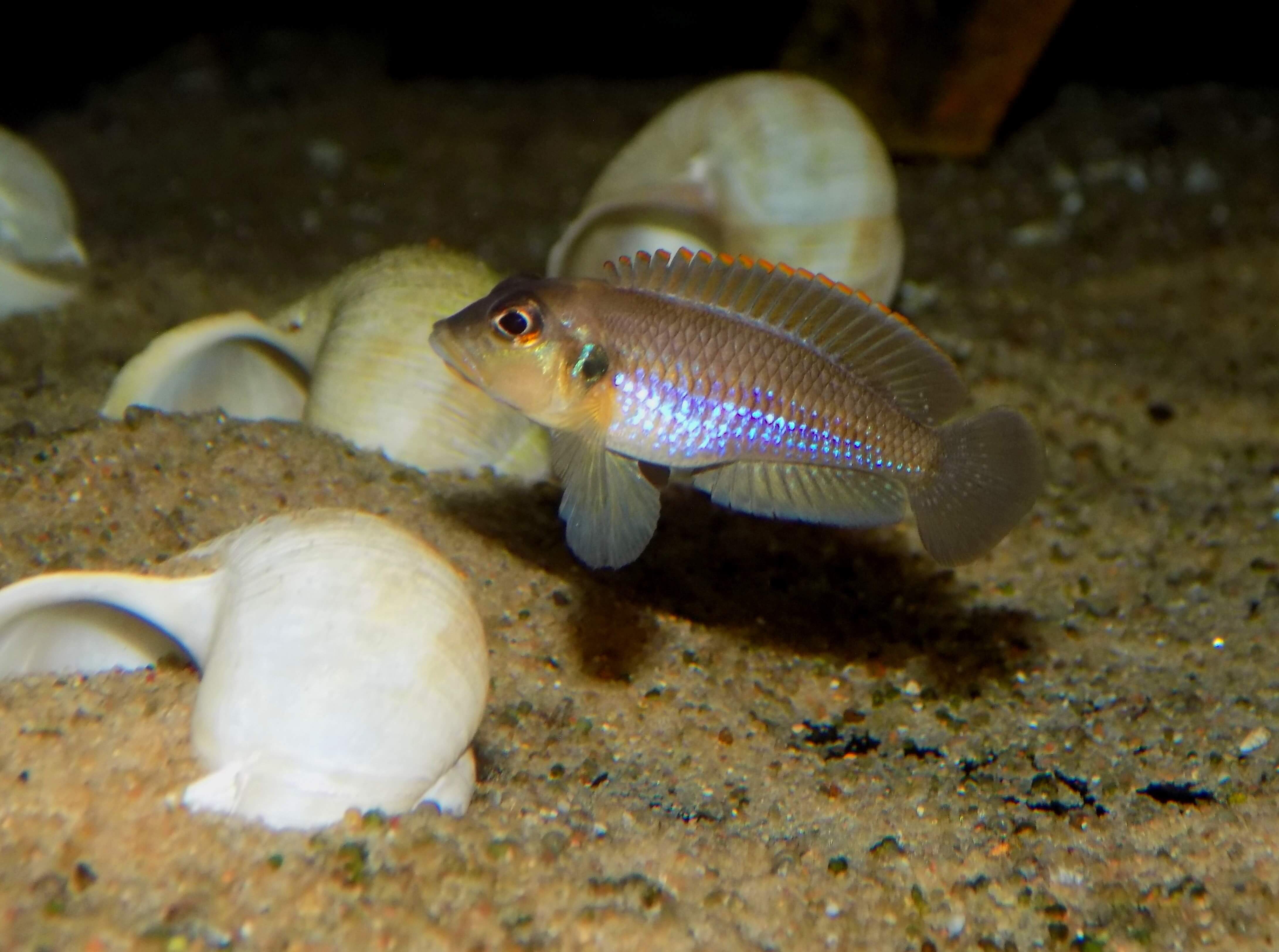
Lamprologus ocellatus male
Lamprologus multifasciatus, Lamprologus similis
Both species belong to small fish. Males measure 4 cm, females are one centimeter smaller. In nature, they are found at depths of around 10 - 25 m. Lamprologus multifasciatus inhabits the southern part of the lake, Lamprologus similis the central part. Neither species forms variants in individual localities that would differ significantly. Unlike the previous species, these are group-living fish, which thrive in larger groups, where they feel safer and do not tend to hide excessively in shells.
They are relatively diligent diggers that constantly stir up the sand around their shells, and even with their small size, they can build real sand dunes around their shells in the aquarium. A pleasant characteristic of these fish is their low aggression.
Both species lay around 15 eggs per spawning. Adult fish do not harm the fry, and the fry swim freely through the colony. As they grow older and exceed 1 cm in size, they are pushed out by adult fish, and it is ideal to catch them or add a few shells to the tank and let them spread the group.
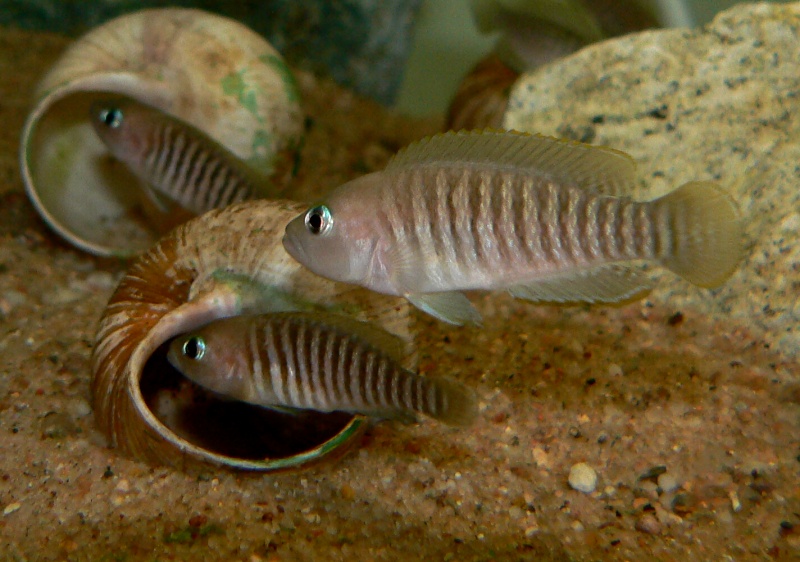
Lamprologus multifasciatus
Lamprologus ornatipinnis
Males of this species grow up to 9 cm, females around 4 cm. These fish live around the entire perimeter of the lake at depths of 30 - 45 m and form geographical variants. Fish from localities with distinct white markings on their fins (Burton Bay, Kigoma, and others) are particularly popular, as well as a recent novelty from the locality of Mwamgongo, which has an atypical orange pattern for this species.
Sex can be distinguished by size and coloration of the fish. Males are larger and more slender, while females have a rounder belly, which is often iridescent like that of similar small species Lamprologus kungweensis and Lamprologus signatus.
This species can be kept either as a pair or in a harem with one male and several females. Since it is a larger species that is also relatively active, it is necessary to keep them in slightly larger tanks. A pair needs a minimum of 50 l, while a trio should ideally have at least 75 l of aquarium space.
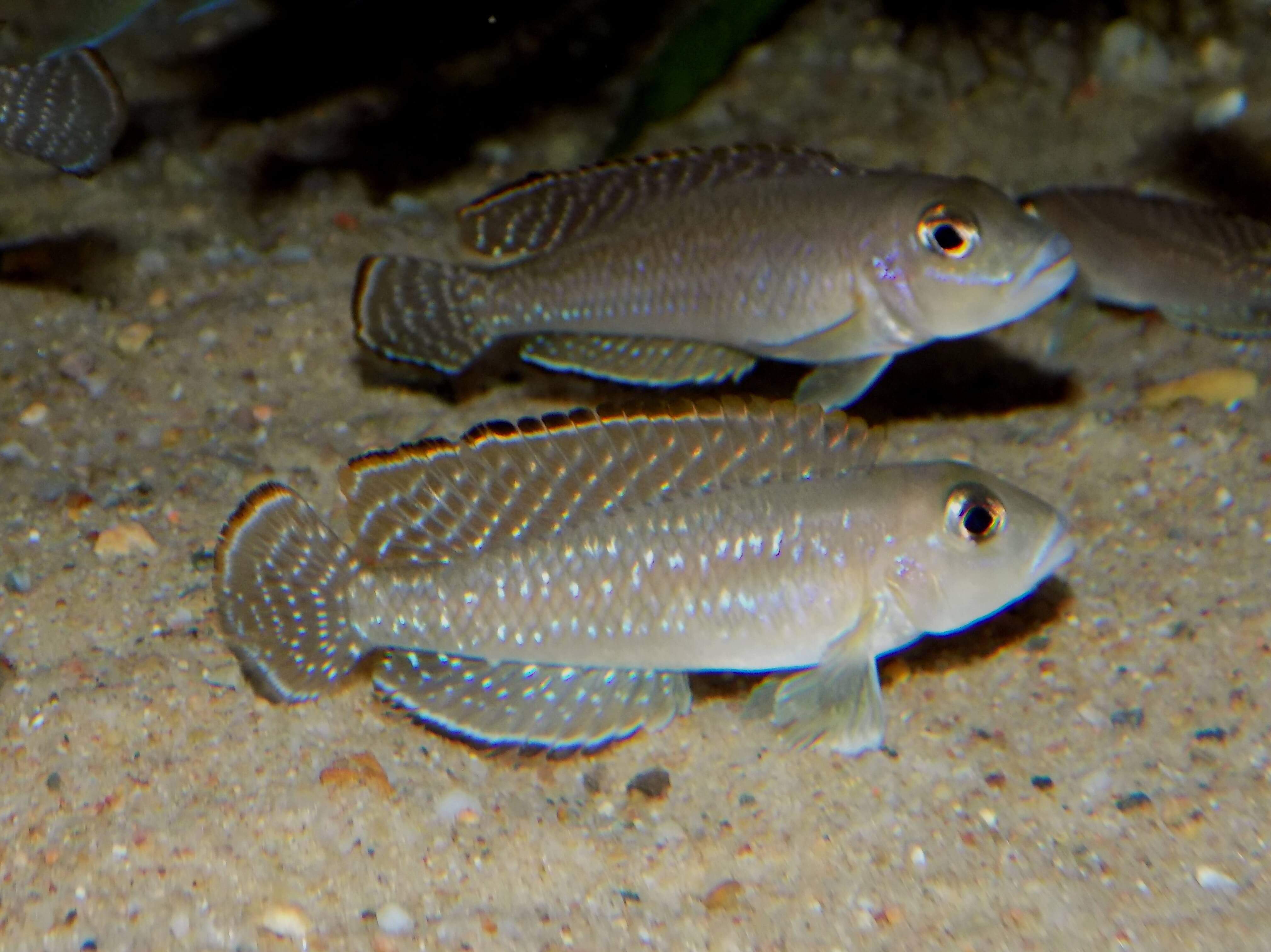
Lamprologus ornatipinnis males
Lepidiolamprologus boulengeri
Males of this species grow to 8 cm, females to 5 cm. Both sexes are similarly colored, and the male can be distinguished from the female only by size and body shape, with the female being smaller and more robust.
This species inhabits the northern part of the lake in Burundi and Tanzania at depths of around 10 - 35 m. For keeping this species, an ideal tank is over 50 l for a pair. In a spacious tank, harem breeding is possible. More than one male usually cannot coexist in a tank of standard dimensions, and sooner or later, only the strongest will remain.
For breeding, larger shells are optimal. In spawning, which the female defends very aggressively, there are usually around 50-100 fry. Given the size and aggression of this species, it is ideal to keep them with larger representatives of the genus Neolamprologus or Altolamprologus,with which they share similar dietary preferences. They thrive on coarse frozen or live food and high-quality granules.
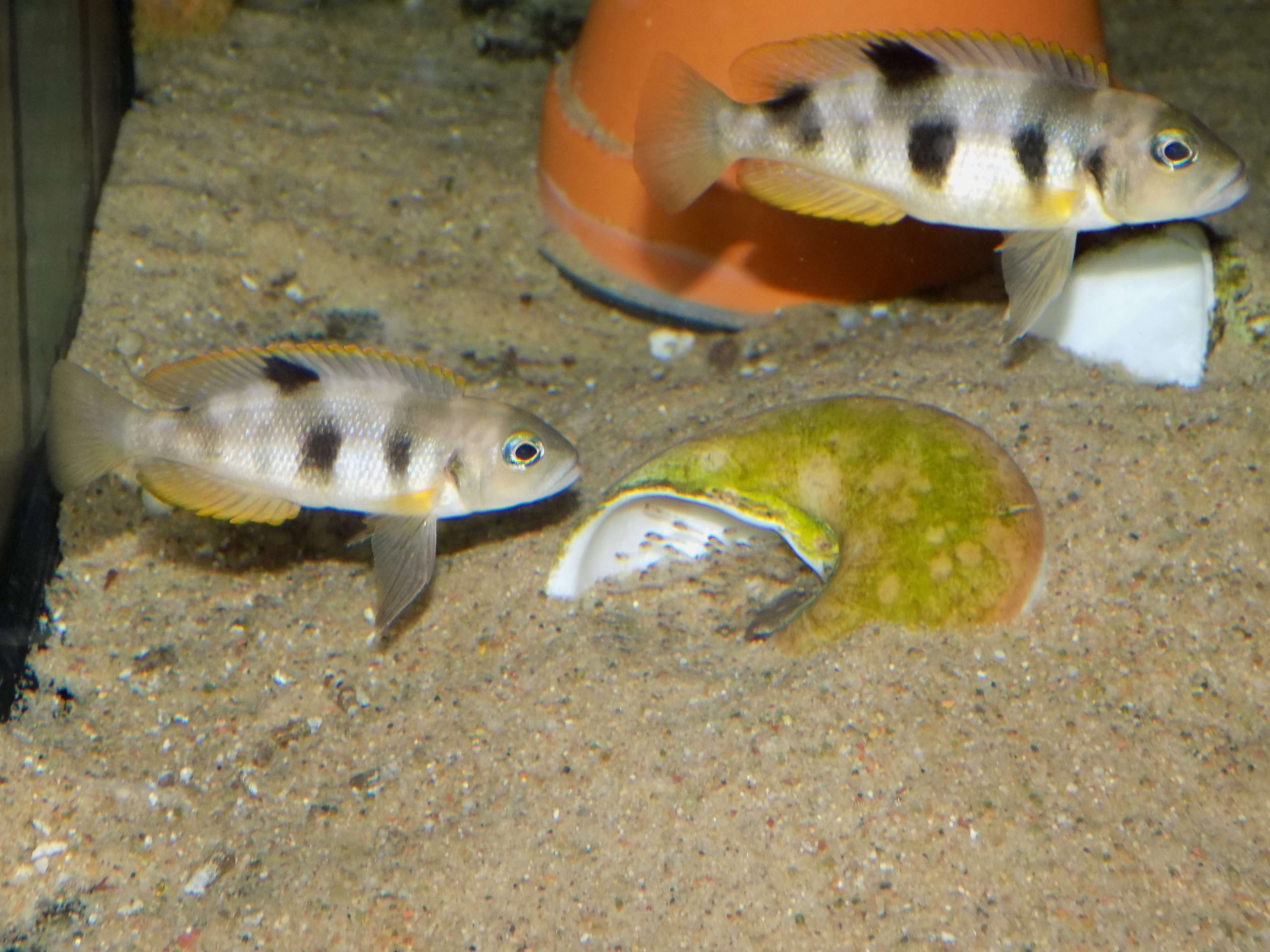
Lepidiolamprologus boulengeri pair with fry