

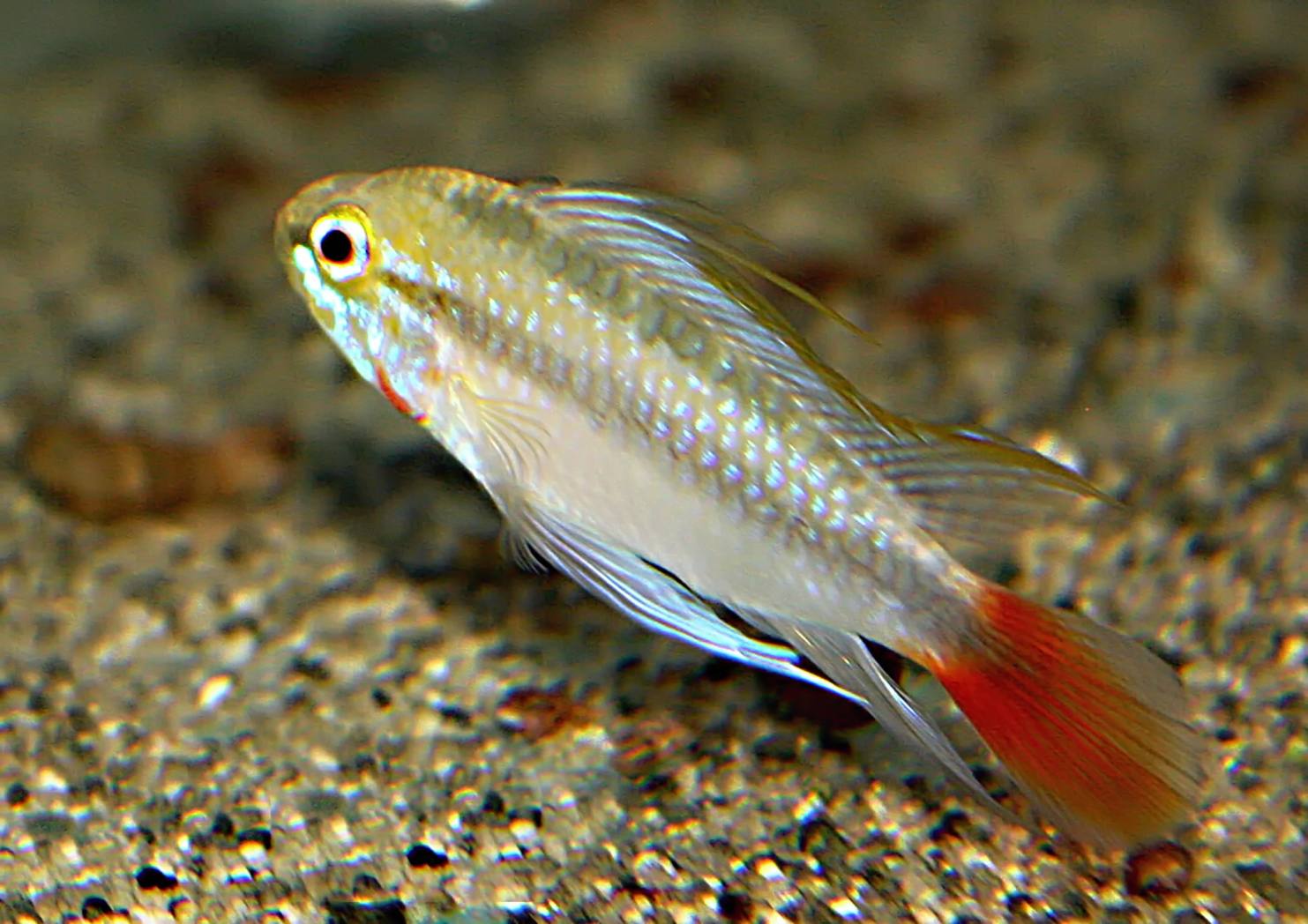
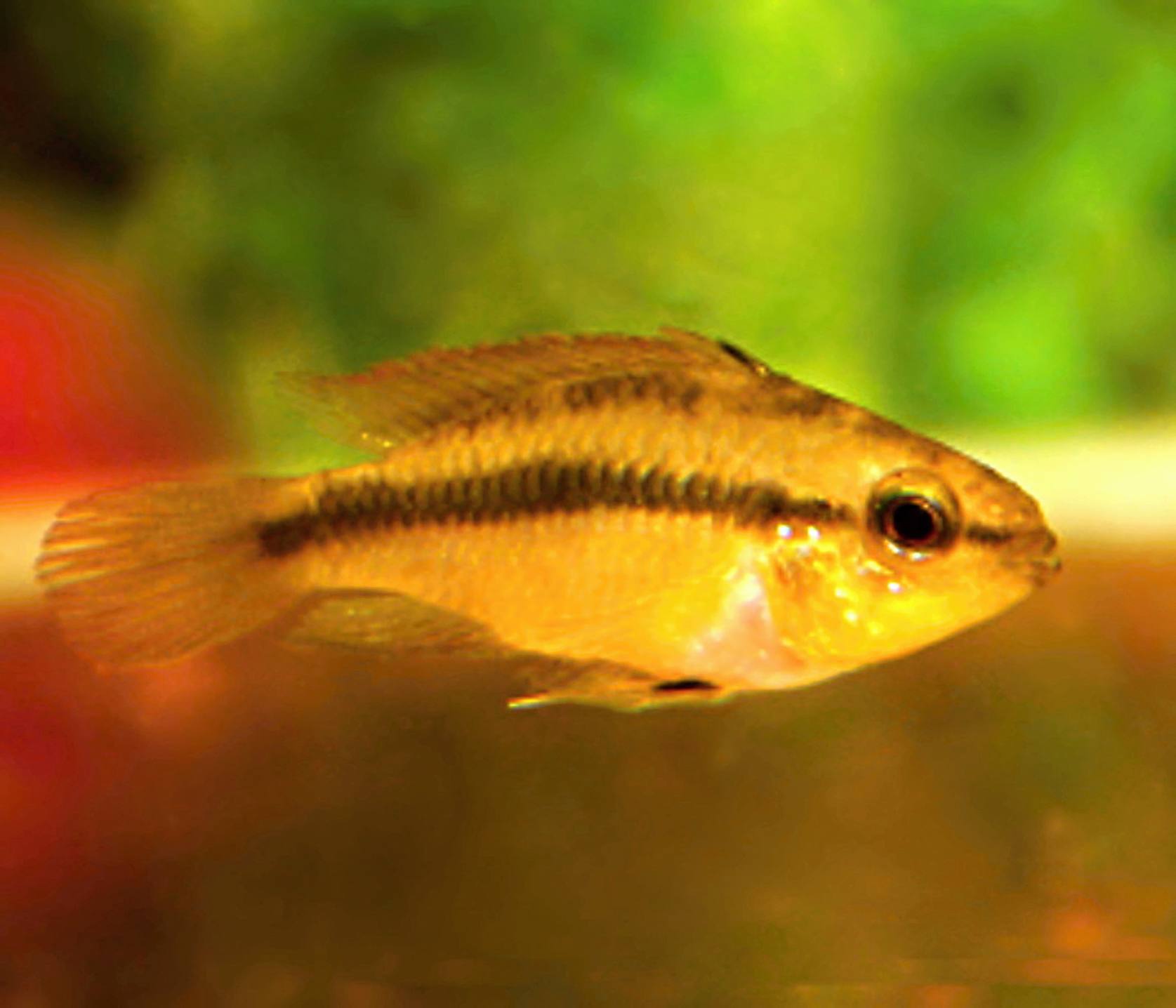
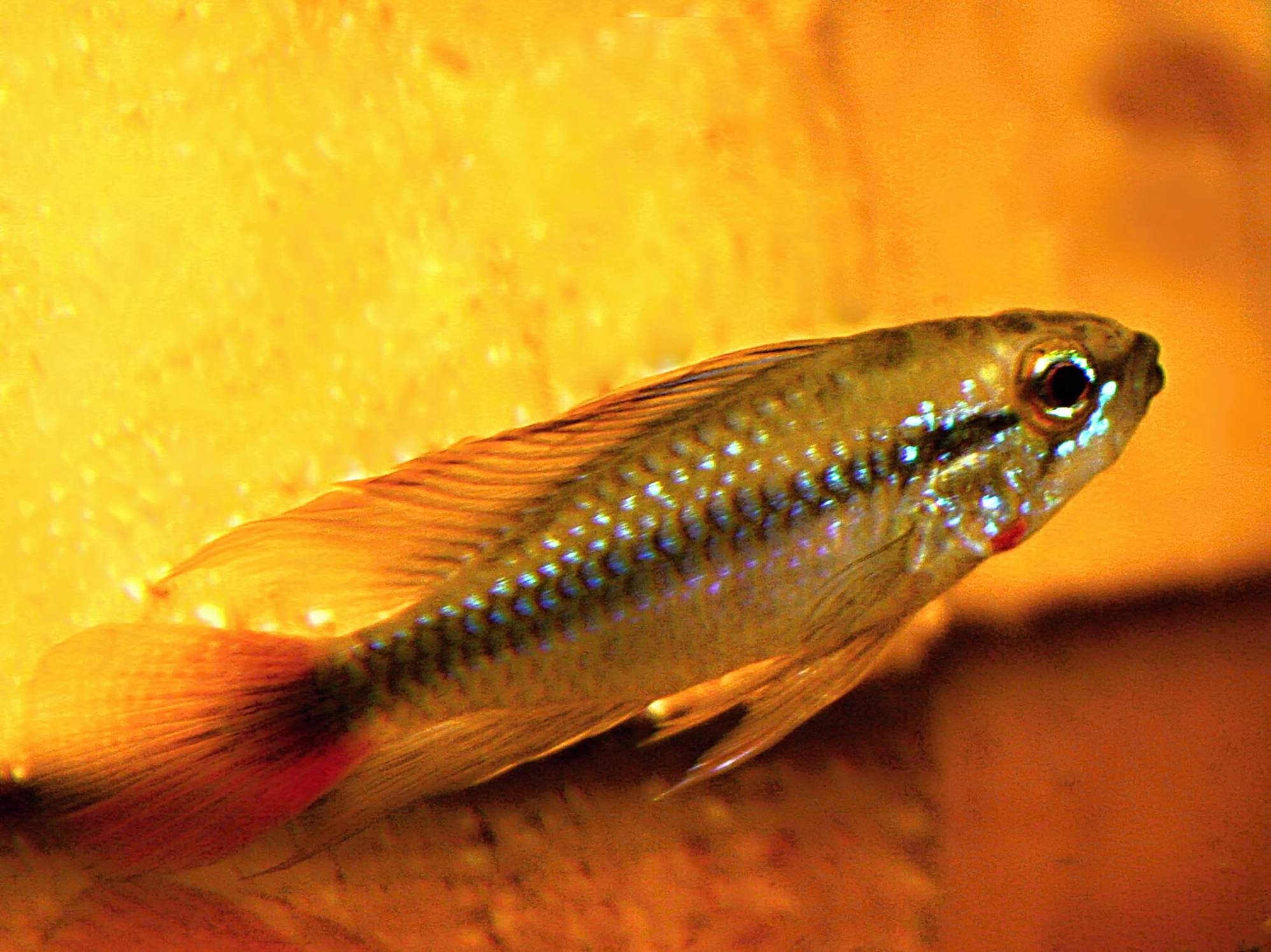
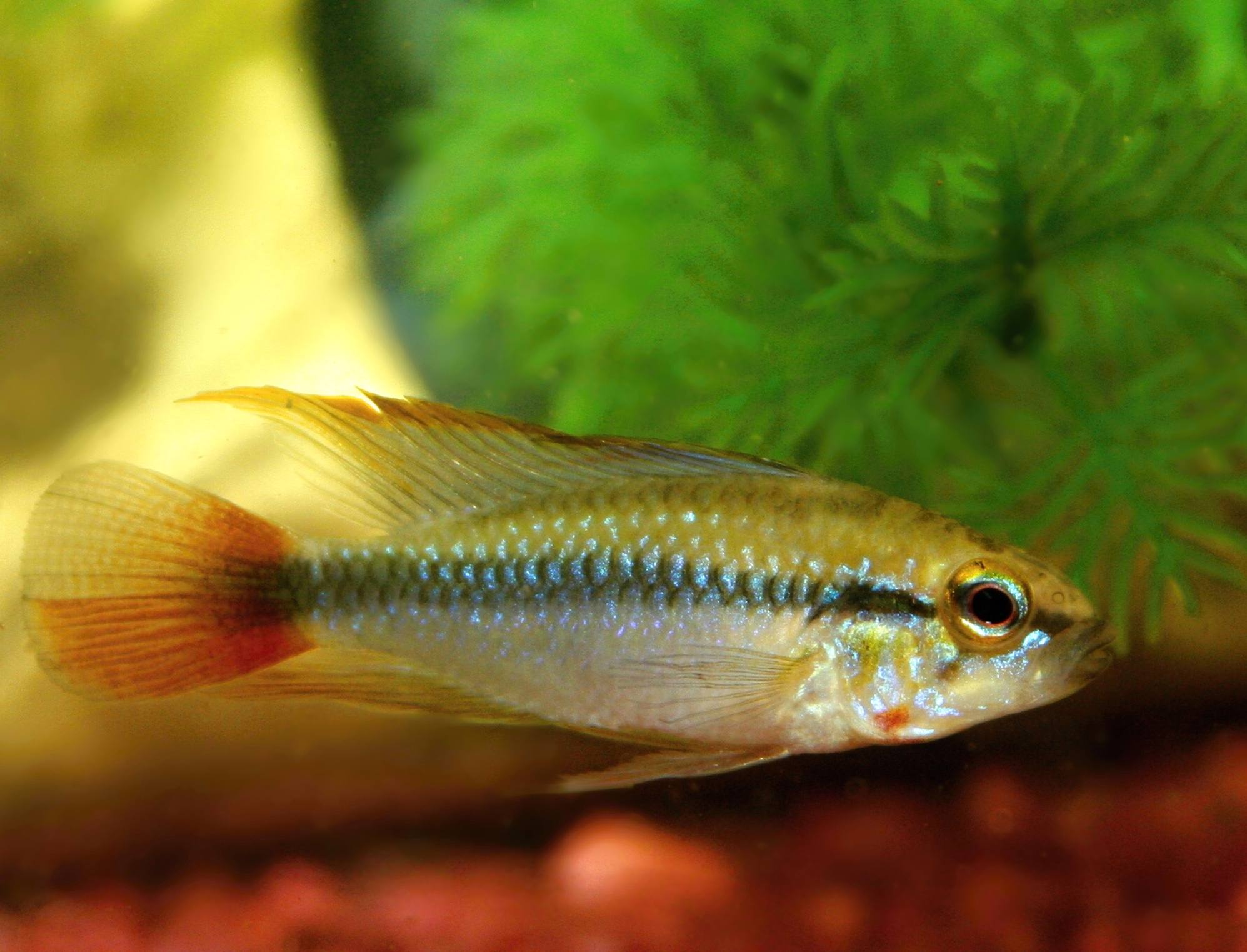



For a long time, it eluded scientific naming, but it has held a place in the hearts of aquarists for a long time. Apistogramma erythrura is a fascinating cichlid from the wild savannas of Bolivia, distinguished by the red tones of its tail fin and unusual agility. Discover its water requirements, the secrets of its diet in nature, and a guide on how to successfully raise a healthy generation in home conditions.
The fish was described in November 2008 by Dr. Wolfgang STAECK and Ingo SINDLER, when our aquarists had known it for years under a series of synonyms, such as Apistogramma sp. "Rio Mamoré", or Apistogramma trifasciata marmore, Apistogramma t. haraldschultzi etc. I once received it as Apistogramma macieliensis from Radek Winkler, and we brought it back as Apistogramma erythrura with Jiří Bošina in 2011 from a market in Germany. From this breeding, I repeatedly obtained young fish.
Homeland
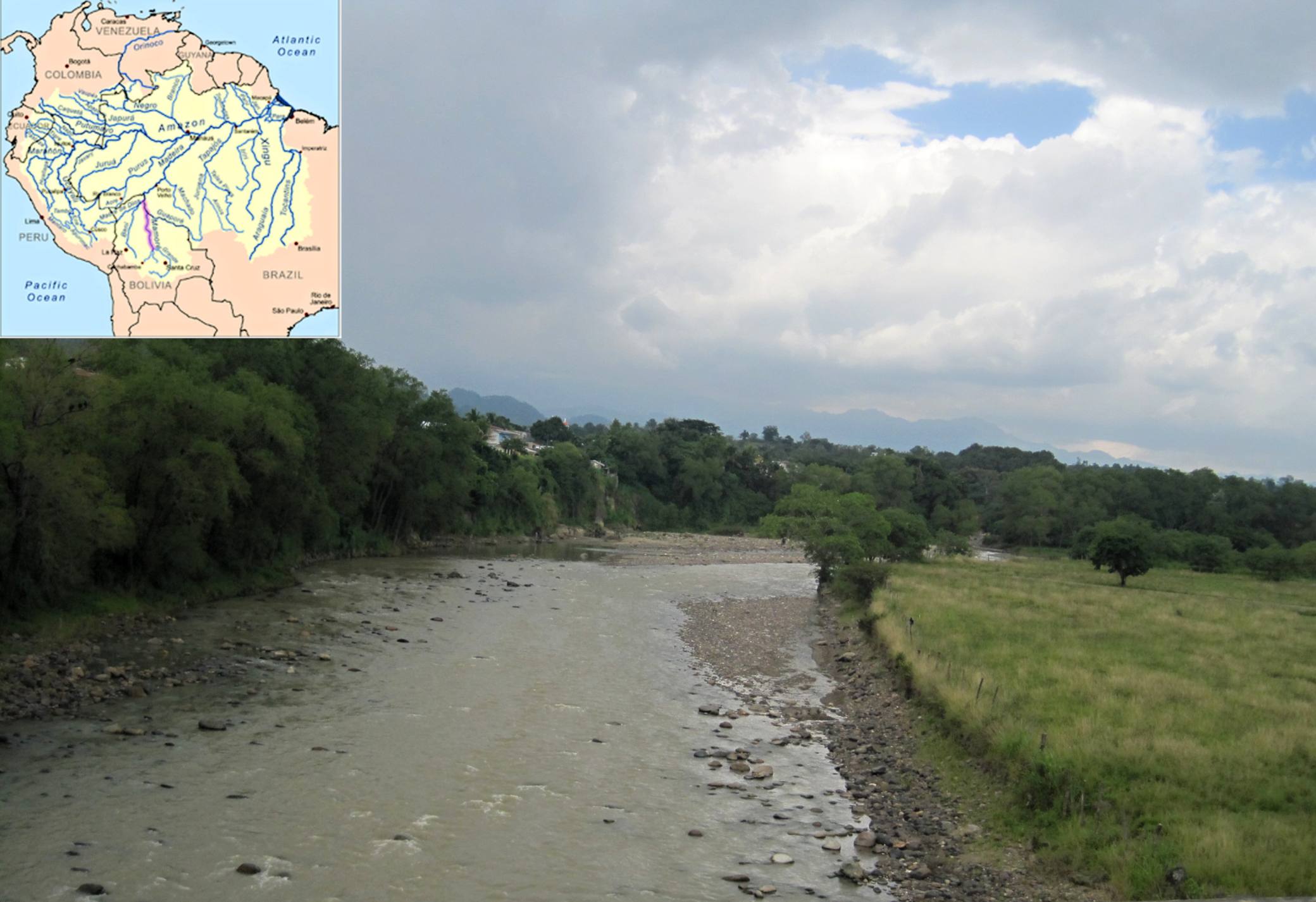
It occurs in the border area of Bolivia and Brazil, primarily north of the city of Trinidad in the Beni province in the area between the Rio Mamoré and the Rio Guaporé. Eight specimens that served both authors for description also originate from this area. The fish is caught in the western region in the basin of the Rio Yata (Laguna Larga and Laguna Piranha in the northwestern basin of the Rio Ana de Yacumay), Rio Itonamas (Laguna Mapava) in the eastern part of Bolivia. Additionally, it is caught for aquarium purposes in Lago das Cobras in the basin of the Rio Pacaás Novos in the southeastern part of the city of Guajara-Mirim in the state of Rondônia in Brazil. It prefers slow-flowing to stagnant waters of clear and white water with pH 5.2-6.4, hardness below 1°dH, conductivity up to 20 µS/cm, temperature 25.1°C - 30.0°C.
The fish prefer densely vegetated marginal zones of lakes and small streams, as well as so-called "floating meadows". Here, in floating carpets of plants, mainly Eichhornia azurea, Cabomba furcata, Paspalum repens or Utricularia sp. When disturbed, our cichlids jump above the surface, where they can stay on a leaf for 10-20 seconds, waiting for the danger to pass. In these areas of "floating meadows," Apistogramma erythrura coexist with tetras Hyphessobrycon elachys, Hyphessobrycon herbertaxelrodi, Hyphessobrycon megalopterus, Moenkhausia australis, Nannostomus trifasciatus, Nannostomus unifasciatus, and in deeper layers also Mesonauta festivus.
The river Rio Mamoré is 1319 kilometers long from its source in the eastern slopes of the central Andes to its confluence with the Rio Beni. Since it meanders, it adds another 681 km, making a total length of 2000 km. It is the largest river in Bolivia, flowing through savannas and savanna forests, and after its confluence with the Beni in Brazil, it forms one of the largest tributaries of the Amazon, the Rio Madeira. My long-time Swiss friend Robi Guggenbühl, who has been regularly flying to Bolivia for years and is known for his beautiful videos of natural habitats filmed underwater, found in the Itonamas basin pH 5.5, undetectable conductivity, and water temperature 30°C.
The fish live among rich plant growth. So far, 990 species of fish have been cataloged from this river alone. For example, other well-known fish species here include Aphyocharax rathbuni, Hyphessobrycon eques or Apistogramma similis. Brazilian ichthyologist Lacerda found a syntopic occurrence of Apistogramma cf. staecki in the Rio Pacaás and Apistogramma cf. resticulosa in the Rio Mamoré.
Characteristics
This Apistogramma is a typical example of a phenomenon that biologists call polychromatism. This is a phenomenon where within one species, there are various color forms. Especially when different colored individuals of the same species coexist in one habitat. This is well documented in many species of cichlids from Lake Malawi, but also in the Central American complex Amphilophus citrinellus. However, this is well known among South American cichlids. In this species, there are also males with uncolored tail fins, two basic variants - blue and yellow.
Systematics
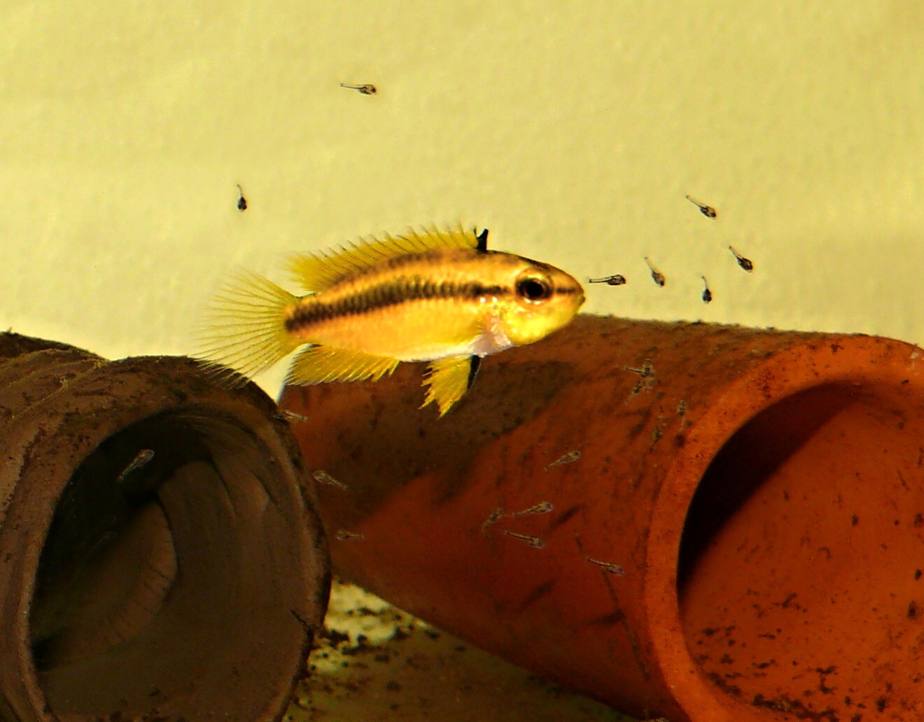
In some individuals, their coloration may superficially resemble Apistogramma trifasciata and its two original subspecies Apistogramma t. maciliensis and Apistogramma t. haraldschultzi. When describing this species, both authors had in mind the distinctive red coloration of the tails of adult males. Its species name is derived from the Greek erythro, meaning red, and oura, meaning tail. It belongs to the Apistogramma cacatuoides complex, which has especially seen a multitude of newly caught cichlids in recent years, mainly from the area of Peru. This complex is characterized, among other things, by the elongated first ray of the dorsal fin, which looks like a parrot's crest.
Breeding
The conditions are similar for all members of this complex of some of the most beautiful South American cichlids. Breeding can be managed both in a typical community tank and in a so-called "species" aquarium. A standard 60-100 liter aquarium is sufficient. We use a variety of roots, stones, and plants to prevent mainly visual contact between males.
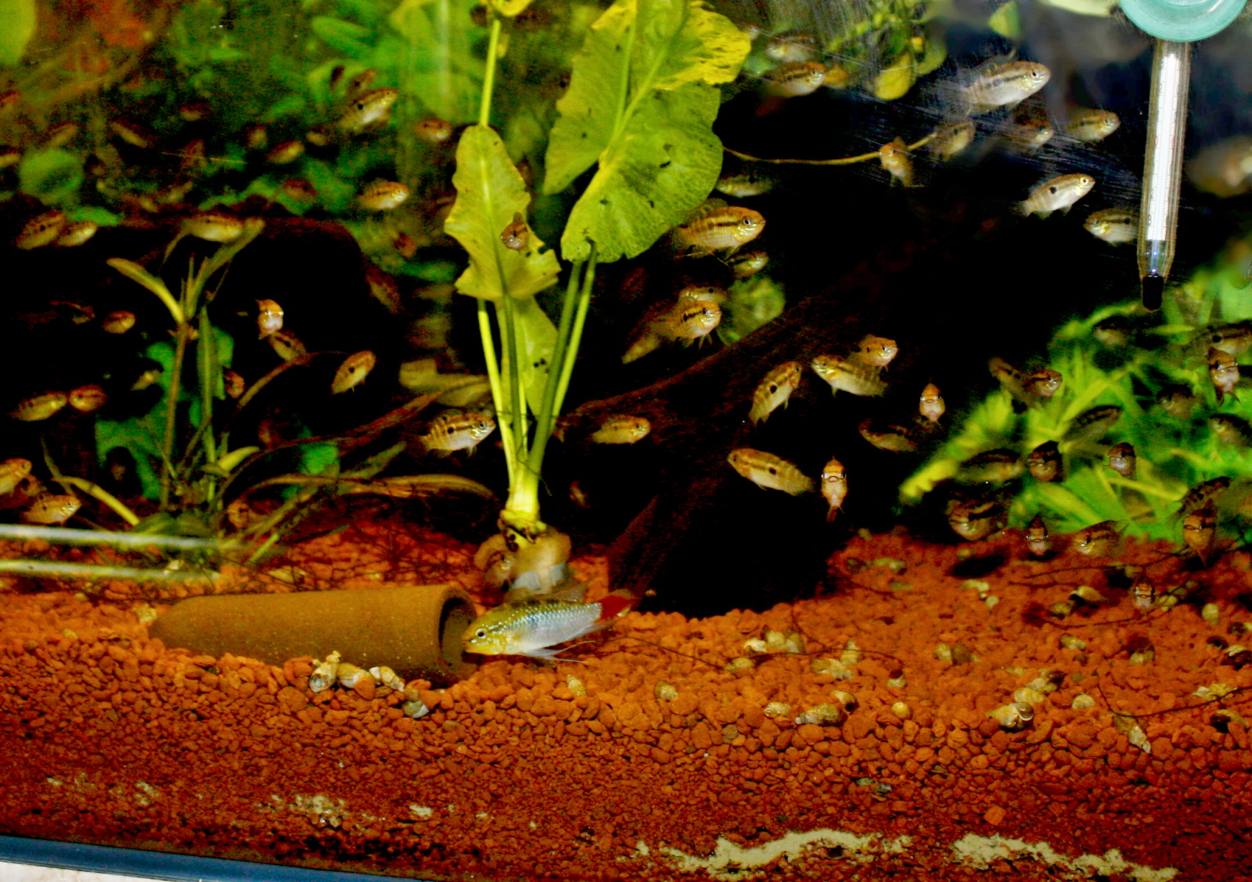
Most breeders who have been engaged in long-term breeding and raising of cichlids agree that often a stronger male will dominate a weaker one, even if they are in the largest aquarium. It is ideal to have only one male in an aquarium and perhaps several females. Females have smaller territories and are not as aggressive. Various peaceful and small fish can accompany these cichlids. Given their origin, we prefer South American species, especially tetras, catfish, but also shrimps. Where we want to observe the breeding process, we avoid keeping catfish, as they usually take care of the fry. Many cichlids do not even breed in their presence. A similar problem is caused by snails, even small ones. They hide in the males' shelters, which not only disturbs them but also later consume the eggs. More aggressive females will be pushed out of their hiding places. The bottom of the tank should be well covered with fine sand of 3-5 mm grain size, which provides good protection for similarly colored and newly swimming cichlids.
Another option is to keep these fish separately in a tank - preferably in pairs. This is how I proceed when I want to observe the fish as well as raise them. Then usually a 10-20 liter tank with a structured bottom or even without it, just with a tube or a flower pot, is sufficient. I always try to place some plant, preferably a brownish one for hiding (Microsorum pteropus). The tank does not need to have a high water column; rather, the area of the bottom with sufficient hiding places is more important.
Feeding
Stomach examinations have shown that these cichlids mainly feed on invertebrates and their larvae in nature. The most frequently identified representatives are from the order Cladocera - water fleas, Copepoda - copepods, of which the most well-known to us are water fleas, Acari - mites, etc., and Nematocera - of which the most well-known to us are mosquitoes.
Food is the basis for trouble-free breeding and raising of all South American cichlids. A varied and high-quality diet is necessary, rich in fats, but also with sufficient so-called ballast substances. The basis should consist of plankton (alternating water fleas, more often water fleas), occasionally brine shrimp nauplii, live or frozen daphnia and bloodworms (both about once a week). Artificial feeding is a backup in emergencies; I only use Cyclop Eeze, which also works very well for fry. Depending on the size of the fish, I then use granules of various sizes from 6 types of food by Dr. Gerald Bassleer. It is already up to the observational skills of the aquarist to determine which type of food the fish prefer. When we cater to their culinary needs, they reward us with better care for the fry.
Raising
It is a typical representative of the "male-parent" group. In the male's territory, there are several mini-territories of females that breed with him. The male is important for fertilizing the eggs, taking care of the area around the spawning site, while the female is responsible for the actual care of the fry. There are many professional breeders who immediately remove the eggs after spawning, add an anti-fungal agent, and introduce aeration. They then wait about 3 days for hatching and subsequently 5 days for swimming up and start feeding with fine live food.
Personally, I prefer natural raising. Although this usually yields fewer fry, they are healthier, in better condition, and more suitable for further breeding. The moments we experience while observing them are often touching, and cannot be replaced by a larger number of raised fry. Females, if they are in good condition and the aquariums are placed in shaded and not too frequented areas, take very good care of the fry.
For spawning, we use soft water. As I always say, the practice of preparing water for tetras pays off. We can use both natural water and artificially prepared water using ion exchangers or reverse osmosis. The parameters are similar to those for many tetras. However, for this species, it does not always have to be "neon water". In České Budějovice, older tap water is sufficient, thus adequately "processed" in the aquarium. The filter and plants in the tank do their part. I have found success with water at pH 6.3, temperature about 27 °C, conductivity around 120-150 µS/cm. For "erythrura," success is crucial for them to breed. Then we proceed as with other members of the genus. For starter food, we use fine brine shrimp nauplii or water fleas. Especially for the first option, meticulous cleanliness in the breeding tank is essential!
The advantage of brine shrimp nauplii is that the fry do not bite them, which can happen with some species of water flea nauplii. The disadvantage is greater contamination of the tank. We feed several times a day in smaller amounts. Water changes are carried out very carefully with regular tap water (always max. up to half a liter) daily until we reach the usual water commonly used for our cichlids. Ideally, soft water, best up to 10°dH. Here, breeders in southern Bohemia will have an advantage, as well as in northern Moravia and in some areas of northern and eastern Bohemia.