

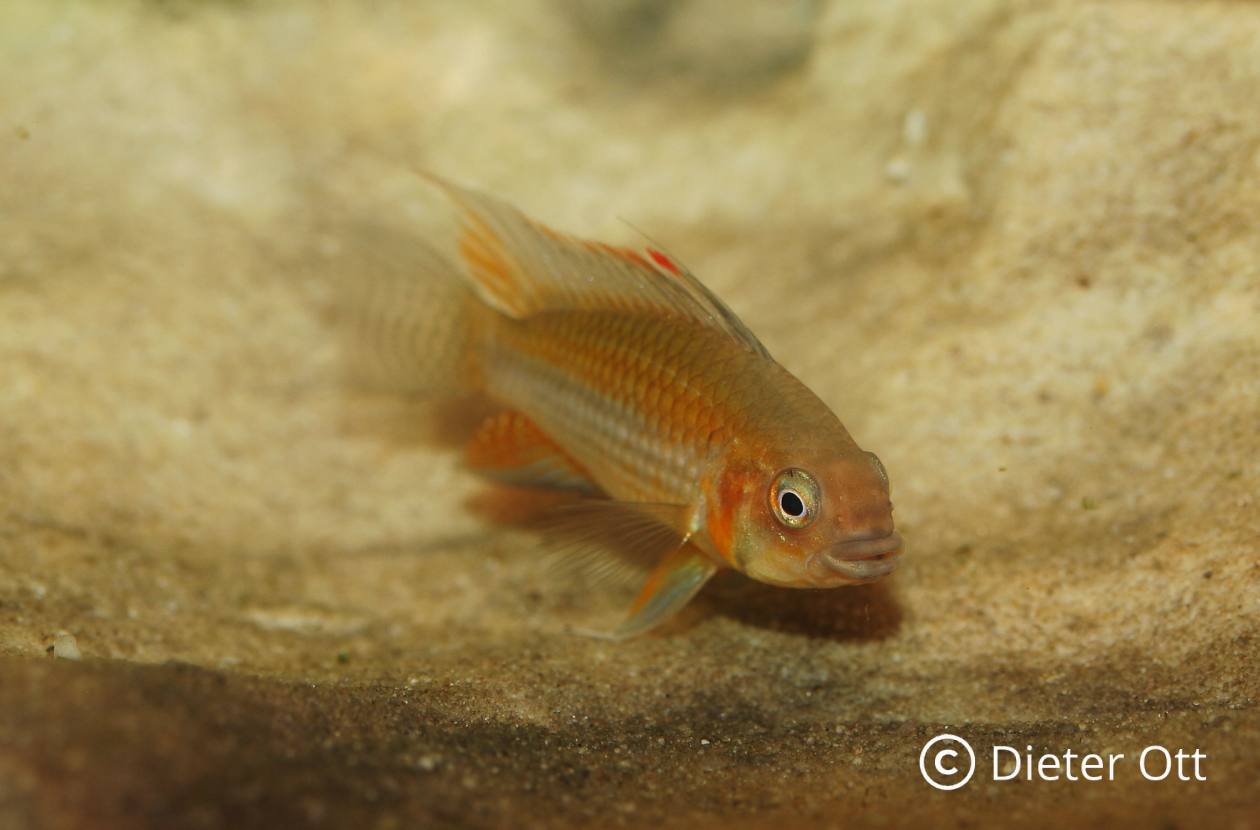

Apistogrammas are among the most popular dwarf cichlids of all. They fascinate not only with their vibrant colors but also with their remarkable behavior, parental care, and the diverse requirements of individual species. This text summarizes practical experience with their husbandry, disease prevention, breeding, and nutrition, showing why these cichlids are so appealing to aquarists.
The third part of The phenomenon of Apistogramma – Part 2: A Guide to Proven Species and Their Breeding
Avoiding diseases
In principle, all Apistogramma species can contract the usual diseases common to aquarium fish. With the Animal Medicinal Products Act (TAMG) that came into effect in February 2022, significant changes have occurred regarding the treatment of sick fish. There are profound problems in treating ornamental fish. All "antimicrobially active" medications - meaning not only antibiotics but also all medications effective against viruses, fungi, and protozoa (single-celled organisms) have become prescription-only. Aquarists may only use them after examination and prescription by a veterinarian. However, the veterinarian can only prescribe medications that are approved. This approval is lacking for the medications that were previously available over the counter in pet shops. Consequently, the range of over-the-counter medications for ornamental fish has been significantly reduced. I would like to only hint at the costs involved for the veterinarian.
Until now, the principle has been that it is more sensible to prevent fish diseases through appropriate care measures to spare the fish stress. This principle still holds true. However, it is now even more important to adjust the stocking density to the tank size, change the water in a timely manner, generally focus on sensible water parameters, and pay attention to suitable feed types and amounts during feeding, rather than facing huge problems in case of disease. For practical reasons, it will be difficult to consult one of the rare fish veterinarians in a short time, obtain a prescription, and get the necessary medication.
Meanwhile, the pet trade offers products that promise help in treatment. It remains to be seen what experiences will be gathered with these.
In rare cases, ulcers appear on the sides of the body. They break through the skin surface. Unfortunately, these fish can no longer be saved. Keeping them in very soft water can help. For Apistogramma species that can also be kept in harder water, I have not observed such a disease so far.
Breeding
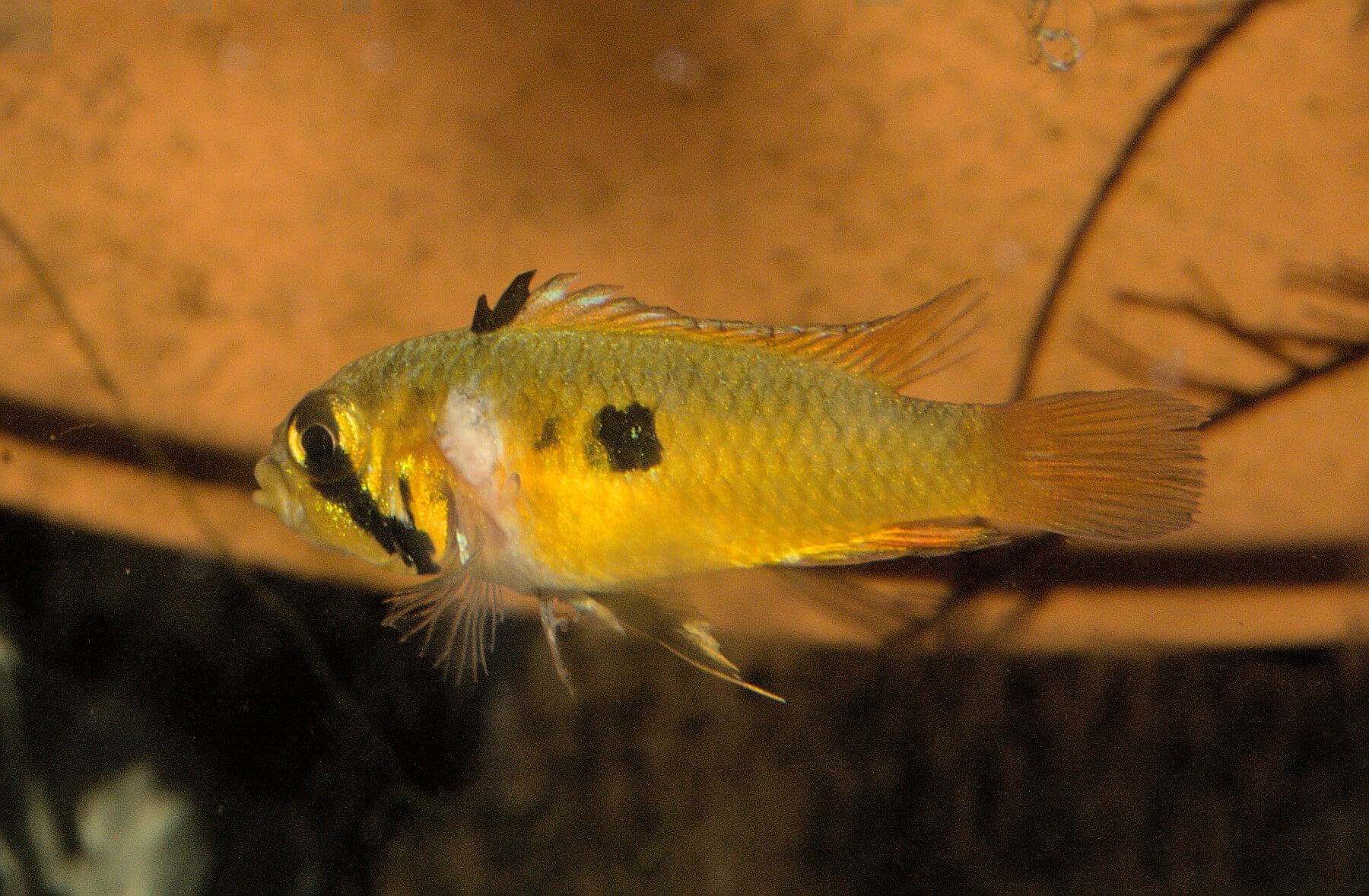
The right water and the right water temperature are prerequisites for successful breeding. In the species descriptions, I have indicated the requirements for each species. With good care, we will encounter our animals one day during breeding preparations. However, it is not uncommon for the female to surprise us with a bright yellow breeding coloration, as the species tend to act discreetly during this phase.
The development of the eggs until hatching takes several days. The time varies from species to species, but it also depends on the water temperature. The female relocates the larvae to different pits or other coverings, such as a root. When the fry swarm rises, we must begin feeding. I use Artemia nauplii for this purpose, as they are already available to me. Fine pond food or microworms are equally suitable. I have experienced with an Apistogramma cactuoides female that she crushed Tubifex over the fry and distributed it through the gill openings.
Productivity increases with age and body size.
The male is often not tolerated near the eggs or fry in the confined space of the aquarium. Those who want to be sure should remove the male as soon as the female appears in her distinctive coloration and indicates that breeding care has begun. In some species, the female tolerates the male at a certain distance. This tolerance increases with the size of the fry. However, even then, it is not certain whether a dispute over the fry will break out. It can happen that the parents literally fight over the fry. Quick intervention is then required.
The growth of the fish would slow down with a denser population of fry in the limited space of the tank. Therefore, frequent water changes during this time are particularly sensible. Unfortunately, in many species, the sex ratios are often skewed in favor of one sex. Changes in pH and water temperature can be attempted to counteract this.
I do not find it necessary to provide the often recommended high water temperatures for breeding. I breed the majority of my species at room temperature. My fish room maintains 23 °C with slight fluctuations.
The fish does not live on fleas alone: Nutrition
Our Apistogramma species tend to be small animal eaters. They prefer live food but also accept frozen food. Suitable options include water fleas, Cyclops, mosquito larvae, and Tubifex, as well as similar live food. They even catch flies from the water surface. My Apistogramma regularly receive Artemia nauplii, as I need them for my breeding and then feed some to larger fish.
In Apistogramma, gastrointestinal disturbances are occasionally observed. The affected animals leave a longer fecal string behind them, which does not have the usual dark coloration but appears rather translucent. These digestive disturbances can be attributed to unsuitable food. The easiest way to address this disturbance is to refrain from feeding for a while and change the water. Then it would be worth questioning which food or amount caused the problems.
Amlacher already warned in 1958 against feeding Tubifex or red mosquito larvae. This warning has been firmly established among many aquarists and is passed down from generation to generation. However, this advice needs to be relativized under today's conditions. Amlacher explicitly referred to the sludge of wastewater-polluted waters as the source of these food organisms. This is no longer to be expected today. Amlacher recommended soaking the mosquito larvae in clean water for some time. This recommendation still applies to both food types today, even without dubious origins.
I have already mentioned that the number of fish kept in the tank, as well as the method of feeding, plays a role in the pollution of the water. It is important to only administer the amount of food that can be consumed in a short time. Bremer (1997) pointed out that all food organisms immediately decay after dying. This is scientifically referred to as autolysis. Here, the remaining enzymes of the corpse act without bacterial involvement. Tubifex lose 70% of their body mass within 24 hours in this way, water fleas 50%, and, for example, guppies 30%. Even if a small layer of mulm should be left for the fish, it seems sensible to vacuum up the uneaten food residues to avoid further water pollution.
Only a small skin flap
A certain significance for nutrition is also attributed to a small skin flap on the bone of the gill apparatus (epibranchial). This is referred to by scientists as the epibranchial lobe
which is characteristic of the cichlids of the Geophagus family. This lobe is padded with dense connective tissue. Kullander (1989) attempted to explain its most likely function. If one considers the depiction by Lüling (1977) and Fiedler (1991) of the corresponding organ of the African knifefish (Heterotis niloticus), which filters and slimes zoo- and phytoplankton, the involvement of the mentioned lobe in the nutrition of Apistogramma becomes evident. The lobe effectively separates the oral cavity from the pharyngeal cavity and is likely intended to prevent the suspended food from escaping from the pharyngeal cavity. It is worth mentioning in this context that the lobes represent paired protrusions that work together in their function.
Very often, Apistogramma can be observed sifting through the substrate. One might assume that they are searching for Tubifex or other larger particles. They certainly do that as well. But there is more. Ziemek (2011) vividly introduces us to the substrate, the so-called interstitial. This is surprisingly densely populated. Essentially, algae and bacteria lay in a thin film around each grain of sand. Ziemek describes diatoms as the spreadable topping in the supermarket of sediments. The biofilm is also inhabited by a variety of animal organisms such as ciliates, nematodes, and also small crustaceans. This makes it clear that our Apistogramma, while sifting through the substrate, utilize these small structures alongside larger food particles, and these have nutritional significance. Their composition varies seasonally. It is worth considering whether these food particles help strengthen the immune system.
This food is supplemented by detritus. This refers to the decaying organic substances in the waters, commonly referred to as mulm. Every practitioner can confirm that the fish consume and sift through these substances.
Hättich & Römer (2018) recommend very fine, non-sharp-edged sand as substrate for all Apistogramma species, as their natural method of feeding largely consists of taking in sand with their mouths, sieving the food contained within, swallowing it, and expelling the sand again through the gills. The authors mention as an important side effect of this method of feeding the cleaning of the oral cavity and gills, which is very important for the long-term health of all Apistogramma. I am not aware of any studies in this direction with this result. But this effect is also worth considering.
For a species-appropriate keeping of Apistogramma, a layer of gravel or sand would therefore be sensible.
In the nutrition of our aquarium fish, dry food is often used. I mentioned earlier in connection with the breeding of Apistogramma cacatuoides that the fish can be accustomed to dry food under certain conditions. In this regard, sometimes food competition from guppies or platys helps. However, caution is advised during feeding, as dry food is very calorie-rich. There is a risk that the previously mentioned stomach or intestinal inflammations may occur. In general, it can also be expected that the animals will become overweight.
In conclusion
Apistogramma are popular among aquarists because they are easy to keep and can be bred with some effort. Moreover, they bring behaviors into one's own aquaristics that are worth observing. The beauty of it is that there are always new insights. Therefore, I can only recommend trying them out. But you probably already thought that if you have read this far.
Literature:
- Amlacher, E. (1958): Krankheiten von Zierfischen. 3. Fortsetzung. II. Spezialteil (einzelne Fischkrankheiten). – AT 5(10): Oktober: 292–296.
- Bone, Q. & Marshall, N. B. (1985): Biologie der Fische. Fischer, Stuttgart, New York. 236 Seiten.
- Bremer, H. (1993): Wasser und Futter. Zwei Grundpfeiler der Cichlidenpflege. – Buntbarsch-Jahrbuch: 86–95.
- Bremer, H. (1997): Gesundes Füttern von Aquarienfischen. – Verlag Eugen Ulmer GmbH & Co., Stuttgart. 191 Seiten.
- Fiedler, K. (1991): Fische. In: Starck, D. (Hrsg.): Lehrbuch der speziellen Zoologie. Band II: Wirbeltiere. Teil 2: Fische. Gustav Fischer Verlag, Jena. 498 Seiten.
- Hättich, F. & Römer, U. (2018): Apistogramma sp. „Rautenband“ – Ein neuer aquaristischer Zwergcichlide aus dem Einzugsgebiet Rio Vaupés. – DCG-Informationen 49 (2): 32–41.
- Kullander, S. O. (1989): Biotoecus Eigenmann und Kennedy (Teleostei: Cichlidae): Beschreibung einer neuen Art aus dem Einzugsgebiet des Orinoko und überarbeitete Diagnose der Gattung. – Journal of Natural History, 23: 225–260 (nicht eingesehen).
- Linke, H. & Staeck, W. (1984): Amerikanische Cichliden I. Kleine Cichliden. – Tetra Verlag, Melle. 194 Seiten.
- Lüling, K. H. (1977): Fische mit knorpeligen Zungen. – A. Ziemsen Verlag. 104 Seiten.
- McMaster, M. (1977): Über Hobbyarten Apistogramma. – Buntbarsche Bulletin (60): 3–10.
- Ott, D. (1966): Apistogramma taeniatum. – DATZ 19(2): 7–9.
- Ott, D. (2023): Rund um den tanzenden sogenannten Gelben Zwergcichliden, Apistogramma borellii (Regan, 1906). – DCG-I 54(2): 30–35.
- Römer, U. (1998): Atlas der Cichliden: Naturgeschichte der Zwergcichliden Südamerikas. Band 1. – Mergus Verlag GmbH, Melle. 1311 Seiten.
- Staeck, W. (2003): Südamerikanische Zwergcichliden. Cichliden-Lexikon, Teil 3. – Dähne Verlag GmbH, Ettlingen. 219 Seiten.
- Ziemek, H.-P. (2011): Interstitielle Fauna und Flora. Sand und Kies… köstlich! – DATZ 64(8): 31–33.