




Breeding South American cichlids requires experience, attention to detail, and patience. The "Fire Red" variant is no exception. How does it differ from the original form, why is it important to monitor the number of females in the aquarium, and how can you stimulate their vivid coloration with quality food? We provide a detailed look at the breeding and raising of a fish that has captivated many aquarists.
The "Fire Red" variant first appeared around late summer 2006 at the well-known German company, Glaser. Since then, many aquarists have had the opportunity to breed this fish. I haven't met anyone who regretted acquiring this gem. It is a fish that, like most South American dwarf cichlids, primarily attracts specialists—but the effort is well worth it!
Apistogramma agassizii
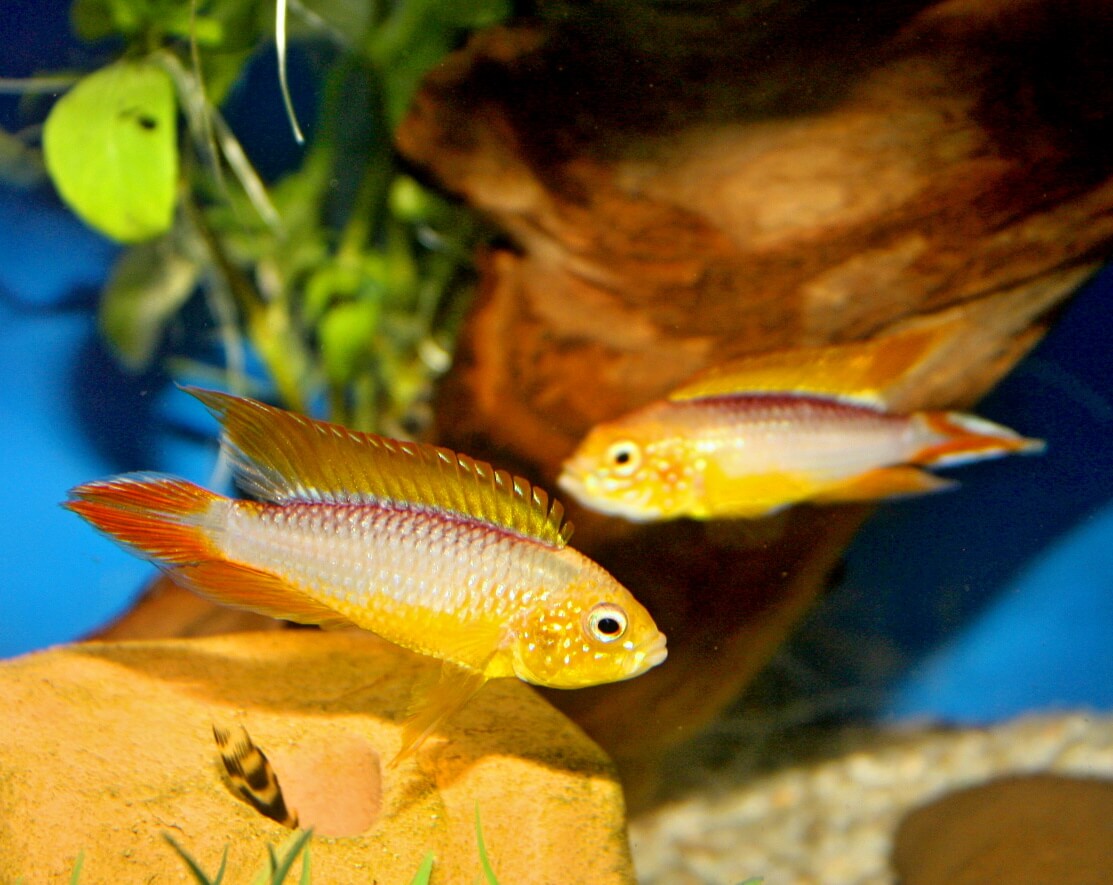
The basic variant of Apistogramma agassizii has been known in European aquariums since 1909. Males are incredibly diverse in color, growing up to 9 cm, while females reach 5 cm. In nature, there are 3 basic color variants, blue-white, red, and yellow. The new color variant is color stable, although when fed high-quality live food, its colors, especially red, can still be enhanced.
Aquarium for Apistogramma agassizii "Fire red"
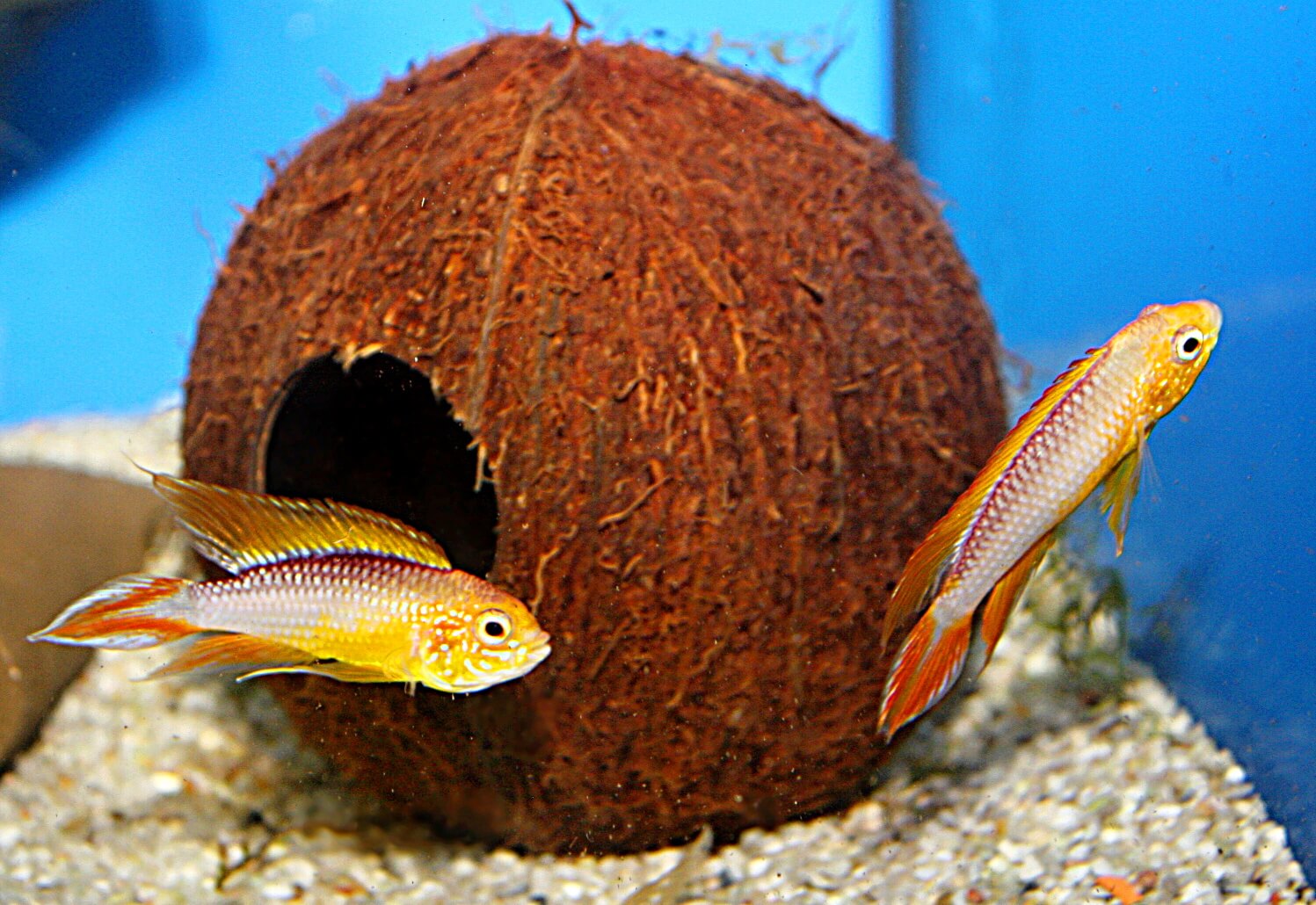
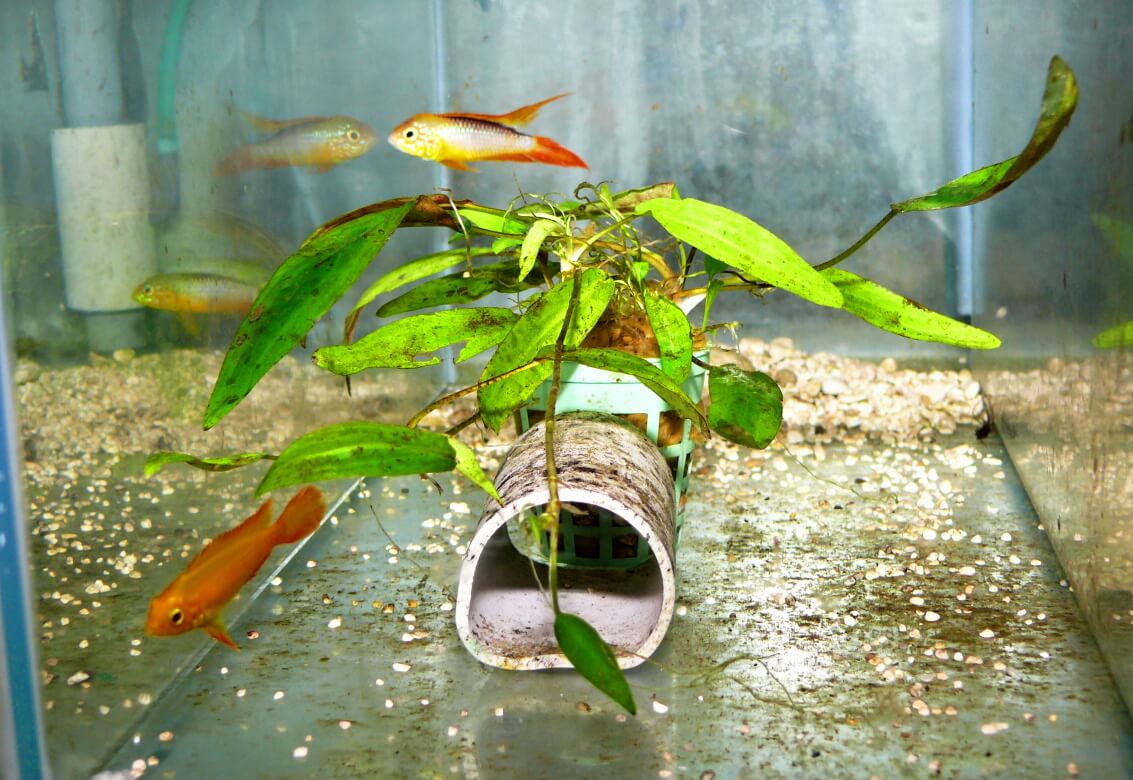
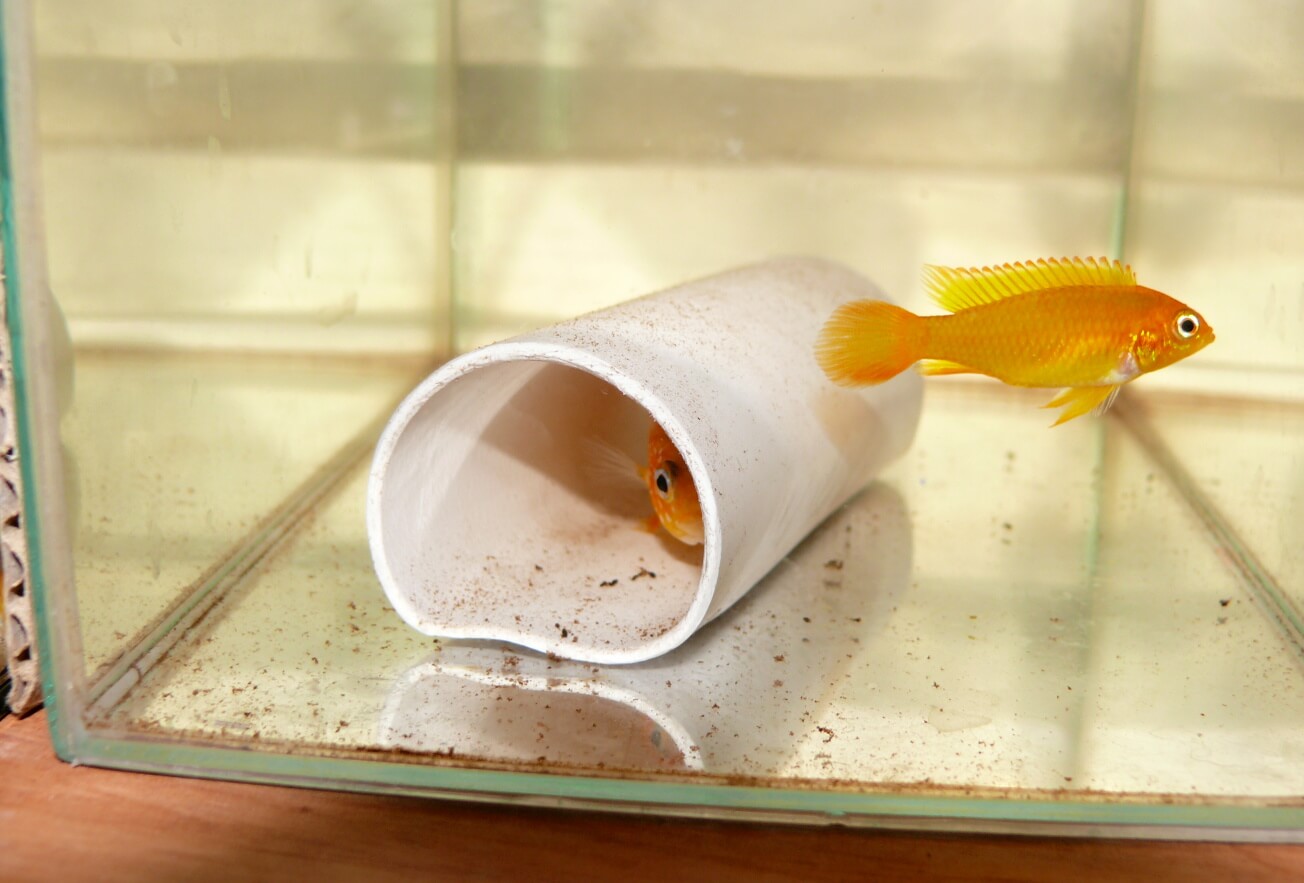
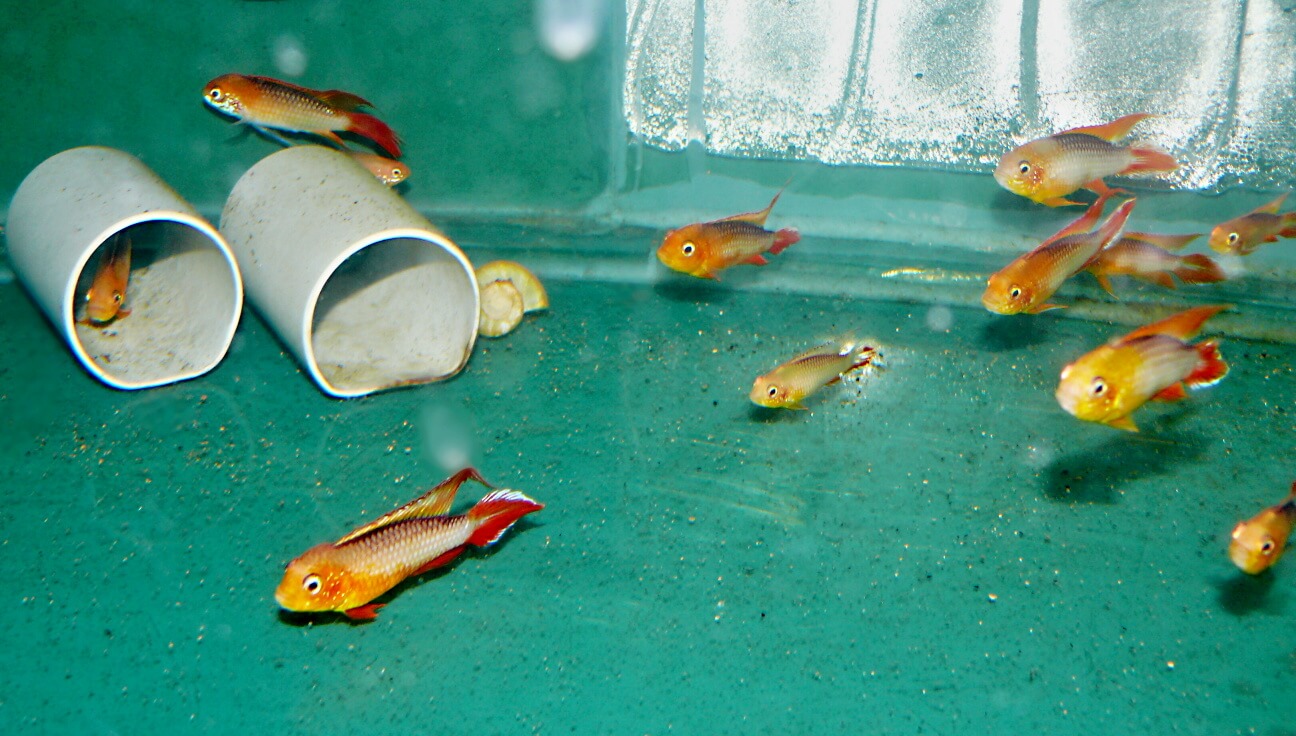
Like the basic form, males tend to take care of more females. Therefore, we should get a smaller aquarium, but with a larger surface area and mainly length. It should be at least 80-100 cm if we want to keep multiple individuals of the species together. Even with this color variant, the males create typical mini territories that must be at least 20 cm apart. Again, we should not skimp on providing enough hiding places for the males. We will use various ceramic or plastic tubes, parts of flower pots, roots, and stones.
Only then will there be relatively solid and harmonious relationships between individual males in the aquarium. I again remind you that in one aquarium there should be only one male. Like most cichlids, we keep the fish in pairs or use 3-4 females. When we use only two females, usually the stronger female that pairs with the male will end up beating the remaining female. When there are more females, this sibling rivalry does not occur.
Quality filtration and regular water changes are essential. However, the fish do not like too strong a current in the aquarium. The bottom of the tank should be well covered with fine sand with a grain size of 3-5 mm. The water should preferably be soft, with a temperature around 24°C.
Feeding
The diet should mainly consist of live food, daphnia, occasionally brine shrimp, and for some time we can manage with nauplii of brine shrimp. Mosquito larvae or insect larvae are welcome supplements to the diet in both live and frozen forms. Most cichlids very reluctantly accept substitute dry or artificial food. Only when they are hungry will they take what is nearby. It should definitely serve only as a supplement.
Now, since my brine shrimp cultures are working again (Luděk Zicháček recently reported on breeding brine shrimp in Hovorech nad hladinou), I am adding this quality but somewhat fatty food once a week. I use daphnia very sparingly. They must not only be well rinsed; I also soak them in a weak green solution of malachite green before feeding.
Breeding cichlids
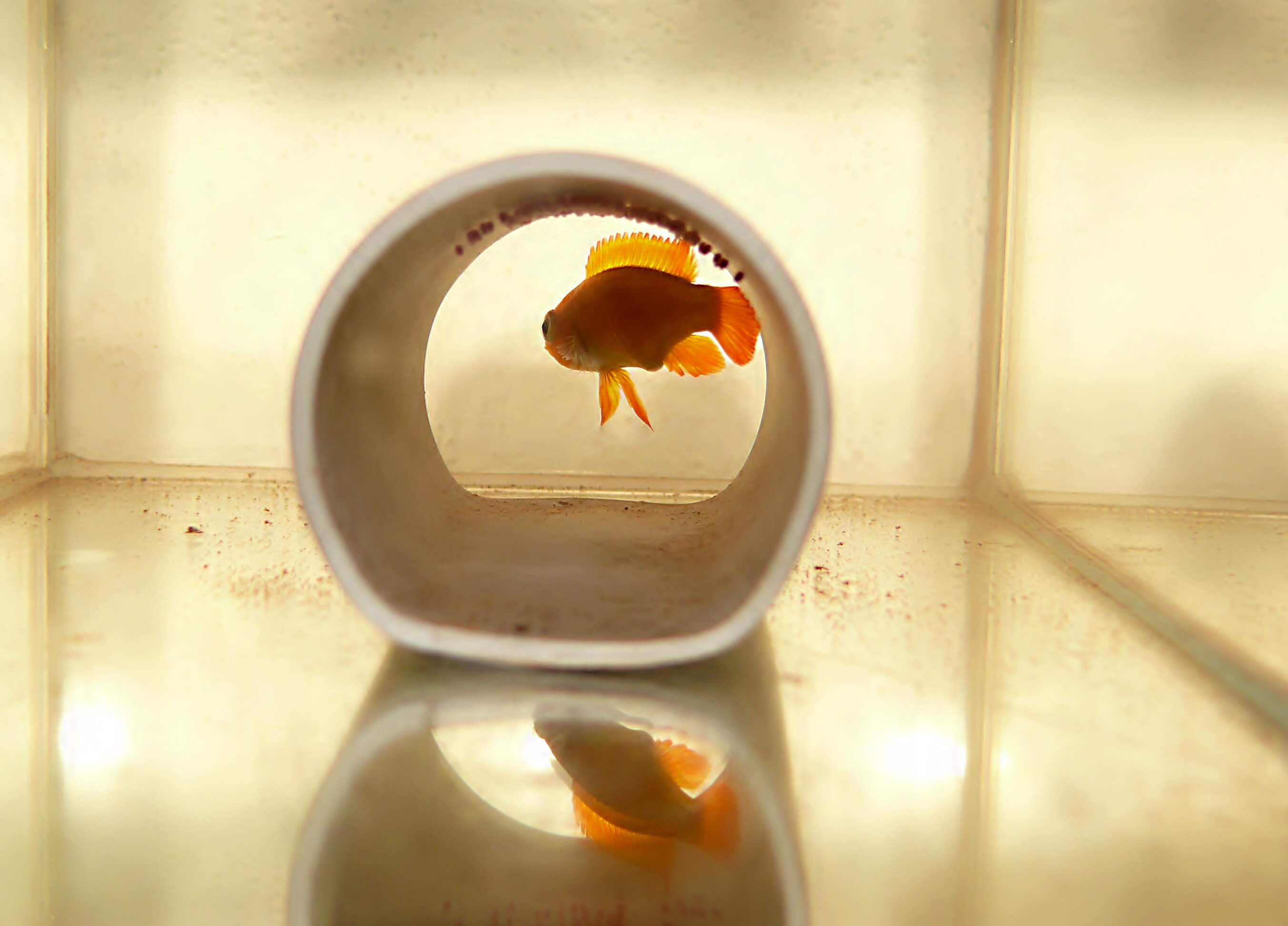
I would say that this color variant is somewhat less productive than the basic form. While they usually lay around 60-100, sometimes even more than three hundred red eggs, which the female attaches in the upper part of the cave, "fire red" has about half the eggs.
Hatching occurs after 2-3 days (at a temperature of 26-28 °C), followed by free swimming after about 5 more days.
The females take good care of their clutches in my case. For starting food for the fry, we use fine nauplii of brine shrimp or daphnia. We only gradually perform water changes for fresh water with the same parameters.
Images:
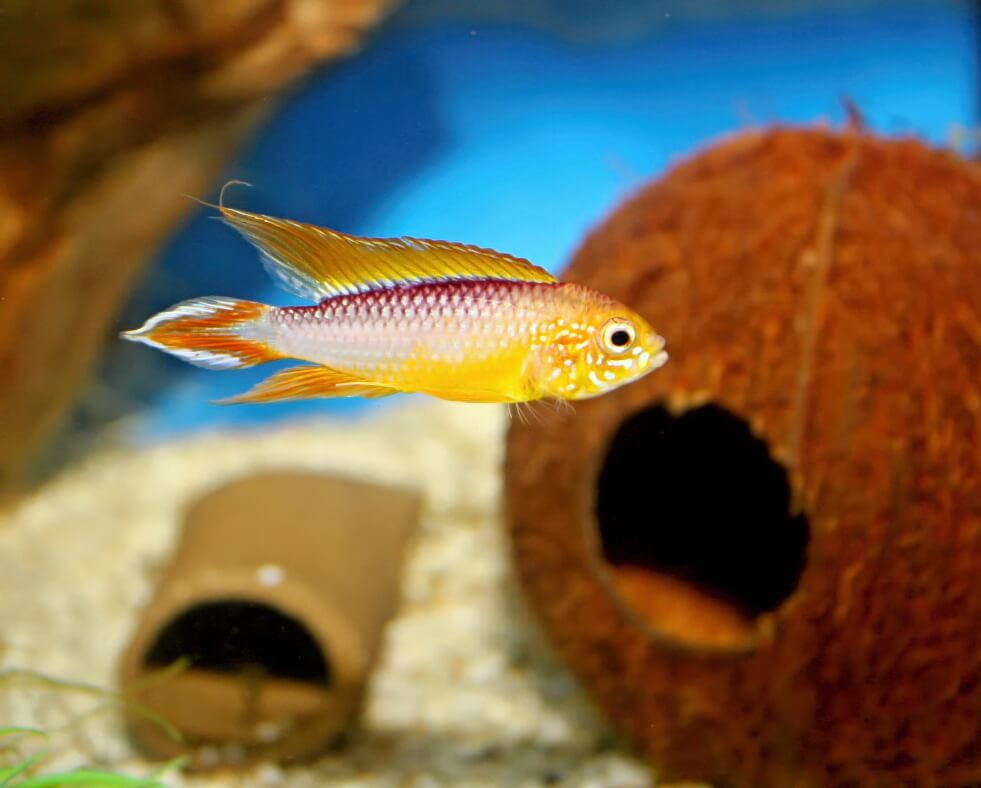
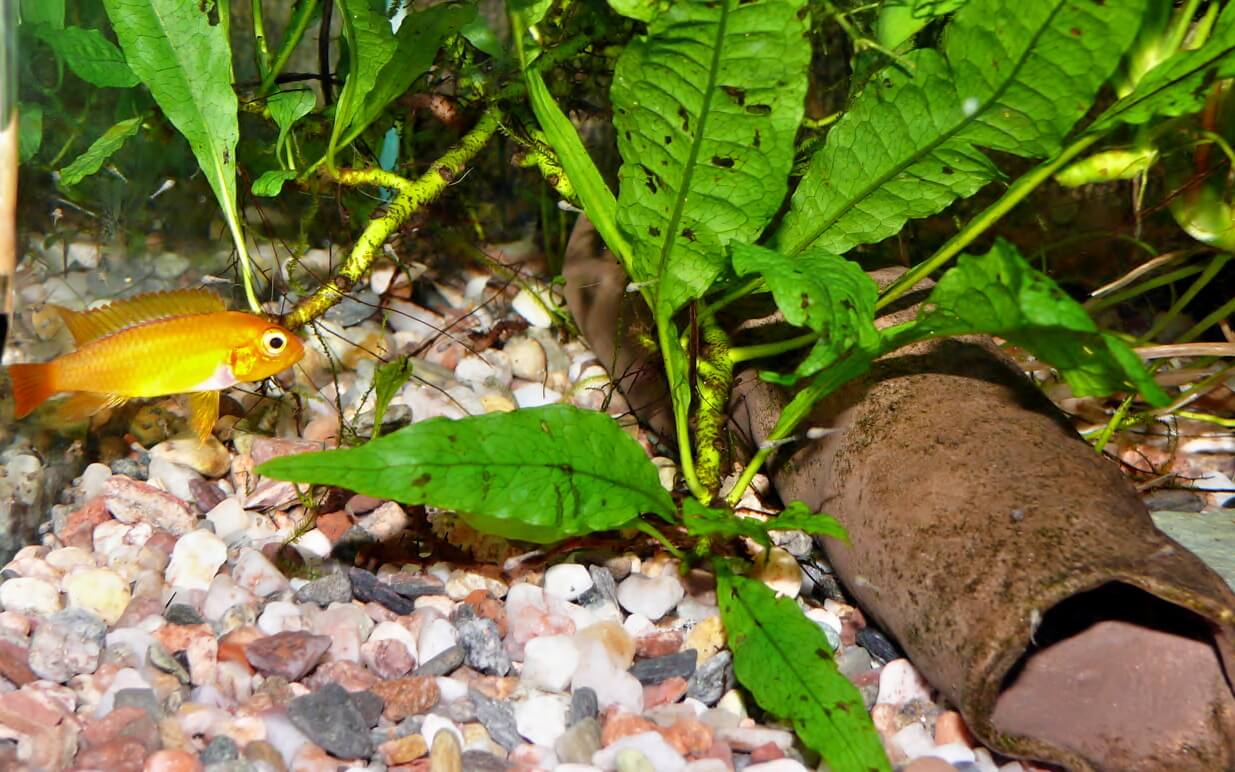
- Adult male.
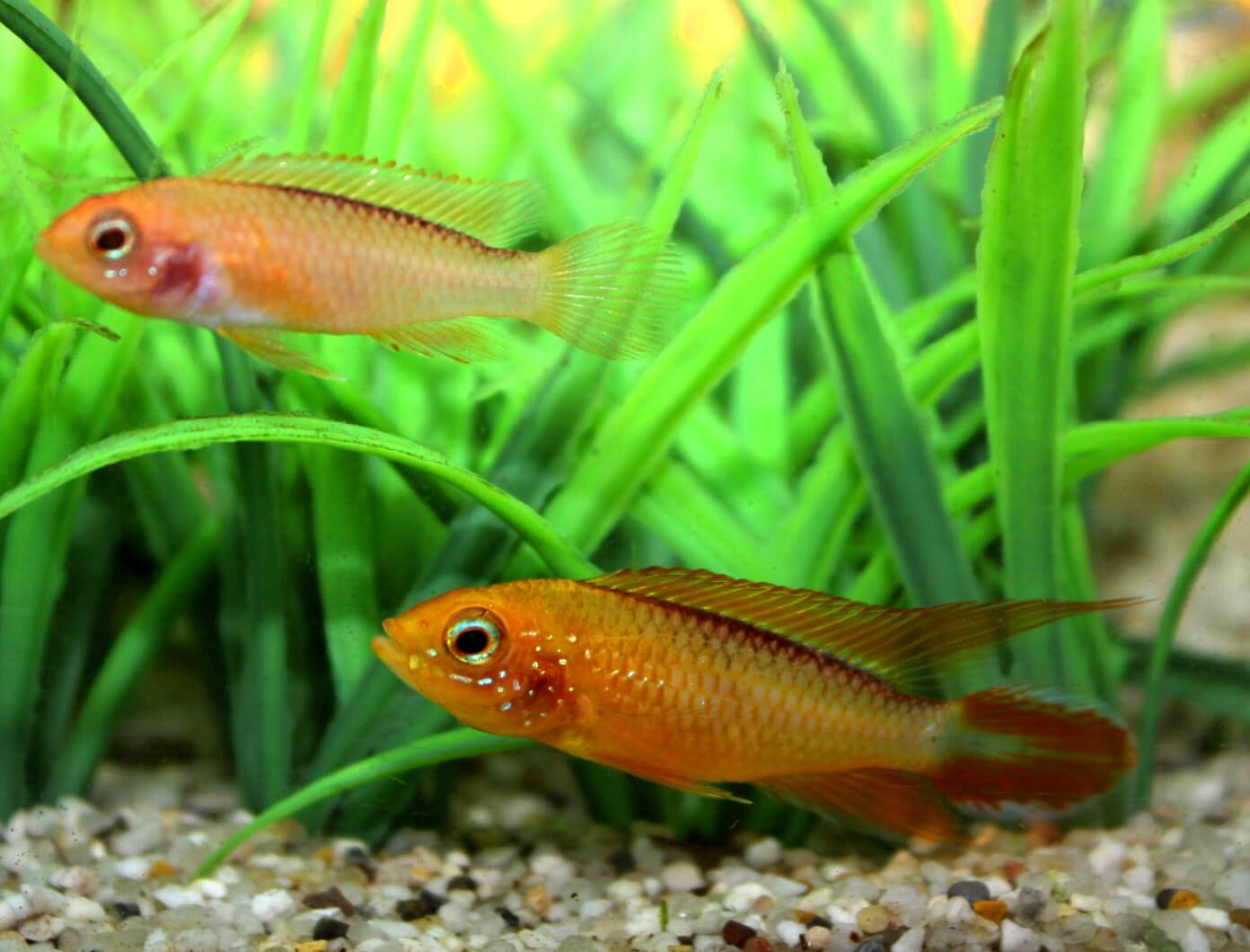
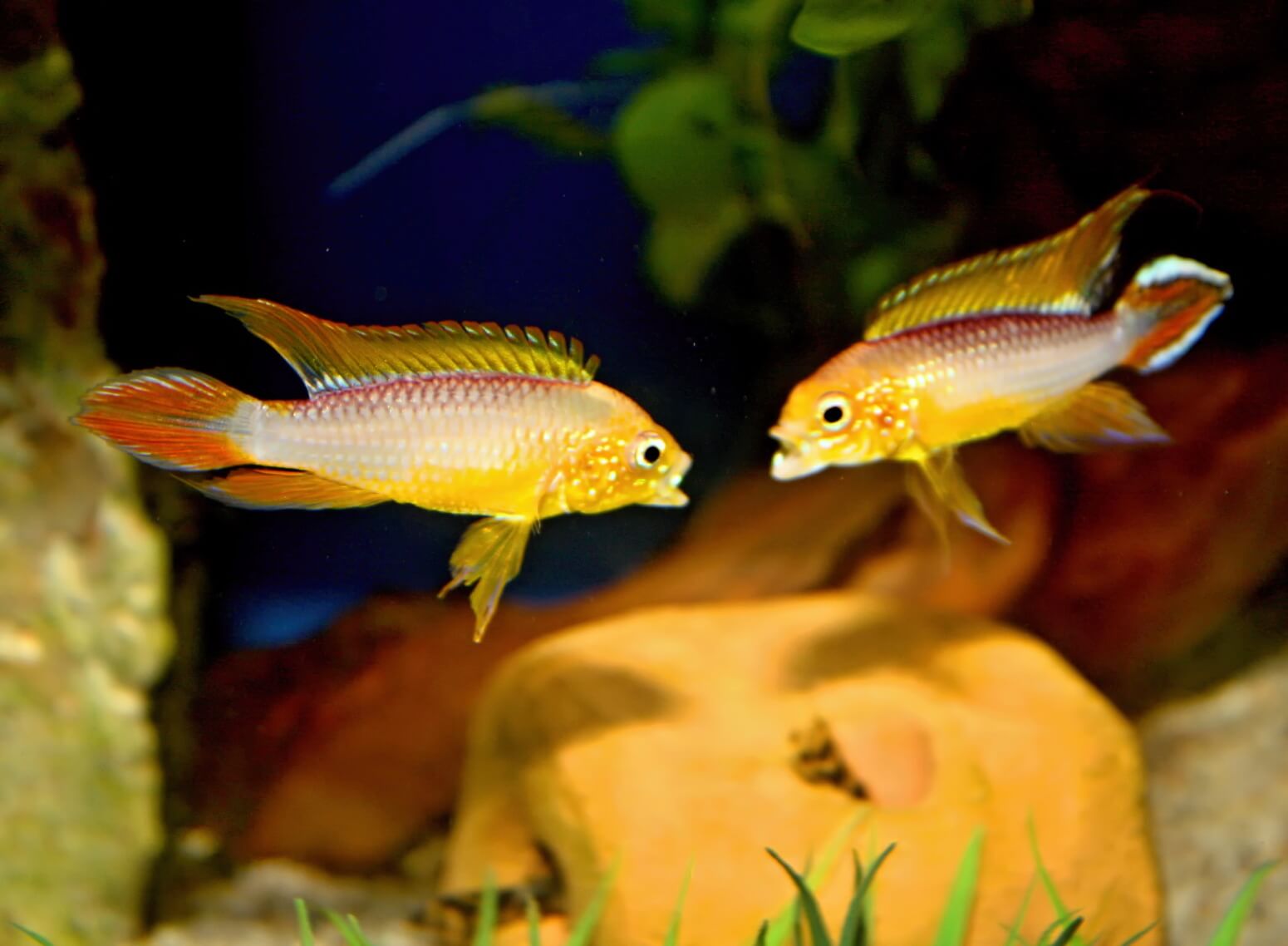
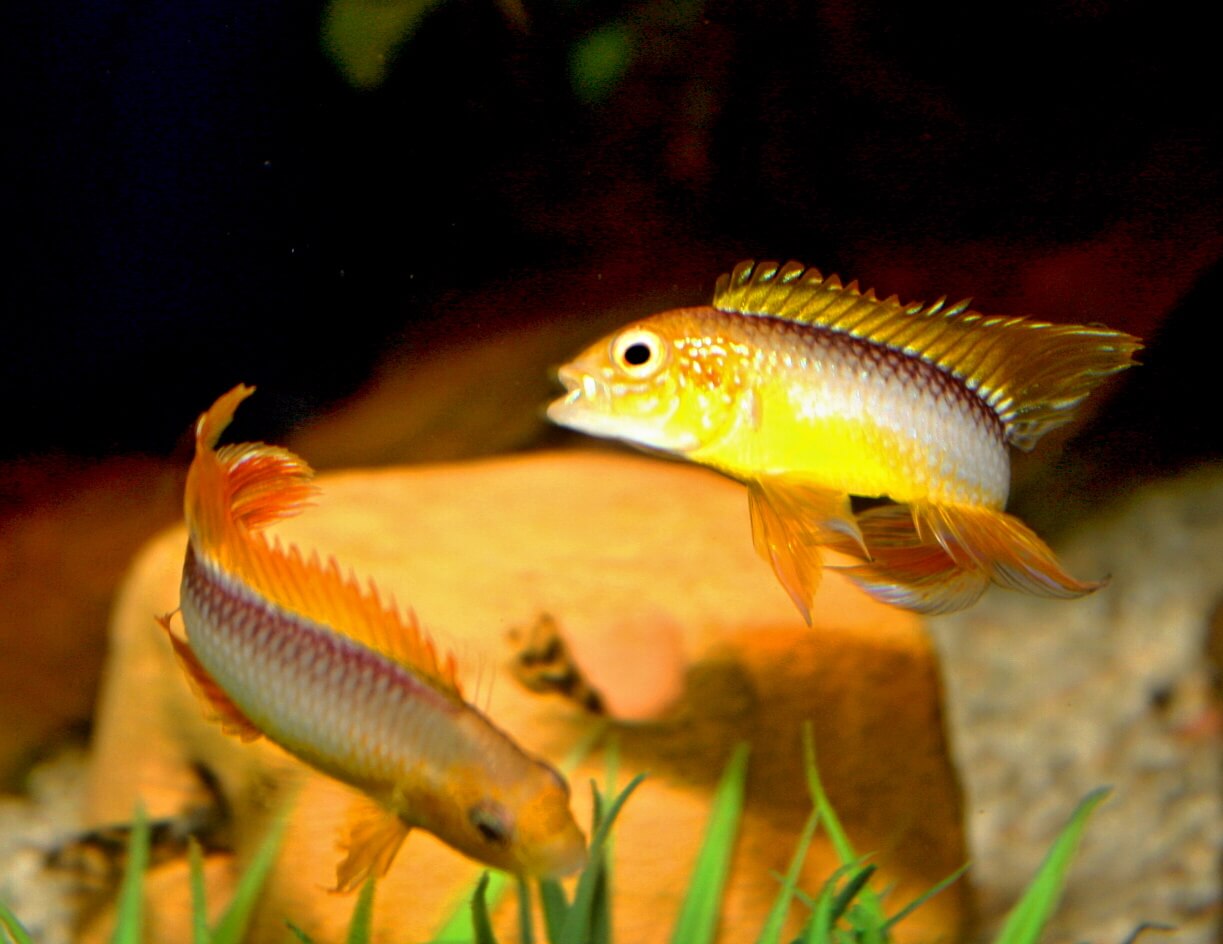
- Young pair at the age of 6 months, male below.
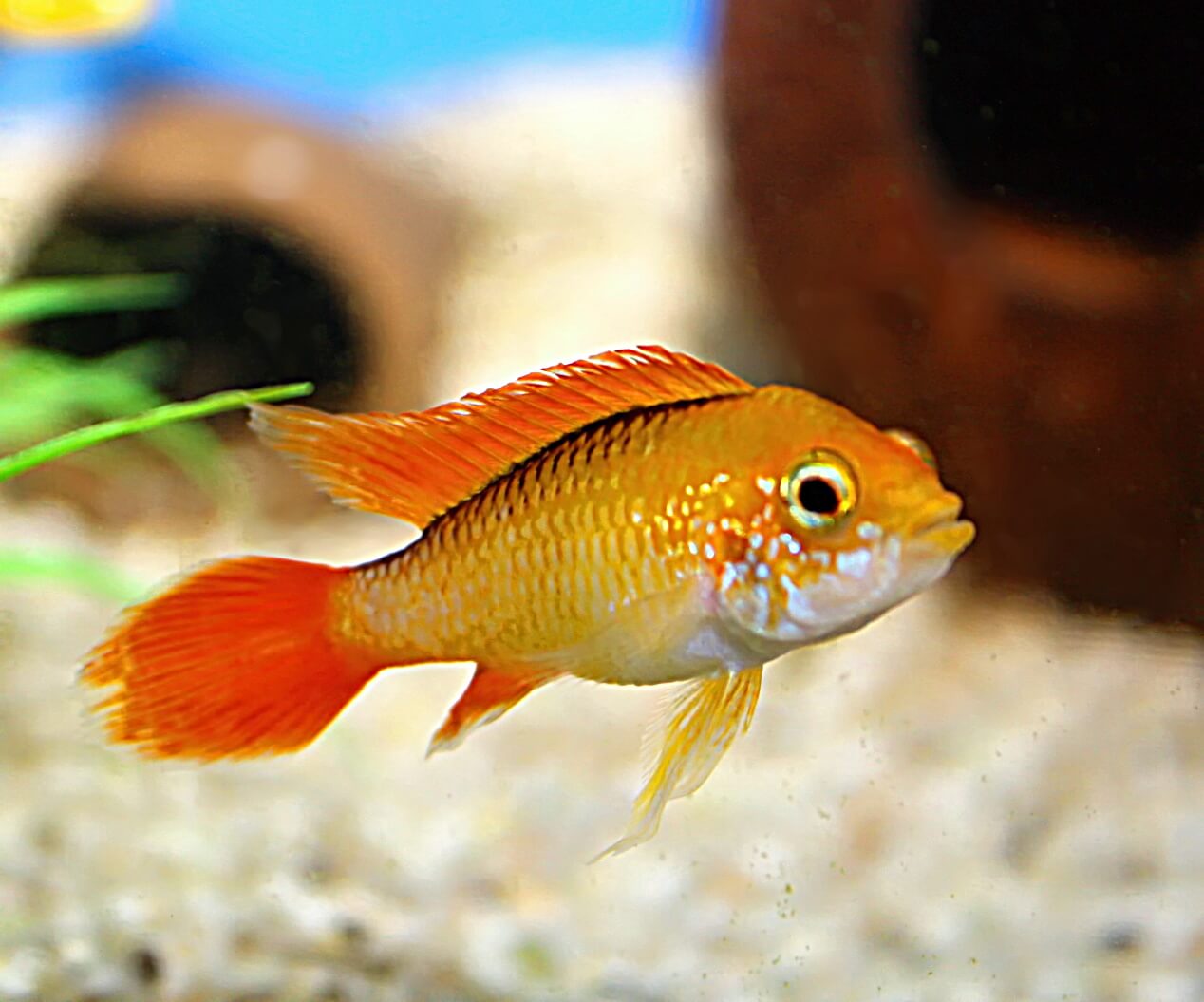
- Adult female.
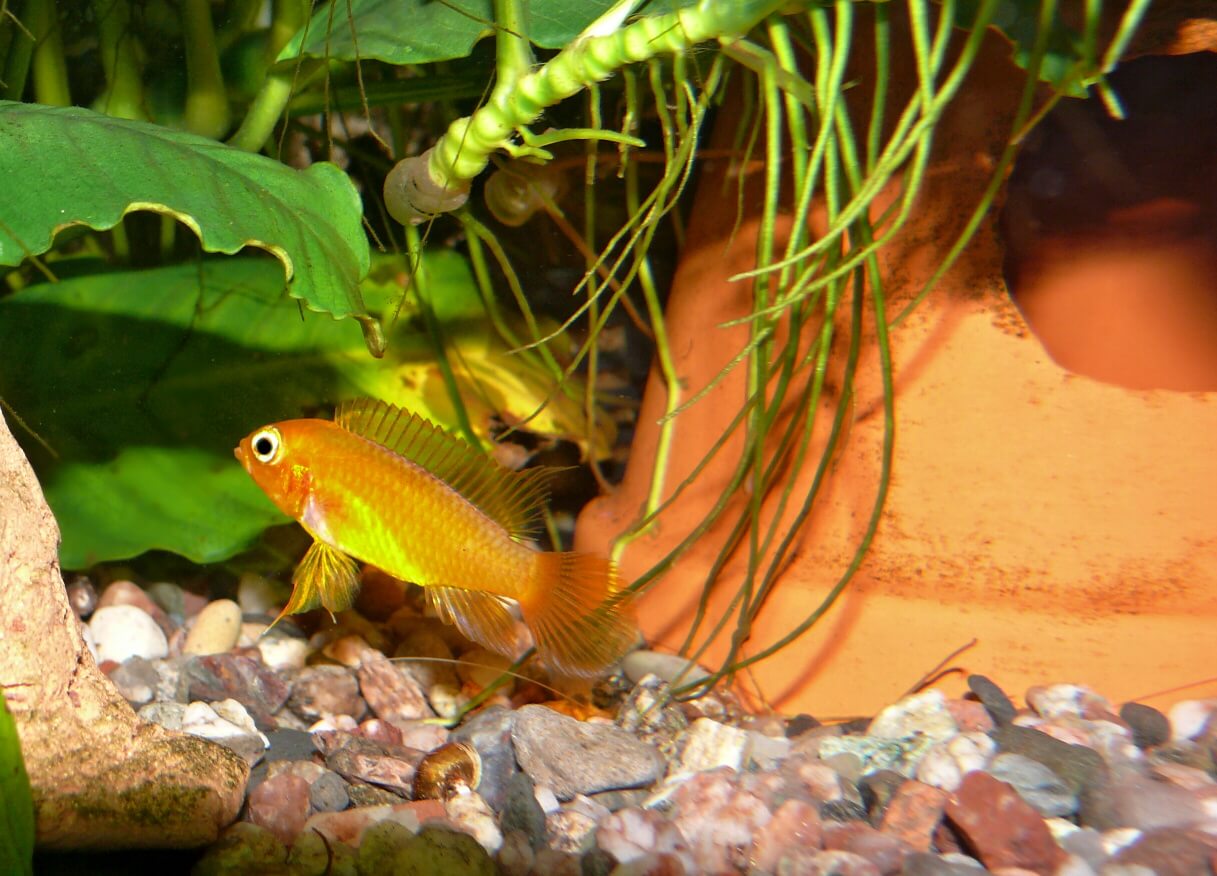
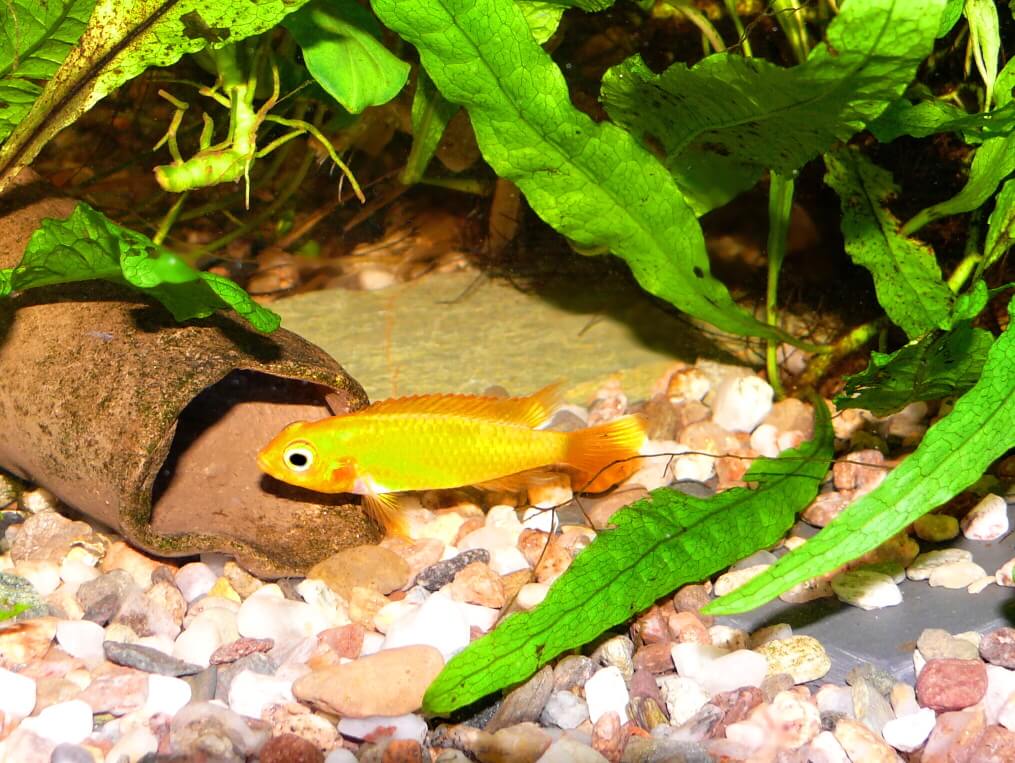
- Juvenile male.
- If there are two males in the aquarium, they often engage in fierce battles. It is about who will be the boss.
- Fights between males can last several minutes and can be watched.
- After such a stage of "tag" play, the weaker male usually retreats.
- The weaker male prefers to swim away to hide somewhere.
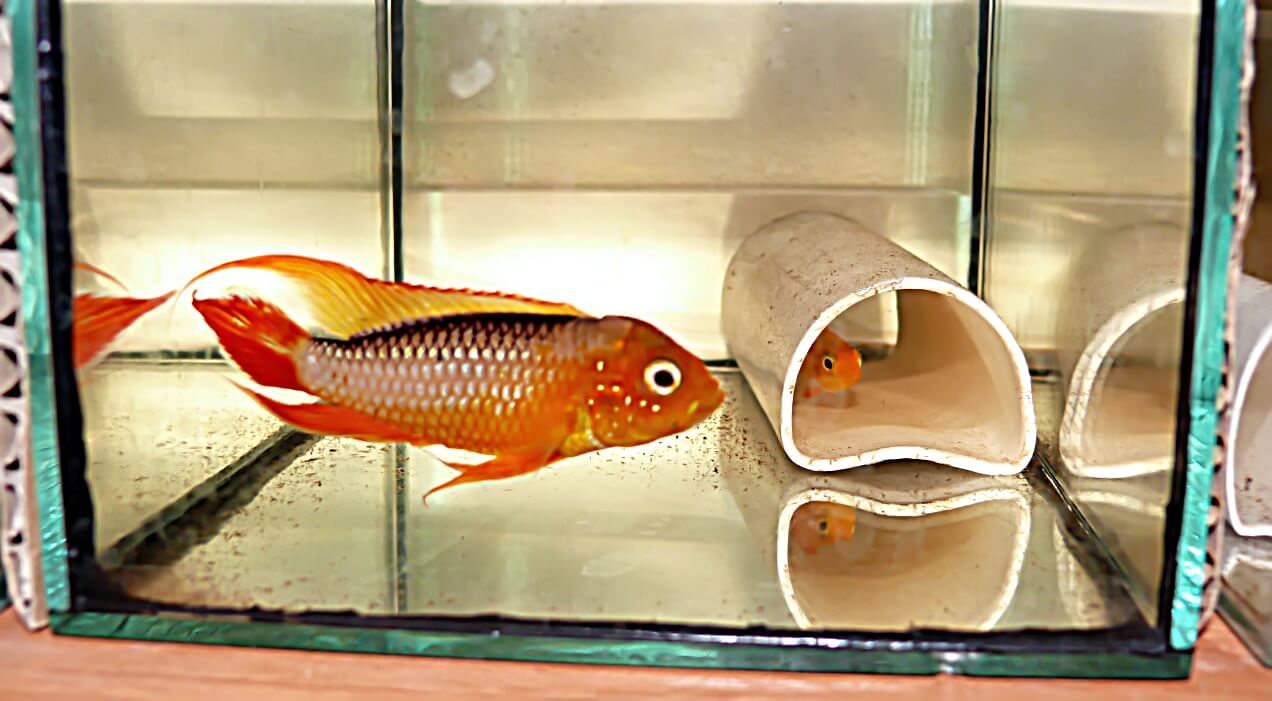
- This is what a typical spawning setup looks like for a professional, volume 20 l. Taken at Radek Winkler's place.
- At the beginning of spawning, the male occupies a suitable tube. I fundamentally breed my cichlids in well-equipped tanks.
- The female carefully guards her clutch. With natural breeding, we obtain fewer young than when collecting eggs and developing them without the female. However, the young in this case are of higher quality and in subsequent generations, they also raise their fry.
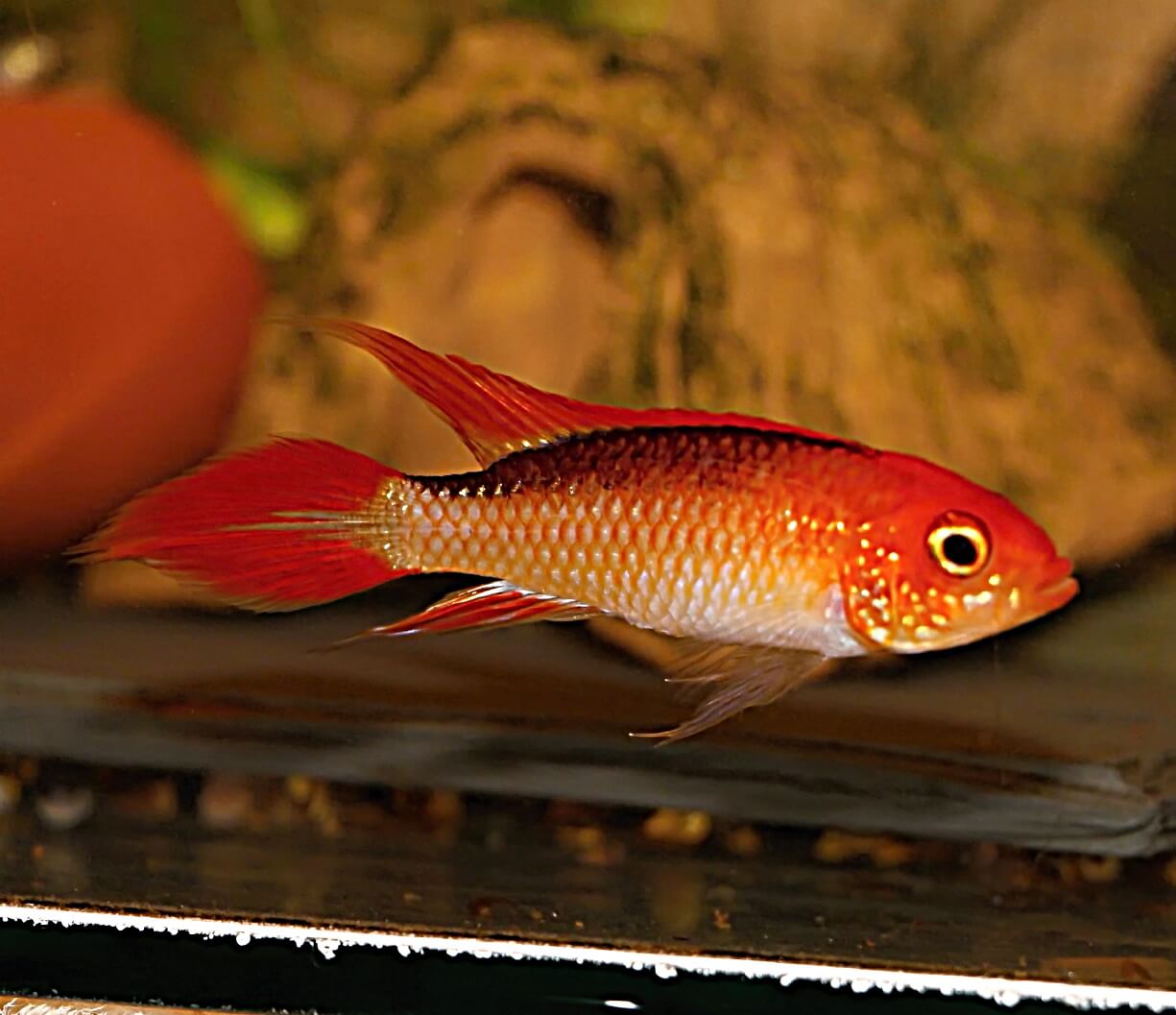
- The more red variety is Apistogramma agassizii super fire red, shown in the picture is a beautiful male, but more about them some other time.
- Pair in the spawning tank, male in front.
- This time the female is in front.
- The female carefully guards her clutch.
- Sometimes it happens that only males are in the spawn. The reasons are numerous.