

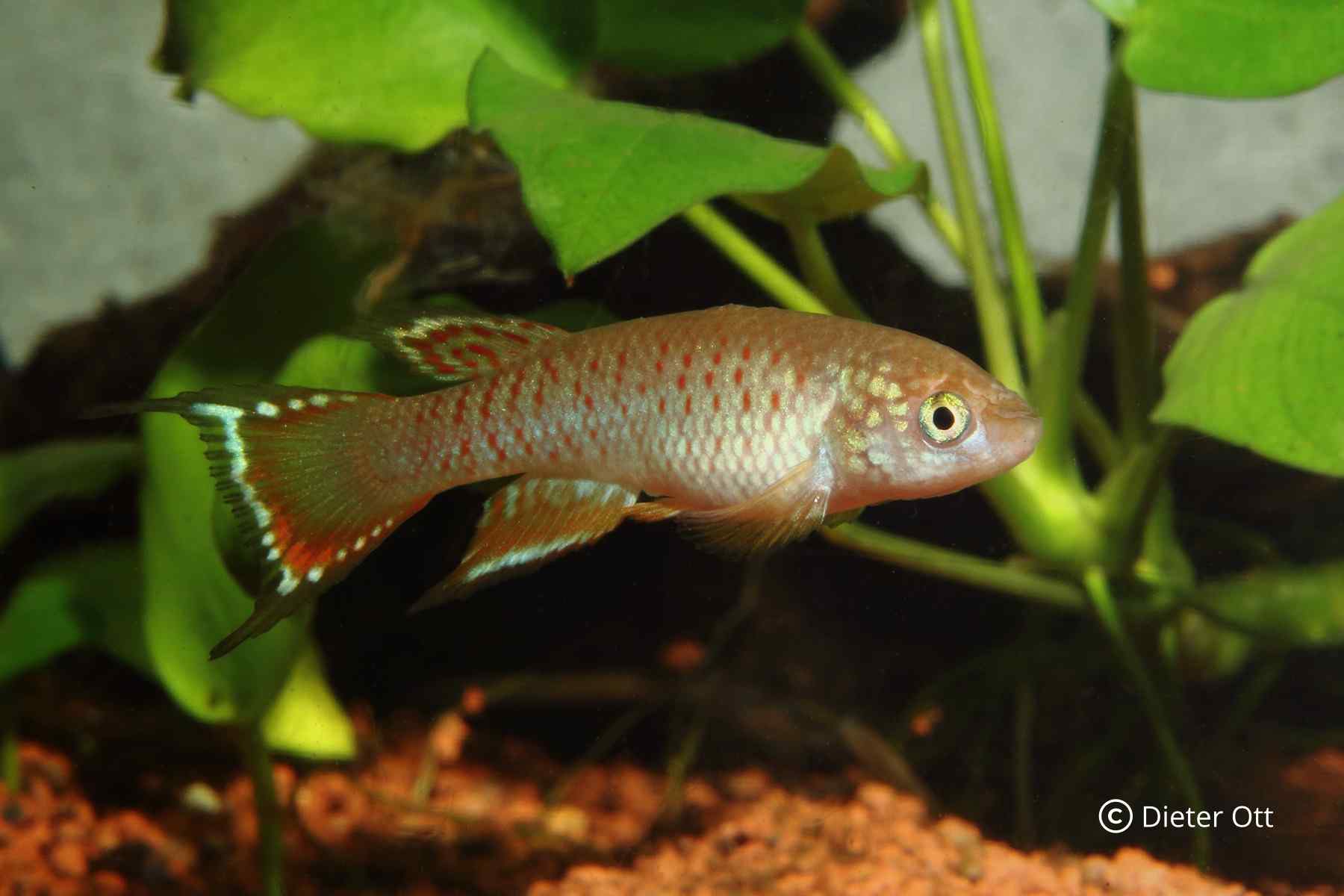
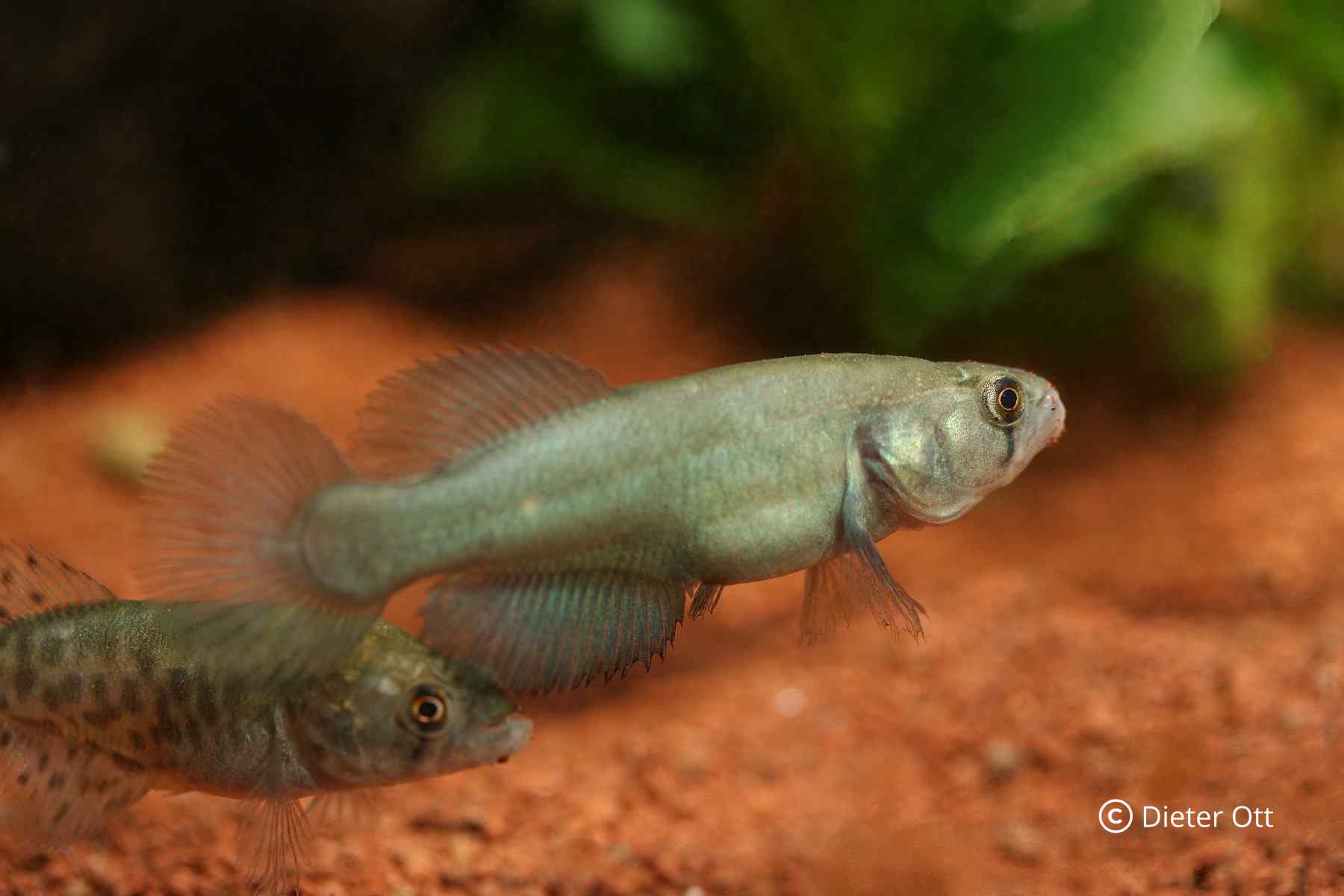
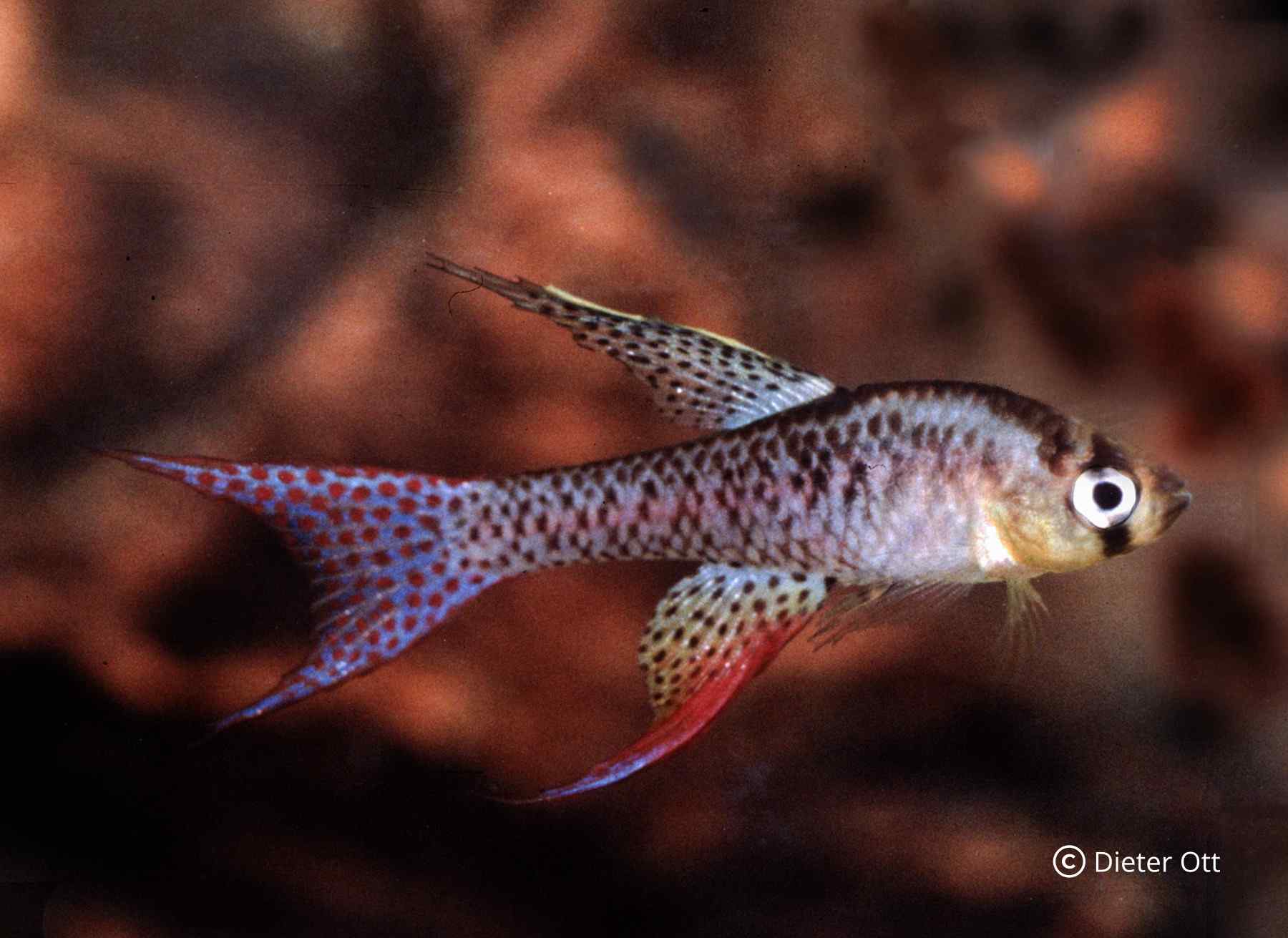
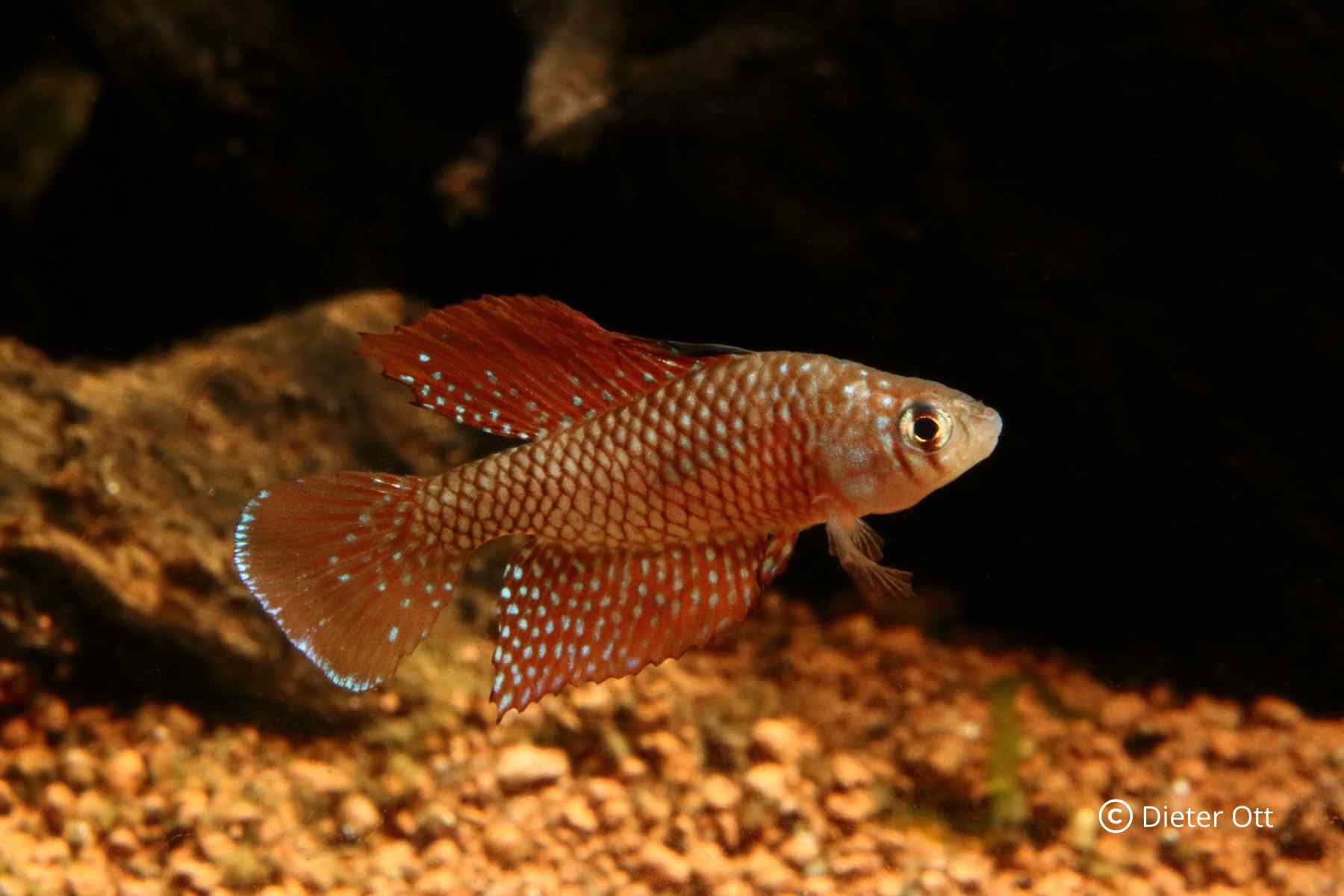

For the breeding of South American annuals (SAA) II - A century full of mistakes on the way to breeding success
The breeding of South American annual killifish has long been characterized by misinformation – from the confusion between males and females to incorrect breeding care instructions that anticipated a long development underwater. Only the understanding of the pronounced sexual dimorphism and the necessity of a dry rest period for the eggs (diapause) in the substrate led to a breakthrough. This report highlights the historical turning points and the modern breeding practices, which are based on careful control of storage humidity and the use of various substrates (such as peat, sand, or healing clay) to master the complex adaptations of these fascinating annual fish.
Intimate sounds
If we want to breed fish, we need to know more about their behavior. Because some of the framework conditions such as tank size, substrate height, temperature, etc. must be aligned accordingly. The study of behavior is our greatest strength as aquarists. Therefore, it is remarkable what interesting behaviors South American annuals display and how few species have been studied in this regard so far. This is a rich field for aspiring keepers.
With video recordings, Belote & Costa (2002, 2003) documented the mating behavior of some species of South American annuals. Such studies prompt scientists to shed light on kinship relationships, which we do not want to delve into here. Regarding Cynolebias porosus, they found that this behavior differs in some characteristics from the observations available so far for Simpsonichthys, Austrolebias, or Campellolebias. Females of Cynolebias porosus take an active role in mating. It has been observed that a female appears dominant among several females, and then mates. Costa (2012a) rightly describes it as a unique behavior within the aplocheiloid killifishes that Cynolebias porosus males produce a cracking sound while courting by shaking their heads.
Twenty species that were still classified as Simpsonichthys in 2002 were assigned a sequence of actions during reproduction that can be attributed to five distinguishable stages:
1) Display behavior
2) Invitation to dive
3) Diving
4) Mating/Fertilization
5) Surfacing
Any killifish enthusiast would mention a similar sequence of mating actions when asked about their observations. And we can add further "nuances." Details such as broadside displays or sigmoid positions, as I have depicted for other genera (Ott 2019), are addressed by García, Daniel; Loureiro, Marcelo & Tassino, Bettina (2008).
Many species want to dive completely into the substrate. Foersch (195b) showed with the example of Pterolebias longipinnis that they do not spawn properly if this is not possible. Austrolebias elongatus also proved to be peat divers. With only seven to eight centimeters of peat cover, the fish surfaced without having spawned. Spawning only succeeded with a layer of 14 cm height. However, the male measured 13 cm (Foersch 1978). But there are very different experiences. For example, Rachovia and Austrofundulus are referred to as bottom divers, while other sources explicitly emphasize that they do not need to dive. This is confirmed by my own experiences with Argolebias nigripinnis (formerly Austrolebias). They laid many eggs in a shallow substrate height. As in this example, many species comparable to Nothobranchius only need contact with the not too high substrate. Thus, Opthalmolebias constanciae does not need to dive into the peat (Bela, 1982). The same applies to the genera Maratecoara and Terranatos. Another group of these annuals only requires light contact with the substrate to spawn successfully. The male of Papiliolebias ashleyae performs a complete roll of over 120° to the side of the female before spawning in a new rotation of the male across the female's axis (Nielsen & Brousseau 2014).
In the Cynopoecilus and Campellolebias species, internal fertilization is considered a generic characteristic. As a result of investigations on Cynopoecilus, Costa (2002) mentions a muscular expulsion pump. Unfortunately, nothing is known about the actual processes of mating, fertilization, and the fertilization of these species. Here, fertilization is understood as the process in which the sperm penetrates an egg or has just penetrated. Fertilization is completed when the sperm nucleus fuses with the egg nucleus. These events usually occur temporally separated from each other. So we wonder what development the (simply put) eggs undergo? Do the eggs have a micropyle? How long is sperm stored, in what form and where? When does sperm become free, and fertilize the egg? Where does fertilization take place? There is still much to discover. Some questions we aquarists could also answer.
In the Campellolebias species, the reshaped first two anal fin rays are clearly visible, separated from the rest of the anal fin. Costa (1995) refers to them as Pseudogonopodium. How this is used during mating, we can only guess. Seegers (2000a) provides evidence in a photo series using Campellolebias dorsimaculatus, that the courting males of the genus change color. While they dance around the female, the head and the front back area turn nearly white. Whether eggs were released during mating in any of the photos has not been indicated by Seegers. The animals were above a root. So it could have been a false mating. Rosskopf (pers. comm.) mentioned that he found fertilized eggs in a female of Campellolebias brucei that it laid without a male. Wildekamp confirms this as well (1995).
Also in the other genus with internal fertilization, the males dance around their female, as Foersch (1975) reported many decades ago. It is noticeable that in Cynopoecilus melanotaenia, the males also change color.
Breeding
More than a hundred years ago, the first breeding attempts of South American annuals were unsuccessful. This was mainly due to a whole series of misinformation. Initially, one could not imagine a different appearance of the sexes and such rapid growth of the fry.
The ichthyologist Steindachner (1881) described the female of Cynolebias bellottii as Cynolebias maculatus (now in the genus Austrolebias). Carlos Berg (1897) already pointed out that the two latter fish represented the same species and that the differences were due to pronounced sexual dimorphism. Eigenmann (1907) did not mention Berg's publication but simply presented Cynolebias maculatus as a valid species. Regan (1912) also classified Cynolebias maculatus as a valid species. Rachow (1912) followed up on this, referred to Berg's work, and clarified the error and its connections.
According to Stansch (1914), the fish was introduced for the first time in 1906 by Schneising, an ornamental fish breeder from Magdeburg. Köhler's (1906) reference to the existing concrete tanks suggests that it was a larger operation. To illustrate his report, he placed two males in the photo tank. Seegers (1979) reported on Köhler's mistake of having a pair in front of him. The supposed female was physically significantly affected. Köhler influenced future discussions about the occurrence area with his note on the presence of Cynolebias bellottii (and maculatus) as well as porosus (now Austrolebias bellottii and Cynolebias porosus) by relocating it to La Plata or its larger tributaries.
In addition to the already mentioned incorrect references to the distribution area, the pocket calendars published by Brüning also misled the breeder. I have the editions from 1912 to 1914. They state, alongside a brief reference to La Plata and a recommended temperature of 16 to 20°C, that the eggs require strong aeration and a development period of 50 to 60 days. It is admitted that breeding is difficult. But it gets even more intense. Schwarz already described the breeding principle and the rapid growth of the species in 1918. Brüning (editor of the magazine) doubts whether the description is "correct in all respects," questions a lifespan of one year and such growth. The search for the right way thus continued, and Schwarz was discredited.
Several years later, Thomas (1938) reported that he had dug up earth from the natural habitats of Austrolebias bellottii. On the way home, he poured this soil with water and obtained fry. This was proof that the eggs could survive such a dry period.
Meder already described the principle of Cynolebias breeding in detail in 1953. His report shows how much aquarists were and are striving to consider and apply the natural conditions. For his experiments with Argolebias nigripinnis, he used peat. He mentioned that even the old Aphyosemion breeders used peat with bottom-spawning Aphyosemion species. We also find a reference to fry developing without drying out.
Adloff's (1923a) contribution also surprised with a breeding success, where fry hatched without a dry period. He had placed a pair in a secluded tank in September of the previous year. A group of fry appeared at a size of 3 to 4 cm. The eggs were covered with water the entire time. Wourms (1972) mentioned a number of species that could hatch in water in the laboratory: Austrofundulus meyersi and transilis, Terranatos dolichopterus, Rachovia brevis and hummellincki, Pterolebias longipinnis, Nematolebias whitei, Cynopoecilus melanotaenia, Argolebias nigripinnis and Austrolebias bellottii. Nowadays, we agree that in the long run, aquarists with their limited resources cannot maintain a population in this way.
In breeding attempts, the aim is to obtain plenty of spawn while keeping the aggression of our killifishes under control. Therefore, it is always important to provide hiding places. The substrate intended for spawning is placed in one or more containers in the tank. When it is distributed in the tank, it complicates removal, and the substrate becomes contaminated with food remnants and feces.
Feeding must be consistent so that the females maintain a sufficient spawning effort. In my initial attempts with Argolebias nigripinnis, I only had success when I placed a dish of tubifex in the tank for the animals.
Substrates
The South American annuals orient themselves to the bottom during mating. This must have the appropriate consistency to enable species-appropriate spawning. In connection with diving, I have described the hurdles that fish may encounter. However, the substrate must also allow for a dry period.
Peat is often used in the breeding of our South American annuals. This is flake peat, sold in garden stores as so-called fertilizer peat. It is sufficient to soak it. Only those who want it to sink quickly can boil it. However, sterility cannot be achieved this way. Those aiming for that should use other substrates.
I repeatedly get the impression that South American annuals also like to feed on their spawn. This somewhat surprises experienced aquarists. Fish eat fish, so why should they stop at the eggs? I believe that a low layer of peat encourages egg predation.
Not a few breeders collect the eggs from the peat and distribute them in smaller quantities (e.g., for sale on aquabid) or because they want to mix them into clean peat. Foersch crushed this peat in his experiments so that he could sift it. This is a significant time saver.
Peat fiber is suitable for breeding attempts just like flake peat. The eggs are somewhat easier to find in it. However, peat fiber is not available everywhere in stores and is considerably more expensive than fertilizer peat. In gardening culture, alternatives to peat are being sought in times of environmental protection. Aquarists are also striving for this. From pellets available in garden stores, we obtain coconut fibers. However, some aquarists have had bad experiences with them if they were not soaked or boiled for a longer time. The reasons for unsuccessful breeding attempts in this context were not clearly identifiable. I experienced this with peat sold as rabbit bedding. Here I suspect that it was just superficially scraped material.
As early as the beginning of the last century, aquarists used sand for breeding attempts with killifishes. It is important to have as rounded a grain as possible. For this reason, bird sand was used in the past. I reach for construction sand, which, however, with its edges, does not always yield satisfactory results. Foersch (1956) photographed Pterolebias longipinnis mating over sand. The young animals had already spawned over peat before. They had dived into it in the usual manner without any issues. Over the sand, they behaved hesitantly. Eventually, spawning occurred, which was evident from the makeshift setup. Thus, sand seems to be suitable as a diving substrate only for very robust animals.
A few times, I have used micro glass beads. In everyday life, these are used for blasting objects. Compared to sand, they offer the advantage of being rounded in any case, so the eggs cannot be damaged. They can also be heated in the microwave and then be available for new uses. My attempts are not yet complete in this regard. Much indicates that these, like sand, are only suitable for more robust species for which contact with the substrate is sufficient for spawning.
In connection with our killifishes, clay comes up from time to time. Recently, Rosskopf (2004) addressed this. The consideration for usage is that clay may bind existing acids and thereby promote the course of incubation depending on the species. Rosskopf did not want to use pure clay and therefore resorted to Luvos healing clay No. 2. He mixed five tablespoons of healing clay with the amount of a flower pot of peat. With this, he succeeded in breeding Hypsolebias flagellatus and Hypsolebias ghisolfi at an incubation temperature of 27°C after failed attempts with peat. To his surprise, the eggs extracted from the peat/clay mixture were completely clear.
Robust species such as Pterolebias longipinnis, Aphyolebias or Rachovia also spawn in wool mops. This allows for easy collection of the eggs and keeps productivity in view. The collected eggs are then mixed with peat for incubation.
In the further text of this article, I will refer to peat for simplicity. This always means the substrate used.
Contact Organs
During mating, the sex partners must coordinate with each other. Hormones cause, for example, (simplified) that eggs and sperm are ripe at the right time. However, the fish must also adjust their movements so that fertilized eggs ultimately lie in the substrate. This coordination is supported by contact organs, of which Carvalho (1957) first reported in the form of contact papillae behind the pectoral fin in Nematolebias whitei.
In his work on the phylogeny of plesiolebiasine species, Costa (2011) addresses these elements. In the examined animals from the genera Papiliolebias, Pituna, Maratecoara, and Stenolebias, he found tiny contact organs on scales at the edge of the body. In addition to the already known contact papillae behind the pectoral fin in Nematolebias whitei, he referred to corresponding formations in Rachovia maculipinnis.
The Peat, Its Moisture and Storage
With the annuals, we regularly lay the spawn dry. This dry period gives development an impulse so that the development time begins. If spawn is left in water for long or stored too moist, often no development is shown even after weeks. After extraction, the peat is poured through a fine mesh net. In the net, I press the peat firmly. We do not have to worry about the eggs in this case. They harden very quickly. Additionally, Siegel (1958) demonstrated with the example of Pterolebias longipinnis (egg diameter 1.46 mm) that the egg shell is layered. This would additionally cushion any pressure. In the image, he also showed the stamp-like outgrowths on the egg of Leptolebias splendens, which also protect the egg against pressure and drying out. However, he also noted that the eggs of this genus do not show the mentioned layering. Other species of our South American annuals carry long hair-like extensions on the egg surface, which are sticky and protect the egg with the adhering soil particles.
The expressed peat is stored in the room for a few days. I spread the peat out to dry a bit. This way, it does not lie in a compact ball on the newspaper. This also means that the somewhat broken peat ball dries out faster, and the diapause begins quickly. It should be about as dry as tobacco. In our family, no one has stuffed a tobacco pipe. And the times when my father rolled his own cigarettes are long gone. So what is meant by tobacco dry? It refers to a slight residual moisture that can be felt with the fingertips. So it only remains to feel – and to try!
Langton (1979) published a numbering system for peat moisture. There is an initial orientation. In the reprint of 1989, Slusarczuk expressed cautious doubts about the practical use. He conducted his own experiments under defined conditions and found Langton's system to be a linear gradation of moisture, for which he found intermediate stages. In practice, I act according to my own experiences. I would recommend trying out several moisture levels yourself. So many peat attempts arise that this way seems most sensible to me. I found it noteworthy in Slusarczuk's experiment that completely air-dried peat, which felt "bone dry," still contained 12.5% water.
The peat is packed in labeled (!) plastic bags until the infusion. Many breeders open these bags from time to time and loosen the peat to allow air in. Plastic bags are permeable to air to a certain extent, so the opening is a matter of belief. I store them closed until the hatching date.
Egg Development
Of course, it makes sense to inform oneself about the required incubation time before the breeding attempt. This is not always easy, as there is sometimes a lack of publications on the individual species. For this reason, I have listed some species with their storage times. The eggs go through their diapauses during this time (Ott 2019). When the infusion date approaches, it is advisable to search for individual eggs from the peat. Checking under the microscope appears to be the safest way to determine the upcoming hatching. In many reports, a clear golden iris has been referred to as a distinguishing feature. However, we find this unmistakable sign only in a few species. In general, it is not easy to follow the development of the eggs of South American bottom spawners because the interior appears clouded. Particularly with the recently added killifish species, we find more indistinct gray shadows than a golden iris, in which an eye structure can be discerned.
The breeding of South American annuals requires perseverance and a willingness to experiment from breeders. It remains a constant search for each individual species to find the right conditions to determine the correct storage time. Over the years, it has been shown that egg development is strongly influenced by temperature, humidity, and oxygen content in the substrate. Generally, annual killifishes have acquired a number of adaptations that allow them to inhabit seasonal waters. These include modifications of general egg attachment patterns and one or more diapauses. These diapauses can occur obligately (obligatory) or facultatively (left to free choice).
We know that the eggs harden quickly after fertilization, so we can handle them without concern with our fingers. Through fertilization (nuclear fusion), the egg cell is stimulated to divide until the embryo is formed. In this process, the germ disc in killifishes typically forms a cap (discoidal cleavage). From the germ disc, the developing cells envelop the yolk. The cell mass sits on the uncleaved yolk initially point-wise, later band-shaped. Finally, the primary segments and the eye cups are formed before the embryo becomes noticeable on the yolk and reaches the so-called eye spot stage through pigmentation and visible eyes. After the tissue differentiation of the organ systems, development concludes (Ott 2019).
In our killifishes, the hatching-ready fry rests in the egg, which corresponds to the so-called Diapause III.
Peters (1963) found Diapause II only in African species, where it appeared obligately (mandatory) in both the water and dry approaches and lasted from 5 to 51 days. Wourms (1964), on the other hand, reported on annuals that could last over two years in this stage before they developed further. This diapause could also be observed by Wourms (1972) in South American species after extensive investigations. The table he published on intra-species development shows the differences that occur even among different locality forms, which present us with great challenges in aquarium practice. With this research result, the often-expressed assumption is outdated that only African annuals would show all three diapauses. With the so-called oxygen theory, Peters showed us that the presence or absence of oxygen regulates both the development of killifish eggs and their hatching.
Occasionally, I have been asked whether the eggs can be placed in the refrigerator. In fact, Foersch (1958) reported on experiments with Austrolebias bellottii at room temperature. He placed eggs that had been kept cool for an unspecified number of months at temperatures near 0°C for several weeks and found that development began even after 15 months. In the eggs that hatched only at a later date, the proportion of belly sliders was very low. The experiments showed that it is advisable to initiate the dry period early. This promotes quick development until hatching.
Higher temperatures fundamentally and within limits accelerate life processes, while lower temperatures delay them. But each species has its optimum and thus its temperature limits upwards and downwards. In experiments conducted by Foersch, eggs of Austrolebias bellottii showed the first eye spots after 14 to 18 days at a constant 30°C. In the control experiment at 19 to 22°C, this only occurred after 42 to 57 days. Freshwater addition and cooling were used as hatching stimuli. At 30°C, the fry immediately perished and remained stuck in the egg membrane. If the temperature was slowly lowered, most fry survived but were belly sliders.
I often rely on the experience values I have determined in my fish cellar and then pour without control. Such an approach quickly finds its limits. With Rachovia or Austrofundulus as well as the attractive Hypsolebias species from northwestern Brazil, higher temperatures not only accelerate the incubation times. Experience shows that with warmer storage, the yield increases and breeding success becomes more assured. Therefore, I acquired a heated incubator, as is offered for hatching reptile eggs. Now, the earlier experience values are no longer useful to me, and the search for the right timing begins anew.
A hatching enzyme is responsible for dissolving the internal zona radiata. It seems to be a metalloprotease. This enzyme originates from specific hatching gland cells of the embryos, which are arranged species-specifically. Its secretion by the embryo is influenced by environmental factors. The young hatch in the substrate and move with their tails leading towards free water (Vaz Ferreira et al. 1963).
But even if all external signs indicate hatching readiness, it can happen that only part actually comes out of the egg. We are then left with no choice but to dry the approach again and later start a new attempt.
Development Times
A brief overview for a storage time at 20-22°C:
Austrolebias bellottii - 6 months.
Argolebias nigripinnis - 2 months to 12 weeks
Austrolebias prognathus - 4 months
Hypsolebias fasciatus - 26 weeks to almost 1 year!
Hypsolebias magnificus - 19 weeks
Hypsolebias tocantinensis - 6 months
Nematolebias papilliferus "Iona" albino - 6 months
Nematolebias whitei - almost 4 months
Notholebias minimus - Storage up to 5 months
Ophthalmolebias bokermanni CEPLAC - 14 weeks
Pterolebias longipinnis - just over 10 weeks
Ophthalmolebias perpendicularis - 10 months
Simpsonichthys boitonei - 7 weeks
Spectrolebias chacoensis - just under 17 weeks
We let it rain: the infusion
For the infusion, I add the peat depending on the species and amount of peat into a suitable container of about one to ten liters in volume. Then I pour the water over it. For species from southern Brazil, Paraguay, Uruguay, and Argentina, as well as Pterolebias, Austrofundulus, and Rachovia, I use tap water. For many other species, especially Simpsonichthys, Hypsolebias and their close relatives, I now resort to rainwater. Since osmotic reactions are involved in hatching, I assume that soft water has a supportive effect. In the infusions, I pay attention to a ratio of peat to water of about 1:3 to 1:4 so that oxygen depletion actually occurs and hatching is promoted. Pillet (2013) points out that according to his experiences, for some species, without soft water, no hatching is to be expected despite the eggs being mature.
It has proven effective to add an oxygen tablet to the infusion, although this seemingly contradicts the desired oxygen deficiency as a hatching trigger. This addition of a quarter to a whole tablet – depending on the amount of peat – reportedly reduces the proportion of belly sliders. I will elaborate on the issue of belly sliders further below.
It is now established knowledge among killifish enthusiasts that the eggs of our annuals develop at different times even from the same spawn. They have thus adapted to the changing conditions of their biotopes. This ensures the preservation of the species under suddenly unfavorable conditions, as only part of the eggs may perish. In aquarium culture, we find even after one or two infusions of the peat attempts still clear eggs that seemingly show no development. The diapauses vary significantly.
Finally, I pour the hatched fry over the edge of the aquarium into another tank.
The third and final part of the article series can be accessed here.
Literature
- Adloff, A. (1923a): Neues von Cynolebias adloffi Ahl. Blätter 34(1): 1 - 3.
- Adloff, A. (1923b): Brief aus Brasilien. Neues von Cynolebias u. a. Blätter 34(12): 251 - 252.
- Barois, Nibia et al. (2016): Annual Fishes. Life History Strategy, Diversity, and Evolution. - CRC Press - Taylor & Francis Group, Boca Raton, FL 33487-2742.
- Bela, Heinz (1982): Cynolebias constanciae Myers, 1942. DKG-J. 14(7): 104-106.
- Belote, D. F. & Costa, W. J. E. M. (2002): Reproductive behavior patterns in the neotropical annual fish genus Simpsonichthys Carvalho, 1959 (Cyprinodontiformes, Rivulidae): Description and phylogenetic implications. - Bol. Mus. Nac. 489: 1-10.
- Belote, D. F. & Costa, W. J. E. M. (2003): Reproductive behavior of the brazilian annual fish Cynolebias albipunctatus Costa & Brasil, 1991 (Teleostei, Cyprinodontiformes, Rivulidae) a new report of sound production in fishes. - Arquivos do Museu Nacional, Rio de Janeiro 61(4):.241-244.
- Berg, Carlos (1897): Contribuciones al conocimento de los peces Sudamericanos, especialmente de los de la Republica Argentina. An. Mus. Nac. de Buenos Aires V: 263-302. (nicht eingesehen)
- Boschi, Enrique (1957): Argentine pearl fish. - T. F.H. Publ. Inc., Jersey City, N. J., 23 Seiten.
- Brüning, Christian (1912): Taschenkalender für Aquarienfreund. - Gustav Wenzel & Sohn, Braunschweig. 96 Seiten.
- Brüning, Christian (1913): Taschenkalender für Aquarienfreund. - Gustav Wenzel & Sohn, Braunschweig. 122 Seiten.
- Brüning, Christian (1914): Taschenkalender für Aquarienfreund. - Gustav Wenzel & Sohn, Braunschweig. 133 Seiten.
- Calviño, Pablo A., Alonso, Felipe & de Torres, Jorge Sanjuán (2007): Llenado de gas de la vejiga natatoria de post-larvas de peces anuales sudamericanos (Cyprinodontiformes; Rivulidae). - Boletín del Killi Club Argentino BIBKCA No. 13: 18-39.
- Cauvet, Christian (2011): Patience et longueur de temps. Une expérience d‘incubation des œufs de killies annuels avec Simpsonichthys magnificus. - KR 1/2011: 14-20.
- Costa, W. J. E. M. (1990a): Análise filogenética da família Rivulidae (Cyprinodontifrmes, Aplocheiloidei). - Rev. Brasil. Biol. 50(1): 65-82.
- Costa, W. J. E. M. (1990b): Classificação e distribuição da famiília Rivulidae ((Cyprinodontifrmes, Aplocheiloidei). - Rev. Brasil. Biol. 50(1): 83-89.
- Costa, W. J. E. M. (1995): Revision of the neotropical annual fish genus Campellolebias (Cyprinodontiformes: Rivulidae), with notes on phylogeny and biogeography of the Cynopoecilina. - Cymbium 19: 349-369
- Costa, W. J. E. M. (2011): Comparative morphology, phylogenetic relationships, and historical biogeography of plesiolebiasine seasonal killifishes (Teleostei: Cyprinodontiformes: Rivulidae). - Zoological Journal of the Linnean Society, 2011(162): 131–148.
- Costa, W. J. E. M. (2011b): Hypsolebias nudiorbitatus, a new seasonal killifish from the Caatinga of northeastern Bazil, Itapicuru River basin (Cyprinodontiformes: Rivulidae). - IEF 22(3): 221-226.
- Costa, W.J.E.M. (2012a): Diversity and conservation of killifishes of the Brazilian Caatinga. - Killi-News Nr. 549: 73-82.
- Costa, W.J.E.M. (2012b): Delimiting priorities while biodiversity is lost: Rio’s seasonal killifishes on the edge of survival. - Biodivers Conserv 21:2443–2452.
- Costa, Wilson J. E. M.; Pedro F. Amorim and Giulia N. Aranha (2014): Species limits and DNA barcodes in Nematolebias, a genus of seasonal killifishes threatened with extinction from the Atlantic Forest of south-eastern Brazil, with description of a new species (Teleostei: Rivulidae). - Ichthyol. Explor. Freshwaters 24(3): 225-236.
- Wilson J. E. M. Costa (2014): Six new species of seasonal killifishes of the genus Cynolebias from the São Francisco river basin Brazilian Caatinga, with notes on C. porosus (Cyprinodontiformes: Rivulidae). - Ichthyol. Explor. Freshwaters 25(1): 79-96.
- Dahl, George (1958): Two new annual cyprinodont fishes from northern Colombia. - Stanford ichthyological bulletin 7(3): 42-46.
- Costa, Wilson J.E.M., Amorim,Pedro F. &. Mattos, José Leonardo O (2018): Diversity and conservation of seasonal killifishes of the Hypsolebias fulminantis complex from a Caatinga semiarid upland plateau, São Francisco River basin, northeastern Brazil (Cyprinodontiformes, Aplocheilidae). - Zoosyst. Evol. 94 (2) 2018, 495–504.
- Eigenmann, Carl H. (1907): The poeciliid fishes of rio Grande do Sul and the La Plata basin. - Proc. US Nat. Mus. 32(1532): 425-433.
- de Greef, Jaap-Jan (1993): Bellysliders: A problem or not. AguaTropica 2(3): 3-4, 1993
- Hagenmaier, Hans E. (1995): Das enzymatische Schlüpfen von Fischen. S. 101-113 in: Fortpflanzungsbiologie der Aquarienfische. Birgit Schmettkamp Verlag.
- Foersch, W. (1956a). Pflege und Zucht von Cynolebias nigripinnis. DATZ 9(2): 35-39.
- Foersch, W. (1956b): Beobachtungen beim Verhalten und bei der Eientwicklung bodenlaichender Fische. – Z. für Vivaristik 2: 8–13, 39–45, 113–117, 177–184.
- Foersch, W. (1958): Beobachtungen und Erfahrungen bei der Pflege und Zucht von Cynolebias ladigesi Myers. - DATZ 11(9): 257-260
- Foersch, Walter (1961): Cynolebias (Cynopoecilus) ladigesi. - Tropische Fische 1(9): 396-404.
- Foersch, Walter (1975): Der „kämpfende Gaucho“ tanzt um sein Weibchen. Zucht und Pflege von Cynolebias ladigesi und melanotaenia. AM 9(10): 404 – 409.
- Foersch, Walter (1978): Wie laicht der Gestreckte Fächerfisch? Beobachtungen bei der Pflege und Zucht von Cynolebias elongatus. - AM 12(2): 86-93.
- Fröhlich, Fritz (1972): Einige Beobachtungen bei der Zucht von Cynolebias-Arten. - DKG-J. 4(1): 1-4.
- Garcez, Daiana K.;Barbosa, Crislaine;Loureiro, Marcelo; Volcan, Matheus V.; Loebmann, Daniel; Quintela, Fernando M. & Robe, Lizandra J. (2018): Phylogeography of the critically endangered neotropical annual fish, Austrolebias wolterstorffi (Cyprinodontiformes: Aplocheilidae): genetic and morphometric evidence of a new species complex. - Environ Biol Fish.
- García, Daniel; Loureiro, Marcelo &Tassino Bettina (2008): Reproductive behavior in the annual fish Austrolebias reicherti Loureiro & García 2004 (Cyprinodontiformes: Rivulidae). - Neotropical Ichthyology, 6(2):243-248.
- Johannis, M. & Köpp, C. (2015): Fische , die vom Himmel fielen. - Amazonas11(6 Nr. 62): 14-22
- Langton, Roger W. (1979): A Numbering System to Indicate Peat Moss Wetness. - JAKA 12(6): 187-188. Nachdruck1989 in JAKA 22(6) 193-194.
- Laufer, Gabriel et al. (2009): Diet of four annual killifishes: an intra and interspecific comparison. - Neotropical Ichthyology 7(1):77-86.
- Liu & Walford: Laboratory Studies on Life-span, Growth, Aging, and Pathology of the
- 1969] Annual Fish, Cynobelias bellottii Steindacher 7
- Loureiro, Marcelo; Sá, Rafael de 2; Serra, Sebastián W.; Alonso, Felipe; Lanés, Luis Esteban Krause; Volcan, Matheus Vieira; Calviño, Pablo; Nielsen, Dalton; Duarte, Alejandro; Garcia, Graciela (2018): Review of the family Rivulidae (Cyprinodontiformes, Aplocheiloidei) and a molecular and morphological phylogeny of the annual fish genus Austrolebias Costa 1998. - Neotropical Ichthyology, 16(3): e180007:1-20
- Meder, Dr. E. (1953a): Cynolebias bellottii Steindachner. - DATZ 6(7): 169 - 172.
- Meder, Dr. E. (1953b): Cynolebias bellottii Steindachner (unter Berücksichtigung des Cynolebias nigripinnis Regan). DATZ 6(8): 197 - 201.
- Nascimento, WS, Yamamoto, ME.b, Chellappa, NT.c, Rocha, O.d and Chellappa, S. (2015): Conservation status of an endangered annual fish Hypsolebias antenori (Rivulidae) from Northeastern Brazil. - Braz. J. Biol. 75(2): 484-490.
- Nielsen, Dalton (2000): Sauver les Killies du Brésil. - KR 05/200 Novembre 2000: 16-19
- Nielsen, Dalton T. B. & Brousseau, Roger (2014): Description of a new annual fish, Papiliolebias ashleyae (Cyprinodontiformes: Rivulidae) from the upper Rio Mamoré basin, Bolivia. - aqua, International Journal of Ichthyology 20(1): 53-59.
- Nieuwenhuizen, A.v.d. (1977): Cynolebias alexandri. DATZ 30(11): 364 – 369.
- Ott, Dieter (1996): Cynolebias affinis or: How do I breed Annual Killifish? - Agua tropica2 1(6): 5-7.
- Ott, Dieter (2020): Faszination Aphyos - Prachtkärpflinge erfolgreich halten und züchten. - VerlagsKG Wolf, 272 Seiten.
- Peters,N. (1963): Embryonale Anpassungen oviparer Zahnkarpfen aus periodisch austrocknenden Gewässern. - Int. Rev. ges. Hydrohiol., 48: 257-313.
- Pillet, Didier (2008): Promenades brésiliennes. Observations et mesures dans les mares temporaires du Cerrado et de la côte brésilienne. - KR 03/2008 Mai/Juin 2008: 5-15
- Pillet, Didier (2013): Conseils pour bien s‘en sortir avec des œufss d‘annuels. - KR 1/2013: 17-22
- Rachow, (1912): Ist Cynolebias maculatus Steind. das Weibchen zu Cynolebias bellottii Steind.? – Blätter 23(52): 835-838.
- Regan, C. Tate (1912a): A Revision of the Poeciliid Fishes of the Genus Rivulus, Pterolebias and Cynolebias. - Ann. And Mag. Of Natural History 8(10): 494.
- Regan, C. Tate (1912b):Sexual differences in the Pocciliid Fishes of the Genus Cynolebias. - Ann. Mag. Nat. Hist. 10: 641-642.
- Rosskopf, Christian (2004): Lehm als Laichsubstrat für Südamerikanische Bodenlaicher. – DKG-J. 36(5): 131 -139.
- Schwarz, Rich. (1918): Cynolebias belotti Steindachner. - Wochenschrift 15(3): 19-21.
- Siegel, G. (1958): Interessante Neuigkeiten über bodenlaichende südamerikanische Zahnkarpfen. - DATZ 11(7): 200-202.
- Seegers, Lothar (1979): Cynolebias bellottii: Geschichtlich, wissenschaftlich und aquaristisch betrachtet. - aquarien magazin 13(2): 78-83.
- Seegers, Lothar (1980): Cynolebias alexandri und einige Feststellungen zur Existenz von Cynolebias gibberosus. - DA Oktober 1980 Nr. 136: 506-513.
- Seegers, Lothar (2000a): Campellolebias – Killifische mit innerer Befruchtung. - Aquarium heute 18(3): 584-587.
- Seegers, Lothar (2000b ): Fächerkärpflinge aus Südamerika. - AF 32(2 Nr. 152): 30-34.
- Siegel, G. (1958): Interessante Neuigkeiten über bodenlaichende südamerikanische Zahlkarpfen. - DATZ11(7): 200-202.
- Stansch, K. (1914): Die exotischen Zierfische in Wort und Bild. - Verlag Vereinigte Zierfischzüchtereien Rahnsdorfer Mühle bei Berlin. 349 Seiten.
- Steinberg, Christian (2011) Der Brackwasser-Killfisch, Fundulus heteroclitus – Modell für Epigenetik und Evolution. - AF 43(1 Nr. 217): 62-66.
- Steindachner,76. Arch. Soco Biol. Montevideo, 26: 44-49.- 19Mb. Tres Especies nuevas del género Cynolebias STEINDACHNEI1l8, 76 (Teleostomi, Cyprinodontidae). Como Zool. Mus. Hist. Nat. Montevideo, 8: (I02'): 1-36, 6 pIs.
- Thomas, Karl (1938): Allerlei Interessantes vom Cynolebias bellotti. - W30(34): 537-539.
- Thomerson, Jim & Taphorn, Don (1992): The annual killifshes of Venezuela. Part 1: Maracaibo basin and coastal plain species. - TFH 41(1): 71-96
- Vaz Ferreira, R., Sierra, B. & Scaglia de Paulete, S. S. (1963): Eclosión y
- propulsión caudal subterranea retrógrada de las postlarvas de Cynolebias (Pisces,
- Cyprinodontidae) Neotrópica 9 (30), 111-112 – nicht eingesehen.
- Wildekamp, R. H. (1995): A world of killies. Atlas of the oviparous cyprinodontiform fishes of the world.
- Band 2. – American Killifish Association, Mishawaka, Ind., 384 S.
- wordlfish wiki (2025): https://www.wf-wiki.de/index.php?title=Cynolebiidae eingesehen 2025).
- Wourms, J. P. (1964): Comparative observations on the early embryology of Nothobranchius taeniopygus (Hilgendorf) and Aplocheilichthys pumilis (Boulenger) with special reference to the problem of naturally occurring embryonic diapause in teleost fishes. – In: East African Freshwater Fisheries Research Organization, Annual Report for 1964, Jinja, 68–73
- Wourms, J. P. (1972): Developmental biology of annual fishes. III: Pre-embryonic and embryonic diapause of variable duration in the eggs of annual fishes. – JEZ 182 (3): 389–414.