

Experience with NonMbuna from Lake Malawi - Placidochromis phenochilus
Population of the species in Lake Malawi:
Placidochromis phenochilus (Trewavas 1935):
- Chesese
- Chirwa Island
- Mdoka
Placidochromis sp. 'phenochilus tanzania:
- Lupingu
- Makonde
Profile - Placidochromis phenochilus Mdoka White Lips
Male size: approx. 18-21 cm
Female size: approx. 14-17 cm
Coloration, differences:
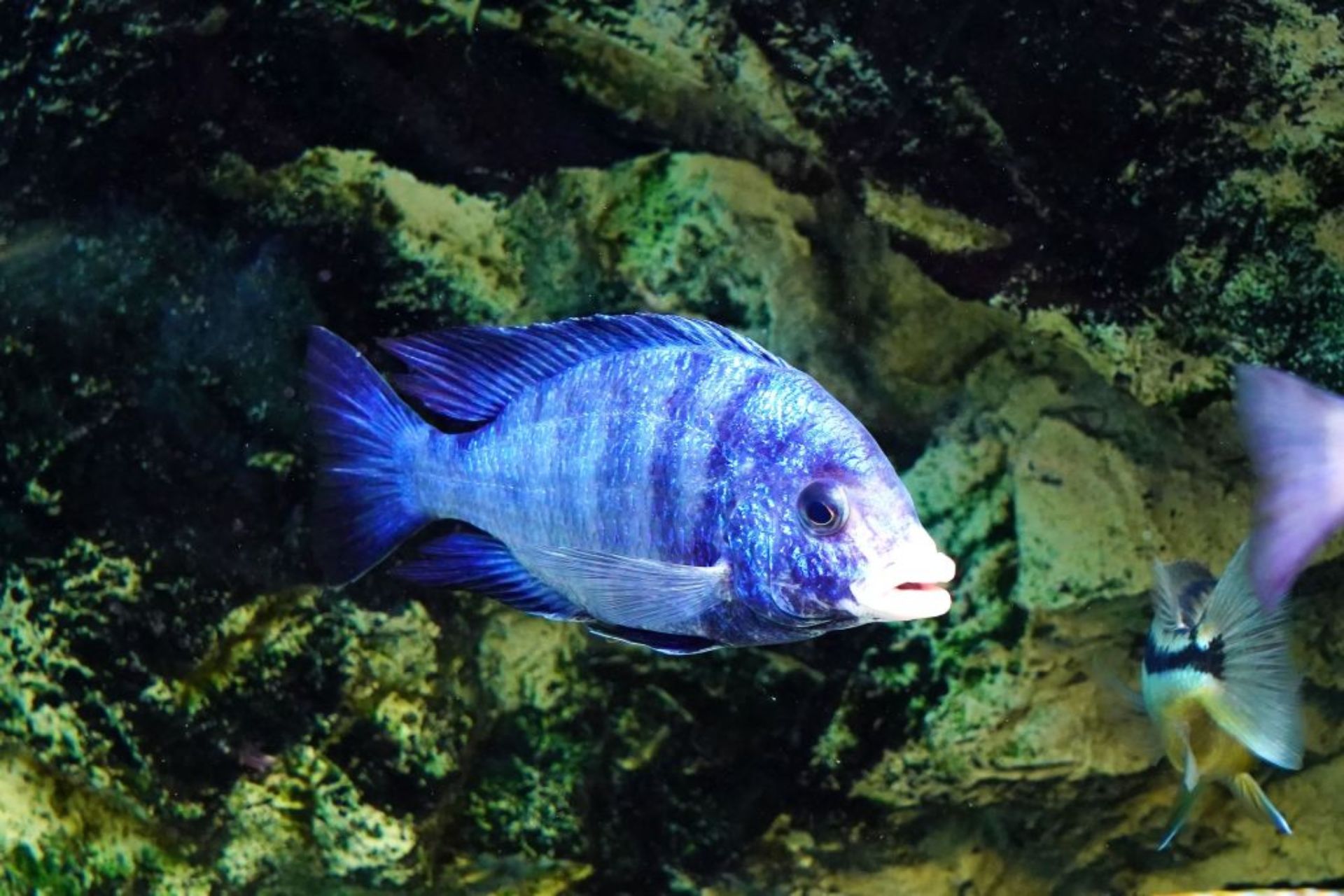
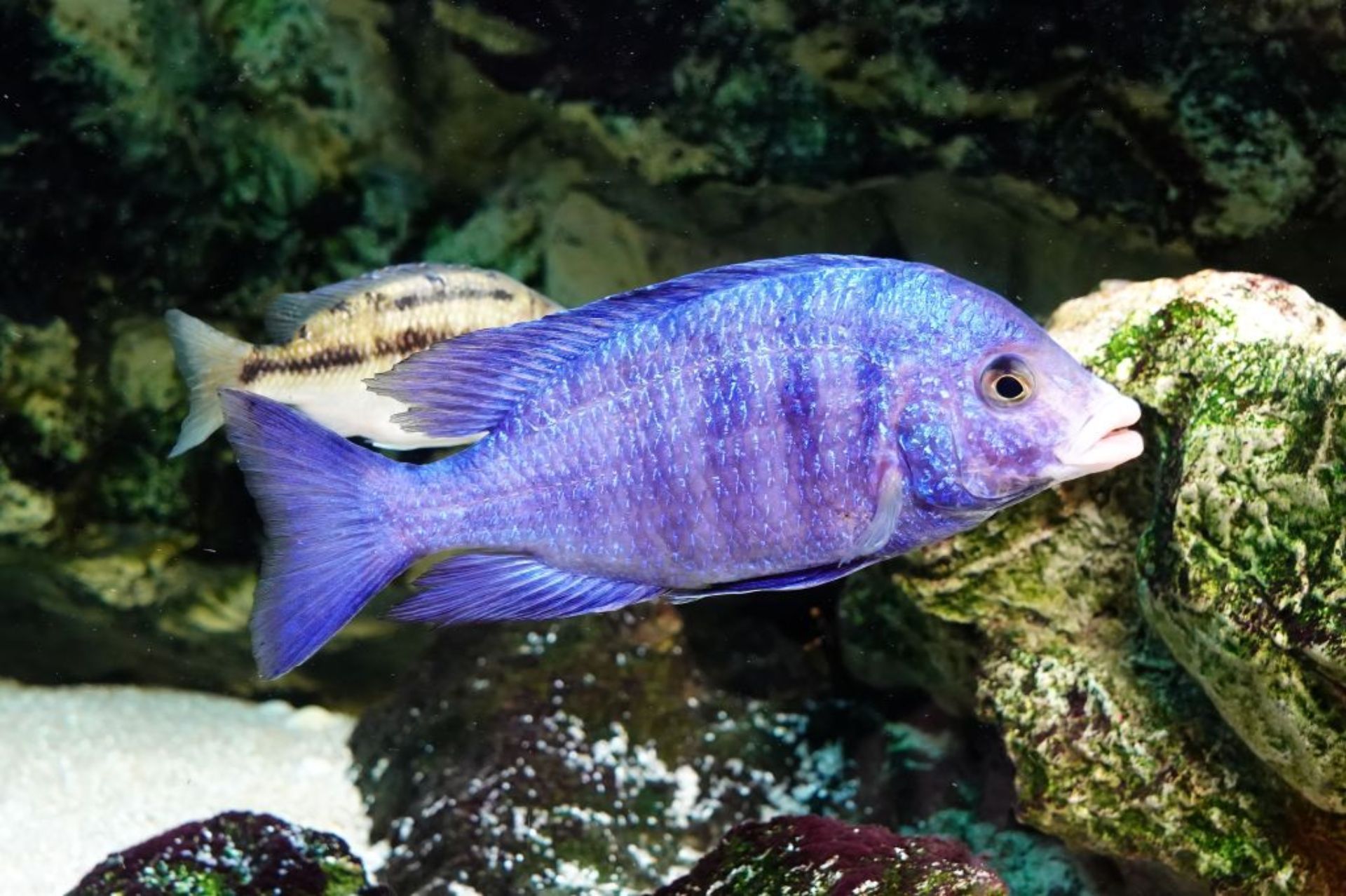
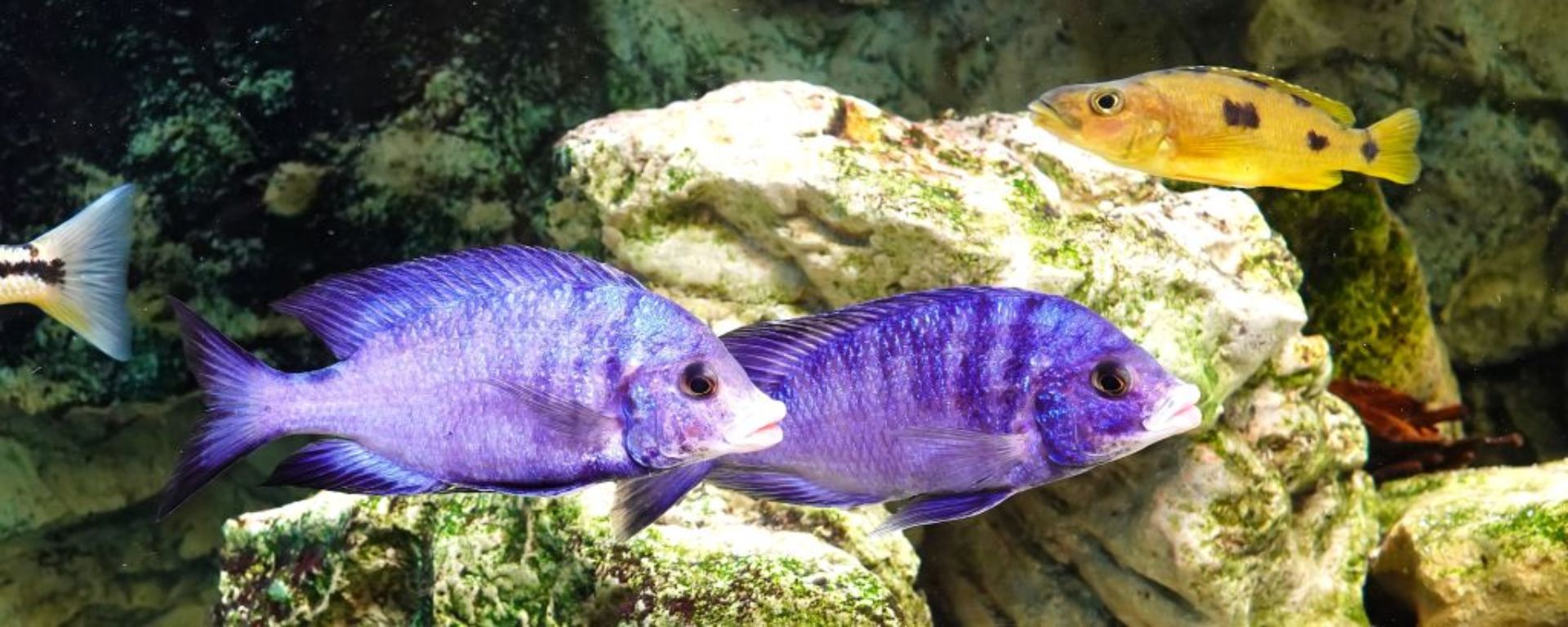
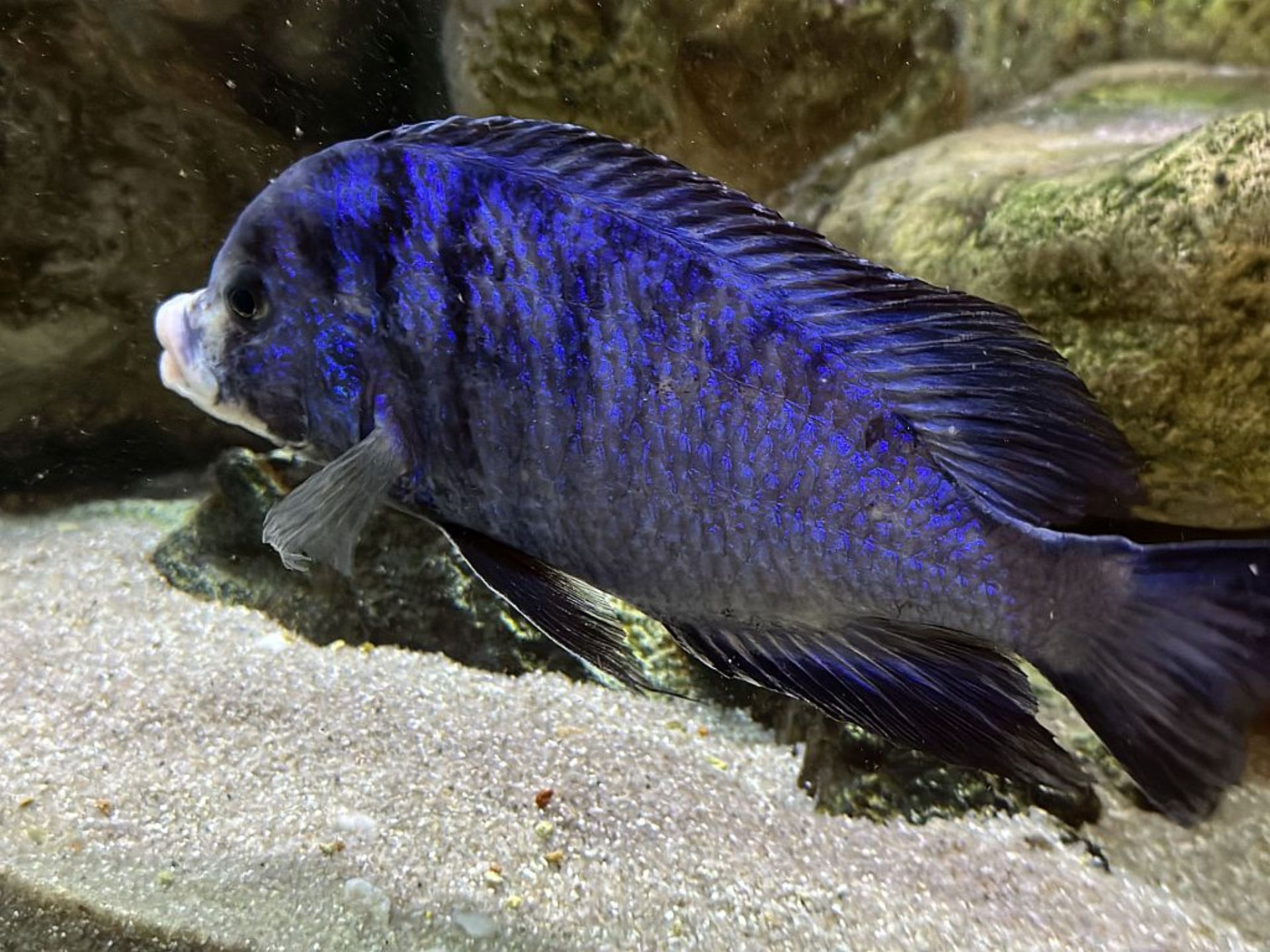
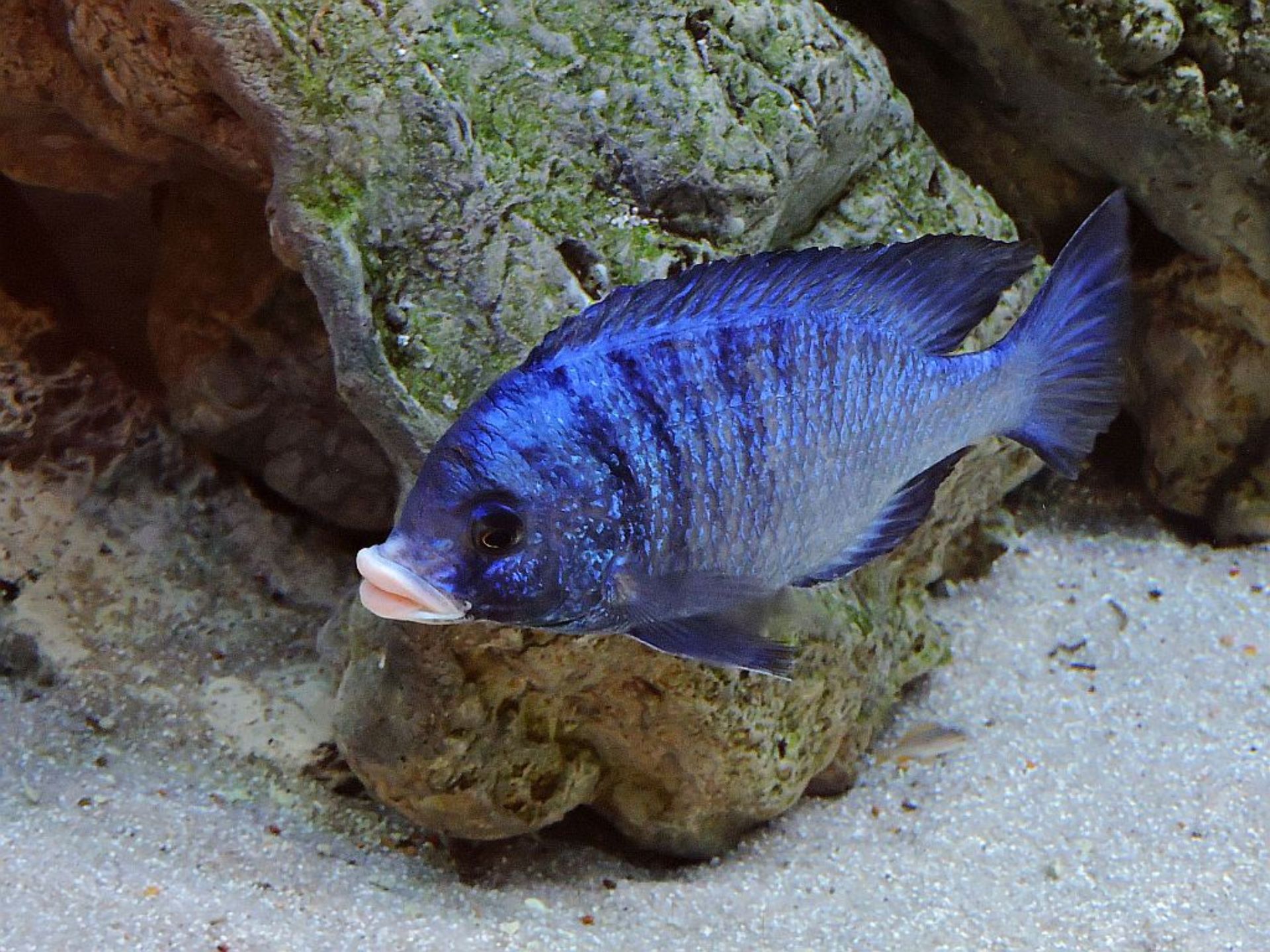
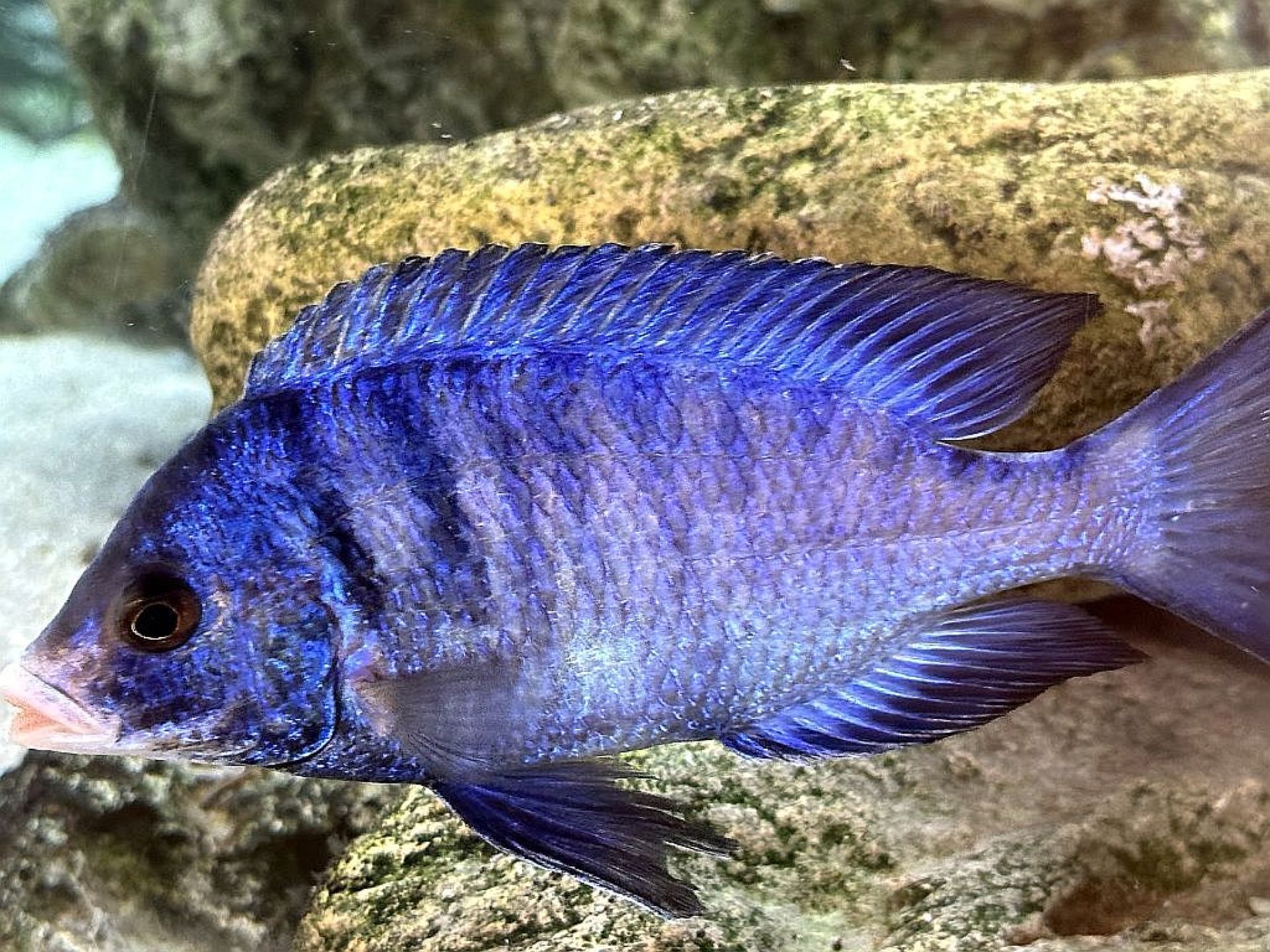
- Males and females are almost equally colored, dark blue with deep black-blue stripes.
- Males are significantly larger, taller with a steeper forehead.
- In juveniles, the sexes are very difficult to distinguish.
Aquarium size:
from 200 x 60 x 50 cm, the larger, the better!
Diet:
predatory fish with a meaty diet, flakes, pellets, frozen and live food
Habitat in Lake Malawi:
transitional zone with large individual rocks and a large open sandy area
Breeding:
maternal mouthbrooder (female incubates eggs in her mouth)
My experiences with Placidochromis phenochilus Mdoka White Lips
Aquarium breeding:
- Since this species grows to relatively large sizes and should be kept in groups, the aquarium must have minimum dimensions of 200 x 60 x 50 cm; the more fish, the larger the aquarium.
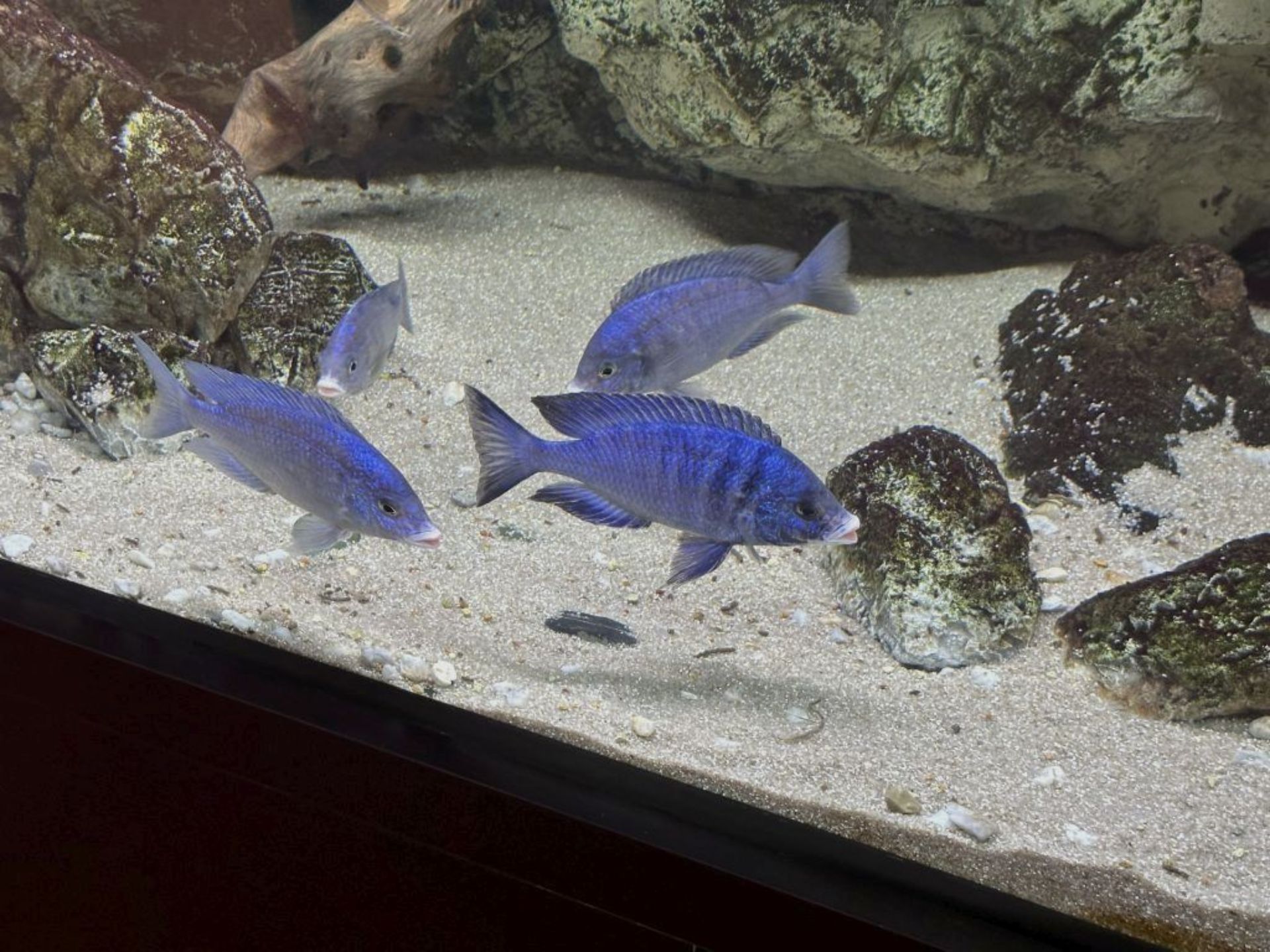
- The tank should be arranged like a transitional zone of Malawi, with larger open sandy areas and large rocks placed among them. This suits the feeding behavior of this species. These fish are pursuers that swim behind larger species that sift through the sand while searching for food, consuming food that is disturbed and stirred up in the sandy cloud.
- It is best to keep a group of about 3 males / 5 females. This meets the needs of these very social fish. However, keeping in a harem of 1 male / 3 females is also possible. Always consider the size of the available aquarium.
Diet in the aquarium:
- The fish consume small invertebrates, insects, worms, etc., found in the sand or stirred up by fish swimming ahead of them and digging in the sand (so-called "sand-sifters"). Therefore, a carnivorous diet is necessary. They accept flake and pellet food. Frozen and live food can also be offered occasionally.
- Caution, this species can easily become overweight, which can lead to health problems. Please feed moderately and with high-quality food (low in carbohydrates).
Behavior in the aquarium (my experiences):
- When placed as juveniles, the fish are very peaceful for a long time and move within their group. However, during breeding periods, this species occupies territories, mostly larger, flat rocks, which they then defend very vigorously. When males mature and court, they aggressively attack both their own species and especially foreign fish, even if they are larger.
- The other inhabitants should not be too aggressive but should be robust enough.
- Fish can change their coloration from almost light blue to dark blue, with deep black-blue stripes. This occurs depending on their mood; a dominant male is often a deep dark blue with deep black stripes.
Together in the same tank:
- It is necessary to choose tank mates that are larger, robust fish in the aquarium (e.g., Non-Mbunas, Malawian predators). An optimal companion species would be a large cichlid, such as Fossochromis rostratus, which would, however, require an even larger aquarium.
- Due to their colors and behavior, these fish are striking even in a suitable single-species aquarium.
My conclusions:
A very beautiful and also unique Non-Mbuna species from Lake Malawi, with its stunning shaded, shiny blue coloration and thick white lips, will be a true highlight of any aquarium. These fish exhibit impressive, majestic behavior in larger groups. I really like them and have been keeping them in my Malawi-style aquarium for many years. Although there are occasionally wilder skirmishes that shake the cover glass.