




The animal kingdom is full of surprises, and the world beneath the water's surface is no exception. Large South American cichlids fascinate aquarists not only with their majestic appearance but especially with their unexpected intelligence and complex social behavior. What does it take to keep these personalities of the fish world, how to create a piece of wilderness in your living room, and why should you avoid the feared Crenicichla?
The animal kingdom offers many surprises. That there are "intelligent" animals is well known. The fact that there are "intelligent" fish is proven by large cichlids. Many aquarists confirm that large cichlids recognize their owner, stop being shy in his presence in front of the aquarium, and usually rush to the offered food. They can see up to 2-3 meters in front of the aquarium. Their feeding, breeding, and care for fry is exceptional in the fish kingdom. Likewise, their survival strategies in the wild are admirable in some species.
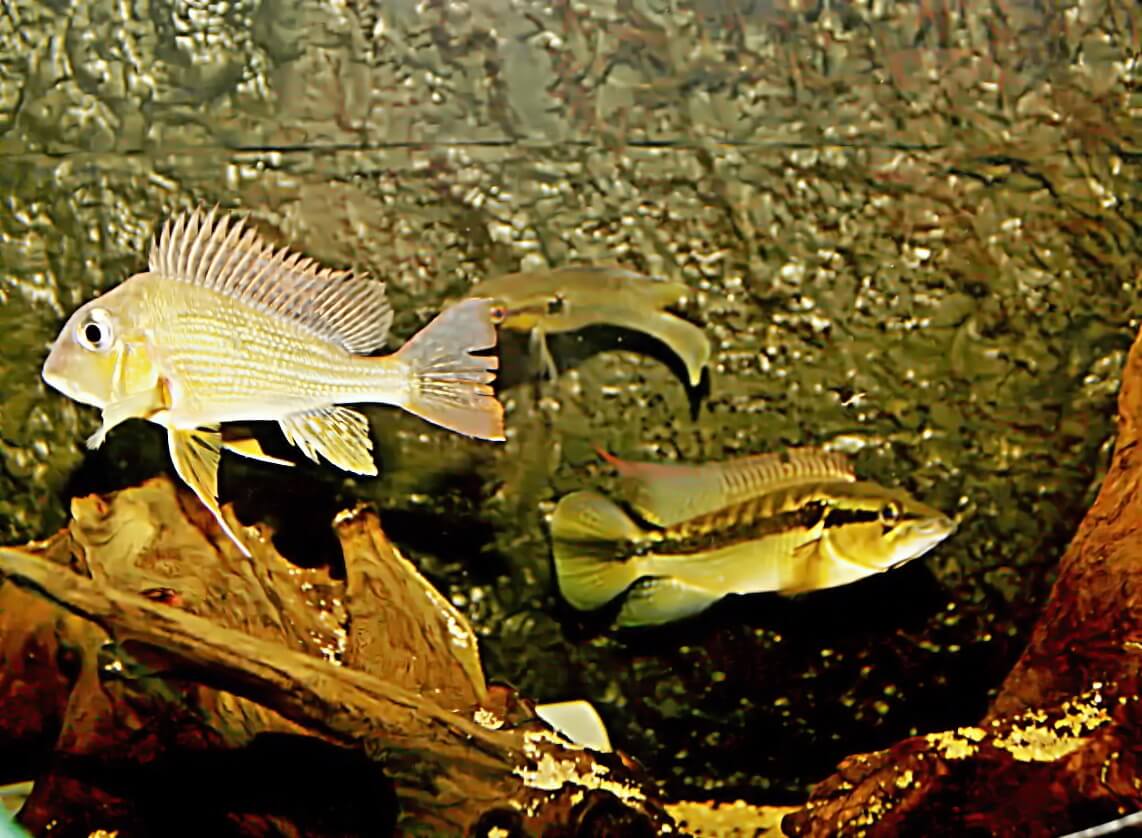
Cichlids are grateful inhabitants of aquariums that allow for many social experiences. Are they instincts or purposeful actions that some attentive aquarists recognize in their pets? In any case, we enter the realm of storytelling, where an attentive listener does not say "I don't believe that" or "that's impossible." Most large cichlids are majestic fish that tolerate each other as long as they have enough space. However, this does not apply to representatives of the genus Crenicichla. Interestingly, most other cichlids respect them, even though they are physically robust. Crenicichla, as they are also called in Czech, are hunters, predatory hunters. I have seen them.
If we own a larger apartment, we should also get a larger aquarium, ideally over 300-500 liters. This can then become the centerpiece of the entire living room. Besides its placement, we also arrange the interior. It should be a decoration on one side of the living room, but on the other side, it should also be a practical home for cichlids. Since we are dealing with inhabitants of the waters of South America, the water should be soft to moderately hard, with a pH in the slightly acidic range, and a temperature above 22-24°C. Many large cichlids can tolerate temperatures below 20°C, but they are not themselves in such situations; they lose their will to live and just lazily drift around the aquarium. The fact that a cichlid is lively is a sign of its health! If we want to keep cichlids in a cold apartment, we should focus on rivers like Rio Paraguay, Rio Paraná, or Rio Uruguay, which flow into the Rio de la Plata. Individuals from these waters can tolerate cooler water than 18°C.
When selecting fish, we generally acquire 6-8 or more individuals, from which pairs will be chosen. We give the surplus fish to a friend. Then it is up to us how much care we give to the fish. Besides quality water, the main factor is food. Most large cichlids are omnivores, but they prefer live or possibly frozen food. Besides brine shrimp, we also use quality source earthworms, mussels, shrimp, occasionally, but also plant food, such as spirulina or spinach. We avoid the bad habit of feeding beef heart and other red meats due to their adverse effects on the fish's digestive system. In emergencies, we use fish fillets.
Images:
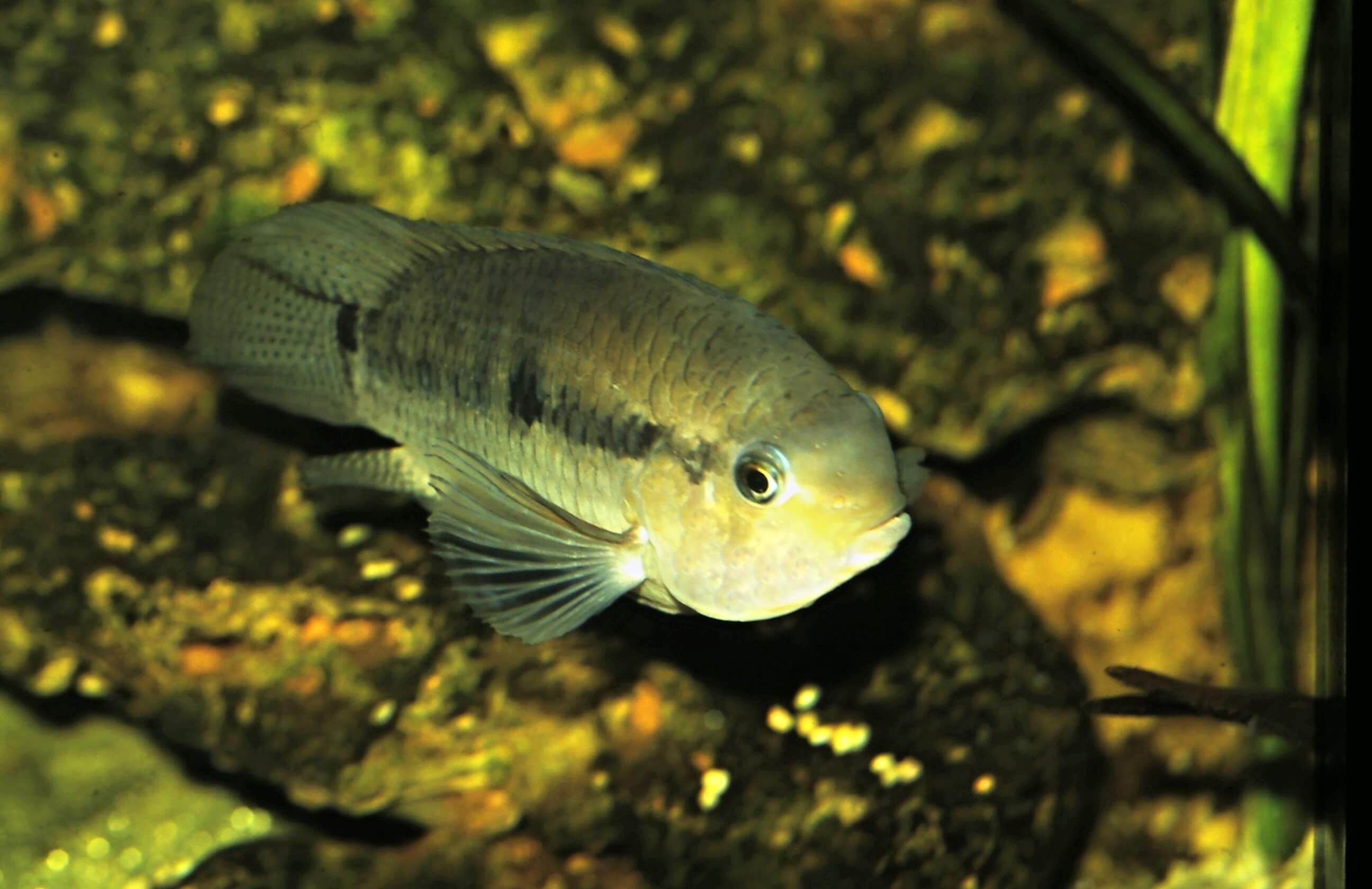
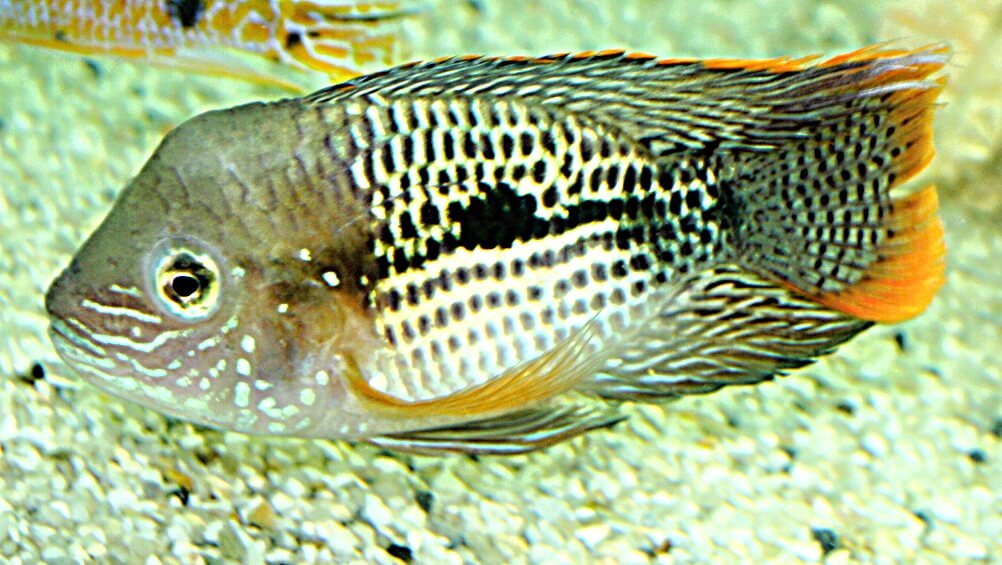
- Aequidens cf. metae comes from the Colombian Rio Meta, hence the Czech name Colombian akara, which grows to about 15-20 cm.
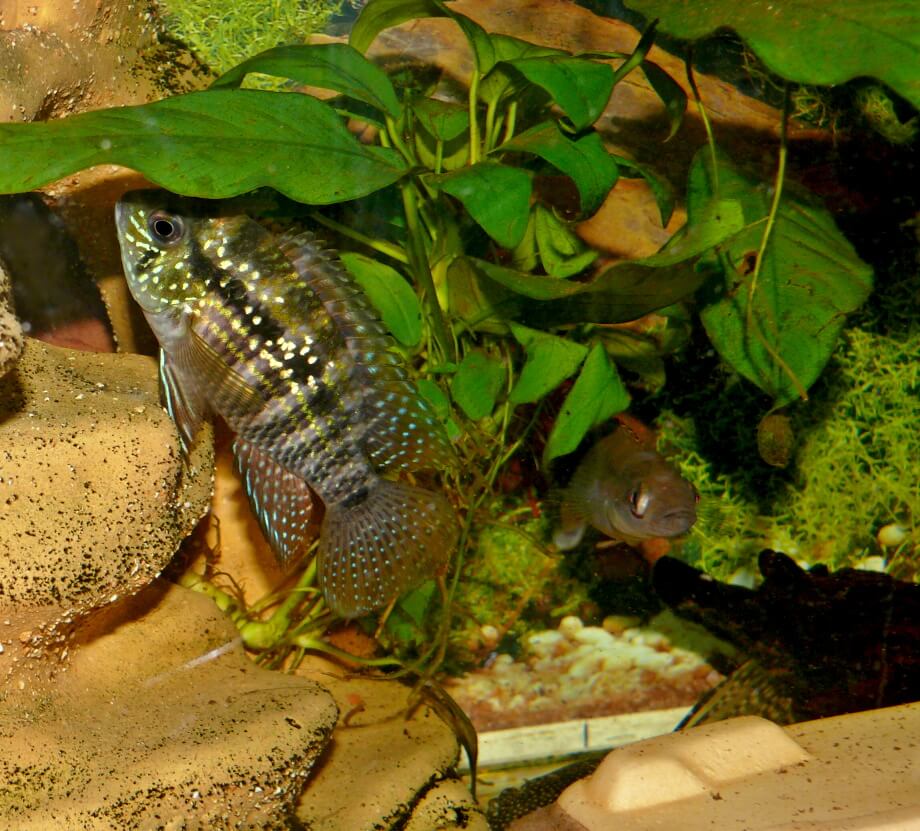
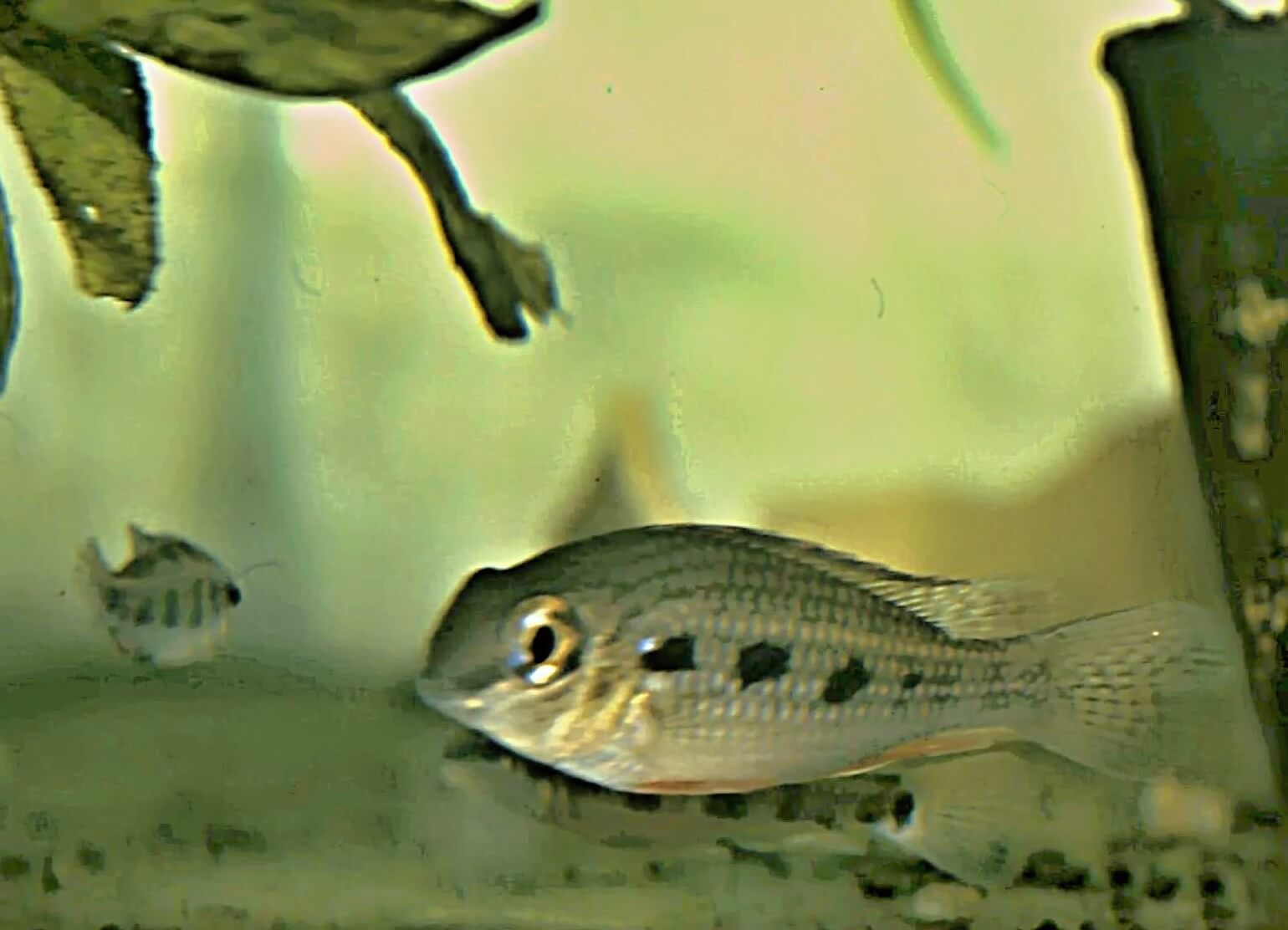
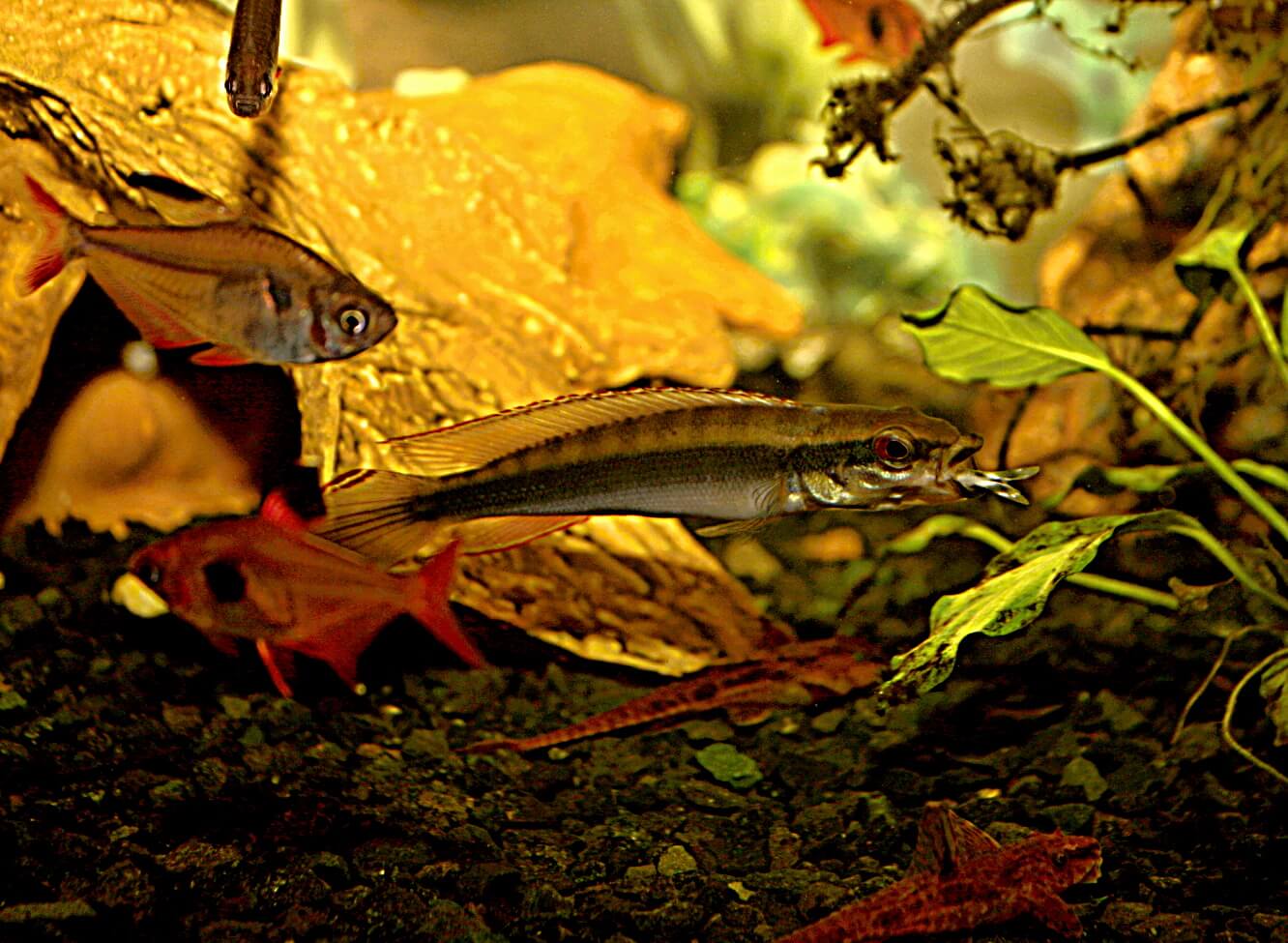
- Andinoacara cf. pulcher – in the picture, the male is trying to hide from the attacks of the female Crenicichla regani.
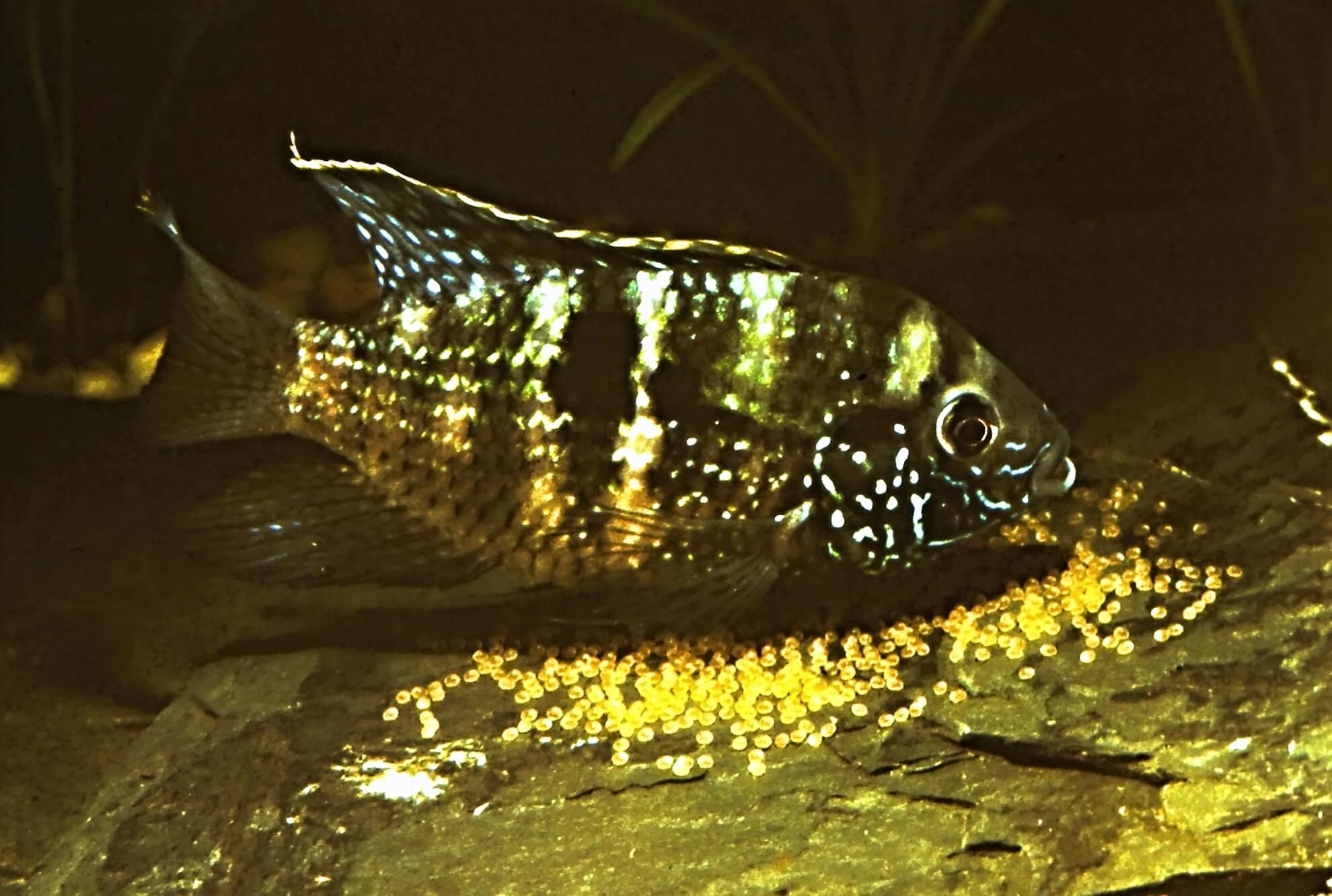
- Andinoacara pulcher is among the most well-known akaras. Blue akaras are one of the most common cichlids that boys start with in aquaristics. Their homeland is Colombia, parts of Venezuela, Trinidad, and Tobago.
- Andinoacara rivulatus GOLDSAUM. The individual in the photo comes from the breeding of Southeast Asian breeders, which is mainly noticeable in the shape of the body. This akara, which can grow up to 30 cm, comes from the waters of central Peru and western Ecuador.
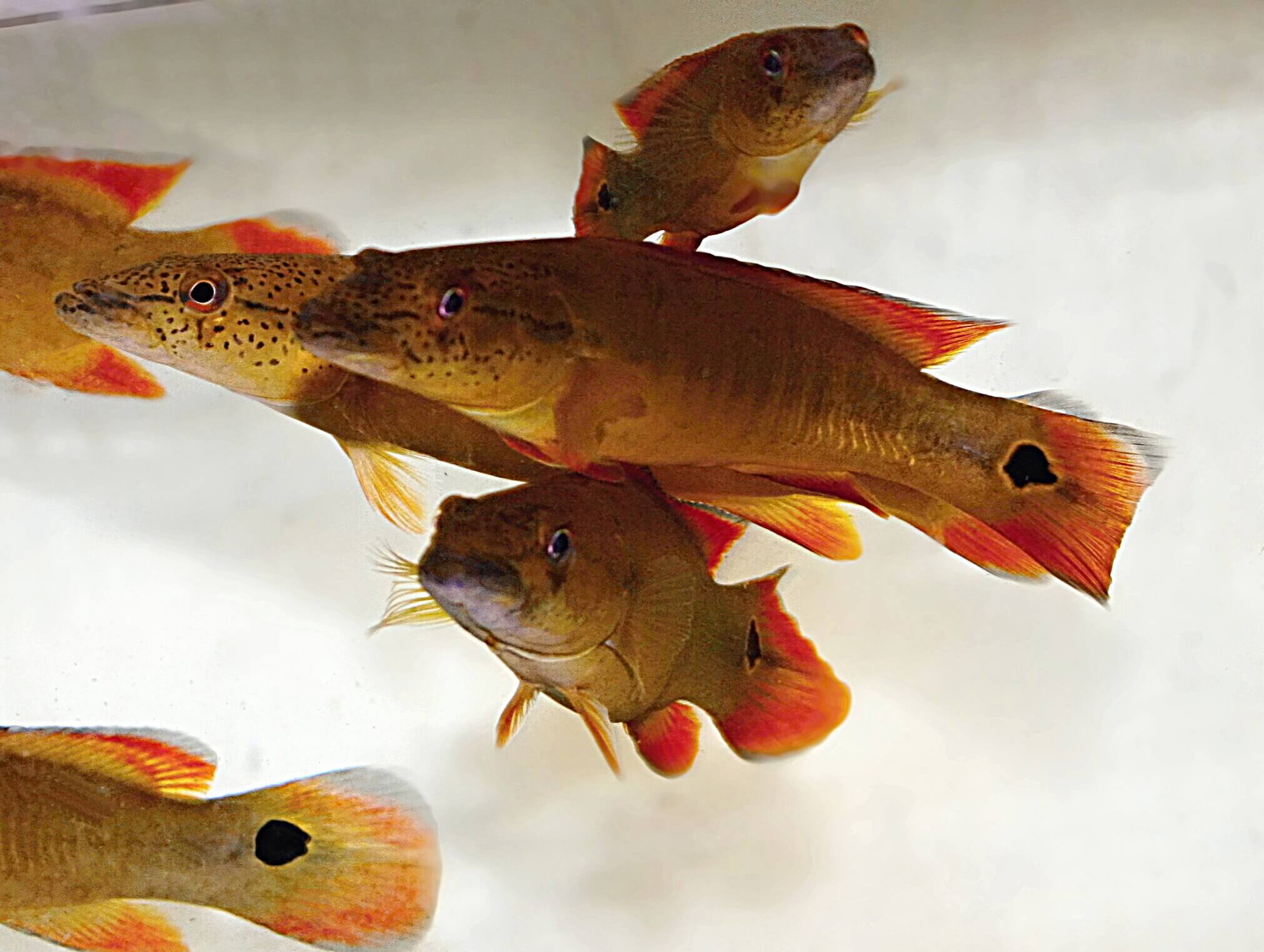
- Crenicara latruncularium is classified by some authors as a cichlid. They grow up to 15 cm, so we can easily use them as possible inhabitants of large aquariums. Their home is in Brazil and Bolivia, in the Rio Guaporé.
- Crenicichla anthurus comes from Ecuador and Peru, where it mainly lives in the rivers Ucayali, Putumayo, Huallaga, and Napo. Males grow up to 25 cm, and it is very difficult to form a cooperating harmonious pair.
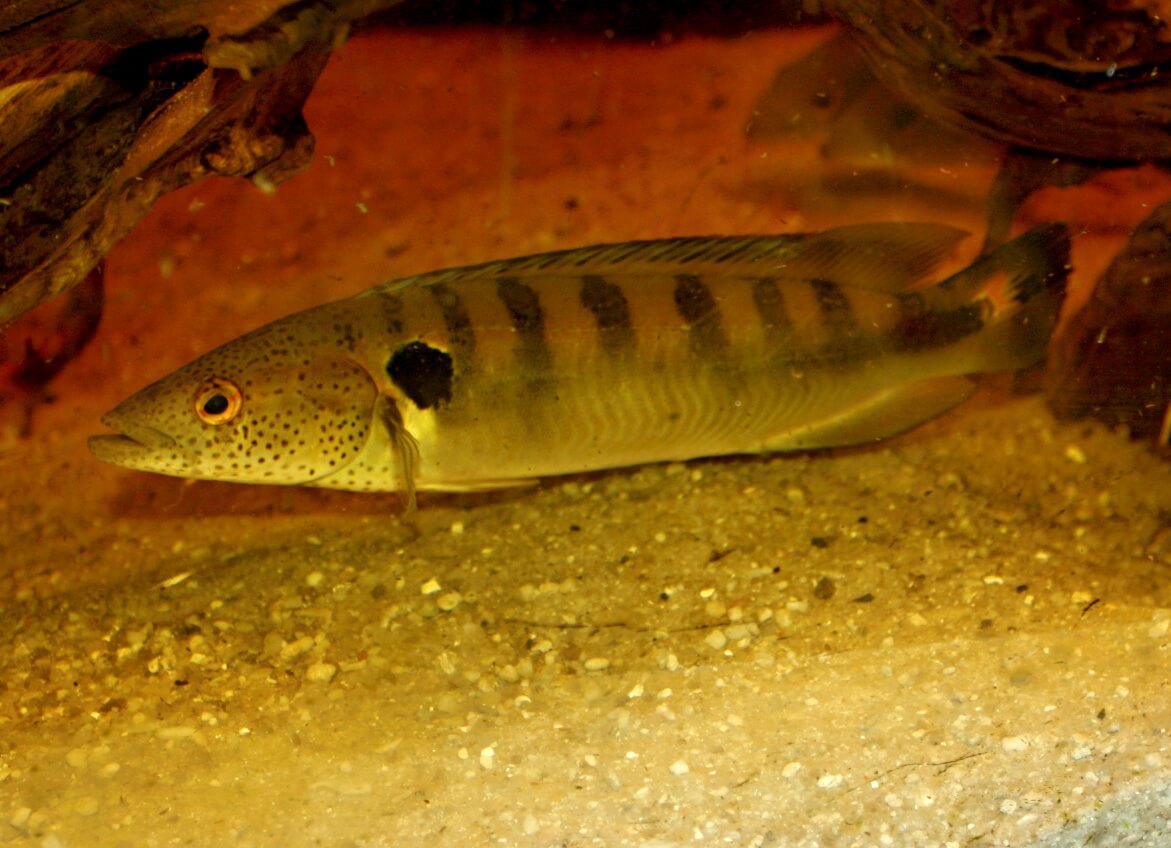
- Crenicichla lenticulata lives in Brazil and Bolivia, with males growing up to 38 cm.
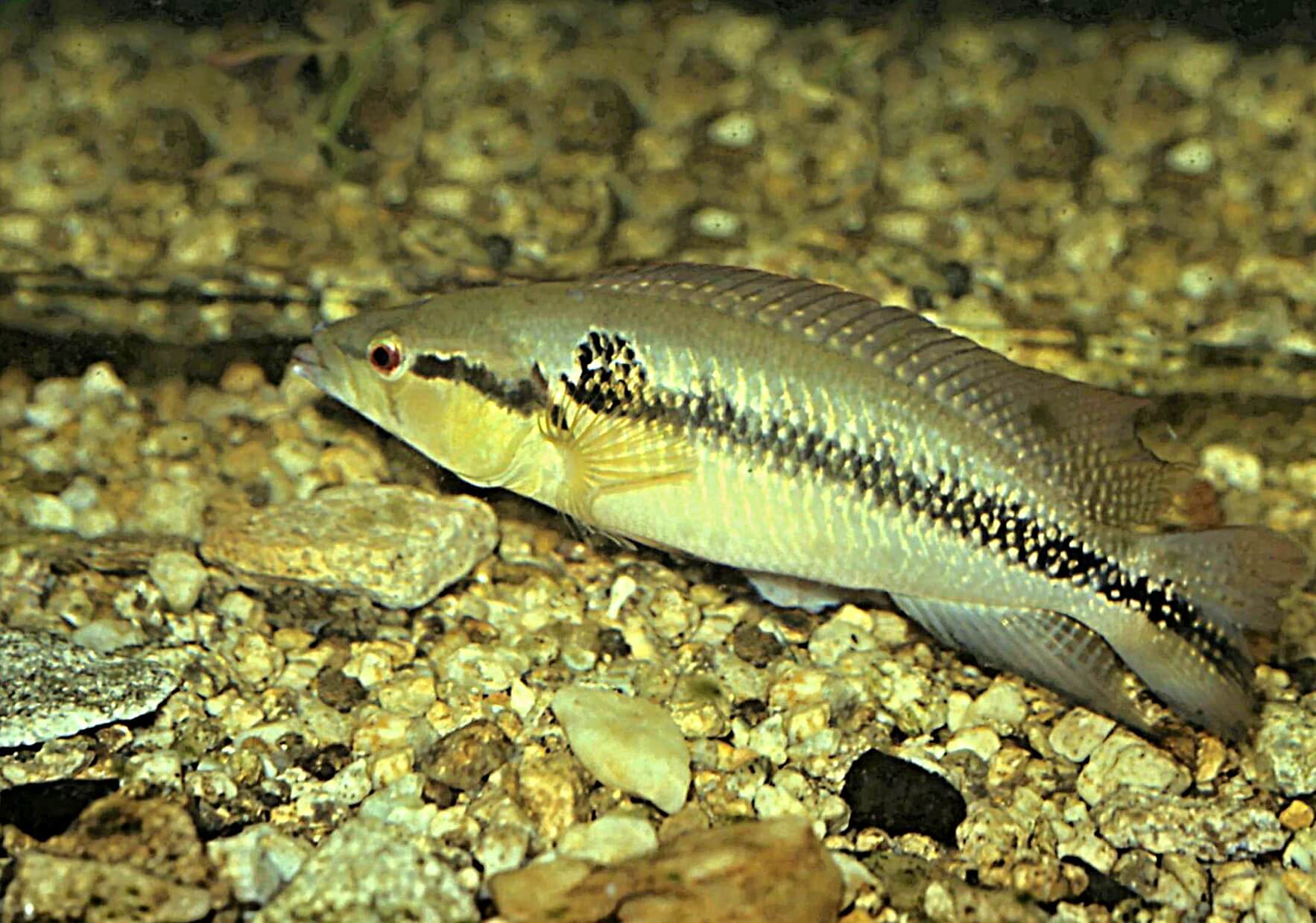
- Crenicichla regani is among the smaller species of Crenicichla, but we definitely do not recommend placing it in community tanks with smaller fish. It comes from the Amazon basin, Rio Negro, Rio Tapajos, Rio Trombetas, and Rio Xingu. Males grow to 14 cm, and females to about 9 cm.
- Crenicichla sp. XINGU as the name suggests, comes from the Rio Xingu. Today, many cichlids are labeled this way, mostly referred to as sp. Xingu I.-III. They grow up to 35 cm.
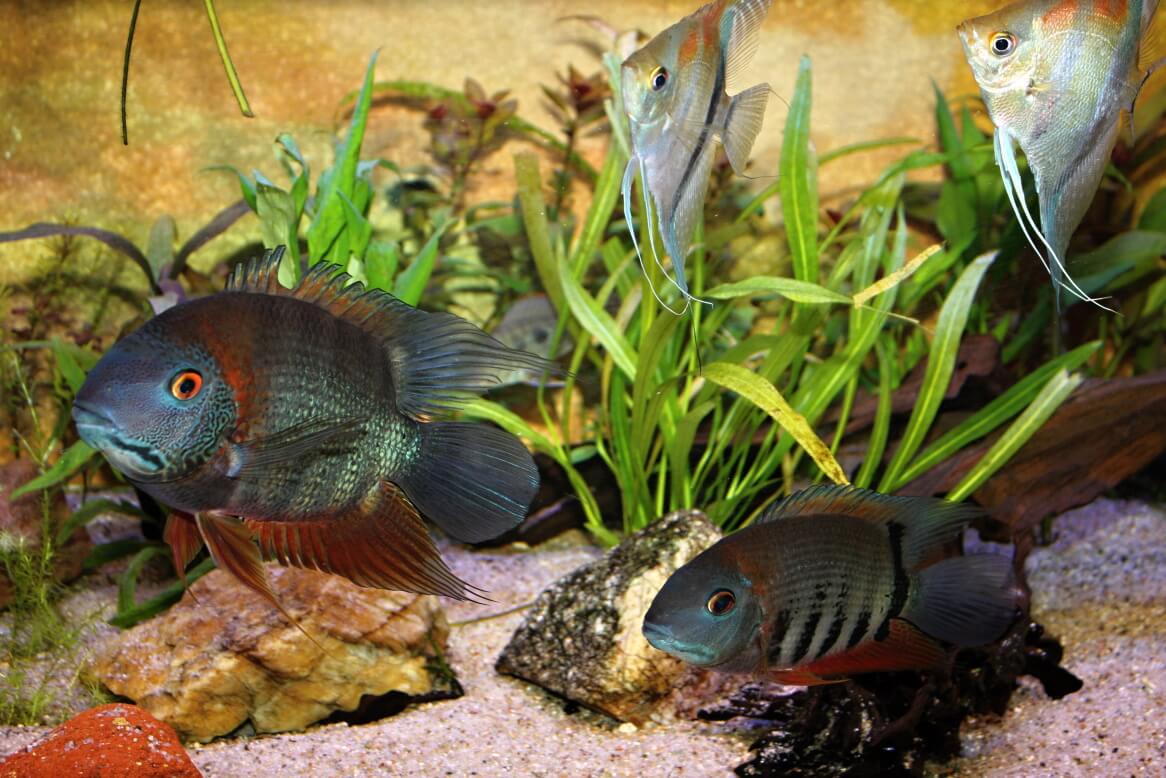
- Heros efasciatus ROTKEIL (1) comes from the waters of the Amazon from Peru to French Guiana. It is a calm fish suitable for community tanks with other calm fish, in the picture with Pterophyllum scalare MANACAPURU.
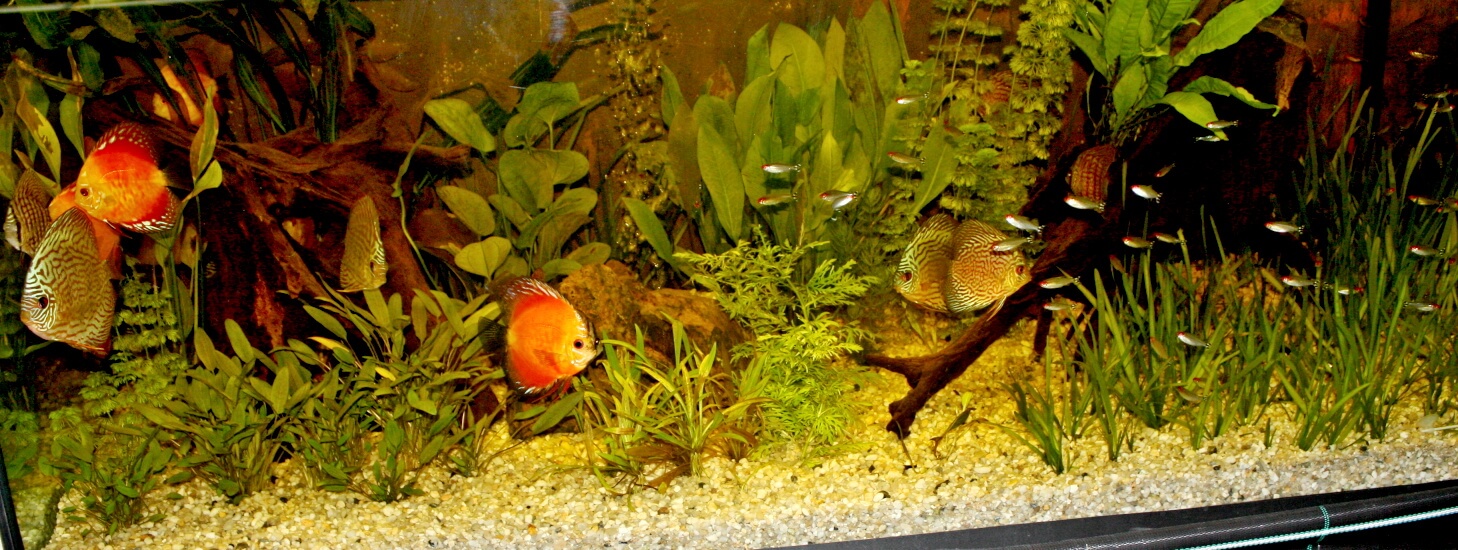
- Heros efasciatus ROTKEIL (2) can be kept in the presence of discus and other calm fish from South America. Males grow up to 20 cm, while females are smaller, about 17 cm.
- Hypselecara temporalis comes from the upper and middle Amazon basin in Brazil, growing up to 30 cm.
- Mesonauta festiva is a very calm fish suitable for community aquariums. These fish can often be observed in the Rio Negro during the breeding of their fry. They grow up to 15 cm. The genera Mesonauta, Pterophyllum andSymphysodon are genetically very close.
- Uaru amphiacanthoides is a fish of three colors, as German aquarists say. This is because their coloration changes significantly during growth. They are completely unsuitable for aquariums with plants, which they destroy with their unusual appetite.
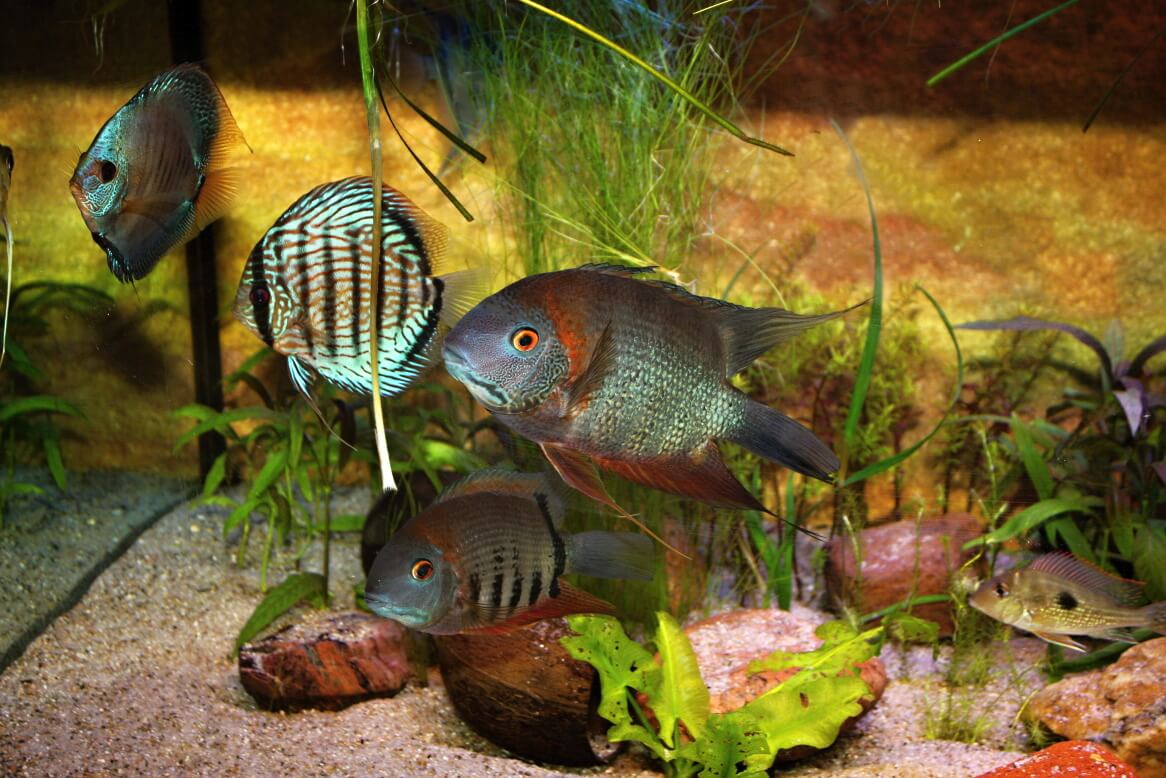
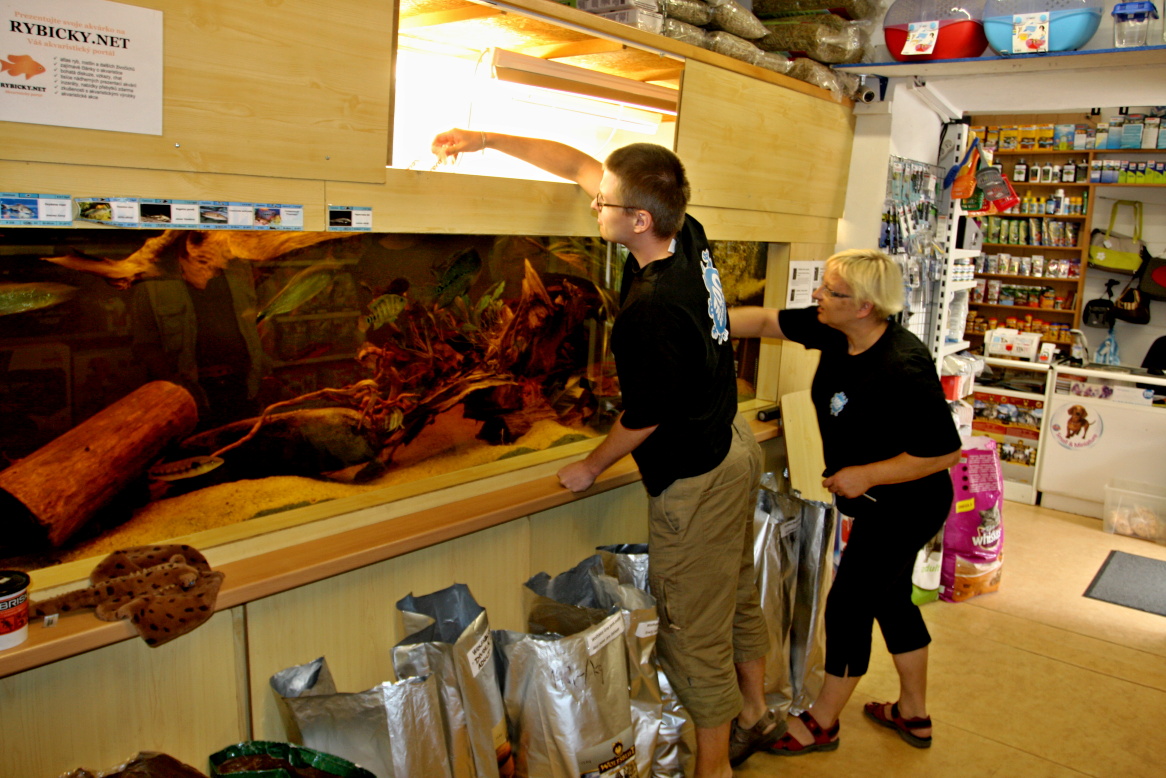
- “Large Cichlids 1”. Only in a few pet stores can you see such beautifully arranged aquariums with an interesting selection of large cichlids, as was the case in the Bráník Zoo store. The aquarium has a volume of 2500 l.
- “Large Cichlids 2”. This aquarium has a volume of 100 l and is one of the examples of what aquariums we can see at aquaristic exhibitions in Germany.
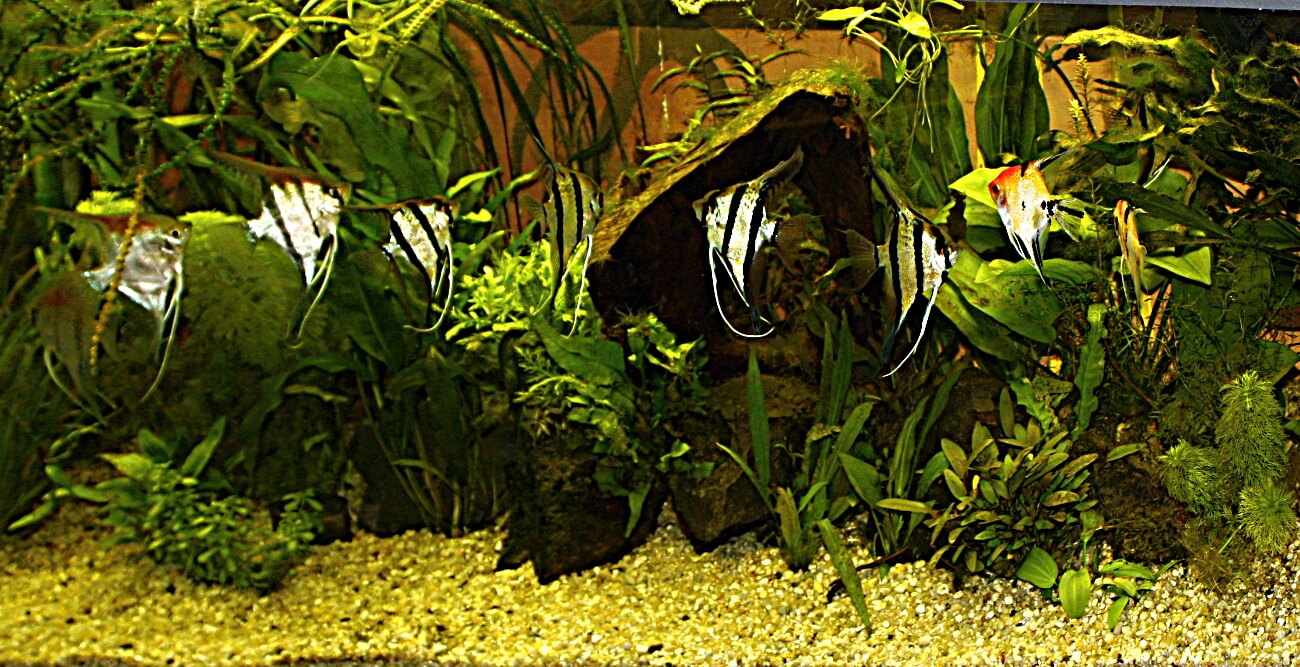
- “Large Cichlids 3”. For large aquariums where we also want to cultivate plants, the most grateful large South American cichlids are probably the scalars. They do not damage the plants; on the contrary, they often use their leaves for spawning.
- “Large Cichlids 4”. If representatives of the genus Crenicichla are present in the aquarium, other companions not only respect them but also show signs of previous attacks, mainly on their fins.
Literature:
1. Bydžovský, V., 2007: Large Cichlids. Aquarium Live 6 (4), 46-52.
2. Bydžovský, V., 2009: Are We Feeding Our Cichlids Correctly? Aquarium Live 8 (1), 20-27.
3. Bydžovský, V., 2010: Heros severus. Aquarium Live 9 (4), 6-10.
4. Bydžovský, V., 2013: Cichla monoculus. Aquarium Live 12 (3), 20-24.