




The three-striped cichlid (Apistogramma trifasciata) may not be a giant, but its dorsal fin resembling an Indian mohawk and proud nature will captivate any observer. Dive into the world of South American dwarf cichlids and discover why this gem from the Rio Paraguay basin is a challenge worth taking, despite its slower growth and specific water cleanliness requirements.
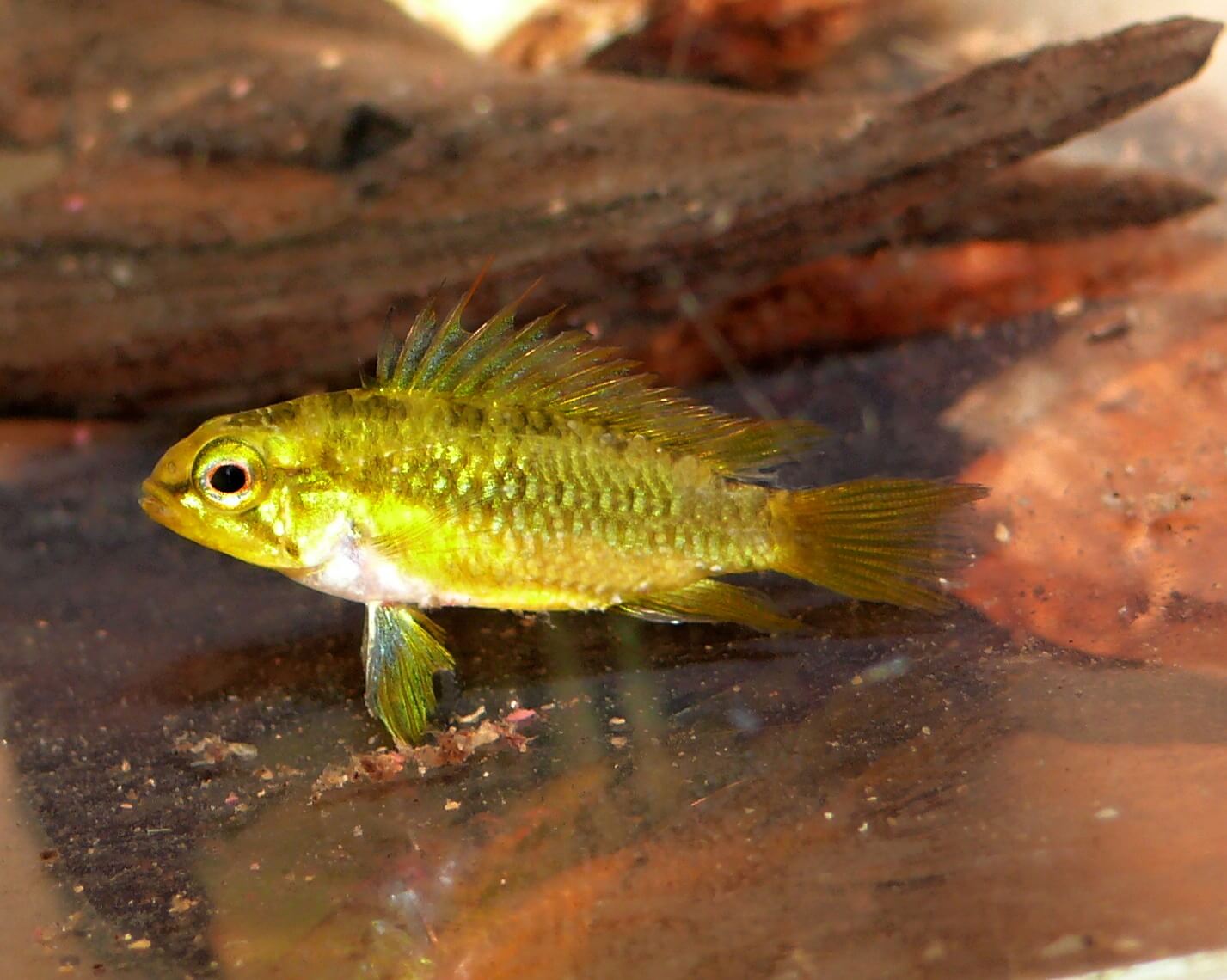
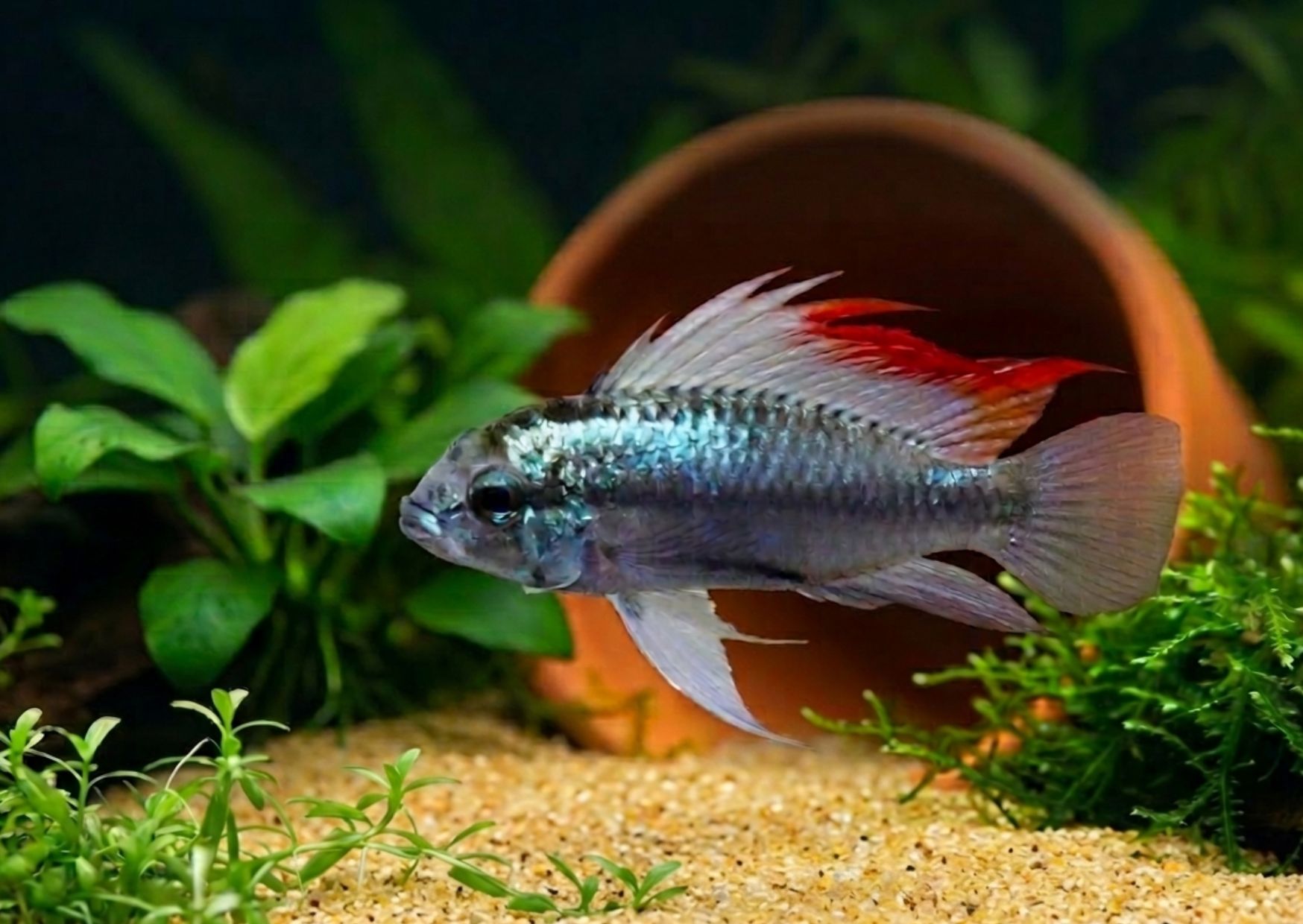
The three-striped cichlid belongs to those apistogrammas whose dorsal fin is quite similar to an Indian mohawk. In these species, the 3rd to 6th rays are elongated and resemble both the headdress of some Indians and the crest of parrots. This group also includes Apistogramma cacatuoides, Apistogramma bitaeniata (previously known as Apistogramma kleei or Apistogramma klausewitzi, as well as Apistogramma sweglesi).
A bit of Latin
The genus name Apistogramma is derived from the Greek "apistos" – deceptive, false, or underwater, and "gramme," which again means line in Greek. This indicates that the lateral line of these cichlids is bifurcated and often incompletely formed. Trifasciata from Latin tri – three and fasciatus – striped. The fish is also known by a number of synonyms. Only when S. O. KULLANDER revised the genus Apistogramma in 1980 was the confusion resolved.
Synonyms:
Biotodoma trifasciatus EIGENMANN & KENNEDY, 1903
Heterogramma trifasciatus REGAN, 1906
Heterogramma trifasciatum maciliensie HASEMAN, 1911
Apistogramma trifasciata maciliensis (HASEMAN, 1911)
Pintoichthys trifasciatus FOWLER, 1954
Apistogramma trifasciatum haraldschultzi MEINKEN, 1960
Characteristics
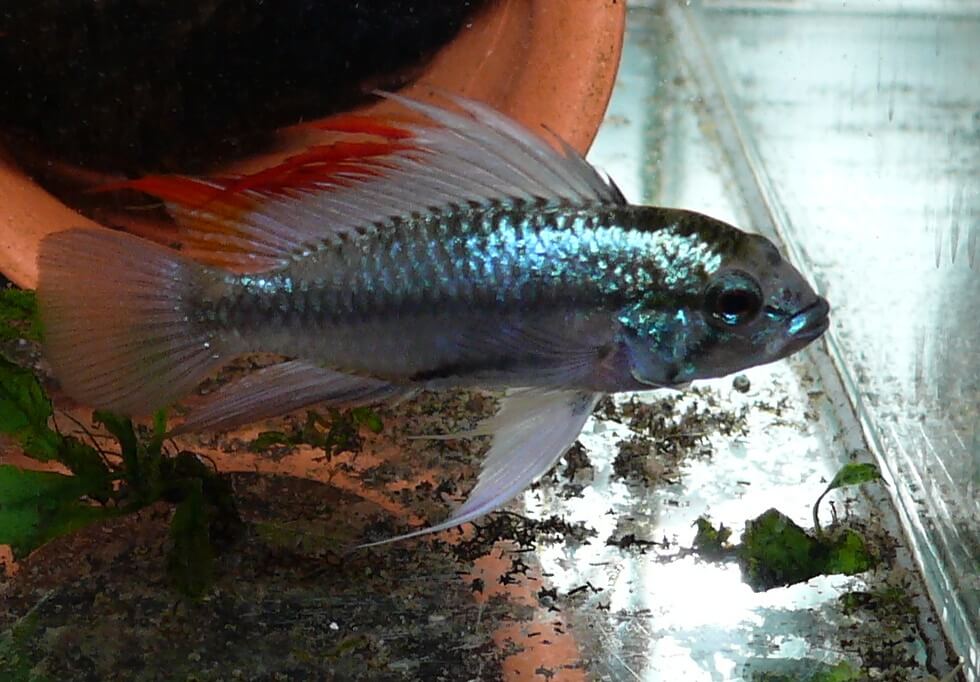
Males reach up to 5 cm, females about 3.5 - 4 cm. The fish is classified in the " Cacatuoides" complex. Similar to most South American cichlids, they exhibit pronounced sexual dimorphism. This also indicates the relationships between the sexes. The male is the ruler of the harem, which always consists of several females. Females establish small territories with a diameter of about 25 - 30 cm, while the male has a significantly larger territory, depending on the number of females he controls. Breeding usually does not cause problems; rearing is regularly successful only for experienced breeders. The main issue with this fish is its slow growth and the currently inadequate market price. This is one of the reasons why we do not see this beautiful cichlid more often.
Homeland
The three-striped cichlid lives in a relatively large area, from northern Argentina, from Santa Fé on the lower Rio Paraná, through the Rio Paraguay in Paraguay, to Colombia and Brazil. It inhabits the Rio Guaporé basin around Guajará-Mirim. Here, it inhabits shallow streams with abundant leaf litter on the bottom. The water in the streams is often turbid or so-called white water. The conductivity here is usually between 10 – 30 µS/cm. In the same locations, STAECK (2003) also reports the presence of Apistogramma borelli and Apistogramma combrae. In the southern areas of its habitat, water temperature can drop to 10 °C.
Breeding and rearing
Fish can be kept in both species-specific and community tanks. Because the fish form territories, which in males are rarely larger than 50x50 cm, we must provide either enough hiding places or "non-aggressive fish." These tankmates essentially do not harm and distract the attention of the males to other objects rather than just themselves or their own females. It is ideal when they are accompanied by small South American tetras, such as Paracheirodon innesi, Paracheirodon axelrodi, members of the genus Hyphessobrycon or Hemigrammus, but also some small invertebrates. If we want to observe attempts at spawning, catfish are not very suitable for companionship. They usually disrupt care for the fry in South American cichlids, and many of them do not spawn in the company of catfish.
The bottom of the tank should ideally be covered with fine sand of 3 - 5 mm grain size, which provides good protection for similarly colored newly-hatched cichlids. Quality filtration is also essential.
Many professional aquarists keep these fish separately in a tank – either in pairs, then usually a 10-20 liter tank with a tube or flowerpot is sufficient. If we want to keep more females together, we place tubes at least 30-40 cm apart so that the females do not attack each other. The tank does not need to have a high water column; the main thing is the area of the bottom with enough hiding places.
Care for the offspring is of very high quality in this species. As is typical for cichlids, the male is a classic "Don Juan." If we want to breed fish for commercial purposes, we take the eggs along with the substrate. Then we can expect spawning every two weeks, with quality food. The classic aquarist lets the young be raised by the female; then the fry are smaller, but we have higher quality individuals. Spawning then occurs at significantly longer intervals of 1-2 months. Food is the same as for other cichlids.
Problems
So far, everything is as with most South American cichlids. However, rearing this species is not entirely without problems. Therefore, only some breeders can successfully manage it. Around the size of about 1.5 cm, we often encounter infections from a number of unicellular parasites, primarily from the group Chilodonella and Piscinoodinium, bacterial infections are also common. Prevention includes quality food, appropriate temperature, and other water chemistry. Infections can be brought into the breeding tank by the parents. Anyone who raises 30 - 40 individuals from one spawn can consider themselves a solid cichlid breeder.
Images:
- Male Apistogramma trifasciata, a very attractive color form.
- Adult female.
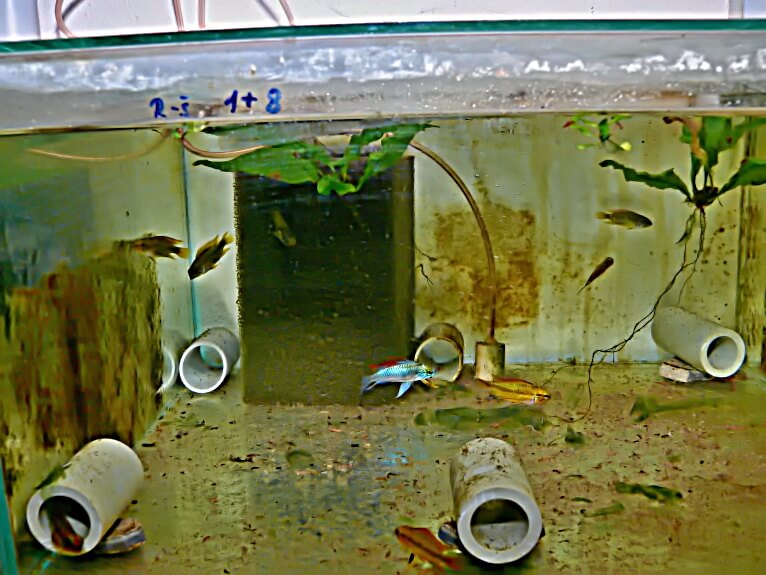
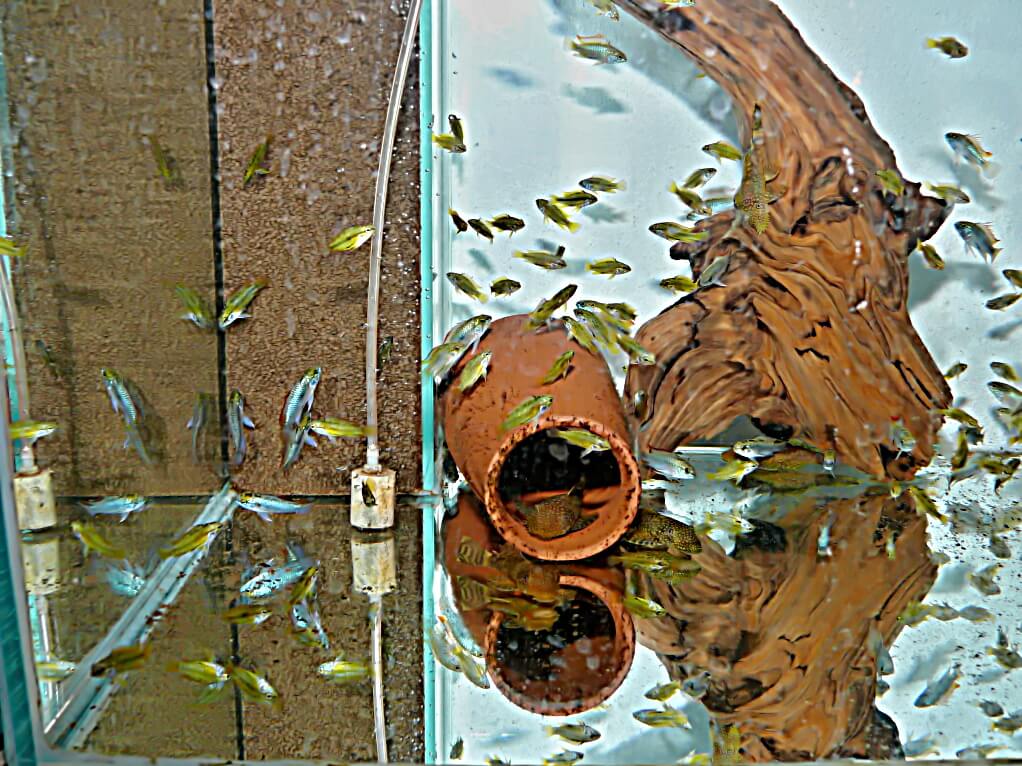
- Species aquarium or breeding tank for multiple pairs. For aquaristic aesthetics, just a small excuse. In a sterile clean breeding tank, cichlids usually do not spawn. The shots are taken as the fish "function" in the aquarium.
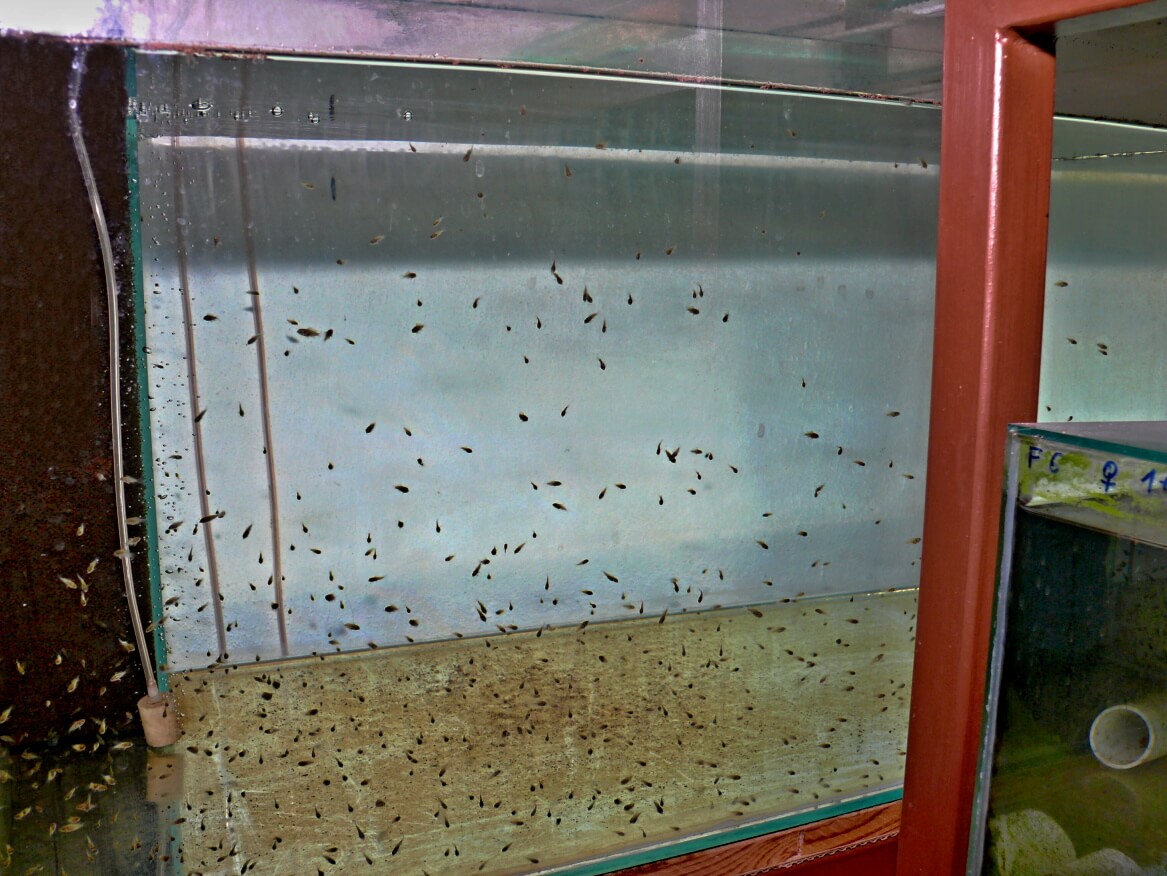
- Usually a well-equipped fry tank with good filtration, aeration, without a substrate, without plants.
- A school of half-grown three-striped cichlids is a beautiful sight. Very few cichlid breeders have experienced this possibility.
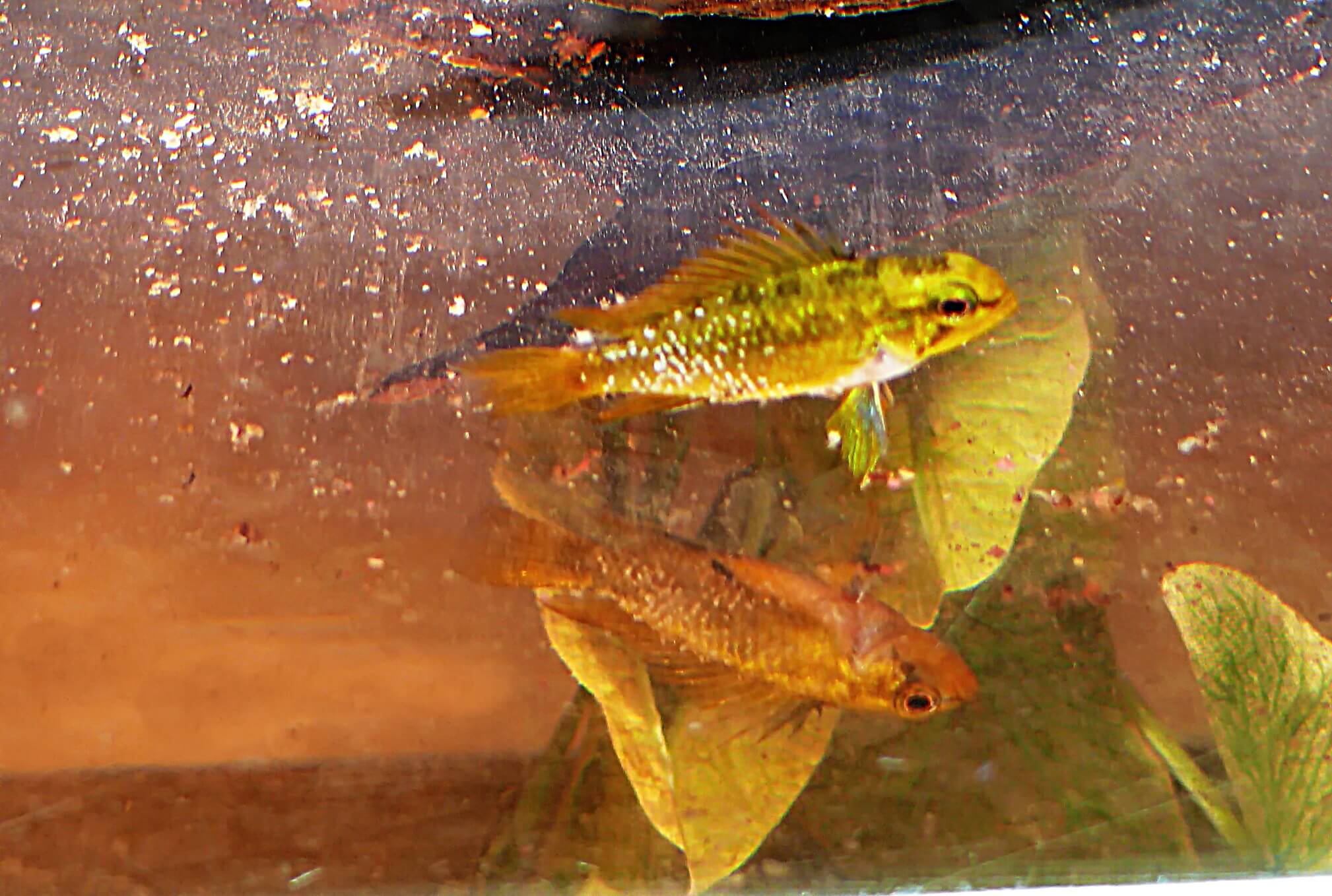
- The disadvantage of three-striped cichlids is their susceptibility to certain diseases. At a size of about 1.5 cm and beyond, we often encounter infections from a number of unicellular parasites, primarily from the group Chilodonella and Piscinoodinium, bacterial infections are also common. In the picture, an adult female with an infection of the "new form" of ich (Ichthyophthirius multifiliis).