

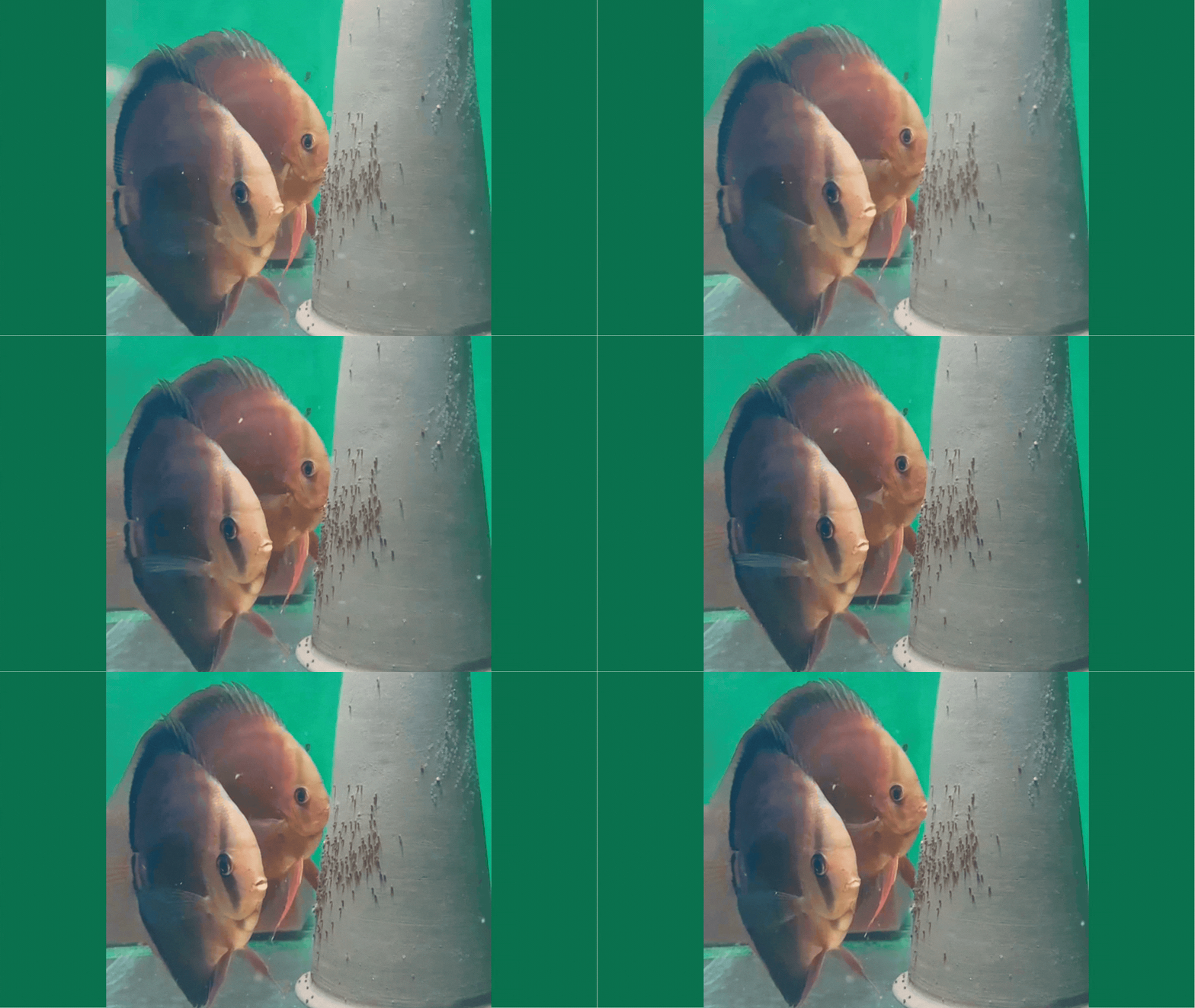



In the latest episode of the show "Conversations Above the Surface," we delved into a world that is the absolute pinnacle for many aquarists – the world of discus (Discus). Our guest, a respected breeder and international judge, guided us through the history of major championships, the pitfalls of Asian breeding, and fascinating details from their natural breeding.
This follows the previous first part, Josef Pejša: A Legend of (not only) Czech Discus Breeding
Discus (Symphysodon) has always been synonymous with the pinnacle of freshwater aquaristics. While in previous decades there was a reputation for the extreme sensitivity of this species, today's domesticated lines exhibit considerable adaptability to common breeding conditions. However, successful breeding, especially ethical breeding, requires a deep understanding of their specific biology and environmental needs.
A historical excursion from Czech championships to German Duisburg
Central Europe, and particularly the Czech Republic, has played a key role in the history of competitive aquaristics. Josef Pejša, one of the leading European breeders, reflects on the golden era of exhibitions in Prague and Ostrava, which competed at their level with world events. The prestige of these championships was underscored by the participation of international experts, such as Horst Linke, and a strict system of anonymous judging (blind judging). It was in this highly competitive environment that Josef Pejša and his breeds triumphed not only on the domestic stage but also at the prestigious championship in Duisburg, Germany, which was long considered the "Olympics of Discus."
The ethics of breeding: Morphological purity vs. Asian experimentation
When looking at global trends, one cannot overlook the vast difference between the European and Asian approaches to breeding the genus Symphysodon. While the European standard emphasizes health and natural body shape, Asian markets often experiment with abnormalities.
- Degenerative changes: We encounter, for example, fish of the "bulldog" type, which have significantly shortened backs (brachyrachii) and shapes resembling vertical eggs.
- The aesthetics of abnormalities: Asian breeders delight in vibrant colors and unusual head shapes or fins, which, however, often lack the charm of a healthy individual for the conservative aquarist.
- Veil forms (Long-fin): Attempts to breed veiled discus (fixation of long fins in the genus Symphysodon) in the past have often failed, as with age, deformities and bending of fin tips occurred, disrupting the aesthetic impression of the fish.
One of the most fascinating aspects of discus biology is their unique way of nourishing offspring with secretions of nutritious mucus from their own bodies. This adaptation from original habitats, where food was scarce, is a key instinct that breeders should protect.
When humans take on the role of nature and breed fish artificially, the animals gradually lose their parental instincts and stop caring for the young,
warns Josef Pejša.
When it comes to feeding, natural food (zooplankton, mosquito larvae, or quality brine shrimp from clean sources) remains an unsurpassed peak for achieving maximum growth rates, coloration, and longevity. Modern granules are a practical substitute, but they will never fully replace the complex nutritional value of live food.
The end of myths about parasites
Myths about constant problems with ectoparasites (ichthyobodo) and intestinal flagellates (Spironucleus) are not an inevitable trait of the species but often stem from unsuitable conditions or stress. This is referred to as a failure in the area of biosecurity.
The basic rule of healthy breeding is not to mix fish from different sources without prior adaptation. Each breeding has a specific microbial flora that can be pathogenic for fish from another environment. Each breeder and dealer carries a different bacterial load, and even if a fish appears healthy, it may be a latent carrier of disease.
An absolute foundation is consistent quarantine in a quarantine tank in a separate room with its own equipment, where the fish can acclimate to the new water and food.
We can avoid diseases by ensuring that we maintain strict hygiene, do not overstock tanks, and regularly change the water. With such an approach, discus will primarily bring us joy.
Watch the second part of the video interview with the legend of Czech breeding: [Conversations Above the Surface with Josef Pejša]
You can also read and watch the third part: Talks Above the Surface with Josef Pejša III: A Czech Legend Whose Discus Fish Conquered the World.