

While most aquarists put their nets away with the arrival of winter, experienced practitioners head to the outlets of ponds. It is during the frosty months that exceptionally high-quality live food with a high fat content is produced, which has a significant impact on the condition, growth, and coloration of fish. Winter plankton fishing is not nostalgia or improvisation, but a thoughtful method that is regaining its place in modern aquaristics.
If you are interested in the summer version of plankton collection, don't forget to check out the article "Secrets of Successful Plankton Collecting: A Demonstration of Live Food Collection with Zdeněk Dočekal."
While for most aquarists the fishing season for live food ends with the first frost on the surface, for professionals and experienced practitioners it is just the beginning of a period that offers perhaps the highest quality food of the entire year. Winter plankton is specific not only for its species composition, but mainly for its high fat content, which directly translates into the condition of fish, the intensity of their coloration, and their growth potential.
Innovations in fishing techniques: From nets to tubular nets
The traditional manual fishing of plankton using nets, as we know it from past decades, is today ineffective in many locations. The reason is primarily the long-term decline in the amount of plankton in ponds.

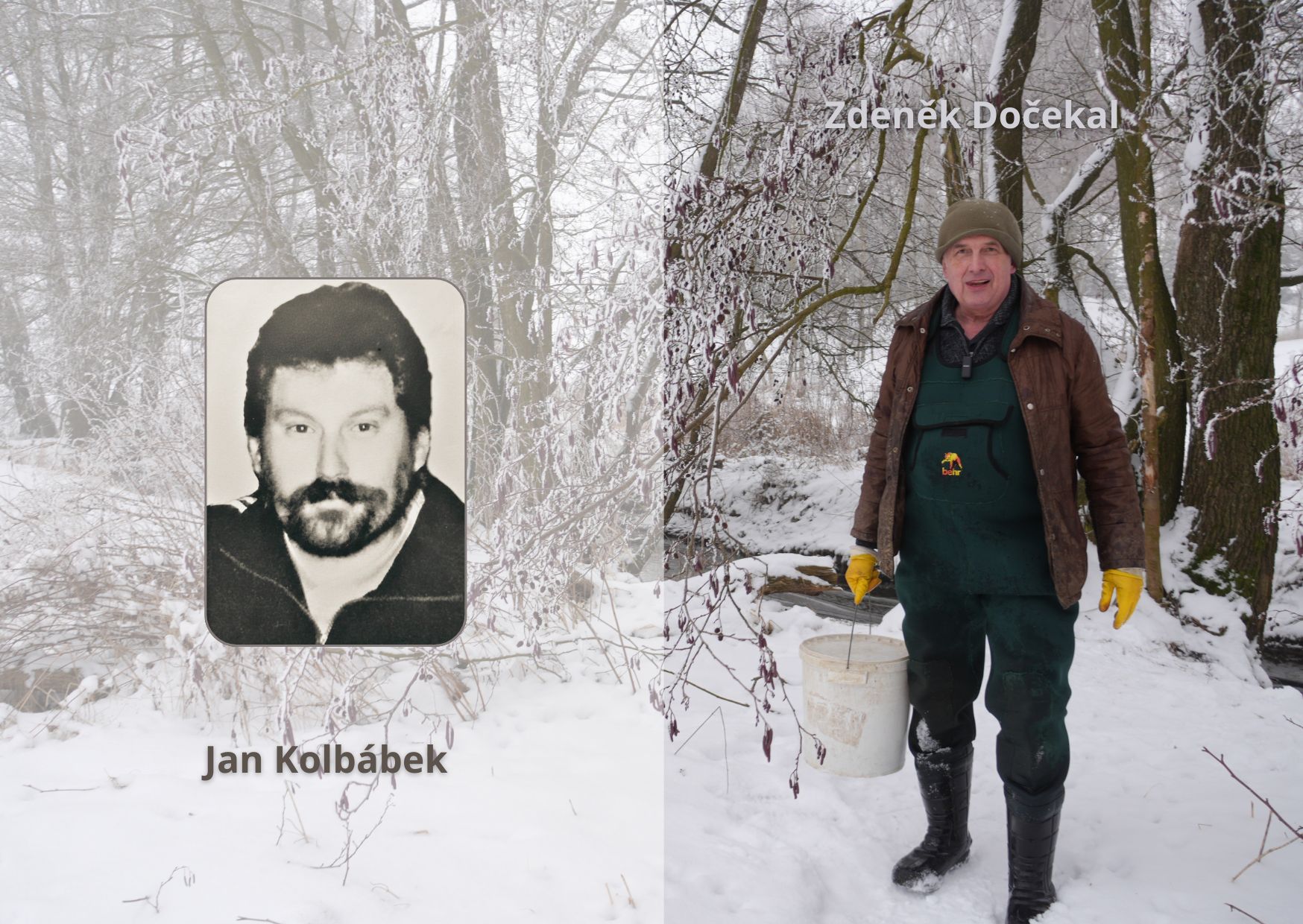
An interesting and effective alternative is the method introduced approximately 25 years ago by the pioneer of this fishing technique in the Highlands, Jan Kolbábek (in the picture) – the use of sleeve-shaped nets installed directly in the flowing water at the outlet of the pond.
This system works on the principle of passive capture:
Installation: The nets are firmly placed at the outlet and remain there continuously from autumn to spring.
Principle: Plankton is naturally carried by the current of water directly into the nets, whether it is moving actively in the water column or being swept in by the bottom current.
Construction: Long sleeve-shaped nets are used, tied at the end, which allows for quick and easy emptying of the catch.
Specifics of winter operation
A key factor for success in freezing months is the proper choice of location. At the outlets of deeper ponds, the bottom water has a stable temperature of around 4 °C. As a result, the surface in areas with strong currents does not freeze even at temperatures dropping to -15 °C. In such conditions, the water paradoxically feels warmer than the surrounding air.
What to watch out for:
- Material of the nets: For long-term winter fishing, black monofilament has proven to be the best choice. Unlike white monofilament, it has less algae sticking to it, which is crucial as the nets remain in the water continuously for 24 hours a day.
- Maintenance: Even with long nets, gradual siltation and fouling occurs over time. Regular shaking is necessary to maintain their passability and effectiveness.
- Undesirable visitors: A significant problem can be ducks that congregate at unfrozen outlets in winter. Their claws on the ends of their webbed feet can easily damage or completely tear the nets.
Composition of the catch and nutritional value
In winter, the dominant part of the catch consists primarily of water fleas (Cyclops), supplemented by smaller amounts of daphnia (Daphnia), usually in single-digit percentages.
Winter plankton contains significantly more fats than summer plankton. Fish grow better on it and achieve more vibrant colors.
summarizes his experiences as a professional aquarist Zdeněk Dočekal regarding the advantages of winter fishing. Practice proves him right – the difference is visible not only in fry but also in long-term kept adult fish.
The amount of catch can vary significantly from day to day depending on whether the plankton is concentrated more at the surface or at the bottom of the pond. During periods of abundance, the idea of freezing supplies "for lean times" presents an ideal solution.
Fisherman's equipment
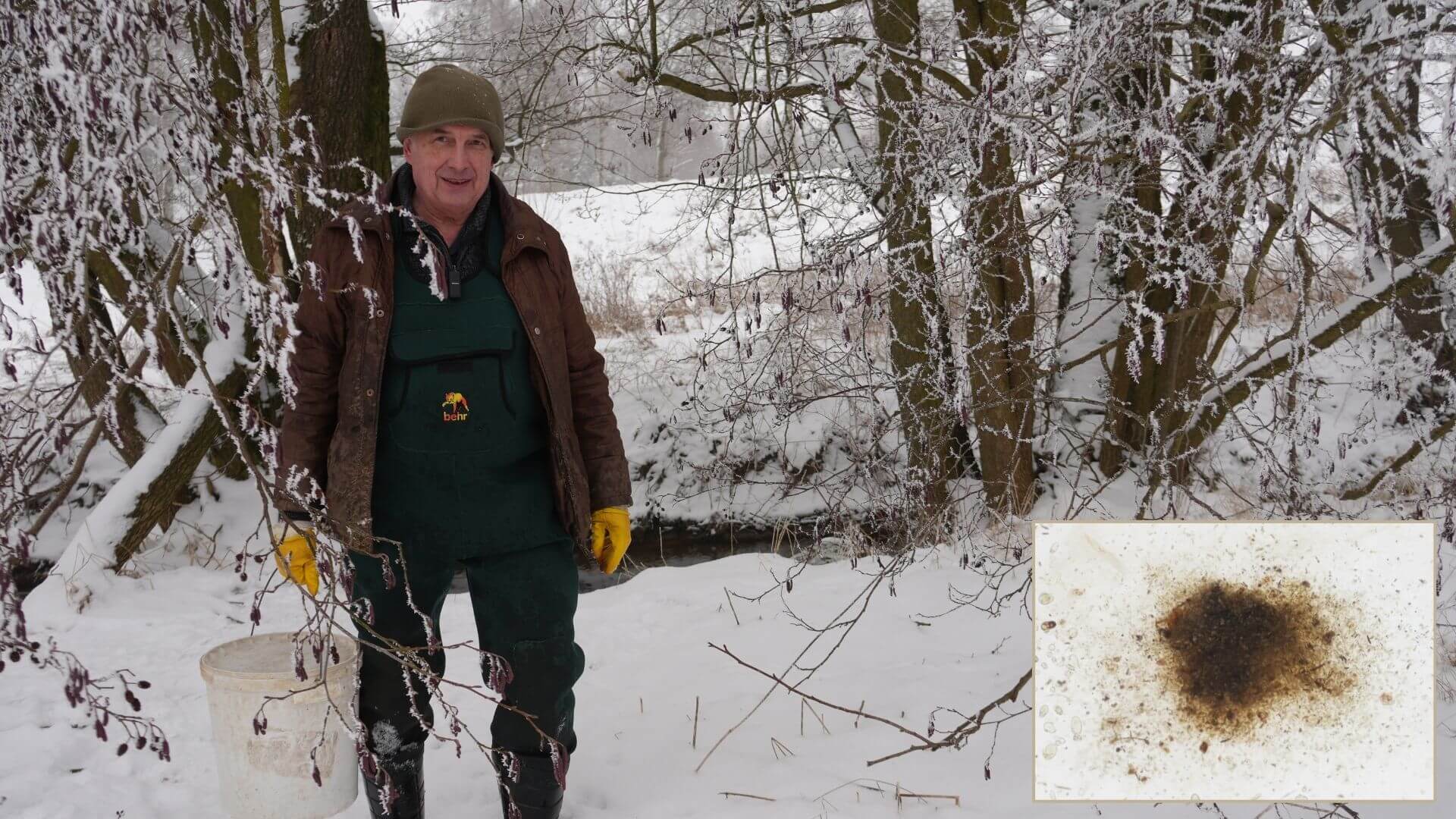
Working in icy water requires adequate equipment. Old rubber pants have their limits in freezing temperatures, and one realizes this very quickly. Today, the standard is insulated neoprene fishing pants that retain heat and allow for comfortable handling of the nets during prolonged contact with cold water.
And if one approaches the outlet only after dark – which is more of a rule than an exception in winter – a good headlamp is a necessity.
You can watch the entire process of winter plankton fishing in the attached video.
Feeding is then captured in this short video.