



Weakly Electric Fish in Aquaristics: A Portrait of the Black Ghost Knifefish (Apteronotus albifrons)


Meet the "Black Ghost" of the Amazon. The Black Ghost Knifefish fascinates aquarists not only with its velvety blackness and elegant movement but especially with its unique electric organ, which serves as a sophisticated biological sonar. Keeping this South American rarity, however, is a rewarding challenge that requires patience, pristine water conditions, and a deep respect for its nocturnal nature.
They are interesting fish that are suitable only for certain aquariums because they require specific conditions. Even if you meet those, you have little chance of breeding the Black Ghost Knifefish. Literary experiences with this fish are scarce, ranking it among aquarium rarities. Ideally, it is captured by the English name "black ghost," meaning black spirit, apparition, phantom, shade, demon, …
Occurrence of fish
The fish live in a vast area of South America, which is bordered to the north by the Orinoco and to the south by the Rio Paraná. In other words, it is found in Brazil, Guyana, Venezuela, Peru, and Ecuador.
Characteristics of the Black Ghost Knifefish
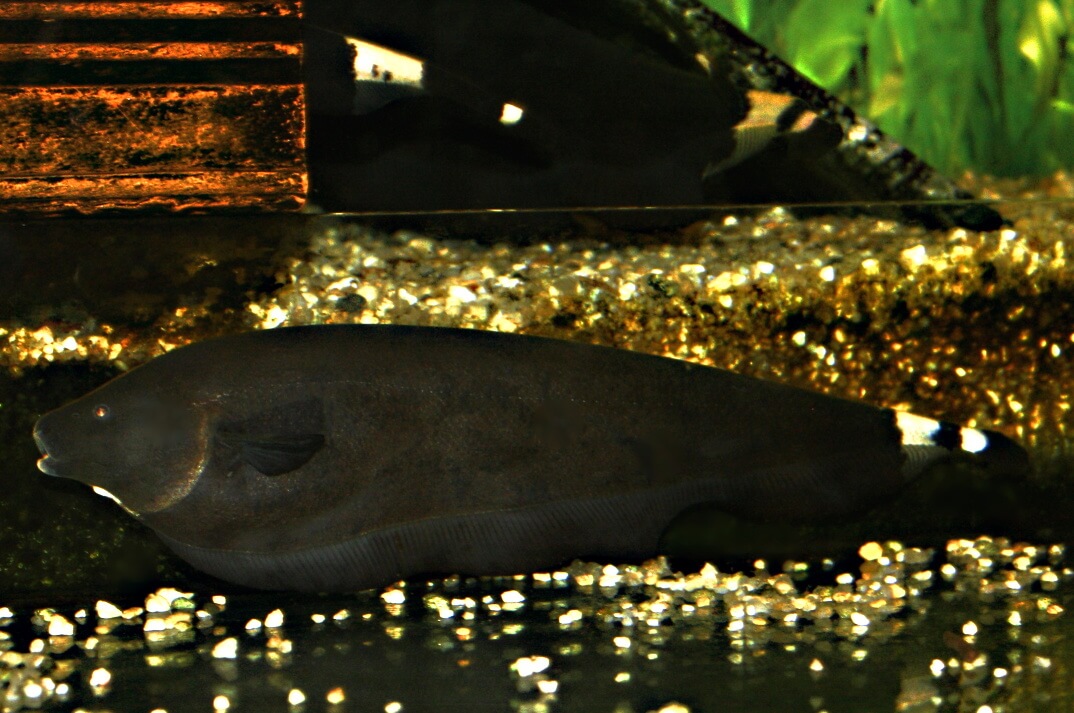
The Black Ghost Knifefish (Apteronotus albifrons) first reached European aquarists in 1934. While it has long been a subject of fascination, it remains a specialty fish rather than a common household pet. The species name albifrons—meaning "white forehead"—refers to the distinct white blaze that runs from its nose along the top of its head. This, combined with its velvety black body and two white rings at the base of the tail, creates a striking, spectral appearance that perfectly justifies its name.
In their native Amazonian habitats, these fish can reach an impressive length of 40–50 cm. While they often remain slightly smaller in home aquaria, they are long-lived creatures, with a lifespan reaching up to 16 years. Because they grow throughout their lives, providing ample space is vital for their long-term health.
The Biological "Sonar"
The most remarkable feature of the Black Ghost is its electric organ. Unlike "strong" electric fish (like the Electric Eel), the Black Ghost produces a weak electric field at a high frequency. This field acts as a sophisticated biological sonar, allowing the fish to navigate and hunt with surgical precision in total darkness or murky water. By sensing distortions in this field, they can "see" the movement of insect larvae or small fish, and even communicate with other knifefish by shifting their discharge frequencies.
Mastery of Movement
One of the most captivating sights in the hobby is the Black Ghost’s movement. This agility is provided by a specialized anal fin—not the pectoral fins—which contains over 150 rays. By undulating this long fin in waves, the fish can move forward, backward, or hover vertically with equal ease. This allows them to slip into tight crevices and navigate complex environments without ever needing to turn their bodies around.
Behavior and Social Structure
Despite their "ghostly" reputation, these are highly intelligent and active fish, though they are strictly nocturnal. During the day, they require secure hiding places—such as "ghost tubes," hollow logs, or dense vegetation—where they will remain tucked away. As evening falls, they emerge to claim their territory.
While they can be kept in groups in very large tanks, they are territorial and semi-aggressive toward their own kind. Intraspecies conflicts are often ritualized; they engage in "head-butting" contests to establish a hierarchy. The defeated fish will signal its submission by retreating backward or tilting its body, effectively "paying tribute" to the dominant individual.
Breeding in the aquarium
The fish are somewhat intolerant towards each other, aggressive, and due to their size, they also require large aquariums. Fights, however, have a ritual character, proceeding according to certain rules, and do not result in injuries. Opponents stand side by side or opposite each other, delivering head blows to each other. After a certain period, a hierarchy is established in the aquarium, where stronger individuals are respected. The defeated individual retreats in reverse, backing out of the winner's sight, sometimes even slightly on its side, thus paying tribute to the victor. It would be very interesting to study the electric discharges of fish during these conflicts. The electric field serves not only to locate places but also for intraspecies communication.
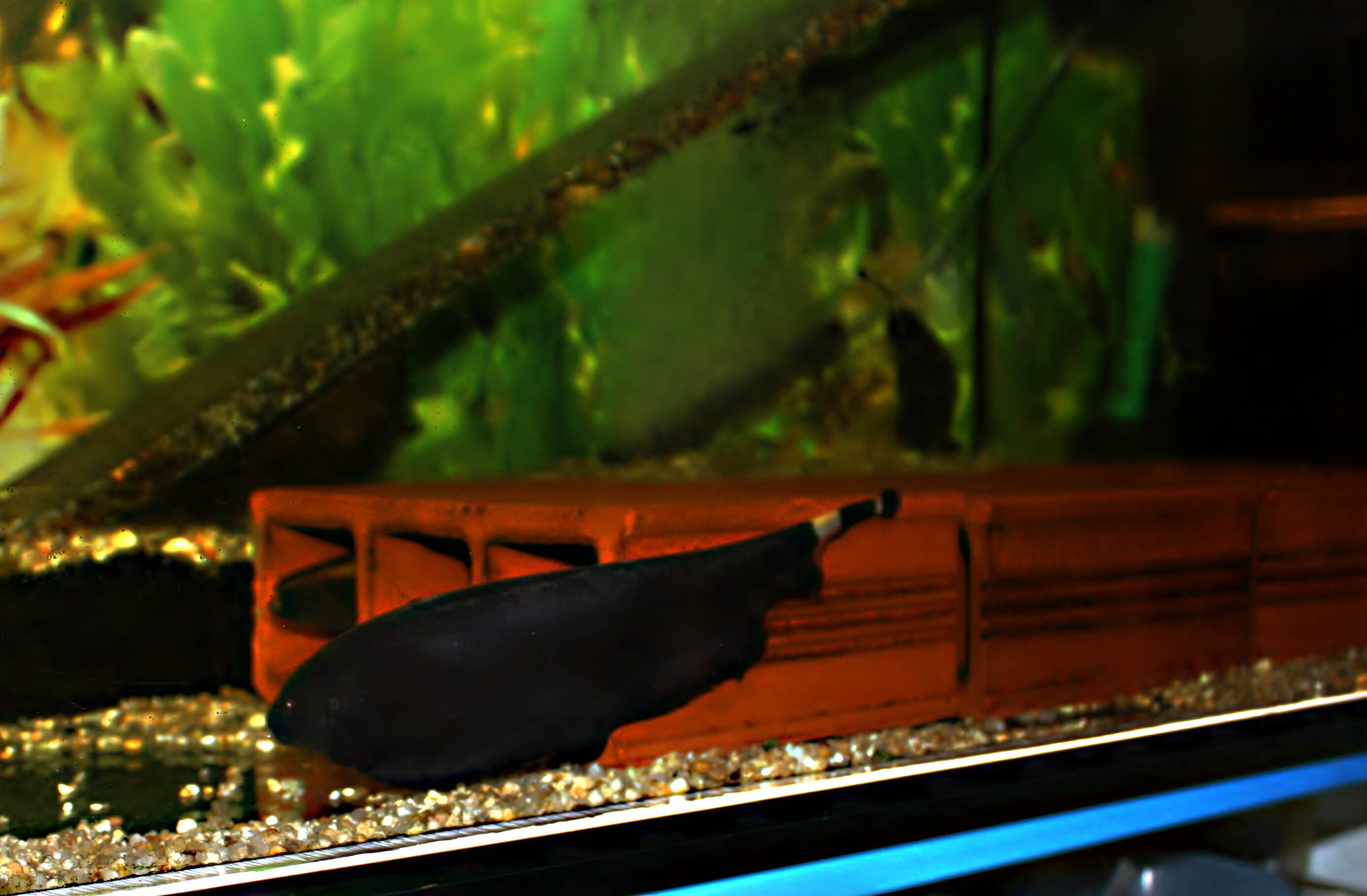
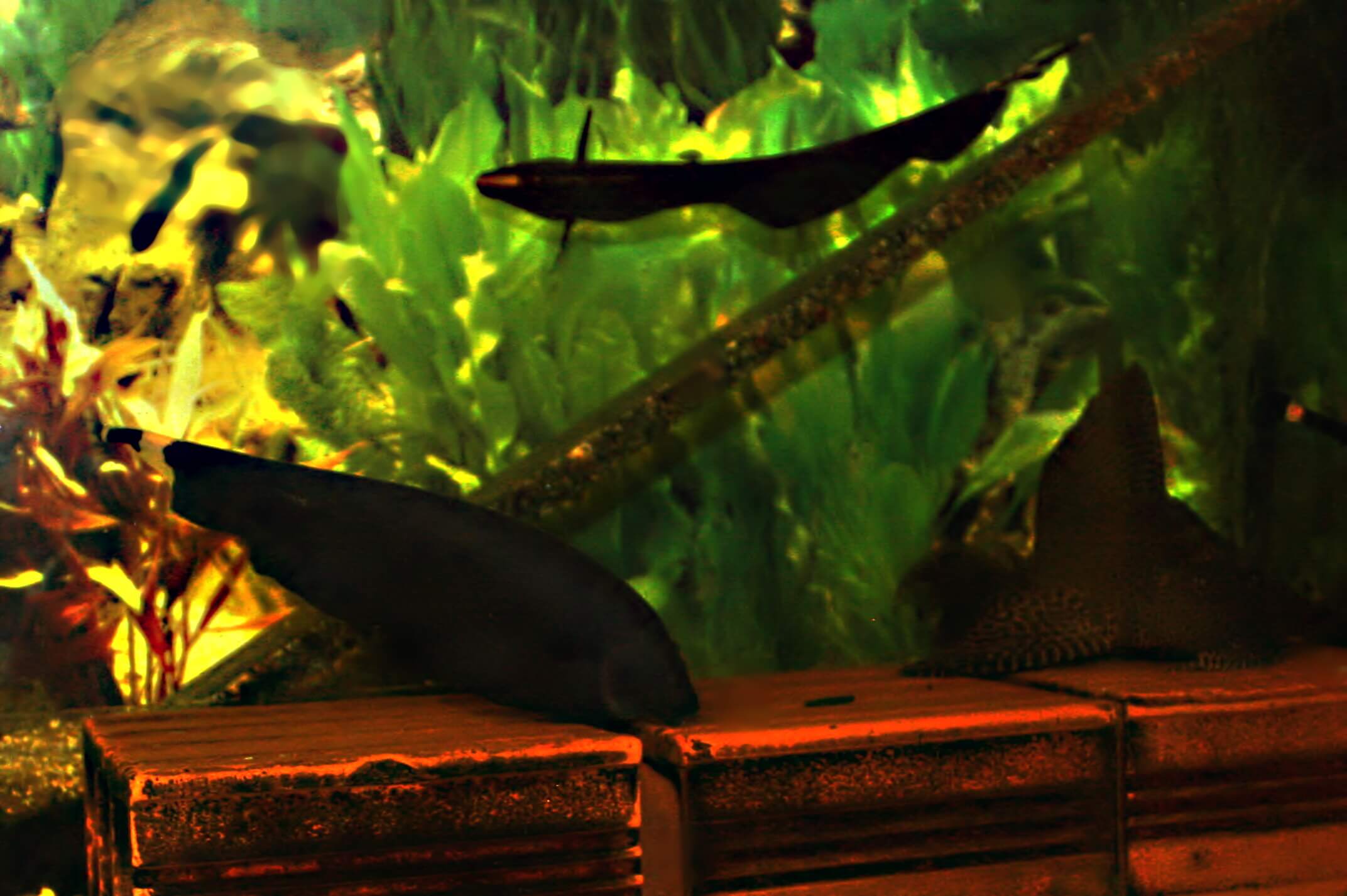
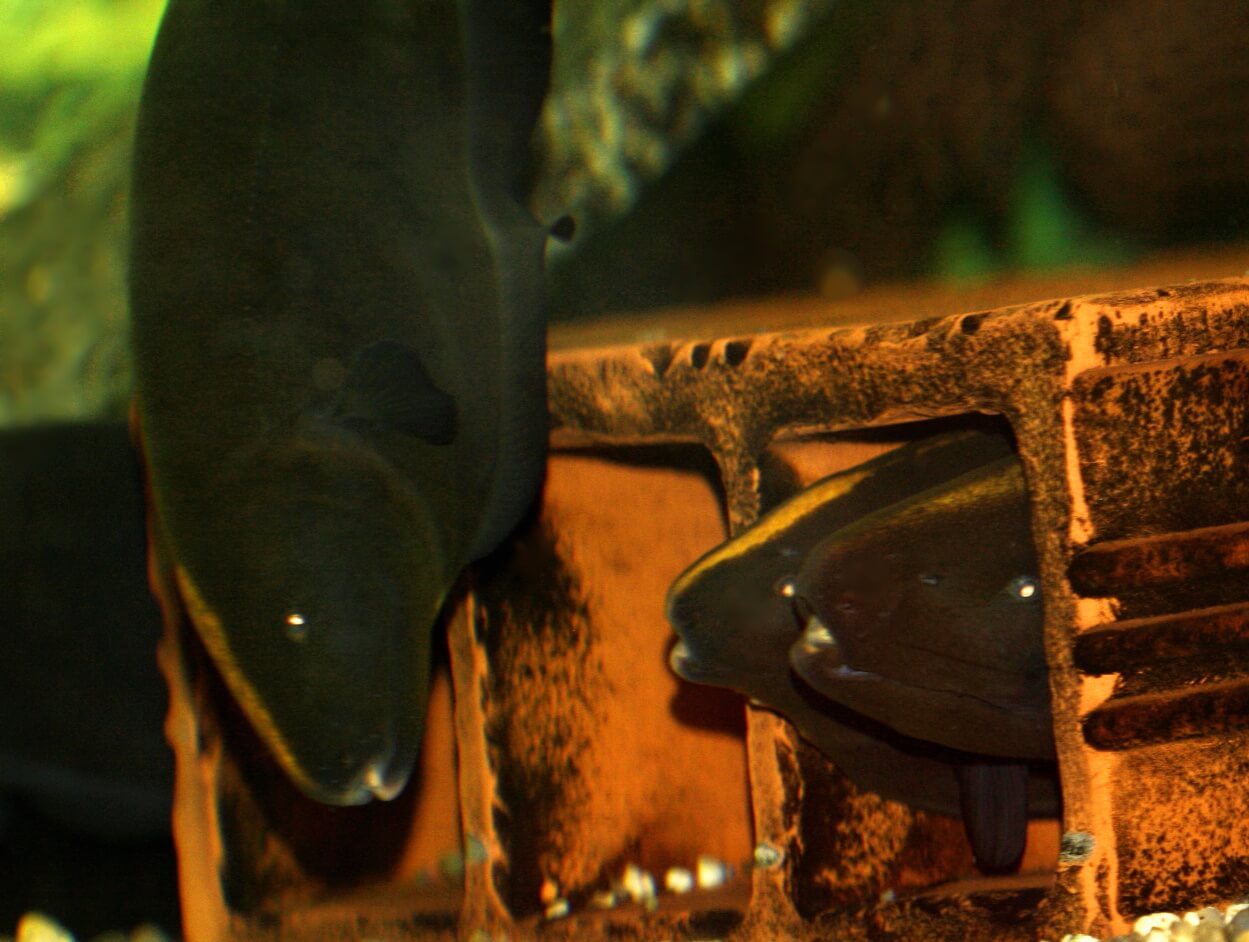
The tanks should be shaded with plenty of hiding places, which can be not only obligatory roots or stones, ceramics, but also common hollow bricks or drainage pipes. Every creature needs its own hiding place. Due to their constant game of hide-and-seek, they are not too popular, as we rarely see them. If we have a school of fish in the aquarium and each fish does not have its own hiding place, then the weakest individuals are out of luck; they must seek alternative solutions, imitating perhaps fallen leaves on the bottom. The bottom should be arranged with finer sand. When changing the water, which we keep warm around 24-27 °C, we ensure that there are no significant changes in chemical parameters, for which the fish could pay with their lives. We primarily keep the fish in schools, as they are then generally calmer and more lively. Tankmates must be of a certain size so they do not serve as quite expensive food.
Feeding
In nature, live food is mainly available, and I still believe that we should not make significant changes. Therefore, we offer live as well as frozen mosquito larvae, daphnia, brine shrimp, small crayfish, and small fish. I must say that they also do not disdain quality artificial food. I tried pellets intended for terrarium fish; the fish, after their fall to the bottom, could not resist, coming out of their hiding places even during the day, similar to what some catfish were also doing in the tank.
Breeding
The general literature on them either stubbornly states they have not been bred or, as the popular "Mergus Atlas," shares that they are unknown. Very interesting attempts by Dr. Frank KIRSCHBAUM (University of Cologne) to breed these fish are known, where he mimicked the rainy season by slowly raising the water level while simultaneously lowering the pH and conductivity. Thanks to him, we learn something about the sexual differences, which are very difficult to determine in these fish. However, when you breed the fish, the differences in sex are obvious. Fully grown males have distinctly longer and sharper mouths, while females have a more blunt mouth. Breeding seems to occur in fish of one year of age, which lay about 2 mm large and yellowish eggs in a cavity that the pair selects beforehand. Hatching occurs at a temperature of 25-27 °C on the third day. At the time of swimming out, the fish are already about 1 cm long, so breeding while feeding with brine shrimp nauplii poses no problems. The fish are initially transparent, whitish, and yellowish, and from about 15 mm they begin to darken.
Images:
- Male Black Ghost Knifefish.
- Female Black Ghost Knifefish.
- Sex differences are primarily recognized by the elongated snout; the female has a short and rounded one.
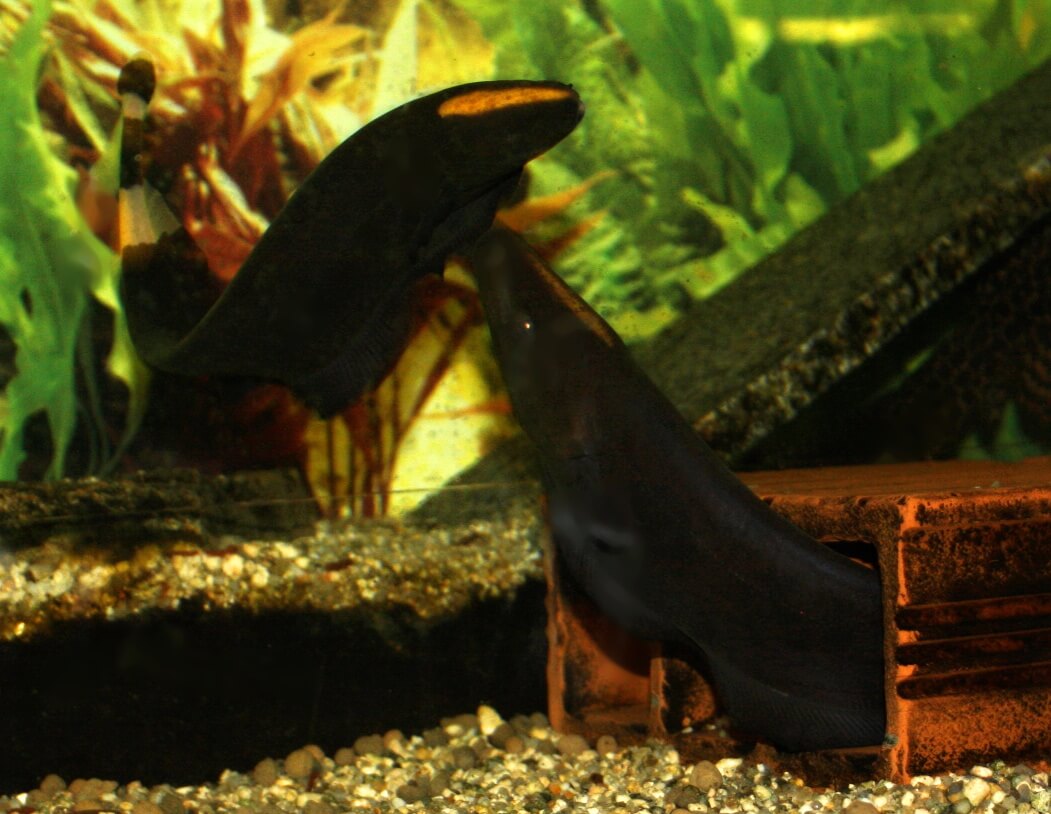
- Adult male attacks the pair in the shelter, which is now a hollow brick.
- The aggressor is however firmly repelled.
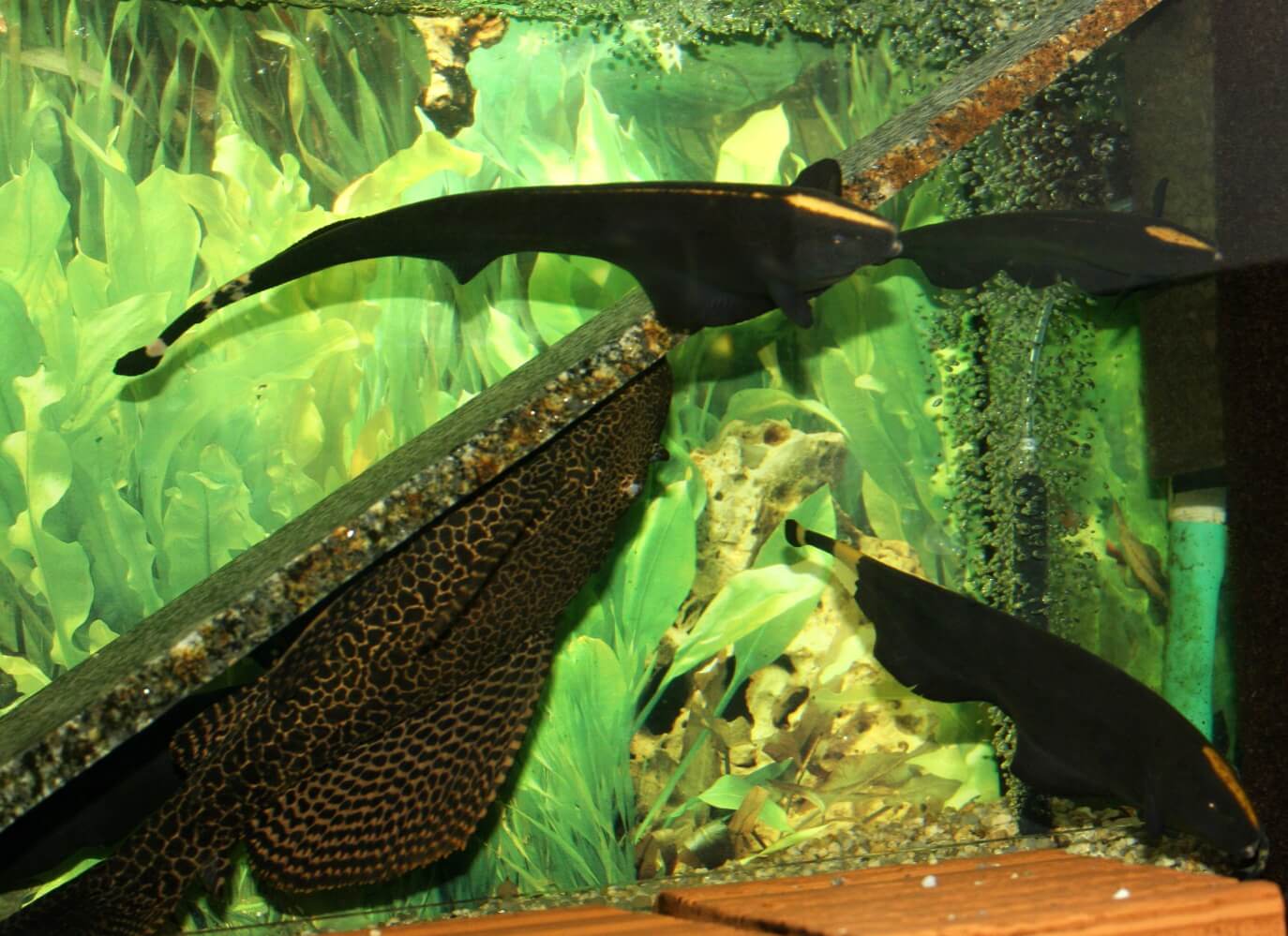
- As a good cleaner, Pterygoplichthys gibbiceps serves; its nocturnal activity does not bother the knifefish.
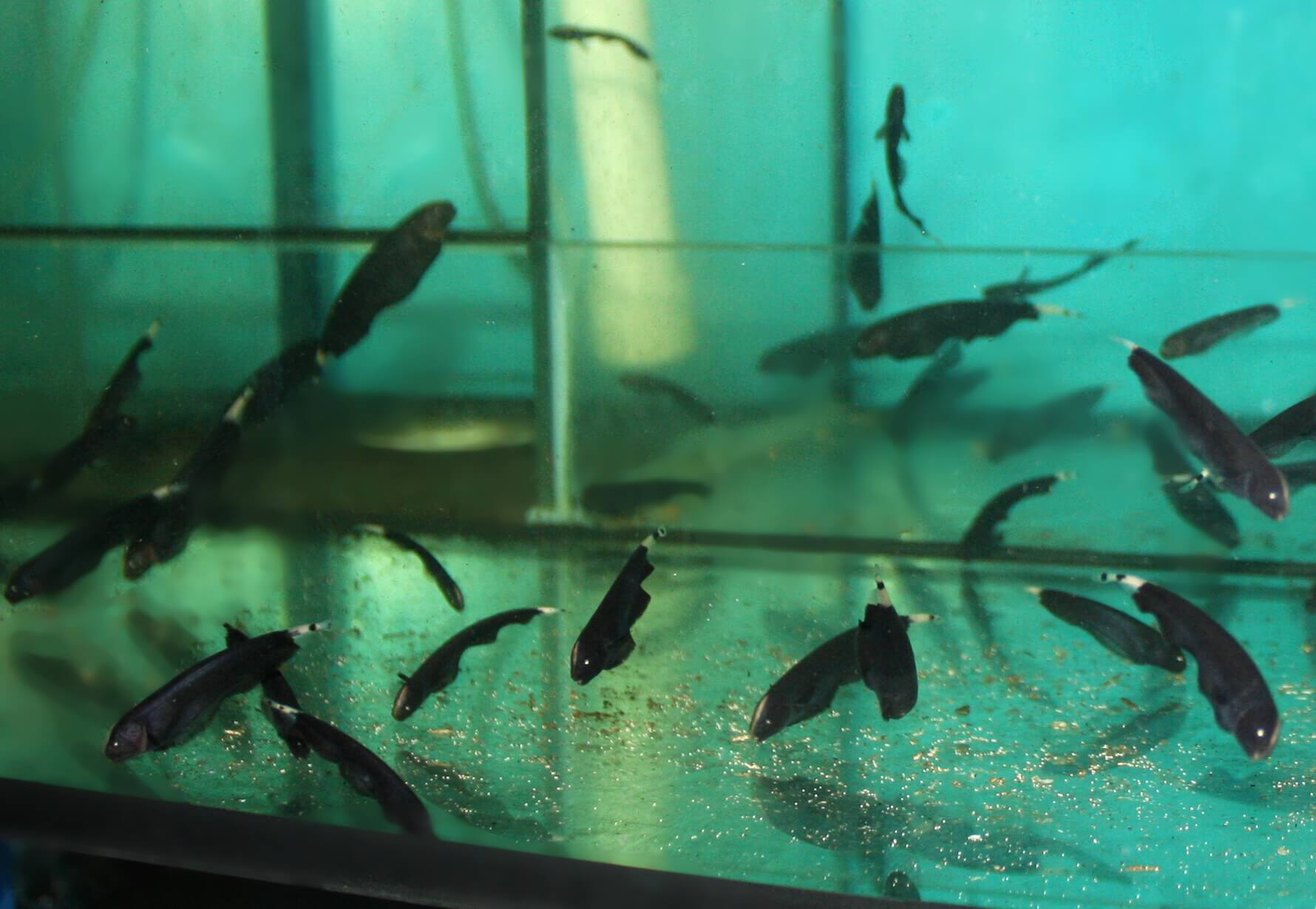
- School of young knifefish.
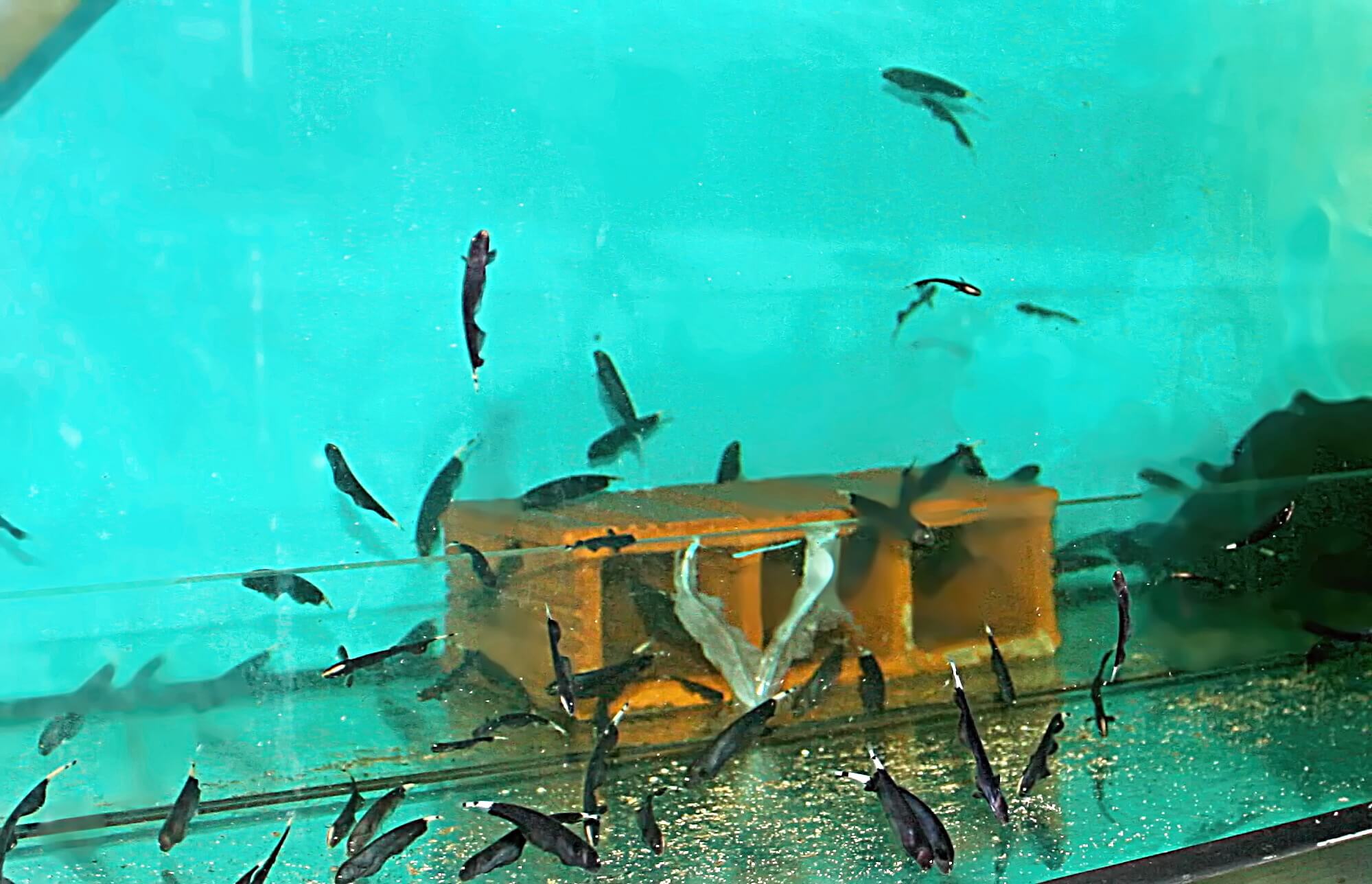
- To breed young knifefish, it is necessary to use larger aquariums.
- Young knifefish require frequent and abundant feeding.
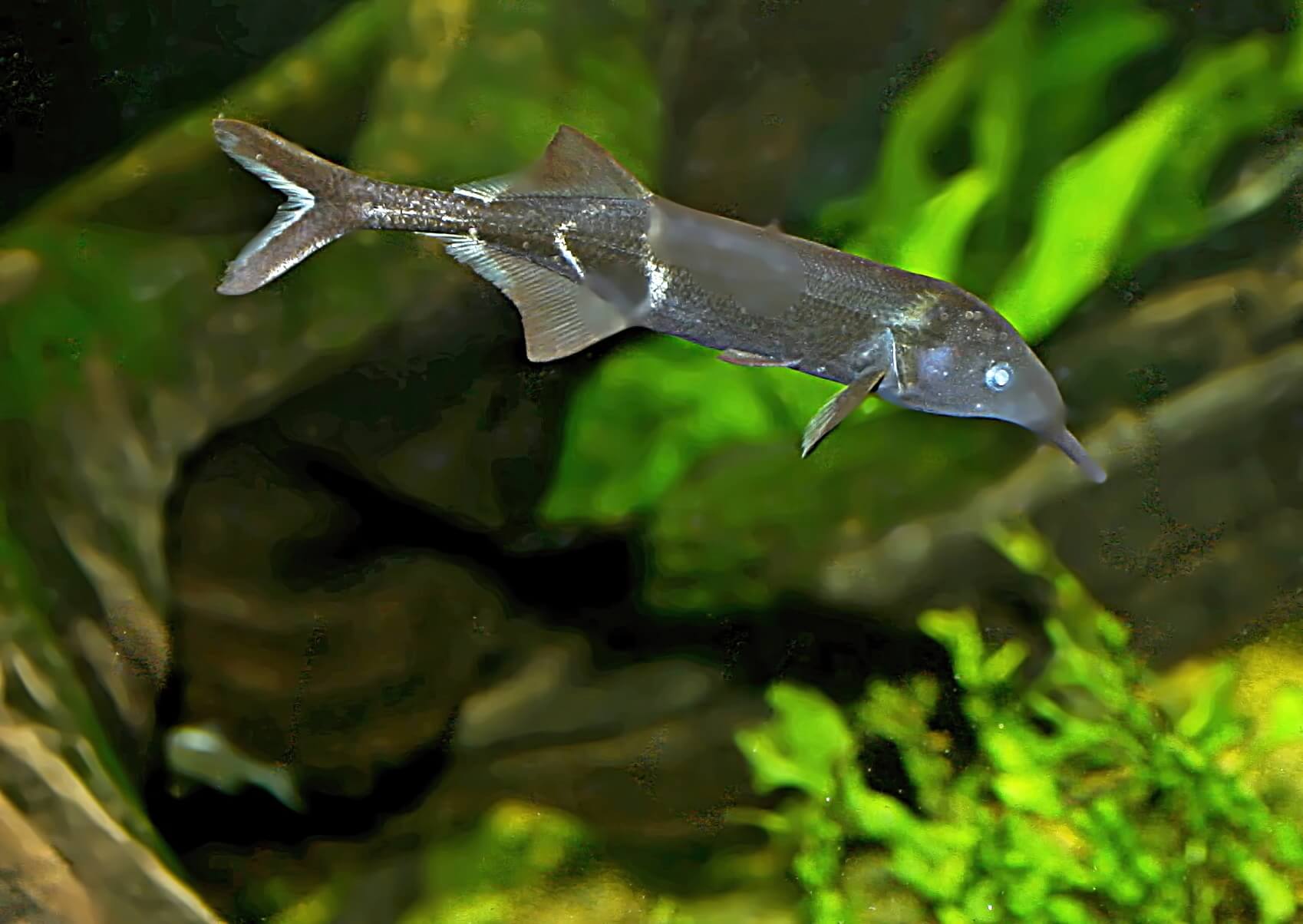
- Gnathonemus petersii, the Mormyrid from Africa, they are a classic example of convergent evolution (two unrelated fish developing the same "sonar" ability), grows up to 25 cm and originates from Central Africa, mainly from the Congo and Cameroon regions. It also lives in the upper reaches of the Blue and White Nile. Because these fish usually live in murky waters, they have poor eyesight. They are not completely blind, though; their eyes are covered with a transparent protective membrane. In case of danger, they burrow headfirst into the mud or sand without damaging their eyes. As the only freshwater fish, they can actively rid themselves of ectoparasites by lying on their side (which they can do in a fraction of a second), and then rubbing against the sandy bottom with forward and backward movements. Poor eyesight is compensated by an exceptional ability of other sensory organs, primarily well-functioning lateral lines and taste. They can easily detect impending danger and search for food. The electric organ in the base of the caudal fin emits weak electric impulses, which help the fish find food or sense danger. Similarly to dolphins and bats, they have "sonar," which can be audible to the human ear after amplification.
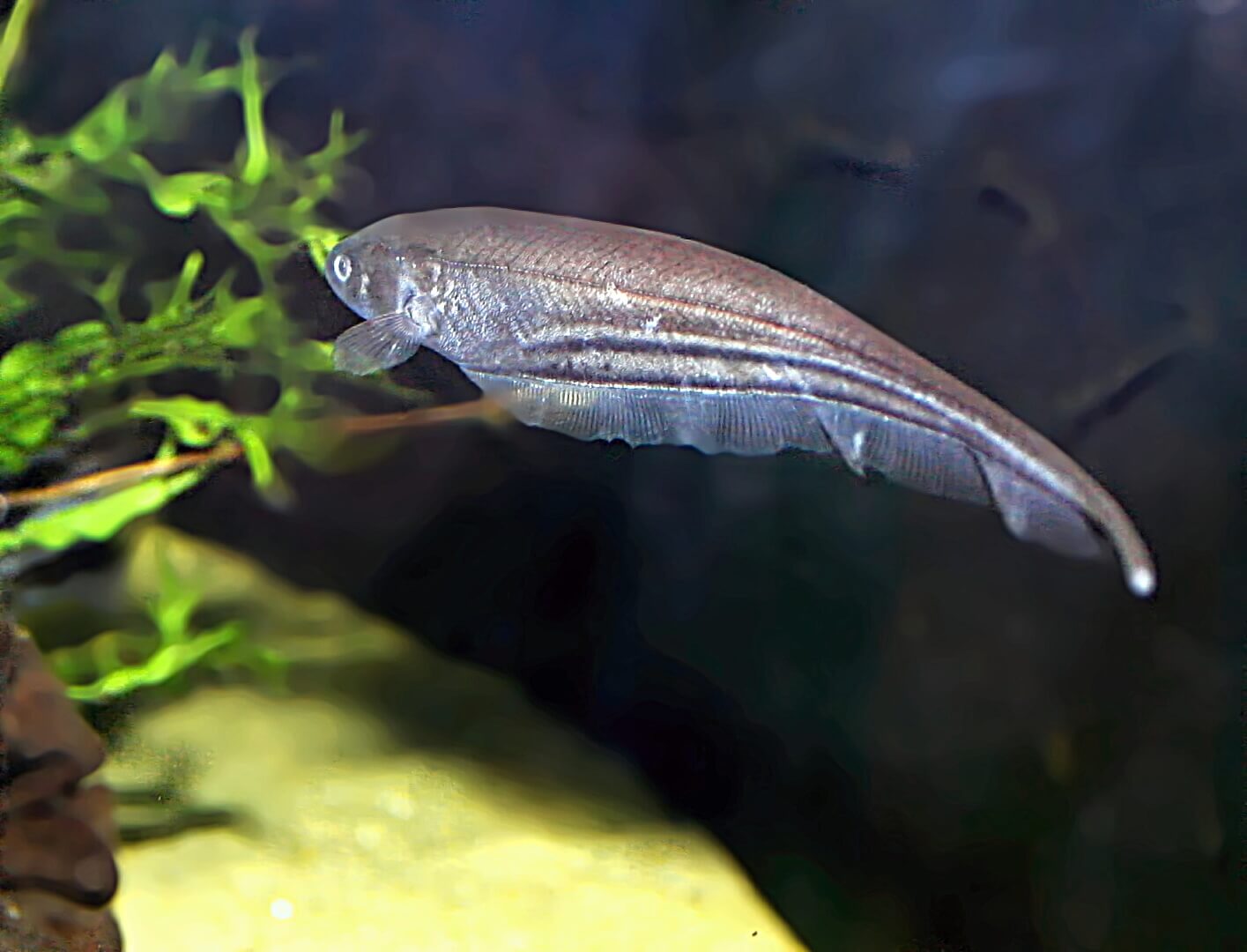
- Eigenmania virescens, the green knifefish, also emits weak electric discharges serving for mutual communication. Males grow to 30-35 cm, while females are smaller, only about 20 cm.
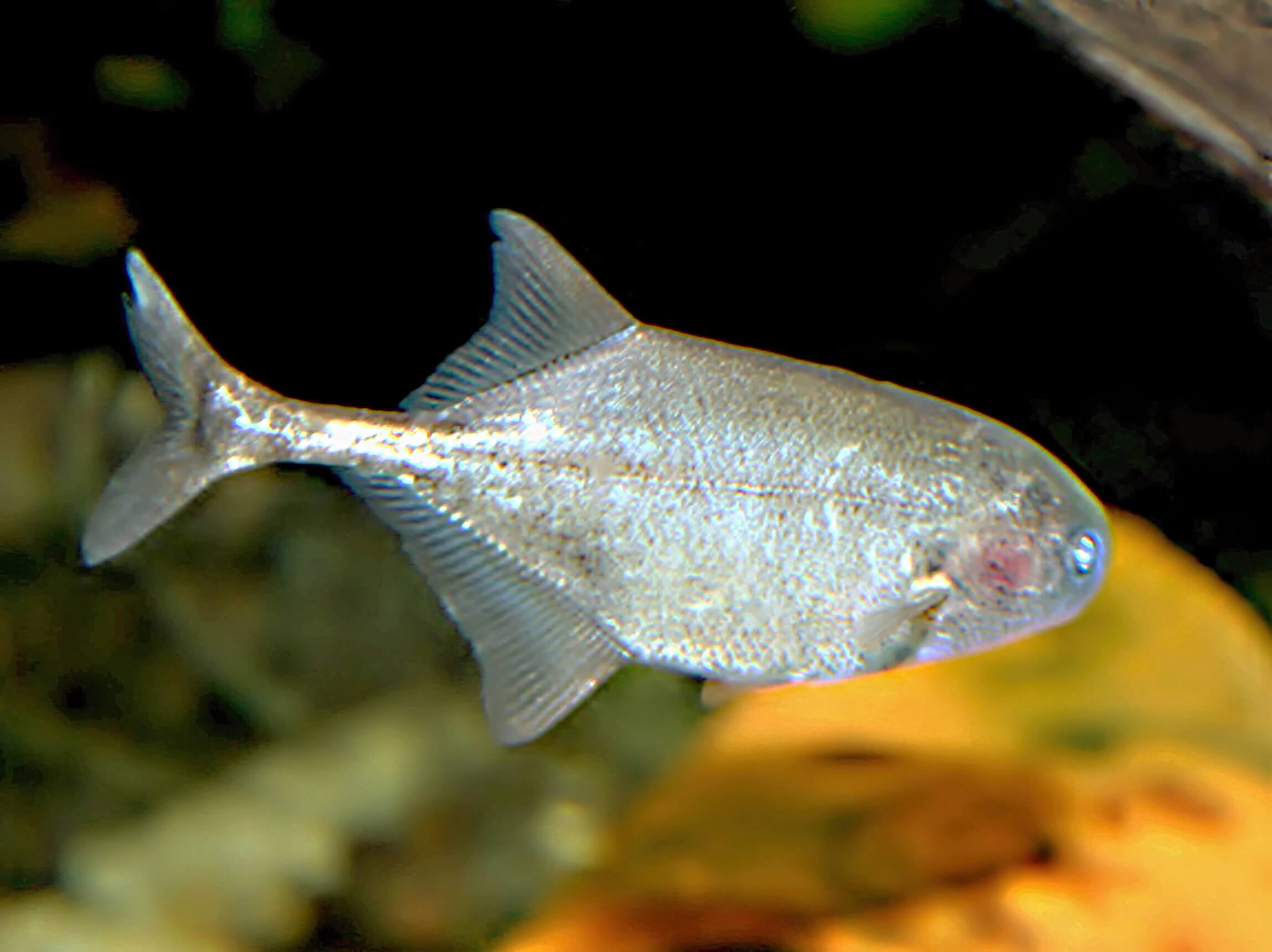
- Petrocephalus sp. belongs to the subfamily Petrocephalinae, which today has about 20 species growing to a size between 10-20 cm. It also belongs to the group of fish that emit weak electric impulses (3-7 V), which help not only with orientation but also with defense. They have large eyes and are active during the day.