


Conversations Above the Surface: Snail Population Control in the Aquarium - From Botia to Predatory Snails
Controlling snail populations is an ongoing dilemma for aquarists. While some welcome them as useful cleaners, others view them as an unwanted invasion. Instead of chemical interventions, a range of effective non-chemical methods—based on natural principles—is available. These range from introducing specialized fish to utilizing predatory snails that naturally reduce unwanted species. Which biological regulators should you choose for small versus large tanks? And how can the right snails help not only with glass cleanliness but also with the critical aeration of the substrate? The key to long-term success, however, is always to prevent overfeeding, which is the primary cause of massive overpopulation.
Population control of snails in an aquarium is a perennial topic that divides aquarists. While some welcome every living organism, others strive to keep the glass and substrate perfectly clean. What non-chemical methods are available?
1. Biological regulators: fish as a common choice
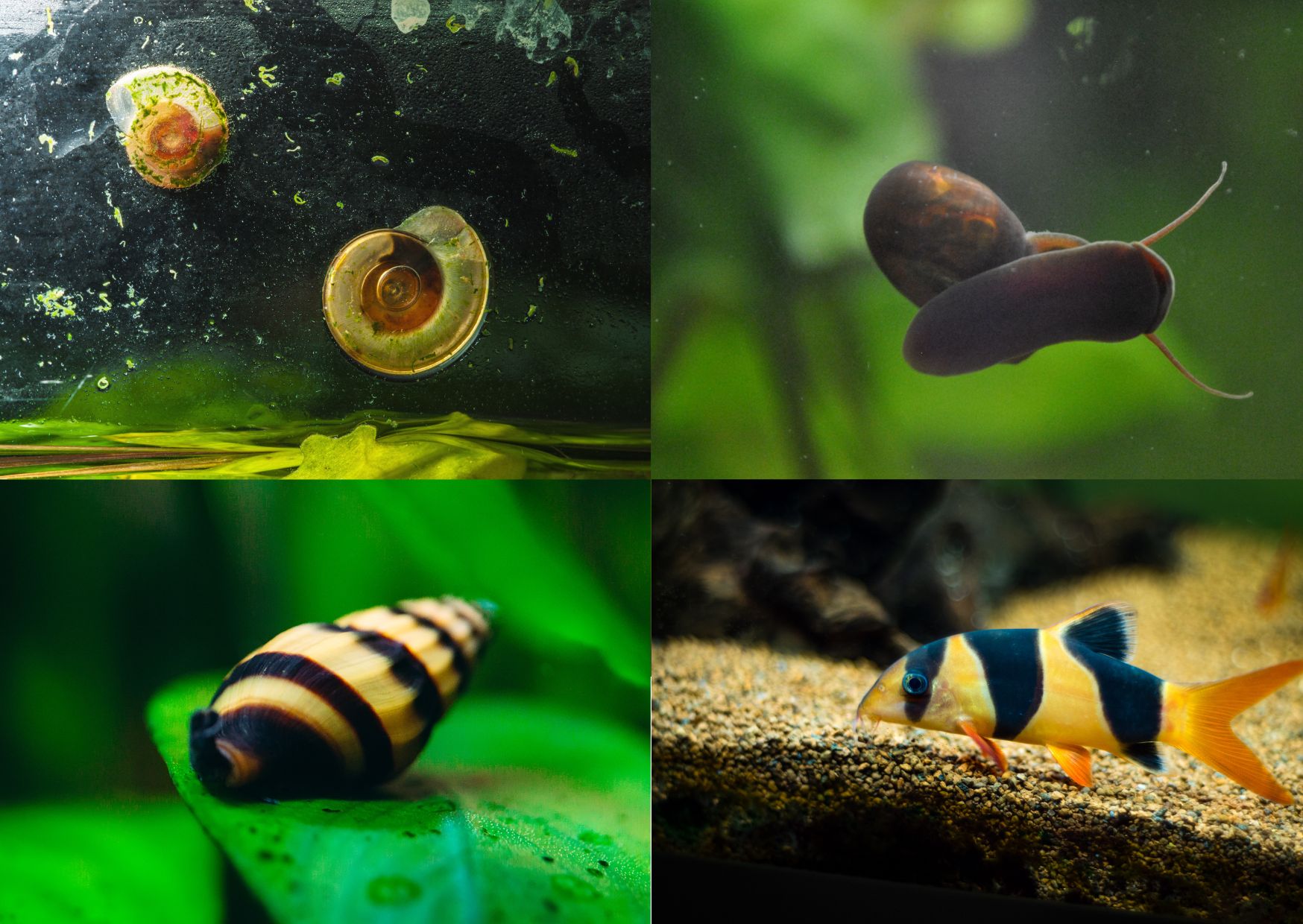
A long-standing staple in the fight against unwanted snails has been Chromobotia macracanthus (formerly Botia macracantha, Clown loach). These fish are known for their ability to effectively regulate (or rather eliminate) snail populations. However, it is crucial to realize that Chromobotia macracanthus can grow up to 30 cm and requires an aquarium volume of 400+ liters (preferably more). For this reason, it is unsuitable for most common aquariums, and its acquisition should be carefully considered. For smaller tanks, the Dwarf loach (Ambastaia sidthimunkii) can be considered as an alternative.
However, if the aquarist decides not to acquire fish for this purpose or is looking for a solution for smaller tanks, the world of snails alone comes into play.
2. Muddies: substrate cleaners
Muddies burrow into the substrate and their movement aerates the substrate. This helps prevent the formation of anaerobic zones, decay, and the accumulation of dangerous hydrogen sulfide, thus fundamentally contributing to the health of the tank.
The Malaysian trumpet snail (Melanoides tuberculatus): This species of snail is ideal for aquarists who care about the aesthetics of the substrate. Muddies burrow into the substrate and their movement aerates it, helping to keep the substrate level beautifully even and free from detritus.
The Sharp mud snail (Melanoides granifera): It is important to keep in mind that the heavily reproducing Melanoides granifera is somewhat more aggressive and has a stronger shell. It may push out the population of Melanoides tuberculatus.
3. Anentome helena (formerly Clea helena): a predatory snail in the service of aquarists
The absolute specialist in controlling snails is Anentome helena, the Assassin snail. This predatory snail has become popular for its ability to effectively limit unwanted species:
Snail targets: Anentome helena easily handles soft-bodied snails, such as planorbids (Planorbella spp.), physids (Physa spp.), and can even eliminate large apple snails (Pomacea spp.). It actively seeks out their eggs as well.
Limitation of mud snails: Although it can limit snails (primarily preying on weak and young individuals), it does not eliminate them entirely. The strong shell of adult muddies is often a barrier for it, which is advantageous for maintaining a beneficial population of snails in the substrate.
Note on predation of larger snails:
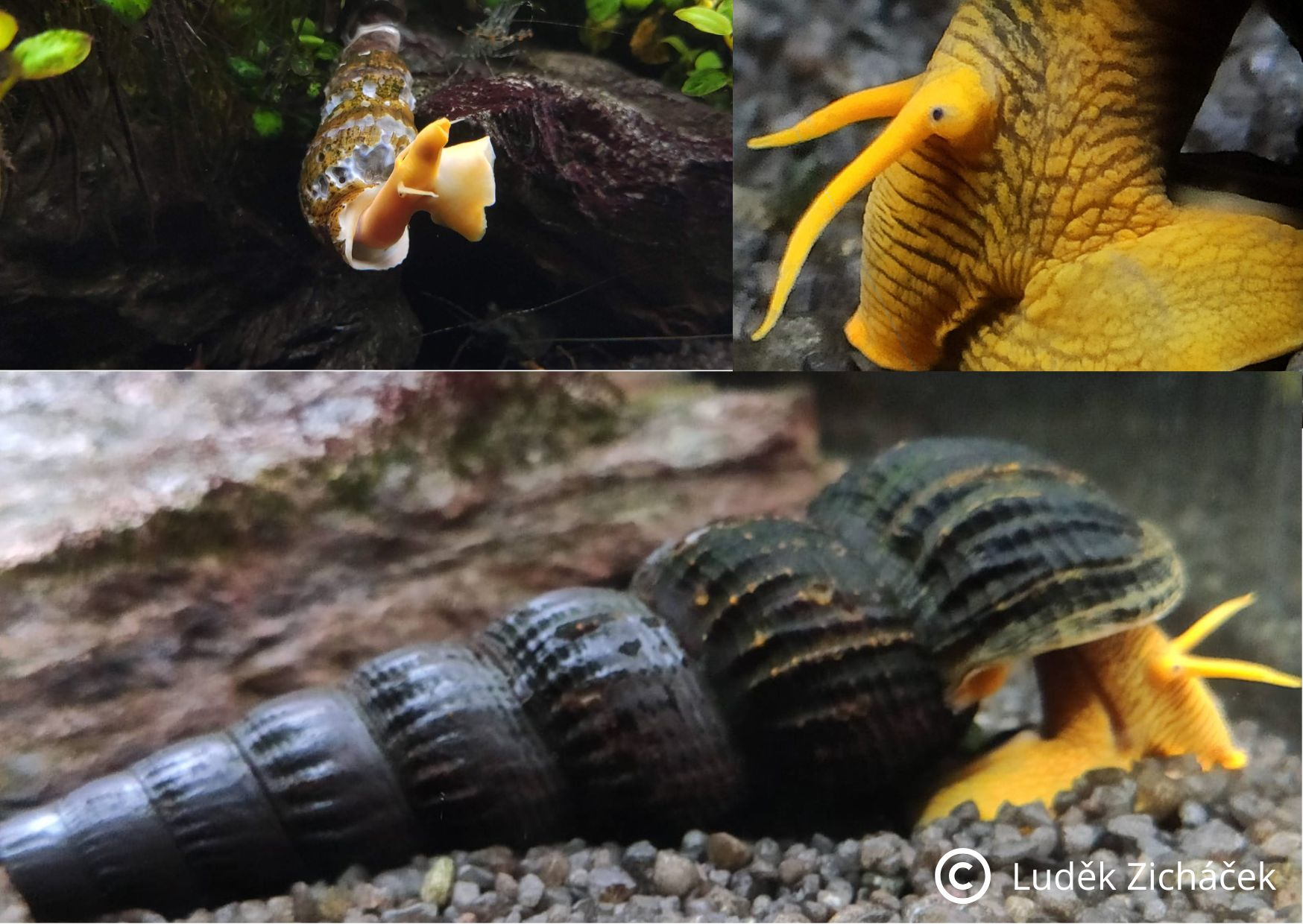
Interestingly, Anentome helena may challenge larger snails such as Tylomelania tuberculatus, but it certainly does not harm them. The reaction of Tylomelania to it has been observable. Anentome helena is the most efficient predator of soft-bodied snails (planorbids, physids), but the strong shells of muddies protect them well, so this species does not displace them.
In the genus Tylomelania, their reproduction is also fascinating – once fertilized, females can have several offspring. The eggs develop inside the female, and the young are born alive. Therefore, it is stated that they are livebearers. Once one offspring is expelled, the female begins to develop another.
Reduction of Anentome helena
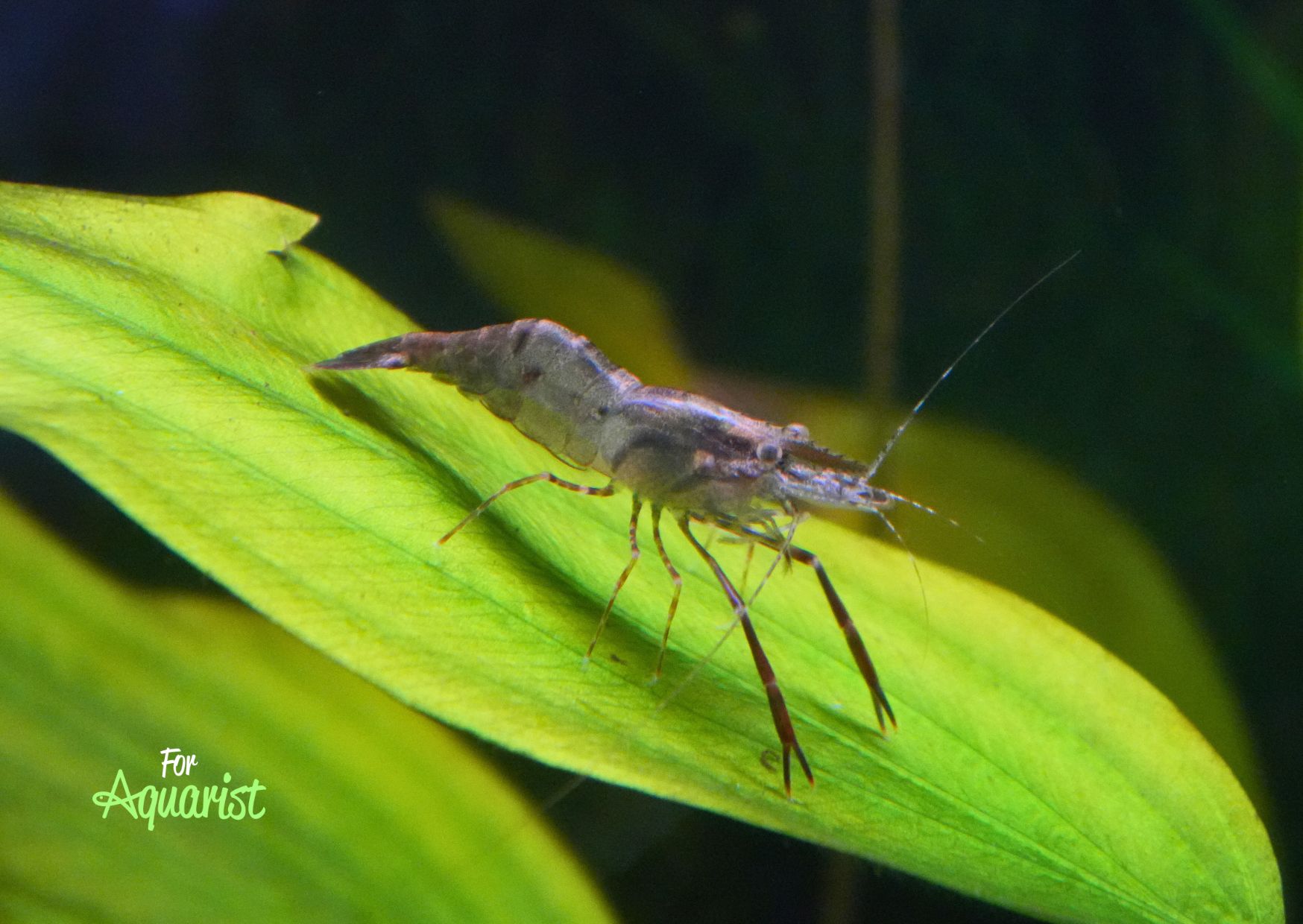
The eggs of predatory snails Anentome helena can become a delicacy for other inhabitants of the aquarium, for example, for the chocolate shrimp (Macrobrachium dayanum), which will consume the eggs.
4. Nerites: glass cleaners without the risk of overpopulation
Nerites (Neritina spp.) are valued for their ability to effectively clean glass and decorations from algae. They are popular precisely because they cannot overpopulate in a freshwater aquarium – adults do lay eggs, but brackish water is necessary for their larvae to develop. This means that practically all nerites sold are wild-caught, which is good to keep in mind from a sustainability perspective.
- Life cycle: Adults live in freshwater. However, the larvae must reach brackish water, which they need for their survival; otherwise, they will die within a few hours.
- Because of their thick shells and tight-fitting operculum, Anentome helena does not harm these snails, making them safe to keep together.
5. Basic rule: cause and effect
No snail or fish will solve a problem with snails if the aquarist does not stop overfeeding. Overpopulation is almost always a primary indicator of excess food and detritus in the aquarium.
Therefore, it is crucial to optimize feeding amounts before introducing a biological regulator. If you reduce the amount of food, the population of snails will naturally decrease as they will not have enough resources for massive reproduction.