

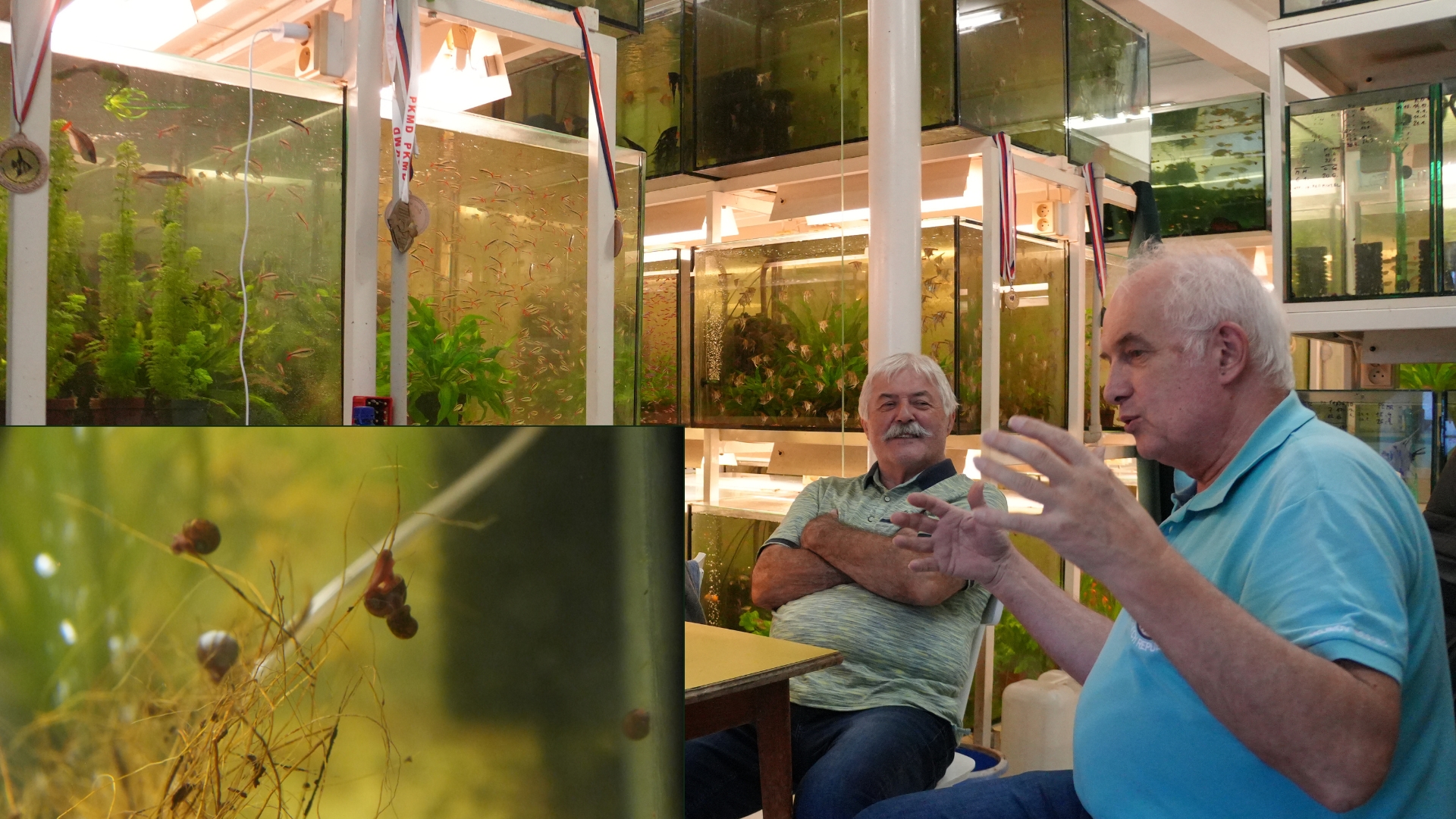
Conversations above the water surface 7: with Slávek Boudný and Zdeněk Dočekal - Snails in the aquarium welcome and cursed
The overpopulation of small snails, such as horned pond snails, can be elegantly and naturally resolved in the aquarium – through the use of specialized predators. "Snail snappers" include loaches and some catfish species that enjoy feasting on the snails and can effectively reduce their population.
Natural predators: fish that regulate the population of snails
Many aquarists struggle with the overpopulation of small snails, such as the snails. Instead of a chemical intervention, the most elegant and natural solution is to introduce specialized fish that enjoy eating snails.
Snail-eating fish are among the most well-known:
-
Macropod (Paradise fish): These beautiful fish are known for their ability to actively hunt small mollusks.
-
Gourami: Particularly some gouramis, such as Helostoma temminckii, are capable of sucking snails out of their shells out. According to the experiences of the aquarist Slavko Boudného, they begin to regulate the population of snails once the snails reach a size of 2 cm. Slavko even recommends adding a handful of snails on the 3rd day after the gourami's closure so that the snails can reproduce and the fish have enough food. Once the fish have grown, the loss of snails is clearly noticeable, and finally, the aquarist is left only with collecting the empty shells.
If you are looking for a targeted biological weapon against snails, you might also consider the snail Clea helena, which is known for actively hunting other types of mollusks.
Snails as roommates and indicators
Although snails are often perceived as pests, experienced aquarists like Zdeněk consider them "roommates". Snails play a crucial role in maintaining the cleanliness of the aquarium.
Snails are my co-workers.
They help eliminate leftovers from food and decaying plant material. For example, when feeding Tetra with water fleas, the leftovers that the fish do not eat and sink to the bottom become food for snails.
Another popular snail, Ampullaria, can in turn serve as a sensitive indicator of water conditions. They are very sensitive to the presence of nitrogenous substances and pH fluctuations. Interestingly, Ampullaria actively consume mollusks or even 3-4 day old larvae, which should be considered when breeding larvae, but in a tank with adult fish, it serves as a natural control.
Interesting: Snails have a tendency to breathe at the water surface, which is a characteristic feature of their behavior.
Chemical regulation
If the invasion of snails is critical and biological regulation is insufficient, a chemical intervention can be used, for example, through the product Flubenol. (Note: Flubenol is an effective dewormer, but it is extremely toxic to many invertebrates. Using it will not only kill the "pest" snails but also any "worker" snails you want to keep. It can also linger in the substrate for months.)
Important note: It is necessary to ensure that you use a 5% Flubenol solution. The application must be repeated, as the medication does not destroy the eggs.
-
First dose: add 5% Flubenol.
-
Repetition: After 3 weeks to a month, when the new, small snails begin to hatch, one must wait a week and add again.
-
Total treatment: The intervention must be repeated up to 3 times.
Healthy aquariums and natural feeding
Aquarist Slavko emphasizes the connection between the health of the fish and natural feeding. Since he no longer buys fish commercially, which has been for about 18 years, he has found no diseases in his aquarium. This suggests that the natural regulation of snails and a varied diet have a positive influence on the overall condition and immunity of the inhabitants of the tank.