

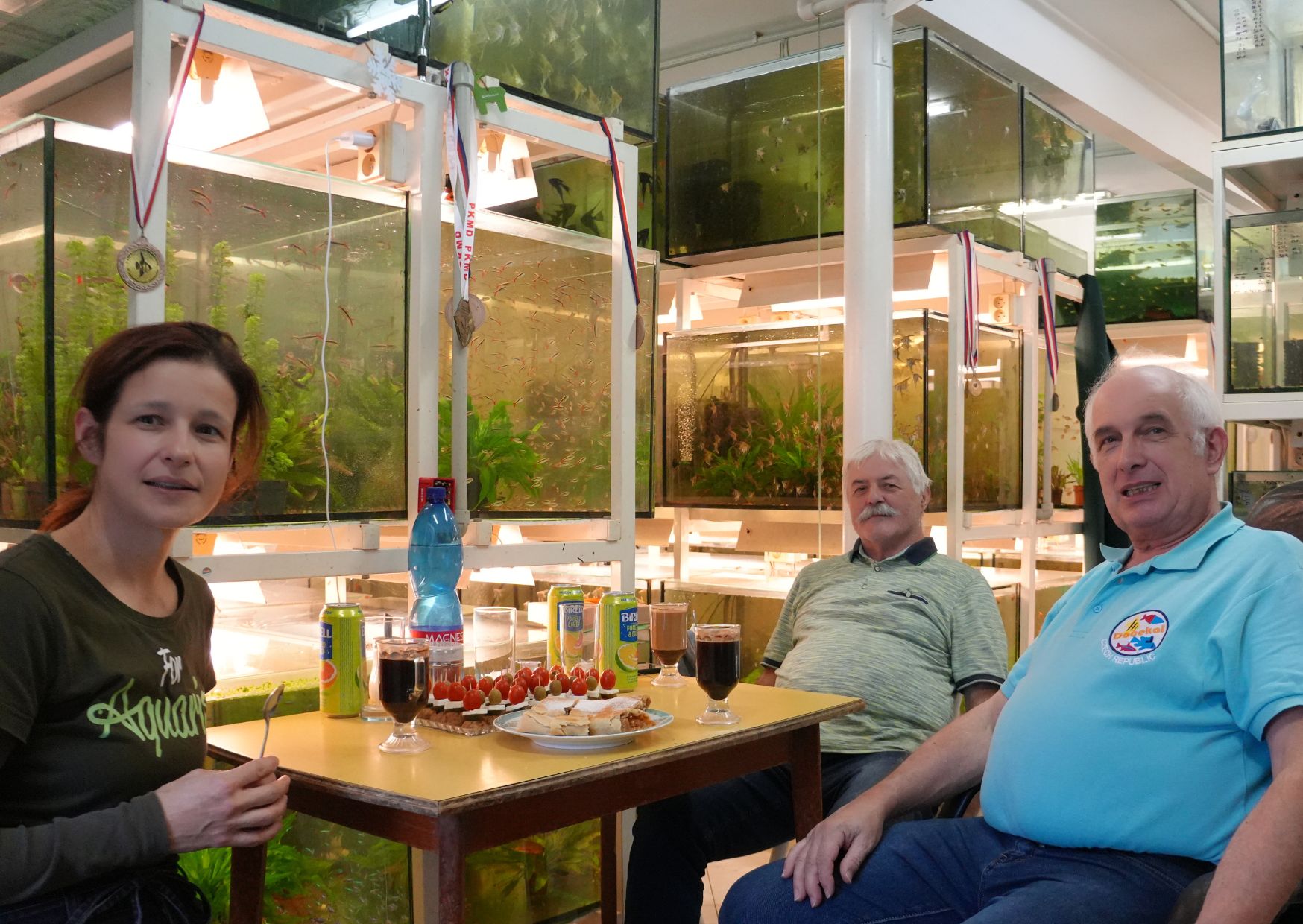
Czech aquaristics has world-famous breeders, but why do fish in stores often lose their color? According to experts, the faded neon tetras and anemic ancistrus are due to sellers trying to save on electricity. Breeding masters like Zdeněk Dočekal and Slávek Boudný, however, show that the key to perfect coloration – from intensely golden gouramis to resilient fry – is not just light, but above all the quality of food and precise prevention. Read about how to defend against hydra, carp fry, and what risks lurk when collecting live food.
Fish Colors: Is the key feeding and light, or just peace? Experiences of Czech breeders
Czech aquaristics has always been rich in quality breeders, but unfortunately, it seems that the quality of trading sometimes lags behind. As one of the experts points out, many sellers who make a living selling aquarium fish cut corners on electricity, and the breeding facilities are only lit for the necessary feeding duration. Such an approach can lead to fish having a somewhat "cave-like" way of life.
The influence of light and feeding on coloration
While, for example, breeder Zdeněk Dočekal lights his breeding facilities, among other reasons, to maintain the beautiful colors of the fish, another well-known breeder, Slávek Boudný, paradoxically does not use light for labyrinth fish, yet still achieves fantastic coloration.
Slávek Boudný is renowned for his stunning breeding of blue, golden, and "Cosby" gourami. For him, it holds true that even with water clarity of up to 5 cm, quality feeding is the key to excellent coloration. For instance, his golden gourami are so vividly colored that they are offered by traders as the "orange" variant.
Similarly, feeding is essential for other species. Ancistrus can be yellow or white depending on the food provided, and for neon tetras, lack of tranquility as "faded jeans" – washed-out colors. Therefore, it is crucial for quality breeding to carefully select an exceptionally colored male and female.
How to deal with unwanted guests in the aquarium?
Breeders must also contend with parasites. What to do when you bring a hydra or planarian into your aquarium?
- Hydra: Here, breeders help themselves with a small dose of Flubenol.
- Argulus: This parasite can be treated with the Sera Argulol preparation. Gouramis can be harmed by them, Angelfish can manage it, but rasboras, gouramis, livebearers, and neon tetras are unfortunate. Some aquarists also use Difuzol.
- Planarians: The most effective solution appears to be the No Planaria preparation.
Interestingly, the head of Chlamydogobius eremius was able to reproduce even after being infested with up to 14 planarians.
Prevention and risks of live food
Fish fed live food generally have a stronger slime coat and are more resistant to diseases. Slávek Boudný describes that calamities in breeding have always been his own fault. Since the early 1980s, he has not brought any diseases from hunting live food, only occasionally a hydra or planarian.
However, beware of the risks associated with collecting food in nature. Once, Slávek went for Cyclops and did not notice a freshly fertilized field. The tiny pests of gouramis ingested the fertilizer and died. Overfeeding with water fleas (Daphnia), which can die and spoil the water, can also be dangerous.
Slávek Boudný emphasizes that every aquarist should analyze every calamity in their breeding. As he aptly says:
Prevention is better than cure.
Check out the entire discussion in the video: