
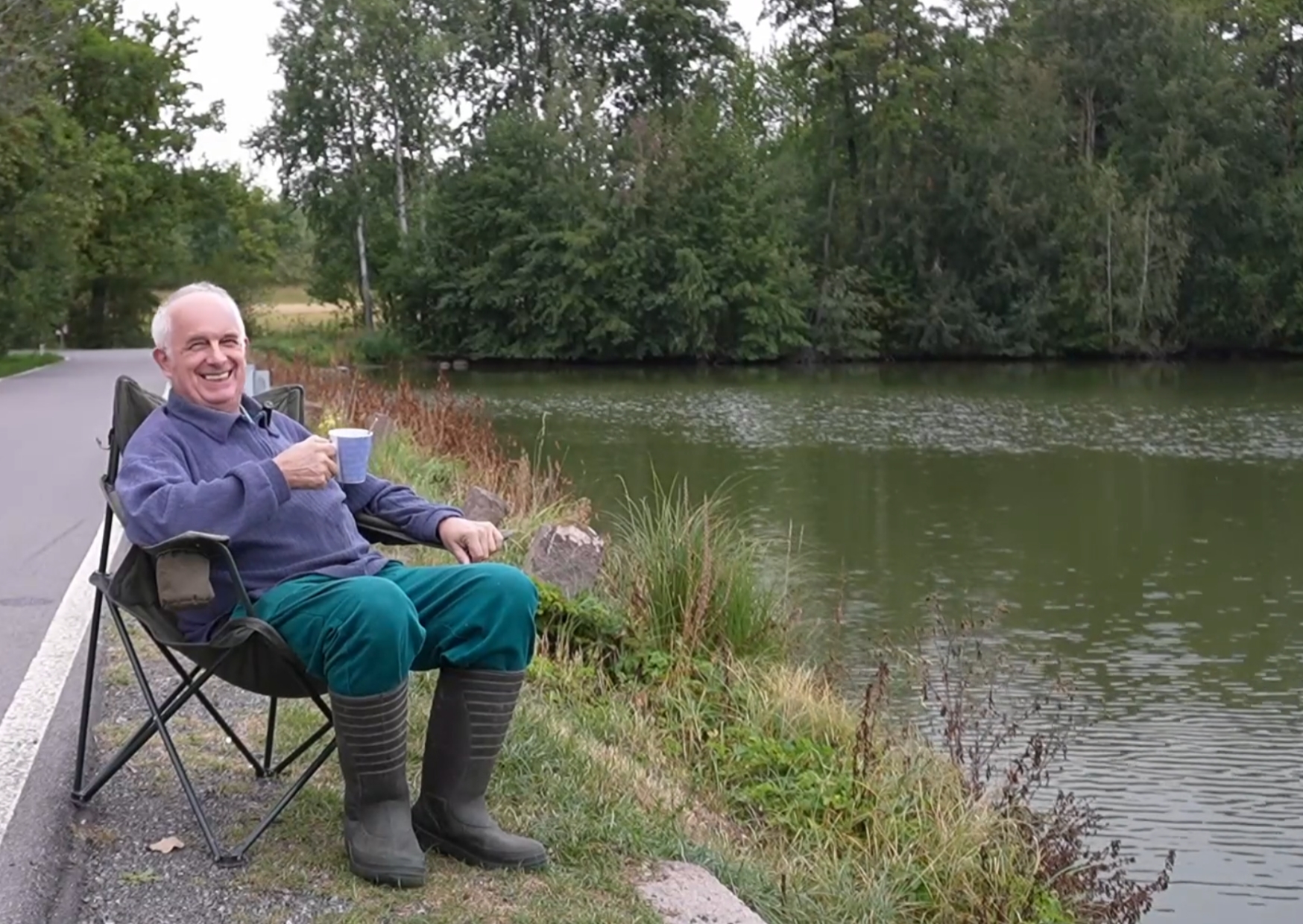
Conversations above the surface: The silent hunter with a passion, Zdeněk Dočekal, goes to the water every day – for half a century!
Find out how Zdeněk Dočekal built his own silent device for effective collection of beech mast and acorns, why he uses a five-meter net, and how many kilos of food he can catch in an hour. We will also reveal his warnings about purchased patent baits and explain why the protective layer of slime is so important for fish fed with live food.
Fifty years in aquaristics is an impressive achievement. When you add that Zdeněk has been going fishing almost daily all that time to ensure the best for his fry, you start to understand what true aquaristic passion means. And although it may seem that daily outings are tiring, Zdeněk does not complain – it is simply his life.
Silent hunter: Custom-built arsenal
To be able to feed his fish well, Zdeněk had to find an efficient way to catch plankton. Many aquarists use noisy generators, but Zdeněk opted for quiet and his own invention. He arranged for a traction motor and assembled the rest himself. The result? A very quiet operation that allows focusing on the most enjoyable part: the actual fishing.
Fishing for plankton, whether it's Water Fleas, such as Daphnia, is more of a relaxation for him.
Zdeněk also has his own definition of an aquarist:
You aren't a real aquarist until you've annoyed the neighbor and fallen into the pond in winter.
Plankton, larvae, and great surprises at the net
Even with modern motorization, some things remain done by hand. Copepods must still be caught the old-fashioned way, manually with a net.
For plankton, Zdeněk uses a net that is 5 meters long. Why such a length? So that the net does not clog with debris and it is possible to fish efficiently. And the result varies from day to day:
In an hour, you can catch 1 kilo, 5 kilos, or even 20 kilos, so it is always a surprise.
The most challenging is when a strong wind blows and waves form. Then plankton is at the bottom, and unfortunately, the quantity is very low.
During fishing, an unwanted "bycatch" in the form of a leech or flatworm may also appear in the final catch. Fortunately, there are reliable treatments for both unwelcome guests.
Beware of bloodworms and the magic of slime
Zdeněk is a strong advocate of live food, but with one big warning. Fish primarily fed live food develop a strong protective layer of slime on their bodies. Therefore, he recommends being cautious when feeding fish that are primarily accustomed to dry food. They may not have developed a sufficiently thick mucus layer to protect them.
Weakening the fish and their mucus layer can also be caused by:
- A drop in pH in the aquarium.
- An increase in nitrogen (caused by overpopulation, neglected maintenance), which leads to a decrease in pH and weakening of the fish, followed by the risk of bacterial infections.
An important point of Zdeněk's philosophy is caution when buying bloodworms. They have the ability to concentrate heavy metals and chemicals. If you do not know where the bloodworms were caught, it is better to avoid this food to prevent poisoning the fish.
Therefore, Zdeněk prefers feeding:
- Brine shrimp
- Coretra
- Plankton
- Worms
He only includes bloodworms in the diet if he accidentally catches them in the same, verified place where he catches the rest of the food.
Worms and rinsing: Instructions for treatment and storage
The basic rule for live food is to let it be rinsed for a week. This ensures its cleanliness and removes potential impurities.
For example, worms are absolutely irreplaceable, especially for catfish. In water with aeration, they can last peacefully for a month and thus serve as an excellent backup source of quality food.
Zdeněk is proof that aquaristics is a lifelong hobby that requires care and dedication. And mainly: it is about a love for fish that deserve only the best.