
Do you want the best and safest live food for your fish? According to aquarist Luděk Zicháček, the ideal choice is white worms (Enchytraeus albidus). Although the culture is easily available, Zicháček describes how it can be easily obtained from your own compost by transferring water between barrels. In home breeding, drainage made of Liapor and the substrate Lignocel are crucial, as they provide safety from drowning and mold.
Feeding fish with Enchytraea
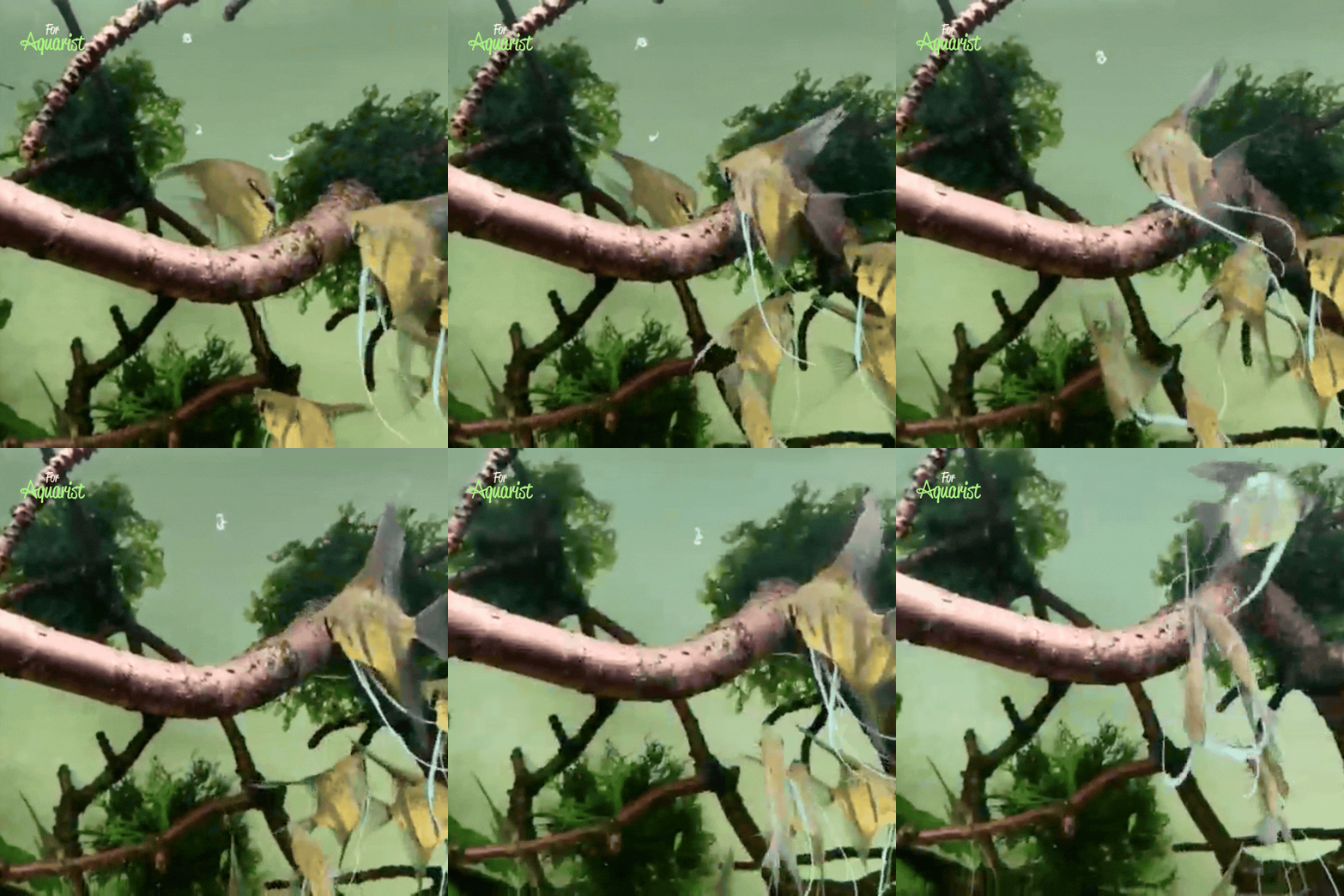
Sometimes, high-quality fish food is literally at your fingertips. Enchytraeus albidus or the white enchytraea is a great example, and you can see that fish really enjoy it in this home video:
White worms are everywhere
Anyone with a garden has Enchytraeus. While it is easy to buy starter cultures nowadays, you can also extract them from compost. Luděk Zicháček has developed a "recipe" for extracting them:
To obtain white worms from compost, use a 120-liter barrel filled with compost and place a 200-liter barrel next to it. By slowly pouring water from one barrel to the other, you encourage the worms to crawl to the surface. From there, you can simply collect them. The key is the slowness of the process, giving the worms enough time to migrate out of the compost to avoid drowning.
Home Breeding for Enchytraeus albidus
To set up a stable breeding culture, use a box measuring approximately 30 x 40 cm. The container must be well-ventilated; never seal it with a tight lid. Use a loose-fitting lid or one with ventilation holes to prevent overheating.
- Base Layer (Drainage): Cover the bottom with Liapor (expanded clay). This drainage layer is vital for removing excess water and preventing the worms from drowning.
- Separation Layer: Place a fine mesh or screened fabric over the Liapor. This prevents the substrate from clogging the pores of the clay pebbles.
- Substrate: Lignocel (coconut fiber) is the ideal substrate. It is resistant to mold and significantly limits mite infestations.
- Temperature: Maintain the culture between 18°C and 25°C.
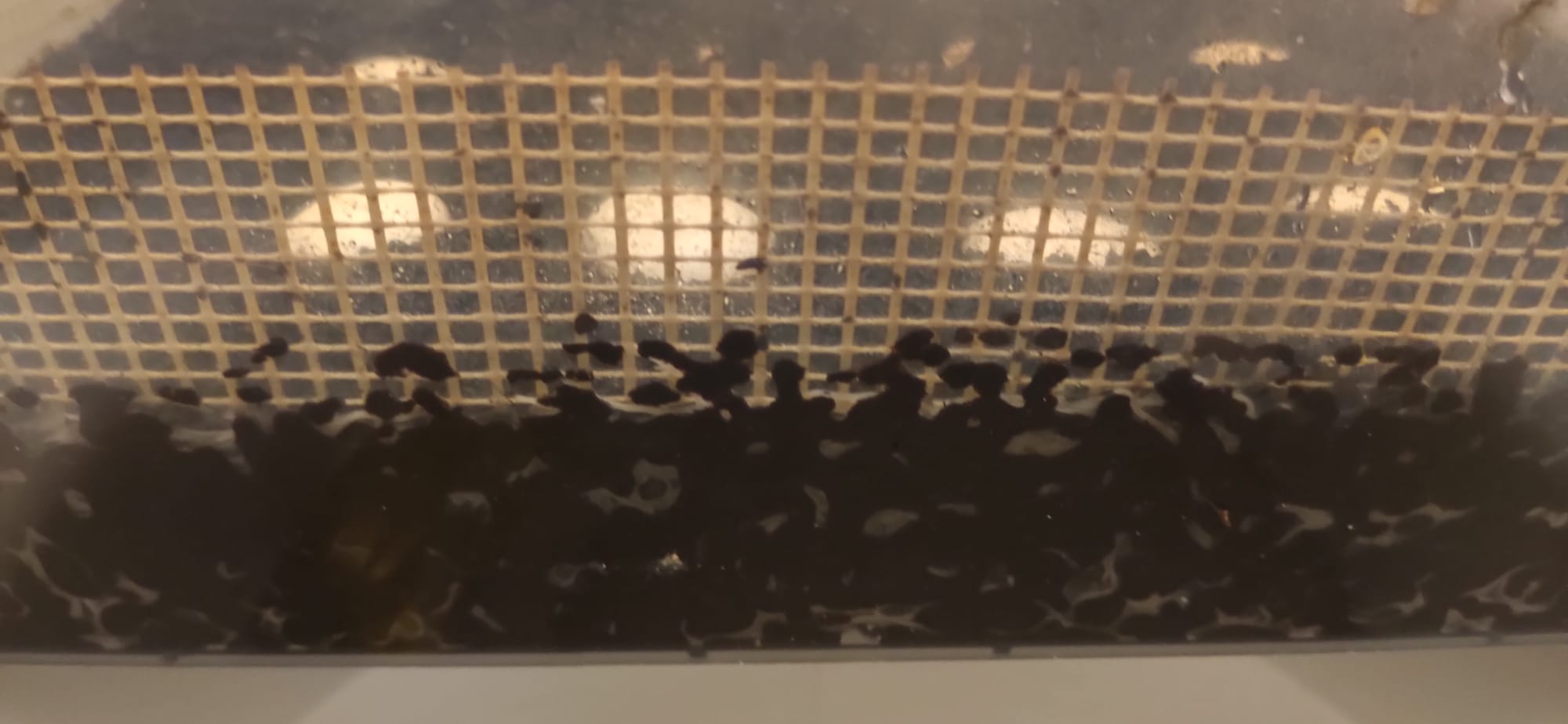
Side view of the breeding box. Some of the fine Lignocel falls into the drainage layer of Liapor.
Moisture and risk of flooding
- Moistening: The substrate is kept moist, ideally with a sprayer. The substrate should be moist but not wet and dripping.
- Beware of drowning: If too much water is added, the drainage (Liapor) will prevent drowning. If only pure Lignocel is used without drainage, moisture will rise, oxygen will quickly disappear, and in case of flooding, it is a matter of half an hour before the entire breeding stock dies off en masse. Therefore, drainage is crucial for Enchytraeus albidus 's survival.
Feeding and cleaning
- Food: Ensure the food does not turn sour or moldy.
- The Biscuit Problem: The composition of many classic biscuits has changed, making some brands unsuitable. Luděk Zicháček recommends Tastino biscuits as a reliable alternative.
- Hygiene: Regular cleaning is necessary. Waste products, food remnants, and mold can quickly foul the environment and crash the colony.
How to get white worms out of the substrate and prepare them for feeding in the aquarium (see video below)
Maintenance of Breeding and Substrate Replacement
Procedure for replacement: After a longer period, Lignocel becomes contaminated and depleted. After that, proceed as follows:
- Add another layer of mesh and fresh Lignocel on the depleted substrate.
- The worms from the depleted substrate will move themselves into the fresh Lignocel.
- Old (depleted) Lignocel and the mesh can be removed and disposed of after the transfer of the majority of the enchytraea.
- Liapor (drainage) can be rinsed occasionally and reused, or replaced with new.
Pests and solutions
Fungus gnats (Sciaridae): The larvae of fungus gnats are a problem because they consume both food and enchytraea and degrade the substrate. It is necessary to actively reduce them (e.g., yellow sticky traps, possibly biological control with nematodes Steinernema feltiae).
Mites: Mites are a problem, especially if they are in greater numbers than the enchytraea (the so-called overpopulation). They compete with enchytraea for food. They can be controlled by maintaining optimal moisture and more frequent substrate replacement.
Why tubifex are often avoided
Luděk Zicháček recommends excluding wild-caught tubifex from your feeding routine for several reasons:
- Origin and contamination: tubifex collected from the wild (especially from ponds, streams, or places with poor water quality) often come from areas under public sewers or nearby them today.
- Pathogens and parasites: Due to this origin, they can carry pathogens, parasites (e.g., Capillaria– hairworms), or other undesirable organisms (bloodworms).
- Chemical contamination: Locations of tubifex occurrence, where there is also chemical contamination (e.g., industrial waste, pesticide residues from fields, or even bird droppings/chemicals in livestock), pose an unhealthy diet for fish.
- Problem: A breeder can feed tubifex multiple times without issues, but then suddenly a problem can occur en masse (e.g., introduction of dangerous diseases or poisoning). Prevention is therefore key.
The parasite-fish relationship
- Symbiosis vs. pathogenicity: Some parasites can be temporarily in balance/symbiosis with the host fish and do not cause acute disease. It depends on the sensitivity of the specific organism (species, condition, immunity).
- Example of gill parasites: For example, gill parasites (Dactylogyrus, Gyrodactylus) can be specific and a major problem for sensitive species (e.g., discus – Symphysodon), while resistant tetra fish may not be affected or manage to keep the parasite under control.
Emphasis on the origin of food
- General rule: When obtaining any live food (not just tubifex), it is essential to pay extreme attention to the source of the food.
- Risks near agriculture: If the food (e.g., near streams) is located close to livestock or agriculturally cultivated areas where chemicals are used, it may not be a healthy diet but rather a toxic one.
Aulophorus - the odorless alternative
Aulophorus is a popular live food that is cultivated in aquaristics because, unlike tubifex, it does not suffer from such severe contamination.
Substrate/medium: Breeding ideally takes place on floating sponge or other porous material, which serves as a substrate and hiding place for the worms. The sponge should float in the water.
Water and aeration: The water must be aerated. Aeration is crucial because:
- Reduces odor: It prevents the formation of anaerobic conditions and putrefactive processes that cause a strong and unpleasant odor.
- Increases oxygen content: Aulophorus needs sufficient oxygen to survive.
Cleanliness: It is necessary to keep the breeding clean. Regular water changes and removal of food remnants reduce the risk of contamination, decay, and subsequent collapse of the breeding (just like with enchytraea).
You can watch the entire part of the interview with Luděk Zicháček and Láďa Chramosta as part of the series Talks Above the Surface in the video below: