Why do neon tetras fade at night? Their colors have their own daily rhythm
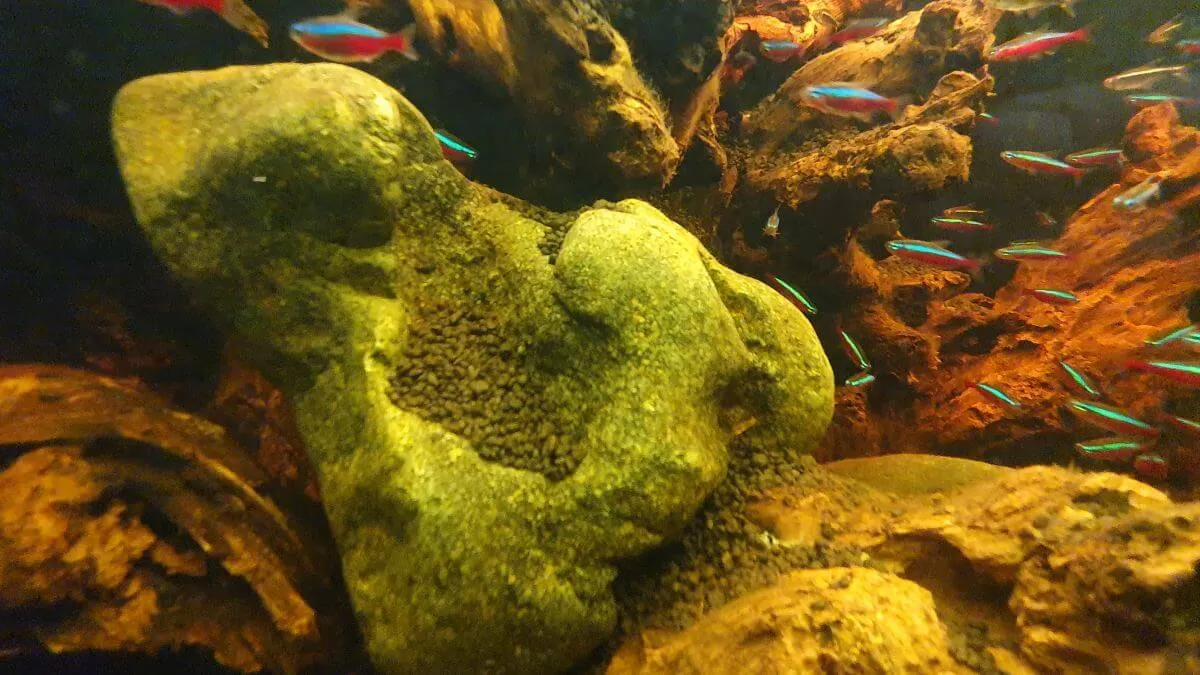
In the morning, the aquarium lights up and neon tetras appear unusually dull. They may not be sick: their coloration naturally changes with light and the daily rhythm. Behind the shiny stripe and the red part of their body are two distinct mechanisms.
The neon tetra (Paracheirodon innesi) is known for its bright blue-green stripe. However, it does not actually glow; its color is created by the reflection of light on microscopic structures in the skin. In specialized cells called iridophores, thin plates of guanine crystals are arranged. Their layers enhance certain wavelengths of incoming light, creating the characteristic shine.
Remarkably, this system is not fixed. The plates can change their angle, similar to the slats of blinds. This alters their spacing and the resulting color of the reflection. Research has experimentally supported this “blind” model. The daytime blue to blue-green coloration of the stripe shifts to a dark purple hue at night. It is not just that less light hits the fish: its own optical structure also changes.
Even more surprisingly, the cells of the shiny stripe can respond directly to light. Experiments with the skin of neon tetras have shown that their response depends on the intensity of illumination. In addition to neural control, there is also local light sensitivity. The fish does not “see” the surrounding image sideways, but its skin can respond to light by changing color.
The red coloration works differently. In neon tetras, scientists have documented nighttime fading associated with the clustering of pigment granules within the color cells. In laboratory experiments, this effect was also induced by melatonin, a hormone related to the daily and nightly rhythm. Therefore, a weaker red color after a period of darkness may not necessarily indicate a health problem.
For aquarists, this leads to a simple recommendation: assess coloration in relation to the time of day and the behavior of the fish. If neon tetras gradually regain their usual appearance and behave normally after the lights are turned on, this corresponds to a natural change. Regular alternation of light and dark is wiser than prolonging lighting just for vibrant colors.
Also, during the day, allow neon tetras the option to retreat into dimmer areas. Sometimes, softer lighting, floating plants, and a group of at least 8–10 individuals are recommended.
However, do not consider persistent white spots or the separation of an individual from the group as a normal nighttime change. Such manifestations require closer assessment; a different color alone is not enough to determine a specific problem. The important distinction is between regular variation and a change that persists or is accompanied by unusual behavior.
Sources used:
- Yoshioka et al. (2011): Mechanism of variable structural colour in the neon tetra: quantitative evaluation of the Venetian blind model.
- Kasai and Oshima (2006): Light-sensitive motile iridophores and visual pigments in the neon tetra, Paracheirodon innesi.
- Hayashi et al. (1993): Circadian motile activity of erythrophores in the red abdominal skin of tetra fishes and its possible significance in chromatic adaptation.
- Seriously Fish: Paracheirodon innesi — species profile and care recommendations.