


Pumpkinseed Sunfish - an invasive beauty from North America
Pumpkinseed Sunfish in the Czech Republic: a beautiful fish that does not belong in our waters
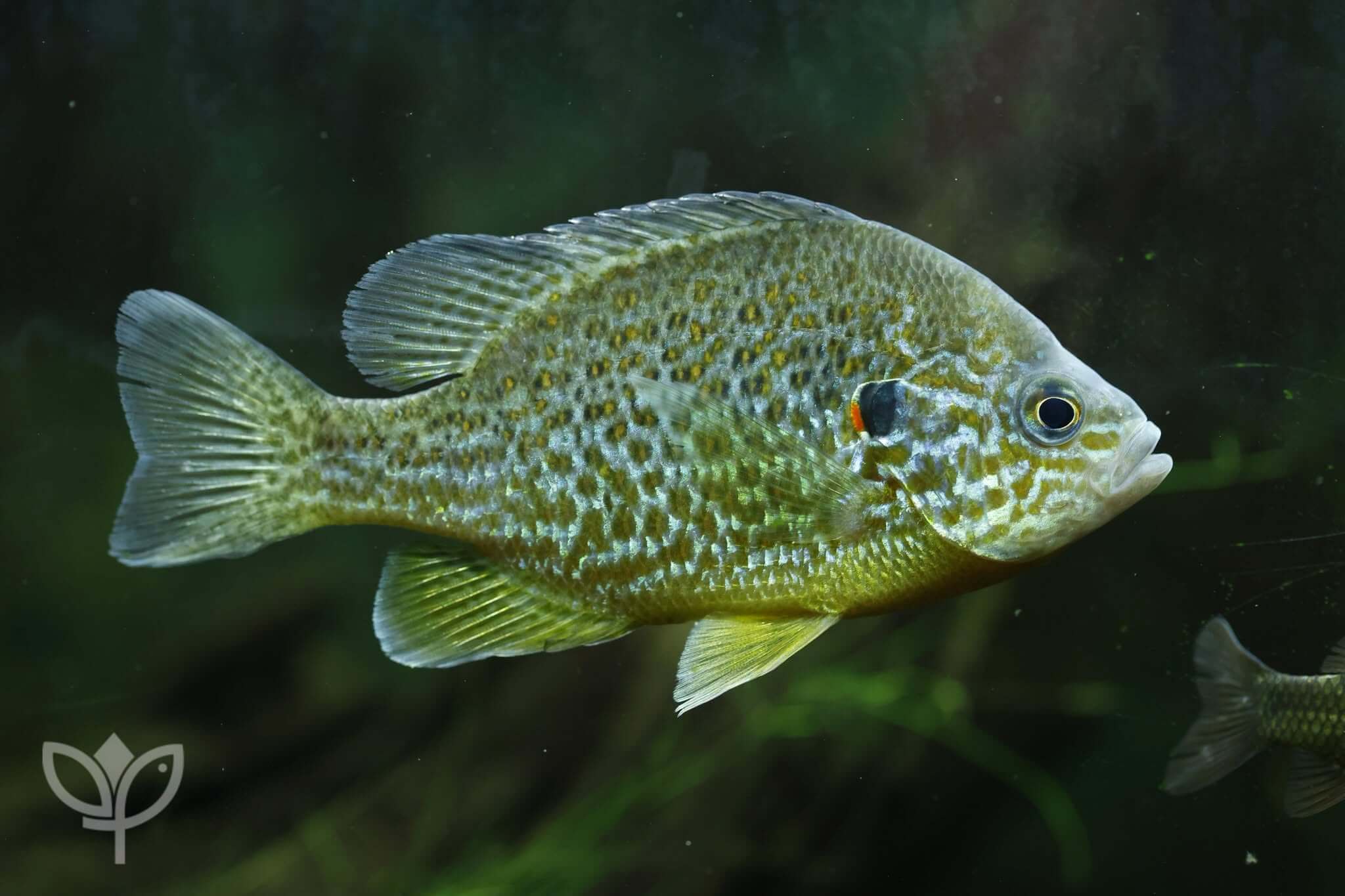
At first glance, it resembles an exotic aquarium fish. Its sides are adorned with greenish-blue stripes, orange spots, and a conspicuous red-edged spot on the gill covers. Pumpkinseed Sunfish (Lepomis gibbosus) unfortunately represents a non-native invasive species in the Czech Republic, which can compete with native fish, consume their eggs, and affect the communities of aquatic invertebrates.
A striking beauty from North America
**The native home of the pumpkinseed sunfish is the eastern part of North America**, including the Great Lakes region. It was introduced to Europe in the second half of the 19th century. The first known European occurrence dates back to 1877, when it was kept in garden ponds at the Palace of Versailles. It later spread to Germany, the Netherlands, and other countries.
Its spread was facilitated by intentional stocking for sport fishing, cultivation in ornamental ponds, and the release of aquarium fish into the wild. Some populations also arose unintentionally, for example, during the transport of fry of economically significant fish species. Currently, the pumpkinseed sunfish is found in dozens of European countries.
How it got into Czech waters
The first documented records from the territory of the Czech Republic date back to 1929 from the Třeboň region. The fish likely arrived here unintentionally along with carp fry imported from then Yugoslavia.
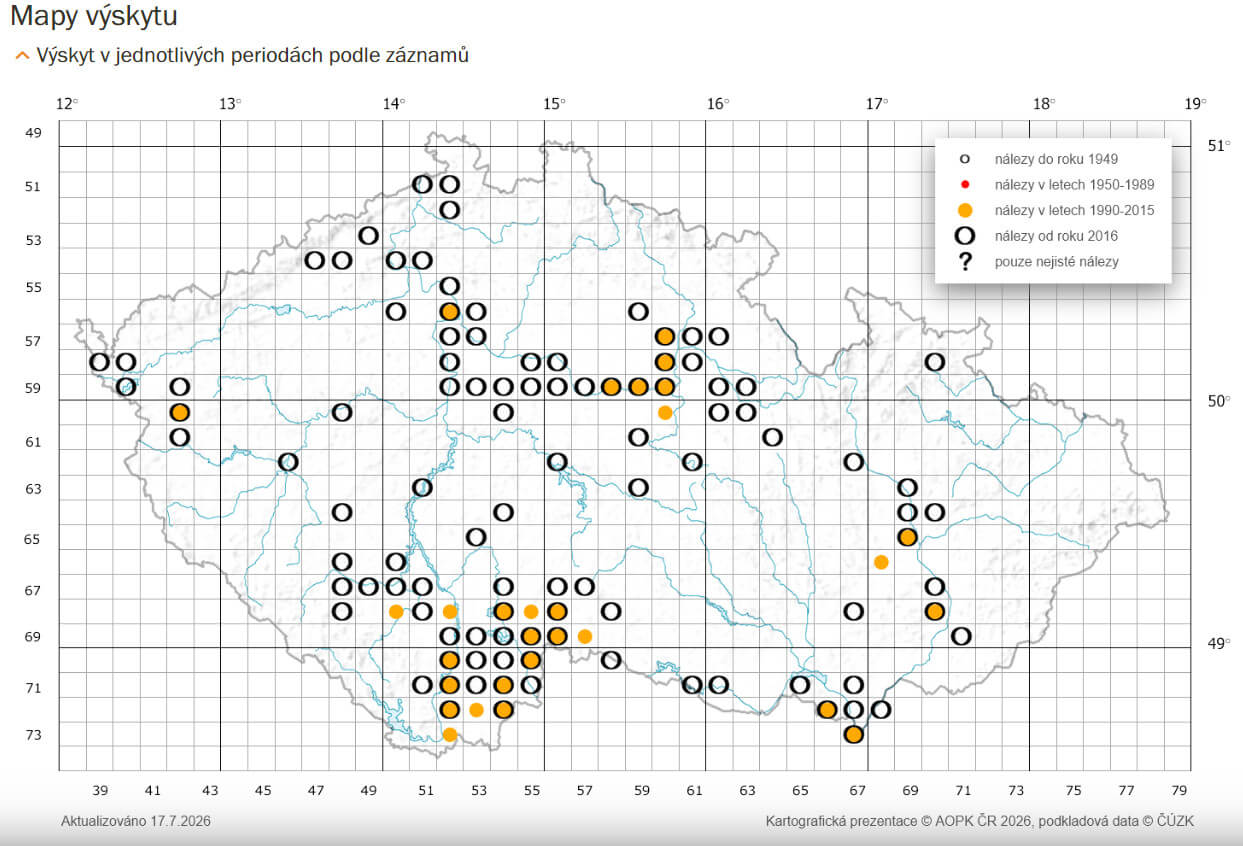
It has gradually been recorded in the areas of Lužnice, lower Povltaví, central Polabí, Orlice, and southern Moravia, especially in the Morava and Dyje river basins. Its distribution in the Czech Republic is not continuous. It tends to form local populations in places that provide suitable conditions for reproduction and sufficient food. The current occurrences are recorded in the Nature Conservation Database managed by the Agency for Nature Conservation and Landscape Protection of the Czech Republic.
How to recognize the pumpkinseed sunfish
The pumpkinseed sunfish has a high, distinctly flattened body. In its native area, it can exceptionally grow up to approximately 40 centimeters, but in Czech conditions, it usually does not exceed 15 centimeters and weighs around 200 grams.
The coloration is highly variable. The back is usually olive green to yellow-brown, while the belly can range from bronze to yellow or orange. Wavy greenish-blue stripes are noticeable on the head, and small colored spots are found on the sides.
The most distinctive identifying feature is a dark spot on the elongated part of the gill covers. In the pumpkinseed sunfish, it is complemented on the rear edge by an orange to red crescent-shaped spot. Males acquire even more intense colors during the breeding season.
Where it thrives
The pumpkinseed sunfish primarily seeks still or slow-flowing waters at lower altitudes. Suitable environments for it include:
- backwaters and ponds,
- smaller fish ponds and garden reservoirs,
- sand pits and flooded quarries,
- irrigation and drainage canals,
- calm sections of smaller rivers.
It thrives best in warm waters with soft bottoms, intricate shorelines, and abundant submerged plant growth. It usually avoids strong currents. Young fish form larger schools in shallow water near the shores, while adults are more often found alone or in small groups among vegetation.
An inconspicuous but effective predator
The diet of the pumpkinseed sunfish changes according to its size and the offerings of specific locations. It preys on larvae of aquatic insects, crustaceans, mollusks, and other invertebrates. Larger individuals also consume eggs, fish fry, and small fish.
This broad dietary spectrum is one of the reasons for its success. It can utilize various food sources while competing with native species that have similar ecological requirements. In smaller ponds or isolated pools, it can significantly alter the abundance of aquatic invertebrates and worsen conditions for the reproduction of native fish when present in high numbers.
However, its impact is not the same across all locations. Monitoring in southern Moravia, for example, has pointed out a possible correlation between the abundant occurrence of the pumpkinseed sunfish and the decline of the rainbow trout in some arms of the Kněžpolský forest. In the area of the confluence of the Morava and Dyje rivers, both species are found together at times, and the population of the rainbow trout remains stable. The actual influence therefore depends on the characteristics of the location, population density, and the state of the entire aquatic ecosystem.
A caring father protecting his offspring
The pumpkinseed sunfish typically matures within one to two years. The male digs a circular nest in shallow water, usually in the form of a depression several dozen centimeters in diameter. Different females can lay eggs in the same nest.
The male then vigorously guards the eggs and freshly hatched fry. He drives away other fish, sometimes even significantly larger ones, and can transport escaping fry back with his mouth. This parental care increases the likelihood of offspring survival and helps the species colonize new locations.
Why the pumpkinseed sunfish is a regulated species
The pumpkinseed sunfish is listed on the EU list of invasive non-native species with significant impacts on the European Union. Restrictions apply to species on this list regarding possession, breeding, reproduction, transport, sale, and release into the wild. Therefore, it cannot be acquired as an aquarium or pond fish or relocated between locations without the appropriate permit.
**Czech fishing law also stipulates that an invasive non-native species from the EU list must not be returned to the water after being caught**. The pumpkinseed sunfish also cannot be used as bait fish. Caught individuals must be handled in accordance with animal protection rules and the fishing regulations of the respective area.
Can it be removed from Czech waters?
Complete removal of an established population is practically impossible. Regular fishing may temporarily reduce the number of fish, but it usually cannot catch all individuals. A few surviving fish can repopulate the area.
In small and technically manageable ponds, complete drainage and leaving the bottom to dry for a sufficiently long time can be effective. However, such an intervention must be professionally planned, as it can also affect native fish, amphibians, and aquatic invertebrates. Therefore, the most important measure remains the prevention of further spread.
What to do if you find one
**Never transfer the pumpkinseed sunfish to another water body or release it from an aquarium or garden pond**. **It is advisable to document a new or unusual occurrence with a photograph and record the exact location and date.**
**Observations can be submitted via the BioLog app or iNaturalist. The Agency for Nature Conservation and Landscape Protection of the Czech Republic also accepts reports via email**. It is helpful to attach a photograph, coordinates, or a marked location on a map, along with the date of observation. The data is subsequently stored in the Nature Conservation Database and helps in monitoring the spread and planning potential interventions.
Attractive appearance must not overshadow the risks
**The pumpkinseed sunfish is undoubtedly one of the most colorful fish that can be seen in Czech waters**. However, its appearance and interesting breeding behavior must not overshadow the fact that it is a non-native species capable of influencing local aquatic communities.
Its story also serves as a reminder that releasing a single ornamental fish may not be a harmless act. A species that appears exotic and innocent in an aquarium can establish a viable population after escaping into a suitable environment and remain a part of our nature for many decades.
Sources
- AOPK ČR – Pumpkinseed Sunfish
- Invasive species from the EU list
- AOPK ČR – rules for handling invasive species
- AOPK ČR – reporting occurrences of invasive species