
Axolotl - origin and history of breeding
Axolotl (also commonly known as the water dragon) originates from high-altitude lakes in the Mexico City valley. Its name likely either refers to the Aztec god Xolotl or has its origins in the translation of "strange/mysterious animal."
The axolotl is a unique amphibian that does not transform into a terrestrial form in adulthood – it remains permanently in the larval stage and has the ability of so-called neoteny - to reproduce sexually in the larval stage while retaining external gills and larval body characteristics. The natural habitat of the axolotl is currently facing ecological collapse, and the species is unfortunately critically endangered in the wild.
The beginnings of European captive breeding:
- 1864 – the first live axolotls were brought to Europe (Paris, Jardin des Plantes), from where they spread to laboratories and private breeding.
- since the 20th century, axolotls have been widely bred in laboratories around the world for the study of development, regeneration, and genetics.
Most of today's domesticated axolotls come from a few original lines and genetically differ significantly from the wild population. If you are interested in more, take a look at the article Axolotl – the aquarium lizard with the smile of Mona Lisa
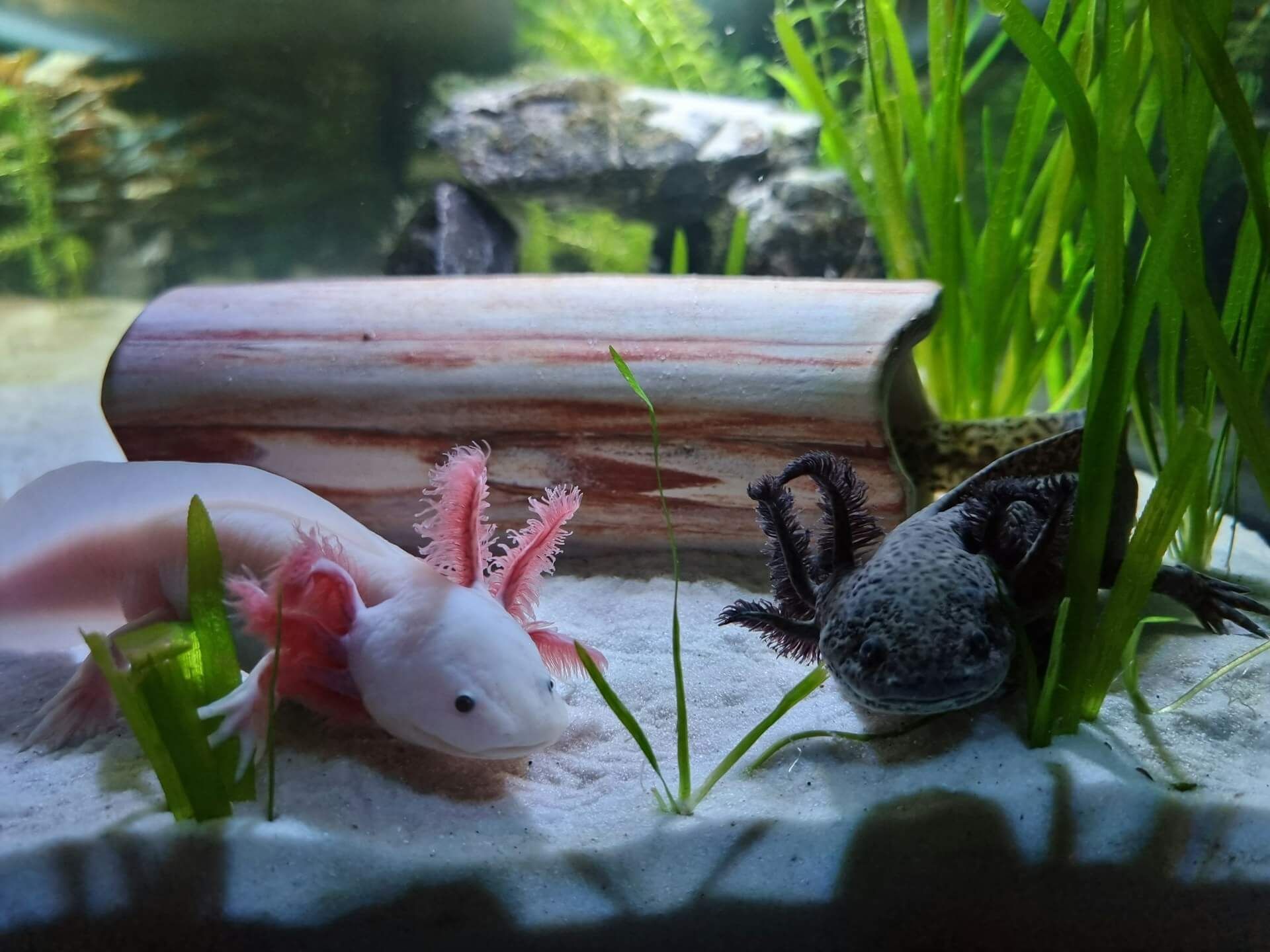
The photo of beautiful axolotls is by T K (Unsplash).